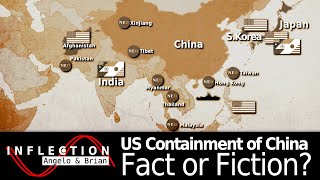
On Taiwan, China’s rise and Western hegemony

August 1st 2022.

With The New Atlas - Brian Berletic and Angelo Giuliano ...

[640],shadow=true,start=,stop=

Orsis Rutherford

The problem with the US is that 90% of the population could not find Taiwan or The Ukraine on a map. I went to China in 2015 and I discovered an amazing country with a blend of tradition and modernity. People looked happy and I felt safe.

AloofMicrobe

"Be humble. Admit you know nothing about China. Start from zero and start building up a real understanding." Probably the best advice I've had my entire life - and I'm 63 years old! Thank you so much, both of you. Love and peace, from London.

ashley mistletoe

As a Taiwaneses, I can vouch for everything you said about Taiwan, history, politics.. very surprised that you nailed so much details. To add a few more facts: 1. Right now in Taiwan it's a hostage situation: people don't want to go to war with China but this government is doing america bidding and for us it's just disgusting, hateful yet there's nothing much we can do... 2. This government brainwashes the less informed population, controls media and public opinions with a massive cyber force that's silencing and suppressing opposition. It's despicable that they have the shame to brag about democracy. 3. NO ONE IN TAIWAN WANTS A WAR, not even the heavily propagandized, except the very few brainwashed extremists. Those in power such as Ms. Tsai never mind bleeding our blood but trust me they will be the first to fly away the moment smell of war approaches. 4. I've heard over and over again that parents told their kids to surrender when the war breaks out. I remember vividly one of them said, "Who are we fighting for? Tsai Yinwen?" followed with an angry sneer. THIS GOVERNMENT IS A DISGRACE.

Nancy Barra

Brian, you represent the best of young Americans. Your critical thinking and analytical skills are amazing and I hope people like you can lead the United States to a new era in the future. In the meantime you are helping a lot of people to think beyond what mass media is proyecting. Angelo Giluino is also a great thinker and analyst.

Gav Munro

As a Brit in China I agree with Angelo 100% about the sense of humility that we should have. I was someone who questioned why things were the way they were in China, thankfully the more I tried to understand China the quicker I grew out of it.

There's a much said phrase here that 'When I landed in China I could write a book about it, after 10 years I could write a leaflet on it, after 15 years I can barely write half a page about it'. That's the reality.

China is an enigma, it's not to be 'advised' but to be respected and studied. It's brought it's poorest into a middle class at a rate of knots. The west is vilifying China not to China's determent but to their own.

They could learn so much from China's rise. Their elites choose not to tell the people the real story.

That's the real tragedy.

[320],shadow=true,start=,stop=

Bonus film - with Richard Wolff ...

[320],shadow=true,start=,stop=

Bonus film - with Garland Nixon ...

[320],shadow=true,start=,stop=

Related Videos


Featured Videos

Rice – growing, maturing and cooking
The main pavilions at the ShangHai 上海 World Expo – video
The China pavilion and the Urbanisation pavilion. 'Better City, Better Life' : 1st May to 31st October 2010.
How to eat Hot Pot 火锅 HuǒGuō, plus ingredients – in both Chinese script and pinyin
Hot pot dining is a communal and interactive meal enjoyed by many in China and beyond. A hot pot meal consists of a simmering broth into which fresh ingredients are cooked, then dipped into a sauce before eating, bit by bit. Meats are thinly sliced and can cook in just 20 seconds (be sure to cook only one slice at a time). One can have tomatoes or cucumber as a side dish to eat raw. Typically, the dipping sauce is sesame sprinkled with chopped spring onions though one add add various condiments such as chopped garlic. Spicy (Hot) Broth (麻辣汤 - Má là tāng): This broth is typically made with a combination of chili peppers, Sichuan peppercorns, garlic, ginger, and various spices. It's known for its fiery and numbing flavor, characteristic of Sichuan cuisine. It adds a spicy kick to the ingredients cooked in the hot pot, offering a tingling sensation on the palate. Non-Spicy (Not Hot) Broth (清汤 - Qīng tāng): This broth is a milder option compared to the spicy broth. It's often made with a clear or lightly flavored base, such as chicken, pork, or vegetable broth. It allows the natural flavors of the ingredients to shine through without the overpowering heat of spices. It's a popular choice for those who prefer a more subtle and refreshing taste. Two-in-One (Yuan Yang) Broth (鸳鸯锅 - Yuān yāng guō): The two-in-one broth offers the best of both worlds by dividing the hot pot into two sections, allowing diners to enjoy both spicy and non-spicy options simultaneously. One side typically contains the spicy broth, while the other side contains the non-spicy broth. It caters to groups with varying preferences, providing a versatile dining experience where everyone can find something they enjoy. Meat: * Beef: Niú Ròu (牛肉) * Lamb: Yáng Ròu (羊肉) * Chicken: Jī Ròu (鸡肉) Pork: Zhū Ròu (猪肉) Sausages: Xiāng Cháng (香肠) * Fish / Shrimp/Prawn Balls: Yú Qiú / Xiā Qiú (鱼球 / 虾球) Seafood: - Shrimp: Xiā (虾) - Fish: Yú (鱼) - Shellfish: Háimǔ (海蜇) - Mussels: Gēn Mǔli (蚌肉) - Squid: Yóu Yú (鱿鱼) Vegetables: * Coriander: Xīng Cài (香菜) Potato slices: TǔDòu (土豆) Tomatoes: Fān Qié (番茄) Cucumber: HuángGuā (黄瓜) Bean Sprouts: Dà Suàn (大蒜) Lotus Root: Lián'ǒu (莲藕) Bamboo Shoots: Zhú Sǔn (竹笋) Cabbage: Xīng Cài (白菜) Spinach: Bō Cài (菠菜) Mushrooms: - * Enoki Mushroom (long thin white): Jīn Zhēngū (金针菇) - * Shiitake Mushroom: Xiāng Gū (香菇) - Oyster Mushroom: Mù Ěr (木耳) - Wood Ear Mushroom: Xīng'ěr (杏鲍菇) - King Oyster Mushroom: Xìng Bàogū (杏鲍菇) Tofu: * Iced Tofu: Dòng Dòufu (冻豆腐) * Tofu Skin: Dòu Pí (豆皮) Firm Tofu: Làn Dòufu (蓝豆腐) Silken Tofu: Dòufu Rǔ (豆腐乳) Bean Curd Sheets: Dòu Piàn (豆片) Noodles: * Clear (bean) Noodles: Tāng Fěn (汤粉) Rice Noodles: Mǐ Fěn (米粉) Udon Noodles: Wǔdūn Miàn (乌冬面) Other Ingredients: * Dumplings: JiǎoZi (饺子) Eggs: Jī Dàn (鸡蛋) Fried Dough Sticks: Yóu Tiáo (油条) Sauce Bowl: * Sesame Sauce: Zhī Málà Jiàng (芝麻麻辣酱) Peanut Sauce: Huā Shēng Jiàng (花生酱) Condiments one can add to sauce bowl: * Scallions (chopped spring onions): Cōng Jiàng Yóu (葱酱油) Soy Sauce: Jiàng Yóu (酱油) Vinegar: Cù (醋) Chili Sauce: Làjiāo Jiàng (辣椒酱) Garlic Sauce: Sào Jiàng (臊酱) Sesame Oil: Zhī Yóu (芝麻油) Well known hot pot chains include XiaoBu XiaoBu and HaiDiLao but one can also enjoy many one-off independent restaurants.
Traditional potato feast
With DianXi XiaoGe ...
XiXia style garden in YinChuan, NingXia province
Including the evening / night light show ...
The Confucius Temple / Imperial College in BeiJing
With Cameraman ... With China Tour ... Visitor Guide to the Confucius Temple and Imperial College, Beijing Introduction The Confucius Temple and Imperial College (Guozijian) in Beijing are historical landmarks dedicated to the legacy of Confucius, one of China's most influential philosophers, and to the education of scholars who served the imperial government. These sites reflect the importance of Confucianism in Chinese history and are a must-visit for anyone interested in Chinese culture and history. History Confucius Temple (孔庙, Kǒng Miào) Built in 1302 during the Yuan Dynasty, the Confucius Temple in Beijing is one of the largest and oldest Confucian temples in China. It was expanded during the Ming and Qing dynasties, becoming a prominent center for Confucian worship and scholarship. The temple was a place where scholars and officials would pay their respects to Confucius and seek inspiration from his teachings. Imperial College (国子监, Guózǐjiàn) The Imperial College, also known as Guozijian, was established in 1306, just a few years after the temple. It served as the highest educational institution in imperial China, where scholars studied the Confucian classics in preparation for civil service examinations. The college was managed by the imperial government, reflecting the significant role of education in governance. Architecture and Key Highlights Confucius Temple The temple complex features traditional Chinese architecture with intricate wooden carvings, stone pillars, and tiled roofs. Key structures include: Dacheng Hall (Hall of Great Accomplishment): The main hall, housing a statue of Confucius, where important ceremonies and rituals are conducted. Stele Pavilions: These pavilions contain stone tablets inscribed with texts and inscriptions from various Chinese dynasties. Spirit Way: A pathway lined with ancient cypress trees, leading to the temple's main halls. Imperial College The Imperial College complex showcases traditional Chinese educational architecture. Highlights include: Biyong Hall: The centerpiece of the college, this circular hall is surrounded by a moat and accessed by four bridges, symbolizing the spread of Confucian teachings to all corners of the world. Jixian Hall: A lecture hall where scholars were taught the Confucian classics. Gate of Great Accomplishment: The main entrance to the college, symbolizing the pursuit of knowledge and scholarly achievement. Visitor Information Here are some practical details to help plan your visit to the Confucius Temple and Imperial College: Location: No. 13, Guozijian Street, Dongcheng District, Beijing, China. Opening Hours: Daily from 8:30 AM to 5:00 PM. Last entry is at 4:30 PM. (Hours may vary seasonally) Admission Fee: Approximately 30 RMB (Check for updated prices before visiting). Transportation: The nearest subway station is Yonghegong (Lama Temple), on Line 2 and Line 5. From there, it’s a short walk to the temple. Tips for Visitors Plan to spend at least 1-2 hours exploring the site to fully appreciate its historical and architectural significance. Visit early in the morning or late in the afternoon to avoid the crowds and enjoy a more peaceful experience. Consider hiring a guide or using an audio guide to gain deeper insights into the history and significance of the site. Respect the cultural and religious significance of the site. Dress modestly and behave respectfully.
Something different – A.I. – benefits and concerns
With Lemmino ... With DeepMind - human (Korean Lee Sedol, Go Champion, with 18 World Titles) vs. AI, in the ancient Chinese board game of Go. How AI can help find things humans have missed, and what about when AI becomes smarter than us ...
Ending poverty (1 / 2)
In the West, poverty is tolerated; some say even necessary. China, however, aimed to end this once and for all. Today, China is almost at the point of eradicating poverty. Let's take a look at how it was achieved ...
The SkyShuttle in ChongQing
With Walk For You ...

Tag search ?