On the US desperation to use Taiwan to attack the rest of China

With Danny Haiphong and Brian Berletic ...

[640],shadow=true,start=,stop=
[320],shadow=true,start=,stop=

Related Videos


Featured Videos

Hong Kong 香港 through the seasons, in Ultra HD / 4K
A very beautiful timelapse film by Jeffrey Poon ...
BeiJing 北京 trip, 2012
Sun Kissed in WuHan city, HuBei province
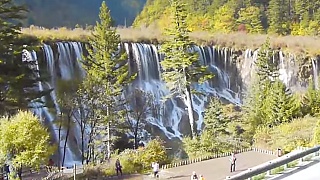
The beautiful waterfalls at DeTian 德天瀑布, GuangXi province
The exceedingly beautiful falls lie on the China - Vietnam border. The largest waterfall is over 200 meters wide and has a drop of more than 70 meters, in three tiers.
The awesome ShenZhen Library North Branch
With Time Walker ... "Shenzhen Library North is one of the first major cultural facilities of the new era built and completed in Shenzhen. It has a construction area of ​​about 72,000 square meters, 6 floors above ground and 3 floors underground. It is designed to hold 8 million books and provide 2,500 seats. Its total investment is about 1.2 billion yuan. The library is positioned as a large-scale comprehensive and intelligent library integrating document collection, national reading, social education, ideological exchange, cultural inheritance and creative creation. It not only has the functions of a public library, but also serves as the city's document adjustment library and Shenzhen's "City of Libraries" joint editing center, network data center and document allocation center. The library has many special libraries and interactive learning spaces, and has the largest underground intelligent three-dimensional library in the country, equipped with advanced facilities such as large-scale rapid sorting system, vertical track access system and electronic seeding wall system. As of July 2024, Shenzhen Library North was officially opened on December 28, 2023. After the opening, 6,000 reservations will be available in the public service area and 2,000 reservations will be available in the children's area every day. Readers can submit a reservation for admission through the Shenzhen Library WeChat official account one day in advance, and present the reservation voucher to enter the venue after arriving at the library. The specific opening hours are from Tuesday to Sunday 9:00-21:00. The housekeeping is done on Mondays. The 1F Reading Hall is open from Monday to Sunday 7:00-23:00. Legal holidays will be notified separately. Location: Located at the intersection of Tenglong Road and Zhongmei Road in Longhua District. Transportation: • Subway: Take Line 4 or Line 6 to Hongshan Station and walk to the library in a few minutes. • Bus: There are many bus lines stopping nearby, such as [specify the specific bus number and stop]. Architectural Features: The exterior adopts a unique design similar to white fish scales, creating a visually stunning effect. The interior space is spacious, with a large atrium and elegant book walls. Opening hours: Open from 9:00 to 21:00 from Tuesday to Sunday. The 1F reading room is open from 7:00 to 23:00. Collection Features: The collection is rich and covers various fields and genres. There are rare and precious books, as well as newly published books to meet different interests. Exhibition Features: Regularly hold a variety of exhibitions, including art exhibitions, historical displays and cultural exhibitions, providing a rich visual and intellectual experience. When you visit: • Remember to make an appointment in advance through the Shenzhen Library WeChat official account. • Take your time to explore each floor and enjoy the peaceful reading atmosphere."
A deep dive into porcelain production in JingDeZhen, JiangXi province
With Expat Natt ... "ExpFrom mud to masterpiece, join us this week as we uncover the history of Chinese porcelain, aka 'fine china'. Jiangxi province is home to the historic city of Jingdezhen, which played a major role in china's porcelain trade. The ceramic wares of this region made china famous during the silk road trade and were believed to be made with magic by europeans. The production of Jiangxi's ceramics were so influential, that they were even named 'fine china', meaning the fine wares which were made in China. We start our adventures by searching for the abandoned mountain mines which were home to the white clay, Kaolin, that first made this region world renowned. We then head over to the ancient village of Yaoli to see the influence of the porcelain industry and it's rich history which paved the path of the stunning pots and cermaic wares we see today. We search for ancient kiln sites in the surrounding countryside, and then head back into Jingdezhen city to see the remains of the incredible kilns that made the porcelain production come to life. Watch as artists hand mould, carve, and paint the breathtaking and intricate designs of cobalt blue on white clay. We even head to Sanbao International Ceramic Village to paint our own plates, and of course discover the mouthwatering local cuisine. Finally we venture into the local chinese night markets where local artists sell their bowls, vases, and china tea sets."
FuZhou 福州 drive, capital of FuJian province
With Walk East ...
XiNing 西宁, provincial capital of QingHai province – aerial view
XiNing is the largest city on the Tibetan Plateau, west China. XiNing was a commercial hub along the Northern Silk Road for over 2000 years, and a stronghold of the Han, Sui, Tang and Song dynasties' resistance against nomadic attacks from the west.
The awesome ChengDe – China’s ancient royal summer retreat / mountain resort
With CGTN / Travelogue ... The eight surrounding temples - with Beijing Old Liu ... With Silver Walks ... ChengDe visitor guide Overview ChengDe, located in HeBei province, is home to China's ancient royal summer retreat, known as the ChengDe Mountain Resort. This UNESCO World Heritage Site is a historical complex of palaces, gardens, and temples used by the Qing dynasty emperors as a summer escape. The resort, surrounded by beautiful natural landscapes, showcases the grandeur and elegance of Chinese imperial architecture. History Construction of the ChengDe Mountain Resort began in 1703 under the reign of Emperor Kangxi of the Qing dynasty and took nearly 90 years to complete. The resort served as a summer residence for Qing emperors, providing a cooler climate and a peaceful retreat from the summer heat of Beijing. It also served as a political center for managing affairs with ethnic minorities and foreign dignitaries. Main Attractions Rehe Palace The Rehe Palace is the central area of the ChengDe Mountain Resort, where the emperors conducted state affairs and received guests. The palace complex includes several halls and pavilions, each with its unique architectural features and historical significance. Lake Area The lake area of the resort is a serene and picturesque section featuring a series of interconnected lakes and islands. The lakes are surrounded by pavilions, bridges, and gardens, offering stunning views and a peaceful ambiance. Plain Area The plain area is an expansive open space designed to mimic the landscapes of the northern grasslands. It includes grazing areas, hunting grounds, and fields used for archery and other activities. The area reflects the Qing emperors' admiration for the vast, open plains of their Manchu heritage. Temple of Universal Peace (PuNing Temple) The Temple of Universal Peace, also known as PuNing Temple, is one of the Eight Outer Temples built around the ChengDe Mountain Resort. The temple is famous for its large wooden statue of Avalokitesvara (Guanyin) and its beautiful architectural blend of Han and Tibetan styles. Temple of Putuo Zongcheng The Temple of Putuo Zongcheng, inspired by the Potala Palace in Tibet, is another significant temple near the resort. It was built to celebrate the emperor's birthday and to strengthen ties with Tibetan Buddhism. The temple complex is an impressive display of Tibetan-style architecture. Culture and Traditions ChengDe Mountain Resort and its surrounding temples are a testament to the Qing dynasty's cultural and religious diversity. The site reflects the harmonious coexistence of Han Chinese, Tibetan, Mongolian, and other ethnic traditions. Visitors can witness traditional Chinese architecture, Tibetan Buddhist art, and Mongolian cultural elements, all within the resort complex. Activities and Experiences Guided Tours Consider joining a guided tour to explore the ChengDe Mountain Resort and its temples. Knowledgeable guides provide insights into the history, architecture, and cultural significance of the site, enhancing your visit. Hiking and Nature Walks The resort is surrounded by beautiful natural landscapes, including mountains, forests, and rivers. Visitors can enjoy hiking and nature walks along the well-maintained trails, offering stunning views and a chance to appreciate the area's natural beauty. Local Cuisine While in ChengDe, be sure to sample the local cuisine. The region is known for its unique dishes, such as ChengDe roasted lamb, Manchu-style hotpot, and various traditional snacks. Local restaurants and food stalls offer a taste of authentic HeBei flavors. Accommodation ChengDe offers a range of accommodation options, from luxury hotels to budget-friendly guesthouses. Staying in a local hotel provides convenient access to the resort and other attractions in the area. Many hotels offer traditional Chinese decor and modern amenities, ensuring a comfortable and memorable stay. Travel Tips Best Time to Visit: The best time to visit ChengDe is during spring (April to June) and autumn (September to November) when the weather is mild and the scenery is at its best. Getting There: ChengDe is accessible by train or bus from Beijing. The high-speed train from Beijing to ChengDe takes approximately 2 hours. Local transportation options include taxis and buses. Opening Hours: The ChengDe Mountain Resort is open daily from 8:00 AM to 5:00 PM. The surrounding temples have similar opening hours. Entrance Fees: There is an entrance fee for the ChengDe Mountain Resort and additional fees for visiting the surrounding temples. Combo tickets are available for multiple attractions. Dress Comfortably: Wear comfortable walking shoes and dress in layers, as the weather can change quickly, especially in the mountainous areas. Respect Local Customs: When visiting temples and historical sites, be respectful of local customs and traditions. Always ask for permission before taking photos of people.

Tag search ?