How Deng XiaoPing set in motion the industrialization that grew the economy by 600% in just 30 years.
With Ben Norton ...
[640],shadow=true,start=,stop=Live more ...
 How China developed from one of the world’s poorest countries to economic powerhouse
How Deng XiaoPing set in motion the industrialization that grew the economy by 600% in just 30 years.
With Ben Norton ...
[640],shadow=true,start=,stop=
|
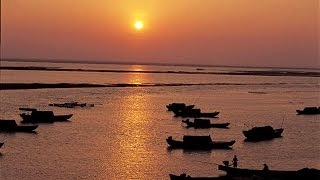
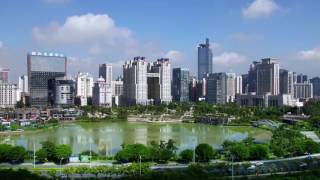
The largest fresh water lake in China and an important stop over for migrating birds.
Beautiful nature ...
|

|
|
|
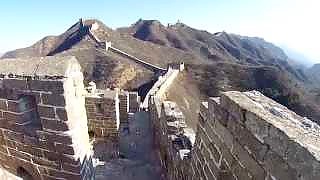
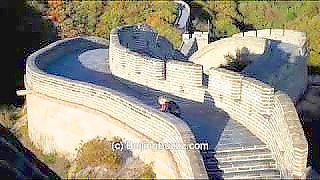
The Great Wall of China is an immensely long man-made wall that was built to keep out invaders.
The Great Wall spans nine provinces and its total length is 6,700 km (3,948 miles). The Great Wall extends from ShanHaiGuan (the 'Old Dragon Head'), a seaport along the coast of BoHai, in the east (near BeiDaiHe resort) to JiaYuGuan Pass in GanSu Province in the west. Like a giant dragon, the Great Wall of China winds its way across grasslands, deserts and mountains.
Listed as a World Heritage Site by UNESCO in 1987, the Great Wall ('Chang Cheng' in Chinese) is a true marvel and a testament to the long history of the Chinese civilization.
Today, people from all over the world visit to walk on the Great Wall of China, to stand on a watchtower and view the wall snaking into the distance. This treasure is now protected so that future generations can see the Great Wall with the same wonder and amazement as we do now.
Some parts of the Great Wall have been overwhelmed by the elements. Some parts have been covered by the desert. Others eroded by local people recycling the wall's materials for constructions in their villages. Nevertheless, the Great Wall in large part still stands in silent splendor, enduring the passage of time and greeting the changes of the seasons as it has done for many hundreds of years.
|

|
With The New Atlas ...
|

|
|
|
Sweeping scenes ...
|

|
The first film is from the CCTV Spring Festival Gala 2013, with singer Na Ying. The song : [Because of You, My Life is] A Warm Spring With Blooming Flowers. In 2015, the Spring Festival (Chinese New Year) runs from the 19th to the 25th February.
The second is from China's National Games Opening Ceremony in 2009. The song is Like A Dream.
The third film features the music 'Legend of Chinese Mountains' and is about the five sacred mountains of China and the Chinese love of nature and balance with nature.
Fourth is 'Your Collar', a romantic song from the imperial music of the Han Dynasty.
Fifth song is 'A Nation of Greatness and Courtesy' and is about the Chinese character of virtue and friendship. Greatness in Chinese thinking is virtue; all three core Chinese philosophies - Taoism, Buddhism and Confucianism - stress that strength and happiness (well-being) lies in balance, not power (dominance).
The last film features music from a documentary about the DaMing Palace (DaMing Gong) of the Tang Dynasty, at the heart of the dynasty's capital Chang'An (which means 'eternal peace'). The palace area is a little north east of the city of Xi'An in ShaanXi province.
|
|

|
UNESCO World Heritage Sites in China
The Great Wall (长城 Chángchéng): Located in Beijing, Hebei, Tianjin, Shaanxi, Inner Mongolia, Ningxia, and Shanxi. An ancient fortification stretching across China's northern border, built to protect against invasions.
Imperial Palaces of the Ming and Qing Dynasties in Beijing and Shenyang (北京和沈阳的明清皇宫 Běijīng hé Shěnyáng de Míng Qīng Huánggōng): Located in Beijing and Liaoning. Magnificent palace complexes representing China's imperial history and architecture.
Mausoleum of the First Qin Emperor (秦始皇陵 Qín Shǐ Huáng Líng): Located in Shaanxi. The burial site of Emperor Qin Shi Huang, known for the Terracotta Army.
Mogao Caves (莫高窟 Mògāo Kū): Located in Gansu. A complex of Buddhist cave temples containing exquisite murals and sculptures along the Silk Road.
Mount Taishan (泰山 Tàishān): Located in Shandong. A sacred mountain with cultural and historical significance, known for its temples, stone inscriptions, and natural beauty.
Mount Huangshan (黄山 Huángshān): Located in Anhui. A stunning mountain range known for its granite peaks, pine trees, hot springs, and mystical atmosphere.
Mount Emei Scenic Area, including Leshan Giant Buddha Scenic Area (峨眉山风景名胜区,包括乐山大佛风景名胜区 Éméishān Fēngjǐng Míngshèng Qū, Bāokuò Lèshān Dàfó Fēngjǐng Míngshèng Qū): Located in Sichuan. A sacred Buddhist mountain with monasteries, temples, and the world's largest Buddha statue.
Old Town of Lijiang (丽江古城 Lìjiāng Gǔchéng): Located in Yunnan. A well-preserved ancient town with traditional Naxi architecture, cobblestone streets, and canals.
Peking Man Site at Zhoukoudian (周口店北京人遗址 Zhōukǒudiàn Běijīngrén Yízhǐ): Located in Beijing. A significant archaeological site containing fossils and artifacts related to Peking Man.
The Classical Gardens of Suzhou (苏州古典园林 Sūzhōu Gǔdiǎn Yuánlín): Located in Jiangsu. A collection of exquisite gardens dating back to the Song Dynasty, known for their harmony between natural landscapes and human creations.
Mount Wuyi (武夷山 Wǔyíshān): Located in Fujian. A scenic area with dramatic cliffs, gorges, rivers, and ancient cultural sites, recognized for its biodiversity and tea cultivation.
Ancient Building Complex in the Wudang Mountains (武当山古建筑群 Wǔdāngshān Gǔjiànzhù Qún): Located in Hubei. A complex of Taoist temples and monasteries nestled in the Wudang Mountains, renowned for their architecture and martial arts heritage.
Historic Ensemble of the Potala Palace, Lhasa (布达拉宫历史建筑群 Bùdálā Gōng Lìshǐ Jiànzhù Qún): Located in Tibet. A symbol of Tibetan Buddhism and culture, the Potala Palace is an architectural masterpiece and former residence of the Dalai Lama.
Mountain Resort and its Outlying Temples, Chengde (承德避暑山庄及其周围寺庙 Chéngdé Bìshǔ Shānzhuāng jí Qí Zhōuwéi Sìmiào): Located in Hebei. A vast imperial garden and palace complex featuring traditional Chinese architecture and landscaped gardens.
Temple and Cemetery of Confucius and the Kong Family Mansion in Qufu (曲阜孔庙、孔府及孔林 Qūfù Kǒngmiào, Kǒngfǔ jí Kǒng Lín): Located in Shandong. A sacred site dedicated to Confucius, including his temple, family mansion, and forest of tablets.
Summer Palace, an Imperial Garden in Beijing (颐和园 Yíhé Yuán): Located in Beijing. A masterpiece of Chinese landscape garden design, the Summer Palace features pavilions, temples, and the famous Longevity Hill and Kunming Lake.
Temple of Heaven: an Imperial Sacrificial Altar in Beijing (北京天坛:天坛地区的祭坛 Běijīng Tiāntán: Tiāntán Dìqū de Jìtán): Located in Beijing. A complex of religious buildings where emperors of the Ming and Qing dynasties performed sacrificial rituals for good harvests.
Mount Qingcheng and the Dujiangyan Irrigation System (青城山-都江堰 Qīngchéng Shān - Dūjiāngyàn): Located in Sichuan. A Taoist mountain and ancient irrigation system recognized for their cultural, historical, and technological significance.
Dazu Rock Carvings (大足石刻 Dàzú Shíkè): Located in Chongqing. A series of Buddhist rock carvings dating back to the 9th century, depicting Buddhist scriptures, deities, and scenes of daily life.
Mount Lushan National Park (庐山 Lúshān): Located in Jiangxi. A scenic area known for its natural beauty, cultural sites, and historic role in Chinese literature and art.
Lushan National Park (庐山国家公园 Lúshān Guójiā Gōngyuán): Located in Jiangxi. A UNESCO World Heritage Site known for its rich biodiversity, unique geological formations, and cultural landmarks.
Yungang Grottoes (云冈石窟 Yúngāng Shíkū): Located in Shanxi. A complex of ancient Buddhist cave temples containing thousands of statues and intricate carvings, dating back to the 5th century.
Three Parallel Rivers of Yunnan Protected Areas (云南三江并流地区 Yúnnán Sānjiāng Bìngliú Dìqū): Located in Yunnan. A UNESCO World Heritage Site known for its rich biodiversity and unique geographical features.
Capital Cities and Tombs of the Ancient Koguryo Kingdom (古高丽国都及陵墓 Gǔ Gāolí Guó Dū jí Língmù): Located in Liaoning, Jilin, and Heilongjiang. Containing archaeological remains of the ancient Koguryo Kingdom.
Historic Centre of Macao (澳门历史城区 Àomén Lìshǐ Chéngqū): Located in Macau. Known for its historic architecture, cultural landmarks, and fusion of Chinese and Portuguese influences.
Sichuan Giant Panda Sanctuaries - Wolong, Mt Siguniang and Jiajin Mountains (四川大熊猫栖息地:卧龙、四姑娘山和夹金山 Sìchuān Dàxióngmāo Qīxīdì: Wòlóng, Sìgūniáng Shān hé Jiājīn Shān): Located in Sichuan. Protecting habitats of the giant panda and other rare species.
Yin Xu (殷墟 Yīnxū): Located in Henan. The ruins of the ancient capital of the Shang Dynasty, known for its oracle bone inscriptions and archaeological significance.
Tu Fu's Thatched Cottage (杜甫草堂 Dù Fǔ Cǎotáng): Located in Sichuan. The former residence of the famous Tang Dynasty poet Du Fu, now a museum dedicated to his life and works.
Mount Sanqingshan National Park (三清山 Sānqīngshān): Located in Jiangxi. Known for its dramatic granite peaks, lush forests, and unique rock formations.
Wulingyuan Scenic Area (武陵源风景名胜区 Wǔlíngyuán Fēngjǐng Míngshèng Qū): Located in Hunan. Famous for its towering sandstone pillars, deep ravines, and lush vegetation.
Historic Villages of China - Xidi and Hongcun (中国古村落-西递、宏村 Zhōngguó Gǔ Cūnluò - Xīdì, Hóng Cūn): Located in Anhui. Featuring well-preserved traditional villages with ancient architecture and cultural heritage.
Longmen Grottoes (龙门石窟 Lóngmén Shíkū): Located in Henan. Containing thousands of Buddhist statues and carvings carved into limestone cliffs.
Mount Wutai (五台山 Wǔtáishān): Located in Shanxi. A sacred Buddhist mountain known for its monasteries, temples, and cultural significance.
China Danxia (中国丹霞 Zhōngguó Dānxiá): Located in various provinces. A series of unique landscapes characterized by red sandstone formations, known for their natural beauty and geological significance.
Historic Monuments of Dengfeng in "The Centre of Heaven and Earth" (登封历史建筑群 Dēngfēng Lìshǐ Jiànzhù Qún): Located in Henan. Containing ancient religious sites and martial arts traditions.
Site of Xanadu (元上都城址 Yuán Shàngdū Chéngzhǐ): Located in Inner Mongolia. The ruins of Kublai Khan's summer capital, known for its historical and cultural significance.
Mount Emei Scenic Area, including Leshan Giant Buddha Scenic Area (峨眉山风景名胜区,包括乐山大佛风景名胜区 Éméishān Fēngjǐng Míngshèng Qū, Bāokuò Lèshān Dàfó Fēngjǐng Míngshèng Qū): Located in Sichuan. A UNESCO World Heritage Site known for its sacred Buddhist mountain and giant Buddha statue.
Qin and Han Dynasties: Mausoleums and Goguryeo Ancient Tombs (秦汉与高句丽古墓群 Qín Hàn yǔ Gāojǔlí Gǔ Mù Qún): Located in Liaoning and Jilin. Containing ancient mausoleums and tombs.
|