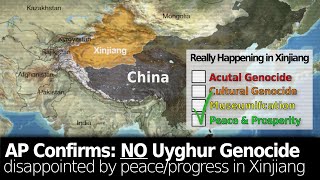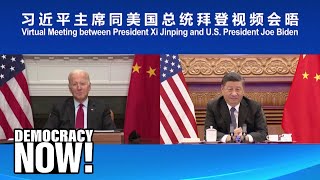
Planning war on China – part 8

With The New Atlas ...

[640],shadow=true,start=,stop=

Bonus film - with Daniel Dumbrill ...

[320],shadow=true,start=,stop=

Bonus film 2 - with NuMuves ...

[320],shadow=true,start=,stop=

Bonus film 3 - with Professor Michael Hudson ...

[320],shadow=true,start=,stop=

Bonus film 4 - with George Galloway and Afshin Rattansi ...

[320],shadow=true,start=,stop=

Bonus film 5 - propaganda theater ...

[320],shadow=true,start=,stop=

Related Videos


Featured Videos

A trip to China 中国, 2012
ShenZhen’s beautiful new metro lines and stations
With Rafa Goes Around! ...
Why is Western media so biased against China ?
With Cyrus Janssen ... Comment by Gustavo Andrés ... There is an overwhelming assumption in the West that China’s Achilles heel is the state: that it lacks legitimacy. This is the underlying reason why Westerners believe that China’s transformation is unsustainable: that the political system cannot survive. It would be wrong to suggest that attitudes have not shifted: the endurance of the reform period, now over 35 years old, and the scale of its achievement have bred a growing if still grudging respect, and a less apocalyptic view of Chinese political change. Few now regard it to be imminent and many have extended their time horizons somewhat into the future. Nevertheless, most Westerners still regard China’s present political order as lacking legitimacy and as ultimately unsustainable. In the post 1945 period, Westerners have come to believe that Western-style democracy – essentially universal suffrage and a multi-party system – is more or less the sole source of a government’s legitimacy. This is a superficial and ahistorical position. Western-style democracy does not ensure the legitimacy of a regime in the eyes of its people: Italy is perhaps the classic example, with successive governments over a long historical period experiencing a chronic lack of legitimacy. And what of China? Although it does not have Western-style democracy, there is plenty of evidence – for example the Pew Global Attitude surveys and the work of Tony Saich at the Harvard Kennedy School – that the Chinese government enjoys high levels of support and legitimacy, much higher indeed than those of Western governments. How do we explain this? Clearly the reason is not Western-style democracy because China has not chosen this path. The late Lucian W. Pye, in his book ‘Asian Power and Politics’, argues that Western scholars have, in their understanding of politics, prioritised political systems over political cultures: Pye argues, correctly in my view, that the opposite is the case. His insight is highly relevant to the Chinese case. The relationship between the state and society in China is very different from that which characterises Western societies. There are three key elements. First, China is primarily a civilization-state rather than a nation-state, with the overriding and extremely difficult age-old task of government being to maintain the unity of China and its civilization. This has lent the state an enduring authority, importance and centrality in China that is very different from the Western nation-state tradition. The state is intrinsic to China in a way that this is not true in Western societies: they are, in effect, in large degree synonymous. Furthermore the Chinese regard the state in some degree as an expression and extension of themselves. Second, whereas in Western societies the state is seen in an instrumentalist and utilitarian way – in other words, what will it do for me? – in China, following from the Confucian tradition and the idea that the Emperor should model himself on the father’s role as the head of the family, the state is perceived in a familial way, whence the expression ‘nation-family’, or the idea of China as an extended family. Or, to put it another way, in Western societies the state is viewed as an external and somewhat artificial construct, for the Chinese it is an intimate. Third, a much higher premium is placed on the efficiency and efficacy of the state than in the West, whence the importance of meritocracy in the recruitment of public servants. In the West, discussion about the state largely revolves around the manner by which the government is selected, in China, by way of contrast, the competence of the state assumes priority. Fourthly, following from the previous point, the state is expected and required to deliver in China. Over the last few decades, of course, it has presided over and masterminded a huge transformation, the most remarkable in modern economic history. The contrast between the performance of the Chinese and Western economies is manifest. In summary, the relationship between the state and society in China and the West is profoundly different and the reasons lie in the historical and cultural differences between them. They can and should learn from each other but they will remain distinct. So what of the future? As I mentioned at the outset, it is axiomatic in the West that sooner or later China will face a crisis of governance that will result in profound reform along Western lines. In reality, it seems far more likely that the crisis of governance will occur in the West than China. The United States and Europe are in decline and, as a consequence, their ruling elites and political systems are already suffering from declining legitimacy and authority, a process that is likely to continue. China, in contrast, is a rising power whose ruling elite is likely to enjoy growing status and prestige as a consequence. China, though, faces its own kind of governance challenge. The country is changing at extraordinary speed. If one thinks of how the life of an ordinary person has changed over the course of the last three decades, then this is a measure of how everything else, including political rule, must also change in order to survive. Of course, transparency, representivity and accountability have been transformed since Mao’s death, but this is a dynamic process and arguably the greatest changes still lie in the future. It is not that China needs to or should change its system – it has stood the test of time and managed to stay abreast of and lead the wider transformations – but, this notwithstanding, more profound ways must be found to modernise the political system and its institutions if they are to meet the demands and expectations of a very different society.
The beautiful BeiHai Park and Grand View Garden, BeiJing
BeiHai Park 北海公园 ... Grand View Garden / DaGuanYuan 大观园 ...
Rice noodles 米粉面条, from scratch …
Mǐfěn Miàn. A staple of YunNan 'small eats' 小吃 (XiǎoChī) street food dishes. With DianXi XiaoGe #滇西小哥 ...
Lavender Manor, NingXia
The life and legacy of Zhou EnLai – an interview with professor Ken Hammond
5th March 2023. To mark the 125th anniversary of the birth of Zhou EnLai - one of the top leaders of the Chinese Revolution, and Premier of People's China from 1949 until his death in 1976 - we conducted an extensive interview with Professor Ken Hammond about Zhou's life and legacy. The interview covers Zhou EnLai's formation as a revolutionary; his role in the early years of the Chinese Revolution in the 1920s; his working relationship with Mao Zedong; his contribution to Marxist understanding of socialist foreign policy; his role in establishing links of solidarity between China and Africa; his role in the negotiations with Henry Kissinger and Richard Nixon that brought about the start of a rapprochement between the US and China; his experiences in the Cultural Revolution; and his lasting legacy, both in China and globally. Ken Hammond is a professor of East Asian and Global History at New Mexico State University, founding director of the Confucius Institute at New Mexico State University, and an activist with Pivot to Peace. He’s also a member of the Friends of Socialist China advisory group, and is working on a biography of Zhou EnLai. He is interviewed by our co-editor Carlos Martinez.
Something different – A.I. – benefits and concerns
With Lemmino ... With DeepMind - human (Korean Lee Sedol, Go Champion, with 18 World Titles) vs. AI, in the ancient Chinese board game of Go. How AI can help find things humans have missed, and what about when AI becomes smarter than us ...
Flying over China 中国 …
A bird's eye view of HuangShan Mountain, the Great Wall of China, YangShuo, GuangXi province, and Hong Kong. Beautiful !

Tag search ?