Planning war on China – part 14 : Silicon Valley and the US Offence department


With NuMuves ...

[640],shadow=true,start=,stop=
[320],shadow=true,start=,stop=

Bonus film - on Venezuela, with Ben Norton and The Moderate Rebels ...

[320],shadow=true,start=,stop=

On Nicaragua ...

[320],shadow=true,start=,stop=

On the MSM ...

[320],shadow=true,start=,stop= [320],shadow=true,start=,stop=

On Ethiopia ...

[320],shadow=true,start=,stop= [320],shadow=true,start=,stop=

BeiJingBuzzz - because truth is sacred.

Related Videos


Featured Videos

In the footsteps of Marco Polo along the Silk Road and his many years in China
With TRACKS - Travel Documentaries ... The Travels of Marco Polo Introduction Marco Polo, the Venetian explorer, is renowned for his extensive travels along the Silk Road during the 13th century. His journey provided Europe with one of the earliest comprehensive glimpses of the East. This guide focuses on Marco Polo's travels, with a particular emphasis on his time in China and the significant experiences he documented in his book, "The Travels of Marco Polo." Early Journey Marco Polo embarked on his journey to Asia in 1271, at the age of 17, accompanied by his father, Niccolò, and his uncle, Maffeo Polo. The Polo family traveled overland through the Middle East, passing through regions such as Persia (modern-day Iran) and the Pamir Mountains, enduring harsh climates and difficult terrains. Their ultimate goal was to reach the court of Kublai Khan, the Mongol ruler of China. Arrival in China In 1275, after nearly four years of travel, Marco Polo and his family arrived at the court of Kublai Khan in Shangdu (Xanadu), present-day Inner Mongolia. Kublai Khan, impressed by their knowledge and skills, took a particular interest in Marco Polo, employing him as a diplomat and sending him on various missions throughout his empire. Marco Polo's Time in China Service to Kublai Khan Marco Polo served Kublai Khan for 17 years, undertaking diplomatic missions that allowed him to travel extensively across China and other parts of Asia. He became well-acquainted with the Mongol administration and the diverse cultures within the empire. His detailed observations and accounts provided valuable insights into the life and governance of the Mongol Empire. Explorations and Observations During his time in China, Marco Polo visited numerous cities and regions, documenting their unique aspects. Some key places he described include: Beijing (Khanbaliq): The capital of Kublai Khan's empire, Beijing was a bustling metropolis with grand palaces, markets, and administrative buildings. Marco Polo marveled at the city's size, organization, and the wealth displayed by its inhabitants. Hangzhou (Quinsai): Marco Polo described Hangzhou as one of the most magnificent cities in the world, renowned for its beautiful canals, thriving commerce, and vibrant culture. He noted its sophisticated infrastructure, including bridges, markets, and gardens. Suzhou and its Silk Production: Marco Polo provided detailed accounts of silk production in Suzhou, highlighting the meticulous process of harvesting silk from silkworms and weaving it into luxurious fabrics. He was fascinated by the craftsmanship and the high demand for silk across the empire. Yunnan Province: During his travels, Marco Polo ventured into Yunnan, describing its diverse ethnic groups and unique customs. He also noted the region's rich natural resources, including gold and other minerals. Tibet: Marco Polo's travels took him to the Tibetan Plateau, where he documented the distinctive culture, religious practices, and the high-altitude lifestyle of the Tibetan people. Technological and Cultural Observations Marco Polo's accounts also included descriptions of various technologies and cultural practices he encountered in China: Paper Money: Marco Polo was fascinated by the use of paper money, a novel concept to Europeans at the time. He described the process of printing and distributing paper currency, which facilitated trade across the vast empire. Postal System: The efficient postal system, known as the "Yam," impressed Marco Polo. This network of relay stations and couriers enabled swift communication and the transportation of goods and information across great distances. Innovations and Inventions: Marco Polo documented various Chinese inventions, such as gunpowder, printing, and the compass, which later had a profound impact on European technology and exploration. Cultural Exchange: Marco Polo's interactions with diverse cultures within the Mongol Empire enriched his understanding of different customs, religions, and lifestyles. His accounts reflect the multicultural nature of the Silk Road and the exchange of ideas and knowledge it facilitated. Return to Venice In 1292, after spending 17 years in China, Marco Polo and his family decided to return to Venice. They joined a Mongol princess's escort on her journey to Persia, eventually making their way back to Europe via the Indian Ocean and the Arabian Sea. They arrived in Venice in 1295, after 24 years of travel. Legacy of Marco Polo Marco Polo's detailed accounts of his travels were compiled into a book, "The Travels of Marco Polo," which became one of the most important sources of information about the East for Europeans. His descriptions of the wealth, culture, and innovations of China and other Asian regions inspired future explorers, including Christopher Columbus, and significantly influenced European knowledge and perceptions of Asia. Marco Polo's travels along the Silk Road highlighted the interconnectedness of the world through trade and cultural exchange, and his legacy continues to be celebrated as a testament to the spirit of exploration and curiosity.
The new GuangZhou tram sightseeing line
With Walk For You ...
More about narcissism
Beautiful WuYuan, JiangXi province
WuYuan, known as the "most beautiful countryside in China", with at least 50 old villages, is located in the northeast of JiangXi province, and near Mount HuangShan and JingDeZhen. With Walk East ... Max (Walk East) : Wuyuan is home to a few of the well-preserved ancient architecture in China. Each of those ancient structures has a unique appearance as well as structure. They emerge from among the emerald green mountains and trees, clear rivers along with the crisscrossing paths between the fields. Those structures were built in 740 during the Tang Dynasty; its remoteness and inconvenient transportation protecting its villages' beauty from a large amount of tourists. Local people there can enjoy the pure, clean brooks, seemingly delicate wooden buildings, unique bridges as well as the tranquil lifestyle, etc... This village has turned into a ecological, cultural as well as tourist demonstration center of China. The ancient Architectural complexes,caves, blue water, trees as well as rural sceneries; all these form a typical Chinese countryside scene Wuyuan has become a well known town in the world features in famous Huizhou local culture as well as charming idyllic scenery. Beijing Opera, Hui Opera, the Luo Dance known as the "Dance Live Fossil" as well as the charming tea performance, all these make Wuyuan fascinating tourism destination. 【Likeng Village】 Likeng Village is a cluster of houses constructed along a brook. It is said to be the most scenically beautiful village in the town. The brook is two to three meters wide spanned at different points by makeshift bridges. A rolling stream through the village lived by 260 peasant households along with ancient buildings with its pink walls, black tiles as well as beautiful girls who are washing laundry reflecting from the stream look like a natural scenery. 【Visit Local Ancient Village in Hui-style】 Wuyuan is the birthplace of the Huizhou culture. Villages around are must go, and you will be attracted by the quiet and simple countryside life there. noticeable Huizhou-style architecture can be found in these old villages, such as, arches, stone tablets, stone bridges, ancient stages, etc. Wuyuan is a county in northeastern Jiangxi province. It is renowned for its beautiful countryside and well-preserved ancient Huizhou villages and architecture. Many of the buildings and villages date from the Tang dynasty and have been protected by the county’s remoteness and relatively inconvenient transportation. Highlights and Travel Tips The area is famous for the fields of yellow rapeseed flowers that surround the villages in March and April, which are among the most beautiful in China and will delight photographers. One of the best places to see the flowers is hills surrounding the village of Jiangling. Popular villages and sights around the county include Likeng Village, Mount Dazhang (a beautiful area filled with soaring mountains and crashing waterfalls that is as yet undiscovered by tourism), Rainbow Bridge (a covered bridge), and Jiangling Village.
China’s metro systems
The world's largest. This is what one can do if invest in one's own country rather than trying to plunder the world. A look at the ShangHai metro system, with Barrett ...
LongTan Park 龙潭公园, BeiJing 北京
Longtan Park is located about 1.5 km east of the Temple of Heaven. Next to the west side of Longtan Park is the Beijing Amusement Park that features a ferris wheel and other rides. LongTan ('Dragon Pond') Park features the large Dragon Lake, with 'moon bridges', weeping willows, rock gardens, dragon boats, tea houses and restaurant, winding jogging track, exercise areas and play areas for children. There is also a beautifully curving pavilion with a dragon roof and pillars decorated with golden spiralled dragons. Indeed, the dragon motif is featured in many places throughout Longtan Park. This is a prime site for the Lantern Festival in Beijing when the whole park is illuminated with large colorful lanterns.
Why the West is using the Uyghurs
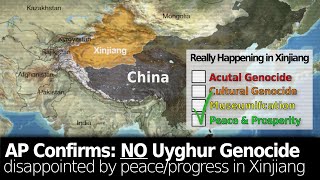
The XinJiang region, (north) west China, has been under Chinese rule since at least the 18th Century. While bombing Muslims everywhere else, the Uyghurs in China (a Turkic people in XinJiang) are a useful tool for Western attempts to destabilize and break up China. Just like the useful idiots in Hong Kong, and Tibet. The Uyghurs have autonomous regions, yet some fall under the Western spell (money) to push for unjustified 'independence'. The Main Stream Media (MSM), and much of the (often fake) 'independent media', in the West have been pushing a "repression" fable strongly for some time, using every propaganda trick in the book; plus the usual 'human rights' (you're free to do as you're told) and 'democracy' (you're free to choose one of the big money picks) scams. Yet wherever 'color revolutions' and invasions by the West have taken place, real repression followed. The MSM tell an, at first glance, convincing story - it sounds good ("how terrible!"), till one scratches the surface. In reality, the West doesn't really care less about the Uyghurs; it's all about trying to break up China. Emotionally charged lie - repeated ad nauseam. Don't be fooled. Uyghurs, Hong Kong organised crime and murderers extradition treaty 'protests', Tibet, 'trade war', South China Sea islands, etc., are all part of a total (all fronts) war on China. For now, it's predominantly an info war; but also a poke, poke, poke real war. And all because the US feels it has the right to rule the whole world (although it cannot even take care of itself). It's not the will of the American (and puppets) people; just the elite (some of).
The MaiJiShan Grottoes 麦积山石窟, TianShui, GanSu province
The MaiJiShan Grottoes are filled with thousands of Buddhist sculptures. These were carved from the Wei dynasty to the Song dynasty by Buddhist monks who first came here via the North Silk Road. The grottoes are close to TianShui, which is the second largest city in GanSu province in central China, with a population of approximately 3.5 milion. The city lies along the route of the ancient Northern Silk Road by the Wei River, through which much of the trade flowed between China and the West. The Qin state, the founding dynasty of China, arose in this part of China.
Geopolitics update, August 2024 (4)
With Ben Norton and Brian Becker ... With Vijay Prashad and Geopolitics Demystified ... With Aaron Good ... With Inside China Business ... With Yanis Varoufakis ...

Tag search ?