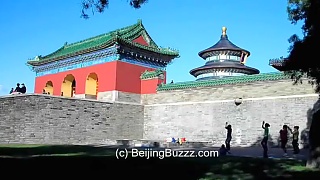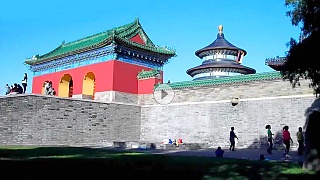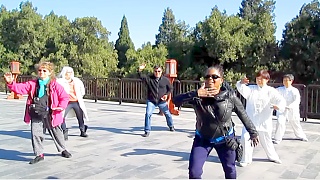
The beautiful Temple of Heaven, BeiJing

With Beijing Old Liu ...

[640],shadow=true,start=,stop=

Welcome to the Temple of Heaven

Explore the ancient beauty and cultural significance of the Temple of Heaven in Beijing.

Introduction

The Temple of Heaven is a complex of religious buildings situated in the southeastern part of central Beijing. It is renowned for its architectural beauty and historical significance.

Location

The Temple of Heaven is located in the Dongcheng District of Beijing, easily accessible from various parts of the city.

History

The Temple of Heaven was constructed from 1406 to 1420 during the reign of the Yongle Emperor, who also oversaw the construction of the Forbidden City. The temple complex was used by the emperors of the Ming and Qing dynasties for annual ceremonies of prayer to Heaven for a good harvest.

The temple complex was expanded and renovated during the reign of the Jiajing Emperor in the 16th century and again during the reign of the Qianlong Emperor in the 18th century. It was designated a UNESCO World Heritage Site in 1998.

Attractions

  • Hall of Prayer for Good Harvests: The iconic triple-gabled circular building, used by emperors to pray for good harvests.
  • Imperial Vault of Heaven: A circular building surrounded by a smooth circular wall, famous for its Echo Wall.
  • Circular Mound Altar: An open-air altar platform where the emperor would worship Heaven during the winter solstice.
  • Seven Star Stones: A group of large stones with historical and cultural significance.
  • Ancient Cypress Trees: The garden areas of the complex are home to many ancient cypress trees, some over 600 years old.

Activities

  • Historical Tours
  • Cultural Performances
  • Photography
  • Guided Walks
  • Seasonal Festivals and Events

Facilities

  • Visitor Center
  • Restrooms
  • Gift Shops
  • Cafes and Restaurants
  • Parking Lots
  • Wheelchair Access

Visitor Tips

  • Wear comfortable walking shoes.
  • Bring water and snacks, especially if you plan to stay for several hours.
  • Visit early in the morning or late in the afternoon to avoid crowds.
  • Check the weather forecast and dress appropriately.
  • Respect the cultural significance of the site; behave appropriately and follow all rules and guidelines.

Beijing, the capital city of China, is a vibrant metropolis steeped in history, culture, and modernity. Here's a brief overview of what you can expect as a tourist in Beijing:

Historical Landmarks:
The Great Wall of China: One of the most iconic structures in the world, the Great Wall is easily accessible from Beijing. Mutianyu and Badaling sections are popular among tourists.

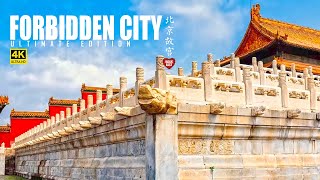
Forbidden City (Palace Museum): A UNESCO World Heritage Site, this vast imperial palace complex was home to Chinese emperors for over 500 years. It houses numerous halls, courtyards, and historical artifacts.

Temple of Heaven: A masterpiece of Chinese architecture, this ancient temple complex served as a place of worship for emperors to pray for good harvests.

Summer Palace: A stunning ensemble of lakes, gardens, and palaces, the Summer Palace served as a retreat for emperors during the Qing dynasty.

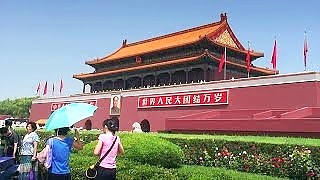
Tiananmen Square: One of the largest city squares in the world, Tiananmen Square is flanked by important landmarks such as the Monument to the People's Heroes, the Great Hall of the People, and the Mausoleum of Mao Zedong.

Cultural Sites:
Beijing Hutongs: Explore the narrow alleyways and traditional courtyard residences of Beijing's historic neighborhoods. You can take a rickshaw tour or simply wander around on foot.

Beijing Opera: Experience traditional Chinese opera performances at venues like the Liyuan Theater or the Chang'an Grand Theatre.

798 Art District: A hub of contemporary art and culture, this former industrial area is now home to numerous galleries, studios, and cafes.

Modern Attractions:
Olympic Park: Visit iconic structures such as the Bird's Nest (National Stadium) and the Water Cube (National Aquatics Center) from the 2008 Beijing Olympics.

CBD (Central Business District): Marvel at the futuristic skyline of Beijing's modern business district, which includes landmarks like the CCTV Headquarters and the China World Trade Center Tower III.

Culinary Delights:
Peking Duck: Indulge in Beijing's most famous dish, crispy roast duck served with pancakes, scallions, and hoisin sauce.

Street Food: Explore the city's vibrant street food scene and sample local delicacies like jianbing (savory crepes), lamb skewers, and dumplings.

Practical Tips:
Transportation: Beijing has an extensive public transportation system, including the subway, buses, and taxis. However, traffic can be heavy, so plan your travels accordingly.

Language: While English is not widely spoken, especially outside tourist areas, many signs and transportation announcements are in English. It's helpful to carry a translation app or a phrasebook.

Weather: Beijing experiences four distinct seasons, with hot summers and cold winters. The best times to visit are spring (April to June) and autumn (September to October) when the weather is mild and comfortable.

Etiquette: Respect local customs and traditions, such as removing your shoes before entering someone's home and using both hands to pass or receive items.

Beijing offers a rich tapestry of experiences for tourists, blending ancient heritage with modern innovations. Whether you're fascinated by history, culture, or culinary delights, there's something for everyone in this dynamic city.
Related Videos


Featured Videos

Song of the Road 路之歌
With MiuMiu (周昭妍 Zhōu ZhāoYán) and famous Chinese indie band Tong Yang 和痛仰乐队的叔叔们一起祝大家六一节快乐 Song by Chinese rock band 痛苦的信仰 (Miserable Faith), 2008. Love this ...
Emotional stress and our health / illness
Thoughts on how emotional stress / trauma can get stuck / repressed (suppressed / buried / hidden) and have a big impact on our current health / 'diseases'. The insights of Pavlov (conditioning) and Freud (repression, the unconscious, projection, ...) remain key facts in psychology ... Emotional stress is being stuck in the past, in some deep-rooted ways. To live in the now, those roots must be uncovered and removed. True living is not reliving the past, or fearing the future; it is about being in the now, detached from past conditioning / beliefs, and the ensuing fear of / dreams of the future. Eat when hungry, sleep when tired, live while you're alive. What you do now, is what will live on. Simple as that.
Official racism. Reality is so very different from the ‘official’ / MSM narrative / fairy tale – DON’T MISS THIS !
Planning War On China part 40 (the encore). From now, all similar content will be on the new Geopolitics page, so do check that out and bookmark. Something Different, health, and psychology videos are likely to also move to their own pages. So we will still cover all these aspects of life, but have more time to focus on Chinese culture and China travel. *************************** Official racism is a very important fact to consider, and because it is is based on propaganda, can be easily missed for what it really is. Yet once seen, it is all so clear. Us and Them - is the sales pitch of supremacists and bomb companies. That is ALL it is. There is no 'us and them'; that is just a scam to fool you into obedience / subservience / enslavement. The real schism is that there are real / open-eyed people, and then there are the brainwashed / believers people. Simple as that. Puppets at the top; puppets at the bottom. One life, one world, one family. One has love, or one does not. Real love doesn't have targets; real love is a light that shines in all directions. Onto the video film ... With George Galloway in conversation with Jerry's Take on China ... Bonus films ... George at his very best - don't miss it ... What is more important - life or money (power) ? Simply believe ? Or be free to see reality ?? No longer puppet. Live more ... Because it is not about 'me' (that is the scam / fantasy, and a big topic in itself - 'your problems are all your fault', is part of it); it is really about 'WE'. In China, the people are family. In the West, the people are livestock. And that is the 'threat'. [ video v=fIxPv2Dn_P0 ] Oliver Stone interviews Vladimir Putin ... Taiwan the next Ukraine ? ... Lee Camp ... [ video v=OSkpIq3T-Zc ] Racism is racism is racism. There is NO excuse, no matter how 'official' it is sold to you. Something like 3 million died in the Vietnam war (not including the carpet bombing of Laos and Cambodia), alone. This is what racism entails. How many times will this lie play out ? Meanwhile ... Peace.
Kindergartens in China
With Mei's World ...
Chip Wars – how the supremacist US tries to squash all other countries’ development
With TechAnalytics Hub ... (Part 3 coming soon)
The Hanging Temple of HengShan 悬空寺, and the YunGang Grottoes 云冈石窟
Near DaTong, ShanXi province. The Hanging Temple (XuanKong Temple 悬空寺, XuánKōng Sì) is constructed on a vertical cliff face, 75 meters (245 feet) above the ground, at the foot of the HengShan mountain. The temple lies about 64 kilometers south east of the city of DaTong. Together with the YunGang Grottoes, the Hanging Temple is one of the main tourist attractions and historical sites in the DaTong area. Built more than 1,600 years ago, this temple is notable also as the only surviving temple combining all three Chinese traditional religions/philosophies: Buddhism, Taoism, and Confucianism. The structure is kept in place with oak crossbeams slotted into holes chiseled into the cliffs. The main supportive structure is hidden inside the rock. The temple is located in a small canyon basin, and is situated under a prominent summit that helps protect the temple from rain and sunlight. The YunGang Grottoes are located at the southern foot of Mount WuZhou, 16 kilometers west of DaTong. There are 250 caves here containing many thousands of carvings and statues.
Places to see in NanJing 我和南京有个约会
NanJing is the provincial capital of JiangSu, east China, not far from Shanghai.
A guide to visiting HuaShan, ShaanXi province
Mount Hua, or HuaShan, is one of China's Five Great Mountains, renowned for its steep trails, breathtaking views, and significant Taoist history. Located in Shaanxi Province, near the city of Huayin, Huashan attracts adventurers and pilgrims alike. This guide provides an in-depth look at the best attractions, activities, and tips for visiting Huashan. Top Attractions The Five Peaks of Huashan Mount Hua consists of five main peaks, each offering unique scenery and experiences: East Peak (Zhaoyang Peak): Known as the "Sunrise Peak," it is the best spot to watch the sunrise. West Peak (Lianhua Peak): Also called the "Lotus Peak," it is famous for its striking rock formations that resemble a lotus flower. South Peak (Luoyan Peak): The highest of the five peaks at 2,154 meters, offering panoramic views. North Peak (Yuntai Peak): Known as the "Cloud Terrace Peak," it serves as the starting point for many hikes. Central Peak (Yunv Peak): Also known as the "Jade Maiden Peak," it is named after a Taoist legend. Huashan Plank Walk The Huashan Plank Walk is one of the most thrilling attractions on the mountain. The narrow wooden walkway is attached to the sheer cliff face of the South Peak, offering an adrenaline-pumping experience and stunning views. Chess Pavilion Perched on a precarious rock, the Chess Pavilion is a small structure with legendary associations. According to legend, it is where a deity played chess with a mortal. Taoist Temples Mount Hua is home to several ancient Taoist temples, including the Jade Spring Temple at the base of the mountain and the Yuquan Temple. These temples are important pilgrimage sites and offer a glimpse into the mountain's spiritual significance. Geology of Huashan Mount Hua is part of the Qinling Mountain range and is primarily composed of granite. The mountain's distinctive steep slopes and sharp peaks are the result of tectonic uplift and erosion over millions of years. The granite rock faces provide both a dramatic landscape and a challenging environment for climbers. Touring Huashan Planning Your Visit Visiting Huashan requires careful planning due to its challenging terrain and the variety of routes available. A typical visit can take one to two days, depending on the routes and peaks you choose to explore. Here is a suggested itinerary: Day 1: North Peak and the Plank Walk Morning: Take the cable car from the East Gate to the North Peak. Spend the morning exploring the North Peak and its surrounding trails. Afternoon: Head towards the South Peak for the Huashan Plank Walk. Ensure you have the proper safety gear and follow all safety instructions. Evening: Consider spending the night on the mountain at one of the guesthouses or temples to experience the sunrise from one of the peaks. Day 2: The Five Peaks Early Morning: Watch the sunrise from the East Peak. Mid-Morning: Hike to the Central Peak, then continue to the West Peak to see the Lotus Flower Rock. Afternoon: Ascend to the South Peak, the highest peak, for panoramic views. Descend back to the North Peak and take the cable car down. Activities and Experiences Hiking Huashan offers challenging hikes with rewarding views. Trails are steep and can be narrow, requiring a good level of fitness and caution. Popular routes include the ascent from the East Gate to the North Peak and the circular route covering the five peaks. Photography The dramatic landscapes of Huashan provide excellent opportunities for photography. Key spots include the sunrise from the East Peak, the Plank Walk on the South Peak, and the panoramic views from the highest point. Local Cuisine After a day of hiking, try local Shaanxi cuisine, known for its hearty and flavorful dishes. Specialties include biangbiang noodles, roujiamo (Chinese hamburger), and various dumplings. There are several restaurants and food stalls at the base of the mountain and near the East Gate. Travel Tips Best Time to Visit The best times to visit Huashan are spring (April to June) and autumn (September to November) when the weather is mild and the views are clear. Summer can be hot and crowded, while winter can be cold and snowy, making some trails hazardous. Getting There Huashan is accessible by train, bus, and car. The nearest major city is Xi'an, from where you can take a high-speed train to Huashan North Railway Station. From there, shuttle buses or taxis can take you to the mountain's entrances. Accommodation Accommodation options range from budget hostels to mid-range hotels in Huayin City. For a unique experience, consider staying overnight on the mountain in a guesthouse or temple. This allows you to catch the sunrise from one of the peaks. Tickets and Passes Purchase entrance tickets at the mountain's gates. There are separate tickets for the cable cars and the Plank Walk. Consider buying a multi-day pass if you plan to explore all five peaks. Guides and Tours Hiring a local guide can enhance your experience by providing insights into the mountain's history, culture, and geology. Many tour operators offer packages that include transportation, tickets, and guided tours.
GuiLin 桂林 photo tour : cormorant fishing, river rafting and landscape photography
Very beautiful scenes - don't miss it ...

Tag search ?