YangShuo 阳朔 ! GuangXi province

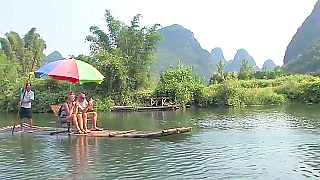
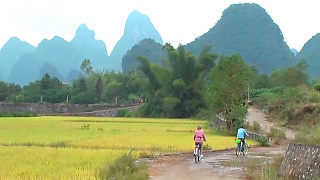
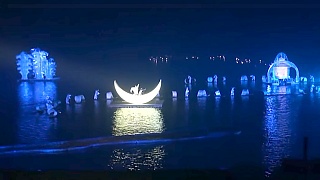
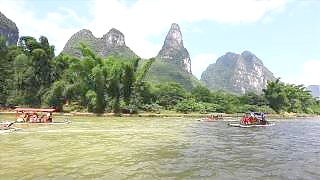
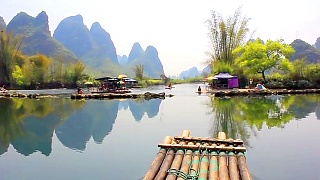
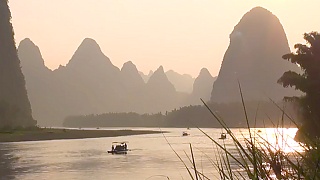
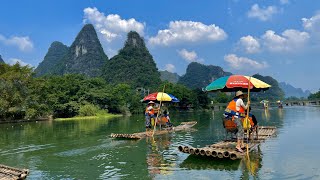
This beautiful film shows the Li River, YuLong River, bamboo rafting and cruise, plus cycling and hot-air balooning. Plus a few scenes from the outdoor performance Impressions Liu San Jie.

15 minutes in paradise ...

[640],shadow=true,start=,stop=

Yangshuo, situated in Guangxi Zhuang Autonomous Region in southern China, is renowned for its breathtaking karst landscapes, serene rivers, and vibrant local culture. Here's a guide for visitors to Yangshuo:

Natural Beauty:
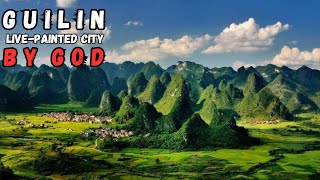
Karst Mountains: Yangshuo is famous for its iconic karst mountains, which rise sharply from the surrounding plains, creating a dramatic and picturesque landscape. Visitors can explore these unique limestone formations by hiking, biking, or taking boat cruises along the Li River.

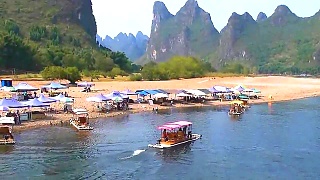
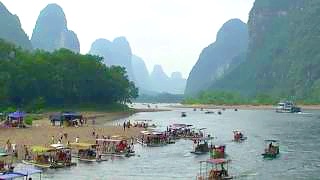
Li River: The Li River, one of China's most scenic waterways, meanders through the karst mountains of Yangshuo, offering stunning vistas at every turn. A leisurely boat cruise along the Li River is a must-do activity for visitors, providing opportunities to admire the breathtaking scenery and capture iconic views of the karst peaks reflected in the water.

Yulong River: The Yulong River, a tributary of the Li River, is another picturesque waterway that flows through Yangshuo's countryside. Visitors can enjoy bamboo rafting or kayaking on the Yulong River, passing through idyllic villages, rice paddies, and bamboo groves along the way.

Outdoor Activities:
Cycling: Yangshuo is a cyclist's paradise, with scenic countryside roads and trails that wind through rice fields, orchards, and traditional villages. Renting a bicycle and exploring the surrounding countryside at a leisurely pace is a popular activity for visitors.

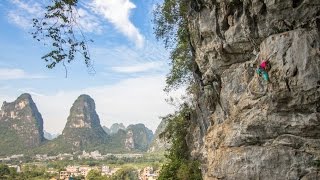
Rock Climbing: With its towering karst cliffs and limestone peaks, Yangshuo is a premier rock climbing destination in China. Experienced climbers and beginners alike can find suitable routes and climbing spots in the area, with options for guided tours and equipment rental available.

Cultural Experiences:
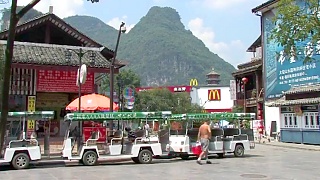
West Street: West Street (Xi Jie) is the main thoroughfare in Yangshuo's town center and a hub of activity for tourists and locals alike. Lined with shops, restaurants, cafes, and bars, West Street offers a vibrant atmosphere and is a great place to shop for souvenirs, sample local cuisine, and soak in the town's unique charm.

Impression Sanjie Liu: Directed by renowned filmmaker Zhang Yimou, Impression Sanjie Liu is a spectacular outdoor performance staged on the Li River. Featuring a cast of hundreds of performers, including local fishermen and farmers, the show combines music, dance, and light effects to showcase the natural beauty and cultural heritage of the area.

Practical Tips:
Weather: Yangshuo has a subtropical climate with mild winters and hot, humid summers. The best time to visit is during the spring (March to May) and autumn (September to November) when the weather is most pleasant and the landscapes are lush and green.

Accommodation: Yangshuo offers a range of accommodation options, including guesthouses, boutique hotels, and hostels catering to various budgets and preferences. Staying in the town center allows visitors to easily access attractions, restaurants, and transportation options.

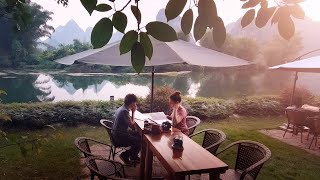
Local Cuisine: Don't miss the opportunity to sample Yangshuo's delicious local cuisine, which includes specialties such as beer fish and Guilin rice noodles. Many restaurants in Yangshuo offer outdoor seating with panoramic views of the surrounding karst landscape.

Yangshuo's stunning natural scenery, outdoor activities, and vibrant cultural scene make it a popular destination for travelers seeking to explore the beauty of southern China. Whether cruising along the Li River, cycling through the countryside, or immersing oneself in the town's bustling street life, Yangshuo offers unforgettable experiences for visitors of all ages and interests.
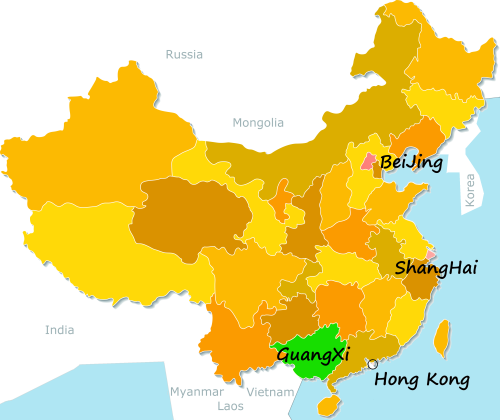
GuangXi map

Related Videos


Featured Videos

Day trips from ShenZhen
Day Trips from Shenzhen, China Guangzhou 广州 (Guǎngzhōu): Explore the vibrant capital of Guangdong Province, known for its rich history, delicious Cantonese cuisine, and modern skyscrapers. Visit iconic landmarks such as the Canton Tower, stroll along the historic Shamian Island, and sample local delicacies at the bustling Shangxiajiu Pedestrian Street. Hong Kong 香港 (Xiānggǎng): Experience the dynamic cityscape of Hong Kong, just a short train ride away from Shenzhen. Explore attractions like Victoria Harbour, ride the Peak Tram to Victoria Peak for stunning city views, and indulge in shopping and dining in areas like Causeway Bay and Tsim Sha Tsui. Macau 澳门 (Àomén): Discover the unique blend of Portuguese and Chinese culture in Macau, known for its historic colonial architecture, vibrant casinos, and delicious egg tarts. Visit iconic landmarks such as the Ruins of St. Paul's, explore the historic streets of Senado Square, and try your luck at the famous casinos along the Cotai Strip. Dameisha Beach and Xiaomeisha Beach 大梅沙海滨公园 (Dàméishā Hǎibīn Gōngyuán) and 小梅沙海滨公园 (Xiǎoméishā Hǎibīn Gōngyuán): Relax and unwind at Dameisha and Xiaomeisha Beaches, popular seaside destinations located just outside of Shenzhen. Enjoy sunbathing on the golden sands, swimming in the clear waters of the South China Sea, and participating in water sports such as jet skiing and parasailing. Window of the World 世界之窗 (Shìjiè zhī Chuāng): Immerse yourself in a world of wonders at Window of the World, an amusement park in Shenzhen that features miniature replicas of famous landmarks from around the globe. Explore iconic sites such as the Eiffel Tower, the Taj Mahal, and the Great Wall of China, all within a single day. Shenzhen Safari Park 深圳野生动物园 (Shēnzhèn Yěshēng Dòngwùyuán): Get up close and personal with wildlife from around the world at Shenzhen Safari Park. Explore the park's vast grounds by tram or on foot, and encounter animals such as giant pandas, giraffes, and lions in naturalistic habitats. Fairy Lake Botanical Garden 仙湖植物园 (Xiānhú Zhíwùyuán): Escape the hustle and bustle of the city and immerse yourself in nature at Fairy Lake Botanical Garden. Explore lush gardens, serene lakes, and scenic hiking trails, and discover a diverse collection of plant species from China and around the world. Shekou Sea World 蛇口海上世界 (Shékǒu Hǎishàng Shìjiè): Spend a day exploring the attractions of Shekou Sea World, a waterfront entertainment complex in Shenzhen. Visit the Sea World Culture and Arts Center, enjoy shopping and dining at the Sea World Plaza, and discover marine life at the Sea World Aquarium. Shenzhen Museum 深圳博物馆 (Shēnzhèn Bówùguǎn): Dive into the history and culture of Shenzhen at the Shenzhen Museum. Explore fascinating exhibits on the city's evolution from a fishing village to a modern metropolis, learn about the region's archaeological treasures, and discover the cultural heritage of the local Hakka ethnic minority. Da Fen Oil Painting Village 大芬油画村 (Dà Fēn Yóuhuà Cūn): Discover the vibrant arts scene of Shenzhen at Da Fen Oil Painting Village, a community known for its talented artists and galleries. Watch artists at work in their studios, browse a wide range of original paintings and artworks, and purchase unique souvenirs to take home. Day Trip to Dongguan 东莞 (Dōngguǎn): Explore the nearby city of Dongguan, known for its manufacturing industry, cultural heritage, and natural attractions. Visit landmarks such as the Keyuan Garden, learn about traditional Cantonese opera at the Qifeng Park Opera Stage, and enjoy shopping at the bustling Dongguan Walking Street. Day Trip to Huizhou 惠州 (Huìzhōu): Discover the historic city of Huizhou, located along the Pearl River Delta and known for its ancient landmarks, scenic landscapes, and cultural heritage. Visit attractions such as the Luofu Mountain, explore ancient villages like Xingfu Village, and relax on the sandy shores of Xunliao Bay. Day Trip to Dongguan 东莞 (Dōngguǎn): Explore the nearby city of Dongguan, known for its manufacturing industry, cultural heritage, and natural attractions. Visit landmarks such as the Keyuan Garden, learn about traditional Cantonese opera at the Qifeng Park Opera Stage, and enjoy shopping at the bustling Dongguan Walking Street. Day Trip to Foshan 佛山 (Fóshān): Visit the historic city of Foshan, known for its centuries-old martial arts traditions, ancient temples, and traditional Cantonese culture. Explore attractions such as the Foshan Ancestral Temple, watch a demonstration of traditional lion dancing at the Foshan Lion Dance Museum, and visit the Nanfeng Ancient Kiln for a glimpse into the region's ceramic heritage. Day Trip to Zhuhai 珠海 (Zhūhǎi): Discover the coastal city of Zhuhai, located on the Pearl River Delta and known for its beautiful beaches, lush parks, and vibrant cultural scene. Visit attractions such as the New Yuanming Palace, stroll along Lover's Road for panoramic views of the coastline, and enjoy fresh seafood at the bustling Gongbei Seafood Street.
BeiJing city drive
With Walk East ...
Ten enduring fundamentals of China’s culture
1. Harmony and Balance (和谐 Héxié) Philosophical Roots: Derived from Confucianism, Daoism, and Buddhism, the concept of harmony emphasizes balance in social relationships, nature, and the universe. It promotes peaceful coexistence and cooperation. Social Application: In social and business contexts, maintaining harmony is crucial. Conflicts are often resolved through negotiation and compromise to preserve social stability. 2. Family and Filial Piety (孝 Xiào) Central Role of Family: The family is the cornerstone of Chinese society. Filial piety, respect for one’s parents and ancestors, is a key virtue. Social Structure: Family obligations often take precedence over individual desires, reflecting the collective nature of Chinese culture. 3. Collectivism Community Focus: Chinese culture emphasizes the importance of the group over the individual. This is evident in societal, family, and workplace dynamics. Shared Responsibility: Successes and failures are often viewed as collective rather than individual, fostering a strong sense of community and mutual support. 4. Win-Win Philosophy (共赢 Gòngyíng) Mutual Benefit: In business and diplomacy, the concept of win-win solutions is highly valued. It emphasizes creating outcomes that benefit all parties involved. Long-Term Relationships: Building long-term relationships and mutual trust is prioritized over short-term gains. 5. Respect for Hierarchy and Authority Confucian Influence: Respect for hierarchy is deeply ingrained, influenced by Confucian principles. This is evident in social, familial, and organizational structures. Role of Elders and Leaders: Elders and leaders are accorded high respect and their opinions are given significant weight in decision-making processes. 6. Education and Continuous Learning Value of Education: Education is highly valued and seen as a means to achieve personal and societal improvement. Historical reverence for scholars and intellectuals persists. Meritocracy: Historically, the imperial examination system reinforced the importance of education and merit in attaining social status and governmental positions. 7. Adaptability and Pragmatism Historical Adaptation: China has a long history of adapting to changing circumstances, whether through economic reforms or cultural assimilation. Pragmatic Approach: Practical solutions are often favored over rigid adherence to ideology, allowing for flexibility in governance and daily life. 8. Respect for Tradition and Cultural Heritage Preservation of Traditions: Despite modernization, traditional festivals, customs, and rituals remain integral to Chinese life. Cultural Continuity: There's a strong emphasis on preserving and passing down cultural heritage through generations. 9. Guanxi (关系) - Social Connections and Networks Importance of Relationships: Building and maintaining relationships is crucial in both personal and professional contexts. Guanxi can provide social support, opportunities, and resources. Reciprocity: Relationships are maintained through reciprocal exchanges of favors and support. 10. Yin and Yang (阴阳 Yīnyáng) Philosophical Concept: Represents the duality and interconnectedness of opposites in the natural world. Balance between yin (passive, dark, feminine) and yang (active, light, masculine) is sought. Application in Life: This concept influences various aspects of life, including health, environment, and personal relationships. Conclusion These enduring characteristics shape the Chinese worldview and influence behavior, relationships, and societal norms. Understanding these cultural elements provides valuable insights into the dynamics of Chinese society and its approach to both personal and professional interactions. These values continue to guide life in China into modernity and its international relations.
BeiJing bicycle ride
Time-lapse Hong Kong 香港, 2017
An amazing, beautiful film by Jeffrey Poon ...
Traditional Chinese music – long play
ShangHai night walk in the new Fashion Street
ShangHai Silent Rainy Night Walk Tour in Brand New Fashion Lane 宁静的雨夜漫步在上海时尚新地标“今潮8弄”文艺街区|四川北路新面貌 “The Fashion Lane 8” is located on SiChuan North Road, HongKou District, ShangHai. 66 old buildings distributed in 8 old-fashioned lanes are completely preserved here. This is a gorgeously transformed old alley. Each space has its own historical story, allowing tourists to feel the deep history and culture. It is also a good place for people to feel nostalgic. There are various art exhibitions & shows, specialty restaurants, coffee shops and individual bars, which have injected a lot of fresh vitality into the old buildings. 今潮8弄位于上海虹口区的四川北路,这里完整保留了分布在8条老式里弄内的66幢老建筑,这是经过华丽变身的老弄堂,每一处空间都有各自的历史故事,让游客感受到浓浓的历史人文气息,也是人们怀旧的一个好地方。这里有各种文艺展览和演出,特色餐厅,咖啡店和个性酒吧,给老建筑注入了许多新鲜活力。 With Wei's Travel ...
XinJiang – the real truth …
With Angelo Giuliano and Brian Berletic. They also discuss China's infrastructure and the development of XinJiang, Tibet, etc. ... In depth ... The West likes to trumpet 'individualism' - but is this really for the elite to divide the people, an excuse for the lack of infrastructure, and that if one is poor, it is your fault ? Compared to China's development and poverty alleviation, what has the West achieved over recent decades ? There are around 200,000 Chinese students in UK alone. China has 120 million outbound overseas tourists each year. There are 850,000 expats living and working in China. XiaoMi sells more smart phones than Apple. Etc. - Reality versus fake news. As for Western MSM, the more ridiculous the bias, the more obvious it becomes. In China, the people are family; in the West, the people are merely livestock.
Spring Festival lights, evening walk in ShangHai
With Wei's Travel ...

Tag search ?