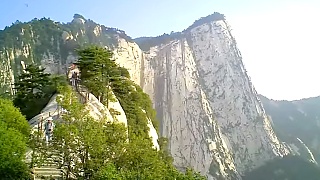
Above the clouds at the awesomely beautiful HuaShan 华山 …

Grab your walking boots and climb up over night (there are lights) to be ready for sunrise. Also featured is the famous 'Plank Walk'.

HuaShan is one of China's Five Sacred Mountains; it lies in ShaanXi province, about two hours from the city of Xi'An, in central China.

Hike above the clouds (at over 2,000 meters).

Sometimes people talk about 'things to do before you die' - a trip to HuaShan (or HuangShan, EmeiShan, CangShan, WuDang or TaiShan) should be one of those ...

[640],shadow=true,start=440,stop=
[320],shadow=true,start=9,stop=
[320],shadow=true,start=43,stop=

Xi'an, located in the heart of Shaanxi Province in northwest China, is one of the oldest cities in China and served as the capital for numerous dynasties, including the Qin, Han, and Tang. Renowned for its rich history, cultural heritage, and iconic landmarks, Xi'an is a must-visit destination for tourists. Here's a guide for tourists visiting Xi'an:

Historical and Cultural Significance:
Ancient Capital: Xi'an served as the capital of China for over 13 dynasties and played a crucial role in shaping Chinese history and civilization. It was the starting point of the ancient Silk Road, facilitating trade and cultural exchange between China and the West.

Terracotta Army: One of Xi'an's most famous attractions is the Terracotta Army, a vast collection of life-sized terracotta sculptures depicting the armies of Qin Shi Huang, the first Emperor of China. Discovered in 1974, the Terracotta Army is a UNESCO World Heritage site and a symbol of China's rich cultural heritage.

Top Attractions:
Terracotta Army Museum: Located about 30 kilometers east of Xi'an, the Terracotta Army Museum is home to thousands of intricately crafted terracotta warriors, horses, and chariots. Visitors can explore the excavation pits, marvel at the craftsmanship, and learn about the history of the Qin Dynasty.

Ancient City Wall: Xi'an is renowned for its well-preserved ancient city wall, which dates back to the Ming Dynasty. Stretching over 13 kilometers in length, the wall offers panoramic views of the city and is a popular spot for walking, cycling, and sightseeing.

Muslim Quarter: Explore the vibrant Muslim Quarter, located near the Drum Tower and Great Mosque of Xi'an. This bustling neighborhood is known for its lively street markets, traditional Islamic architecture, and delicious street food, including lamb skewers, roujiamo (Chinese hamburger), and hand-pulled noodles.

Big Wild Goose Pagoda: Built during the Tang Dynasty, the Big Wild Goose Pagoda is a prominent Buddhist landmark in Xi'an. Visitors can climb the pagoda for panoramic views of the city or explore the surrounding temple complex and gardens.

Shaanxi History Museum: Discover the rich history and culture of Shaanxi Province at the Shaanxi History Museum. The museum houses a vast collection of artifacts, including ancient pottery, bronze ware, jade, and Tang Dynasty murals, providing insights into the region's heritage.

Practical Tips:
Transportation: Getting around Xi'an is convenient with its extensive public transportation system, including buses, taxis, and the Xi'an Metro. Bicycle rentals are also available for exploring the city at a leisurely pace.

Weather: Xi'an has a continental climate with hot summers and cold winters. The best time to visit is during spring (April to May) and autumn (September to October) when the weather is pleasant and comfortable.

Language: Mandarin Chinese is the official language spoken in Xi'an, although English may not be widely spoken, especially in more remote areas. It's helpful to learn some basic phrases or carry a phrasebook or translation app.

Currency: The currency used in China is the Chinese Yuan (CNY). Credit cards are accepted at most hotels, restaurants, and shops in urban areas, but it's advisable to carry cash for small purchases and transactions.

Xi'an offers a fascinating blend of ancient history, cultural heritage, and modern urban life, making it an enchanting destination for tourists seeking to explore the wonders of ancient China. Whether marveling at the Terracotta Army, walking along the ancient city wall, or sampling delicious street food in the Muslim Quarter, Xi'an has something to offer for every traveler.
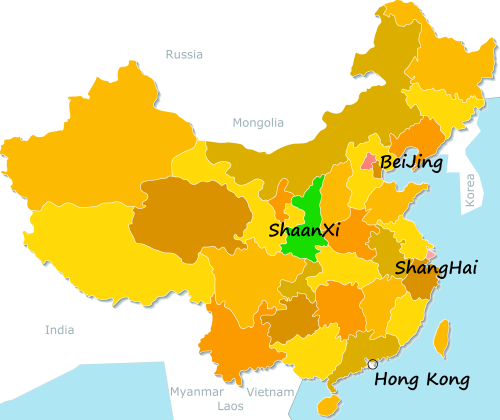

ShaanXi map

Related Videos


Featured Videos

China’s beautiful metro systems
GuangZhou, GuangDong province. China knows how to do infrastructure, and does it very well. With Walk For You ... Bonus film - night walk in ShenZhen : OCT OH Bay and Bay Glory ...
Beautiful YangShuo, plus Pot Stickers
With Living Asian ... Bonus film - Kids Park, ChengDu ...
HangZhou 杭州 food tour
QingDao city drive, ShanDong province
With Chinese Street View ...
XiJiang QianHu Miao Village, GuiZhou province
With Beijing Old Liu ... Xijiang Qianhu Miao Village Visitor Guide Overview Xijiang Qianhu Miao Village, located in Leishan County, Guizhou Province, is the largest Miao village in China and is often referred to as the "Thousand Household Miao Village." This picturesque village is known for its well-preserved traditional Miao architecture, vibrant cultural heritage, and stunning natural scenery. It offers a unique glimpse into the life and traditions of the Miao people. History and Culture The Miao people are one of China's 56 ethnic minorities, with a history that dates back over 2,000 years. Xijiang Qianhu Miao Village is a living museum of Miao culture, where visitors can experience traditional Miao customs, clothing, music, and dance. The village is known for its grand festivals, including the Lusheng Festival, the Miao New Year, and the Sisters' Meal Festival, which feature elaborate costumes, folk dances, and traditional music performances. Main Attractions Miao Ethnic Museum The Miao Ethnic Museum offers a comprehensive look at the history, culture, and traditions of the Miao people. Exhibits include traditional clothing, silver ornaments, musical instruments, and artifacts from daily life. Traditional Miao Architecture The village is renowned for its traditional stilt houses, known as "Diaojiaolou," which are built on wooden stilts and feature intricate wooden carvings. Walking through the village, visitors can admire these unique structures and learn about their construction and significance. Folk Performances Daily folk performances in the village square showcase traditional Miao music and dance. These performances are an excellent way to experience the vibrant cultural heritage of the Miao people. Festival Celebrations Visiting during one of the major festivals, such as the Miao New Year or the Sisters' Meal Festival, provides a deeper insight into Miao culture. These festivals feature colorful parades, traditional music, and elaborate dances, making them a highlight of any visit. Outdoor Activities Hiking and Nature Walks The surrounding hills and rice terraces offer excellent opportunities for hiking and nature walks. The scenic trails provide panoramic views of the village and the lush countryside, making it a paradise for nature lovers and photographers. Exploring Rice Terraces The rice terraces around Xijiang are a testament to the agricultural ingenuity of the Miao people. Visitors can explore these terraced fields, which change colors with the seasons and offer stunning photographic opportunities. Local Cuisine Miao cuisine is known for its bold flavors and use of local ingredients. Some must-try dishes include sour fish soup, sticky rice cakes, and various pickled vegetables. Many local restaurants and street vendors offer authentic Miao food, providing a true taste of the region. Accommodation Xijiang Qianhu Miao Village offers a range of accommodation options, from traditional Miao-style guesthouses to modern hotels. Staying in a local guesthouse provides a more immersive experience, allowing visitors to enjoy Miao hospitality and learn more about their way of life. Travel Tips Best Time to Visit: The best time to visit is during the spring (March to May) and autumn (September to November) when the weather is mild, and the rice terraces are most picturesque. Getting There: The village is accessible by bus from Kaili City, which is connected to major cities like Guiyang by train and bus. Respect Local Customs: When visiting, be respectful of local customs and traditions. Ask for permission before taking photos of people, especially during festivals and ceremonies. Pack Accordingly: Bring comfortable walking shoes for exploring the village and surrounding areas. A light jacket is recommended for the evenings, as temperatures can drop.
The beautiful JinSi Xia 金丝峡 scenic area, ShaanXi province
A trip to the wonderful, natural getaway of JinSi Xia (JinSi Canyon), ShaanXi province in central China ...
First time in BeiJing
With Mike & Ashley ... With Travel For Phoebe ...
Geopolitics update (3rd February 2023) with The New Atlas and Angelo Giuliano
SanYa, HaiNan, walking tour
With Walk East ... Bonus film - with Xplore With Us ...

Tag search ?