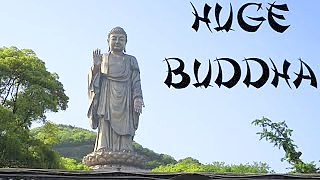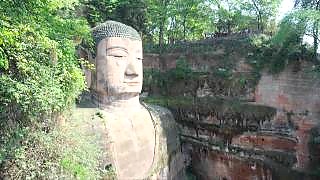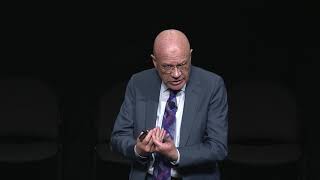
The three key philosophies of China

Confucianism, Buddhism and Taoism.

And how they complement each other.


Stephen Prothero is a Professor of Religion at Boston University. These excellent expositions are well worth a listen for all who wish to understand the Chinese civilisation, including China today.


[640],shadow=true,start=,stop=
[320],shadow=true,start=,stop=
[320],shadow=true,start=,stop=

Related Videos


Featured Videos

Walks in China – in 4K …
With Walk East ... [videogallery id=UCip2HiAmspOVMeh0yxMcEaA]
LiZiQi on … salt
Firewood, rice, oil, salt, soy sauce, vinegar, and tea 柴米油盐酱醋茶. Apollo (YT) : The main focus of this video is salt. It is perhaps the most essential of the seven items important to Chinese culinary life: firewood, rice, oil, salt, soy sauce, vinegar, and tea. LiZiQi shows how salt is refined traditionally in SiChuan, an inland province of China : salt water is extracted from a well, concentrated by boiling in a big pot with firewood, purified by adding soybean milk to remove colored impurities (which float to the top and are skimmed off), and further concentrated to give salt crystals. She then used the salt to prepare/cook a variety of food, including PiDan (a kind of preserved duck egg with a very unique flavor), hand-beaten beef ball (so elastic that it could bounce like a Ping-Pong ball), potato, stewed beef, and more ... Bonus film - LiZiQi, on white radish ... A garden within a garden : )
Scenes from YuanMingYuan 圆明园, BeiJing
YuánMíngYuán was the original Summer Palace in BeiJing and sometimes referred to as the 'Old Summer Palace'. YuanMingYuan lies 8 kilometers (5 miles) northwest of central Beijing, close to the (new) Summer Palace (YíHéYuán 颐和园). It was constructed during the 18th and early 19th centuries and was a wonderland of lakes and waterways, bridges, hills and pavilions. There were originally towers, terraces, pavilions, halls, corridors, pagodas and bridges with a total construction area of 150,000 square meters. Artisans were recruited from all over China to enact the exquisite settings. Many of the 160 scenic spots were reproductions of famous mountains, rivers and famous gardens in China. The various styles of architecture, standing encircled by hills and streams, presented a most picturesque view. In addition, hundreds of invaluable Chinese art masterpieces and antiquities were stored in the halls, including some unique copies of literary works and collections. YuanMingYuan was, indeed, a veritable museum of garden construction and horticulture. Known to be one of the largest museums in the world, a popular name in China was the 'Garden of Gardens'. In 1860 during the 'Second Opium War', YuanMingYuan was looted then burned down by imperialist British and French troops. So great was the devastation that a new Summer Palace was later built nearby.
The awesome Ethnic Culture Park, evening show, BeiJing
With ABingYOLO ... The grand Ethnic Night at the South Garden of the Chinese Ethnic Culture Park in Beijing is an extraordinary carnival combining world-class performances, digital light shows, intangible cultural heritage, lanterns, and ethnic fairs! Spanning an area of approximately 100,000 square meters, the park hosts over a hundred fantastic performances, with global cuisines and cultural heritage, and creative markets offering endless enjoyment. Centered around ethnic culture and infused with elements of the Silk Road, the event invites a Broadway director team from the United States to showcase vibrant ethnic customs. Breaking traditional performance boundaries, the park creates a moving performance scene across the entire area, allowing visitors to encounter breathtaking shows as they explore. Address: South Garden, Chinese Ethnic Culture Park, No. 1 MinZu Yuan Road, ChaoYang District, BeiJing Dates: January 18 - March 31 2025, 16:30 - 22:00 pm.
The beautiful ice sculptures at LongQing Gorge 龙庆峡, BeiJing
Opens in (early to mid) January and February (roughly, depending on the weather). LóngQìngXiá lies not so far from Beijing city.
ShangHai 上海 landmarks – Sunday night walk
With Wei's Travel ... 00:00 Intro 简介 02:38 Yu Garden 豫园商城-城隍庙 08:32 Nine Curve Bridge 九曲桥广场 13:40 Shanghai Old Street 上海老街 20:08 Yu Garden New Street 豫园新街 25:20 The Bund 延安东路外滩 32:17 The Bund Riverside 外滩滨江 37:53 Nanjing Road Pedestrian Street 南京路步行街 47:01 Shanghai Daimaru Mall 新世界大丸百货 01:05:05 Walking Street Plaza Bar 步行街广场酒吧 01:16:50 New World Mall 新世界商城 01:25:28 West Nanjing Road 南京西路 Bonus film - West NanJing Road, ShangHai, with Walk East ...
NanJing, JiangSu, downtown drive
With Walk East ...
FoDing mountain, ShiQian, GuiZhou – hot spring in the rain
China – the threat of a good example
With Expat Adventuring in Asia ... "In this eye-opening video, we uncover the truth behind the growing tension between the United States and China. For years, the U.S. government has painted China as a looming enemy, a global threat that must be contained at all costs. But what if everything we’ve been told about China’s rise is a carefully constructed lie? Why is China seen as an enemy by the U.S. government? The answer is simpler than you think: China’s rise challenges the U.S. dominance — both economically and militarily. In this video, we expose the official U.S. policy that labels China as a threat not because of ideology or military aggression, but because China’s success threatens America’s role as the world's sole superpower. This policy — backed by years of documentation — is the core reason behind the U.S. narrative of China as the “enemy.” China’s peaceful rise versus U.S. domination. While the U.S. seeks to maintain global primacy and control, China has focused on development — building a massive economy, lifting over 800 million people out of poverty, and creating a modern, thriving nation through peaceful means. But the U.S. establishment is unwilling to accept that a country can prosper without following the West’s path. In this video, we reveal: • How U.S. foreign policy, dating back to the 1992 Defense Planning Guidance, explicitly states that any country, including China, that challenges U.S. dominance is labeled a threat. • The “primacy” doctrine and how it has shaped U.S. global strategies, including its ongoing campaign to undermine China’s rise. • The truth behind billions of dollars spent on anti-communist propaganda and “democracy promotion” to convince the world that China’s system is dangerous, despite its successes. • How the global power shift from unipolar to multipolar is already happening, and why the U.S. feels the need to hold onto a world that’s quickly evolving beyond its control. The reality that can’t be hidden Despite the constant anti-China rhetoric, China’s rise speaks for itself. The country’s GDP has grown from just $190 billion in 1980 to $18 trillion today, and it’s created the largest high-speed rail network in the world, alongside cutting-edge tech hubs and innovations that are reshaping the global economy. In contrast, the U.S. continues to face challenges at home, including income inequality, racial tensions, and a failing healthcare system. Yet, the U.S. media continues to promote the idea that China’s peaceful development is somehow a threat to the world. What the media doesn’t want you to know Behind the scenes, hundreds of millions of dollars have been funneled into think tanks, universities, and media outlets worldwide to shape global perceptions about China. We reveal how the Voice of America, National Endowment for Democracy (NED), and USAID fund anti-China narratives and distort the truth about China’s achievements. But no amount of money or propaganda can hide the undeniable truth: China’s success proves that a different system works. What does this mean for the future? As China continues to rise, the world is transitioning from a U.S.-dominated unipolar order to a multipolar world where countries cooperate, not compete. The future of global relations is changing, and China’s vision of cooperation is reshaping the way nations interact on the world stage. In this video, you’ll discover: • The hidden policies that fuel U.S. opposition to China. • How China’s peaceful rise is threatening the U.S. empire — not through war, but through smart, long-term development. • Why the real enemy isn’t China, but rather the U.S. control of global narratives and the unwillingness to share power with emerging nations. Why should you watch? • If you’re curious about the real reasons behind U.S.-China tensions, this video will give you answers based on facts, not propaganda. • If you want to understand global power dynamics and why China’s rise isn’t a threat but an opportunity for cooperation, this video is for you. • If you’ve ever wondered why the U.S. is so obsessed with maintaining global hegemony, this video will unveil the truth. 🔔 Don’t forget to subscribe for more deep dives into China’s rise, U.S. foreign policy, and the changing global order." In China, the people are king In the West, the people are livestock

Tag search ?