The International Children’s Concert

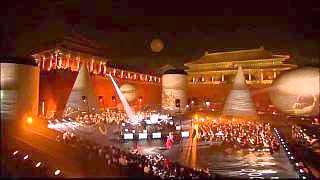
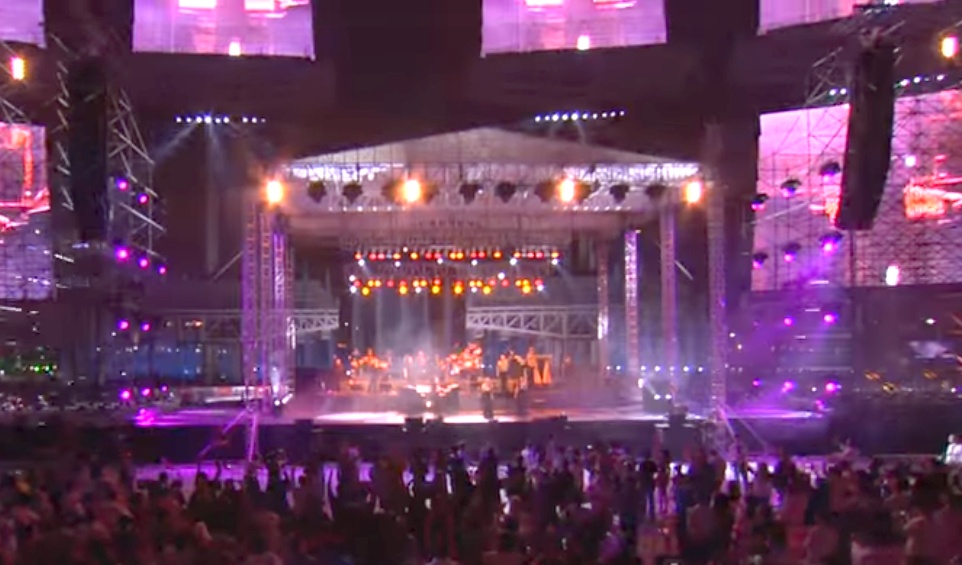
The delightful China Central TV concert of 2013 ...

[230],shadow=true,start=,stop=[230],shadow=true,start=,stop=[230],shadow=true,start=,stop=[230],shadow=true,start=,stop=[230],shadow=true,start=,stop=[230],shadow=true,start=,stop=[230],shadow=true,start=,stop=[230],shadow=true,start=,stop=[230],shadow=true,start=,stop=[230],shadow=true,start=,stop=[230],shadow=true,start=,stop=[230],shadow=true,start=,stop=[230],shadow=true,start=,stop=[230],shadow=true,start=,stop=[230],shadow=true,start=,stop=

* Children of the Dragon (HOU Dejian, 侯德健), performed by Green QIU (QIU Wutong, 邱梧桐, 10 years old), Xiaolong (小龙, 11 years old), and JIN Zhuofan (金卓凡, 12 years old), all from China.

* Memory (musical Cats, Andrew Loyd Webber), performed by Jessie Hillel (11 years old) from New Zealand.

* You Raise Me Up, performed by LI Zewei (李泽维, 11 years old), ZHONG Chenle (钟辰乐, 11 years old), and LIU Bo (柳博, 10 years old), all from China.

* Turkish March (土耳其进行曲), by Wolfgang Amadeus Mozart (莫扎特), performed by ZOU Yufei (邹宇飞, 4 years old), WANG Liya (王丽雅, 11 years old), ZHU Zihe (朱梓赫, 8 years old), and YE Zifan (叶子凡, 12 years old), all from China.

* He is a Pirate, performed by CHEN Qingli (陈庆丽) from Hong Kong, China.

* I can fly, performed by Teressa from the U.S. (5 years old). Teressa is of Chinese and American heritage.

* Baby, performed by NIE Jieming (聂杰铭, English name: James Robert Nicol, 11 years old) from Australia.

* Spicy Girl, performed by Tianyuan (Chinese name:恬源, English name: Tyerra, 8 years old) from the U.S. Tianyuan is of Chinese and American heritage.

* Kalinka, performed by Russian children from Russian Embassy School in Beijing, and Xiao Ding Dang Childrens Choir of the Russian Culture Center in Beijing.

* Love to Flowers and Earth Song, performed by Fairies in Rain Forest (Chinese name:雨林精灵, Pinyin: Yu Lin Jing Ling). Fairies in Rain Forest is formed by two sisters: Linda LEE (李林妲, LI Linda) and Wanda LEE (李宛妲, LI Wanda) of Chinese and German heritage. Their fater, Josef Margraf, is a German ecologist. Love to Flowers is a folk song of ethnic Hani Chinese, sung in the Hani language. Earth Song by Michael Jackson.

* I Just Can't Wait to be King (from The Lion King), performed by the Popcorn Band (Chinese name: 爆米花乐团) from China and Chelsey Mark (Chinese name: 麦小龙, Pinyin: MAI Xiaolong) from Canada; Chelsey Mark is a well-known host of CCTV.

* You'll Be in My Heart (Phil Collins), performed by Ming-An Fasquelle (11 years old, French-American, born in France, raised in Beijing).

* I Have a Dream (Abba), performed by WANG Xinyi (王馨怡, 10 years old) from China.

* ABC (Jackson 5) performed by SH' Boss Boys from the U.S.

* We Will Rock You (Brian May / Queen), performed by Xiaolong (小龙), Huolong (火龙), LI Shuxi (李淑昕), ZHENG Xiao (郑宵), Tianyuan (恬源), 奥斯卡 (Oscar), 成宇朵儿 (CHENGYU Duo-Er), Popcorn Band (爆米花乐队), Zaizai (仔仔), and Kent Niepert (Xiaolong's dad).


Related Videos


Featured Videos

35 years photographing China
With Bruce Connolly ...
The wonderful, beautiful HuangShan 黄山
Yellow Mountain, 黄山, in AnHui province, between ShangHai and WuHan, is one of China's most popular travel destinations. An area of outstanding natural beauty, it is a UNESCO World Heritage Site.
Good times in China 中国 …
BeiJing and ShangHai ...
White radish 白萝卜 – growing, pickling and cooking
A mild-flavored winter radish usually characterized by fast-growing leaves and a long, white, napiform root. It is similar in appearance to fresh horseradish but packs a lighter peppery punch similar to watercress. Unlike other radishes, it is as good cooked as it is raw. A very beautiful film and culinary masterclass with LiZiQi 李子柒. Dishes include SiChuan pickles, NorthEast sauerkraut and several types of XianCai, salty side-dish, and SuanCai, sour cabbage, with spice and without. Similar to Korean kimchi - Korean is one of the 56 ethnic groups in China. Don't miss it ... Rimo Z : 0:23 Rapeseed flowers 2:50 White Radish 3:37 Carrot 4:31 Chinese Cabbage 6:03 Mustard, then dehydrate the vegetables 7:58 Smear chilli sauce 8:28 Sealed for 1 month 8:51 Pine leaves for smoking the meat (Bacon) 9:03 Orange or clementine 9:10 Pomelo on the tree 9:22 Start smoking the sausage and meat 9:30 Add the pomelo and orange peel to enrich the flavor 10:16 Add salt and chilli powder, start pickling the dehydrated radish and carrots 10:36 Dried fish 11:58 put the dried fish, sausage and meat (or bacon) for boiling before eating or further cooking, this step helps to clean the food and reduce the salt 12:47 stir fry with ginger and then start stewing with green onion and orange peel 13:34 Fermented pickle cabbage (non-spicy) 13:49 Fermented pickle cabbage (spicy) 14:06 Minced meat with oil, spice powder, green onions, soy sauce, ginger and 14:14 hot oil to increase the aroma 14:26 Chop the pickle Chinese cabbage 14:38 Mix the minced meat and pickled cabbage, start making dumplings 15:53 Cut the salted meat, stir fry with green onion and stew with the dried vegetables 15:52 Add spicy pickled cabbages 16:16 Add some hot oil on top of the pickle dishes to excite the fragrance 16:42 Cut the boiled sausage, salted meat etc. 17:49 Looks like rose tea 17:55 Just white congee 米老鼠 : Kimchi first appeared in the book of songs. It was interpreted as sauerkraut in China. Korean kimchi originated in the Tang Dynasty. Tang Dynasty general Xue Rengui was assigned to Korea (today's Korea) by the government to settle down in Korea. Many of his entourage were from Jiangbei County, Chongqing, who could make kimchi in his hometown. Since then, Chongqing kimchi has entered Korea. Several wars in Korea have brought this kind of dish into Korean civilian families. Kimchi went through several stages before it became the real Korean kimchi. The first stage is the Three Kingdoms period, when the pickled dishes or radish, cucumber, etc., introduced to South Korea after adding leeks and other fresh vegetables. In the second stage, in the Korean period, the production methods began to be enriched, and the raw materials were added to the base. The third stage is that cabbage has become the main raw material, which is what we eat now.
TianZiFang 田子坊, ShangHai
TiánZǐFāng is a neighborhood of labyrinthine alleyways off TaiKang Road (TàiKāng Lù). TianZiFang is known for small craft stores, coffee shops, trendy art studios and narrow alleys. It has become a popular tourist destination in ShangHai, and an example of the preservation of local ShiKuMen architecture, with some similarities to XinTianDi.
ShanHaiGuan (Mountain Sea Pass) – where the Great Wall of China meets the sea
With Andy see the World ... Visitor Guide to ShanHaiGuan Overview ShanHaiGuan, located in QinHuangDao City, HeBei Province, is a renowned historical site known as the "First Pass Under Heaven." It is one of the most well-preserved and strategically important passes of the Great Wall of China, offering visitors a fascinating glimpse into China's ancient military history and stunning coastal scenery. Getting There By Air: The nearest airport is QinHuangDao Beidaihe Airport (BPE), located about 20 kilometers from ShanHaiGuan. From the airport, you can take a taxi or a shuttle bus to ShanHaiGuan. By Train: ShanHaiGuan Railway Station is well-connected with major cities like BeiJing, TianJin, and Shenyang. High-speed trains make it convenient to reach ShanHaiGuan from these cities. By Bus: Long-distance buses are available from nearby cities, including QinHuangDao and TianJin. The main bus station in ShanHaiGuan is ShanHaiGuan Long-Distance Bus Station. Getting Around Walking: The historic area of ShanHaiGuan is best explored on foot, allowing you to fully appreciate the ancient architecture and fortifications. Biking: Renting a bicycle is a great way to explore the surrounding areas and nearby attractions at your own pace. Local Transport: Taxis and local buses are available for traveling to and from different parts of ShanHaiGuan and QinHuangDao. Main Attractions First Pass Under Heaven (Zhenyuan Tower) This iconic gate is the easternmost point of the Great Wall and marks the starting point of the ancient defense line. The tower offers panoramic views of the surrounding area and the Great Wall stretching towards the mountains and the sea. Old Dragon's Head (Laolongtou) Located where the Great Wall meets the Bohai Sea, the Old Dragon's Head is a dramatic and picturesque site. The fortifications extend into the sea, resembling a dragon drinking water. It's a unique and breathtaking part of the Great Wall. ShanHaiGuan Great Wall Museum The museum provides a comprehensive overview of the history, construction, and significance of the Great Wall. Exhibits include artifacts, models, and interactive displays that bring the history of this monumental structure to life. Jiumenkou Great Wall This section of the Great Wall is unique for its series of nine gates and the river that flows beneath it. The Jiumenkou Great Wall is a UNESCO World Heritage Site and offers a fascinating look at ancient military engineering. Wang Family Courtyard This well-preserved traditional courtyard residence offers a glimpse into the lifestyle of a wealthy family during the Ming and Qing Dynasties. The courtyard is beautifully decorated with intricate carvings and traditional furnishings. Local Cuisine ShanHaiGuan's cuisine is influenced by its coastal location and northern Chinese culinary traditions. Here are some must-try dishes: Seafood: Fresh seafood from the Bohai Sea, including fish, shrimp, and crab, is a highlight of local dining. QinHuangDao Dumplings: These dumplings are known for their thin skins and generous fillings, often served with a dipping sauce. Jiaozi (Dumplings): A variety of steamed or boiled dumplings filled with meat, vegetables, or seafood. Local Snacks: Try street food such as fried dough twists, roasted sweet potatoes, and various grilled skewers. Shopping Local Handicrafts: ShanHaiGuan is known for its traditional handicrafts, including paper-cutting, clay figurines, and embroidery. These items make for unique souvenirs. Antique Markets: Explore local antique markets for historical artifacts, vintage items, and collectibles. Seafood Markets: Purchase fresh or dried seafood to take home or enjoy while you're in the area. Accommodation Luxury Hotels: For a high-end stay, consider hotels like the Shangri-La Hotel QinHuangDao or the Sheraton QinHuangDao Beidaihe Hotel, both offering excellent amenities and service. Mid-Range Hotels: Options such as the Best Western Junyu Grand Hotel and QinHuangDao Grand Hotel provide comfortable accommodations at reasonable prices. Budget Hotels: For budget travelers, hostels and budget hotels like the ShanHaiGuan Youth Hostel offer affordable and convenient lodging. Tips for Visitors Best Time to Visit: The best times to visit ShanHaiGuan are spring (April to June) and autumn (September to November) when the weather is mild and pleasant. Clothing: Wear comfortable walking shoes and dress in layers to accommodate changing temperatures. An umbrella or raincoat is useful during the rainy season. Respect Local Customs: Be respectful of local customs and traditions. Dress modestly and be mindful of local etiquette, especially when visiting historical and cultural sites. Language: While Mandarin is widely spoken, learning a few basic phrases or using a translation app can be very helpful. Plan Your Visit: ShanHaiGuan is best explored at a leisurely pace. Take your time to wander through the historical sites, visit local shops, and enjoy the tranquil atmosphere. Conclusion ShanHaiGuan, with its rich history, strategic importance, and stunning coastal scenery, offers a unique and memorable travel experience. Whether you're exploring ancient fortifications, savoring fresh seafood, or strolling along the Great Wall, ShanHaiGuan provides an unforgettable experience. Plan your visit carefully to make the most of your trip to this fascinating destination in HeBei Province.
China and sovereignty
With Ben Norton and Li JingJing ...
Three days in ShangHai
With Lisa and Josh ... Bonus film - with Expat Natt ...
Ten enduring fundamentals of China’s culture
1. Harmony and Balance (和谐 Héxié) Philosophical Roots: Derived from Confucianism, Daoism, and Buddhism, the concept of harmony emphasizes balance in social relationships, nature, and the universe. It promotes peaceful coexistence and cooperation. Social Application: In social and business contexts, maintaining harmony is crucial. Conflicts are often resolved through negotiation and compromise to preserve social stability. 2. Family and Filial Piety (孝 Xiào) Central Role of Family: The family is the cornerstone of Chinese society. Filial piety, respect for one’s parents and ancestors, is a key virtue. Social Structure: Family obligations often take precedence over individual desires, reflecting the collective nature of Chinese culture. 3. Collectivism Community Focus: Chinese culture emphasizes the importance of the group over the individual. This is evident in societal, family, and workplace dynamics. Shared Responsibility: Successes and failures are often viewed as collective rather than individual, fostering a strong sense of community and mutual support. 4. Win-Win Philosophy (共赢 Gòngyíng) Mutual Benefit: In business and diplomacy, the concept of win-win solutions is highly valued. It emphasizes creating outcomes that benefit all parties involved. Long-Term Relationships: Building long-term relationships and mutual trust is prioritized over short-term gains. 5. Respect for Hierarchy and Authority Confucian Influence: Respect for hierarchy is deeply ingrained, influenced by Confucian principles. This is evident in social, familial, and organizational structures. Role of Elders and Leaders: Elders and leaders are accorded high respect and their opinions are given significant weight in decision-making processes. 6. Education and Continuous Learning Value of Education: Education is highly valued and seen as a means to achieve personal and societal improvement. Historical reverence for scholars and intellectuals persists. Meritocracy: Historically, the imperial examination system reinforced the importance of education and merit in attaining social status and governmental positions. 7. Adaptability and Pragmatism Historical Adaptation: China has a long history of adapting to changing circumstances, whether through economic reforms or cultural assimilation. Pragmatic Approach: Practical solutions are often favored over rigid adherence to ideology, allowing for flexibility in governance and daily life. 8. Respect for Tradition and Cultural Heritage Preservation of Traditions: Despite modernization, traditional festivals, customs, and rituals remain integral to Chinese life. Cultural Continuity: There's a strong emphasis on preserving and passing down cultural heritage through generations. 9. Guanxi (关系) - Social Connections and Networks Importance of Relationships: Building and maintaining relationships is crucial in both personal and professional contexts. Guanxi can provide social support, opportunities, and resources. Reciprocity: Relationships are maintained through reciprocal exchanges of favors and support. 10. Yin and Yang (阴阳 Yīnyáng) Philosophical Concept: Represents the duality and interconnectedness of opposites in the natural world. Balance between yin (passive, dark, feminine) and yang (active, light, masculine) is sought. Application in Life: This concept influences various aspects of life, including health, environment, and personal relationships. Conclusion These enduring characteristics shape the Chinese worldview and influence behavior, relationships, and societal norms. Understanding these cultural elements provides valuable insights into the dynamics of Chinese society and its approach to both personal and professional interactions. These values continue to guide life in China into modernity and its international relations.

Tag search ?