 Best foods to support your liver
With Dr. Eric Berg ...
[640],shadow=true,start=,stop=Related Videos









Featured Videos
|
In central Beijing ...
|
|
|
A citrus fruit native to east asia that is related to the grapefruit.
With DianXi XiaoGe ...
Bonus film - the versatile Chinese onion ...
|
|
Near LuoYang, provincial capital of HeNan, central China.
There is a LaoZi Cultural Park near the foot of the mountain and a cable car is available to reach the top.
The ancient sage LaoZi (in modern PinYin though one will still also see Lao-Tse or Lao-Tzu) who started Daoism (Taoism) and authored the Dao De Jing (Tao Te Ching), is said to have gained inspiration here around 550 BC.
The Dao (道) which roughly translates as 'the way', in the sense of how things are, is a concept that existed in Chinese thought many centuries before LaoZi, but it was LaoZi who developed the concept considerably.
Wu Wei (無爲), literally "non-action" or "not acting", is a central concept of the DaoDeJing. The concept of wu wei is multi-faceted, and reflected in the words' multiple meanings, even in English translation; it can mean "not doing anything", "not forcing", "not acting" in the theatrical sense, "creating nothingness", "acting spontaneously", and "flowing with the moment / 'here and now'". It is a concept used to explain ZiRan (自然), or harmony with the Dao. LaoZi used the term broadly with simplicity and humility as key virtues, often in contrast to selfish action. On a political level, it means avoiding such circumstances as war, harsh laws and heavy taxes. The 'ruler' can also refer to the 'self'. There is an overlap here with the Buddha's teachings that suffering stems from attachments and desires, ultimately to the notion of a separate self.
In Chinese philosophy, Yin and Yang (陰陽 YīnYáng, "dark—light") describes how opposite or contrary forces are actually complementary, interconnected, and interdependent in the natural world, and how they give rise to each other as they interrelate to one another. While duality is found in many belief systems, Yin and Yang are parts of a Oneness that is also equated with the Dao. Yin and yang can be thought of as complementary (rather than opposing) forces that interact to form a dynamic system in which the whole is greater than the assembled parts; it is a holistic view. Everything has both yin and yang aspects, though either of the two major aspects may manifest more strongly in a particular object, depending on the criterion of the observation. Yin and Yang is a balance between two seeming opposites with a portion of the opposite element in each.
Some of LaoZi's famous sayings include:
"When goodness is lost, it is replaced by morality."
"Without Darkness, there can be no Light."
"The usefulness of a pot comes from its emptiness."
"The best people are like water, which benefits all things and does not compete with them. It stays in lowly places that others reject. This is why it is so similar to the Way."
"When people see some things as beautiful, other things become ugly. When people see some things as good, other things become bad."
"Try to change it and you will ruin it. Try to hold it and you will lose it."
"Those who know do not say. Those who say do not know."
"When you realize there is nothing lacking, the whole world belongs to you."
"Nature does not hurry, yet everything is accomplished."
"A good traveler has no fixed plans, and is not intent on arriving."
"Music in the soul can be heard by the universe."
"A journey of a thousand miles starts under one's feet."
"The more that laws and regulations are given prominence, the more thieves there will be."
Alan Watts - 'The Daoist Way' ...
|
|
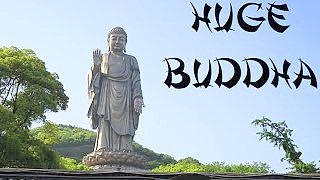
The Grand Buddha at LingShan (Língshān Dà Fó) is the largest bronze Buddha In China with a height of 88 meters. It is located in WuXi, JiangSu province.
It was completed in 1996.
|
|
With Seiu Travel ...
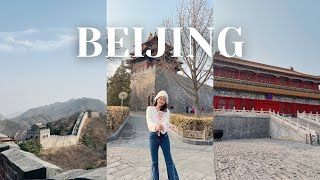
🌹 Yongding Gate
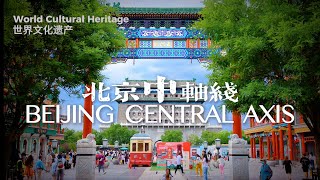
Yongding Gate was the south gate of the outer city of Beijing's old city in the Ming and Qing dynasties. It is the highest-regulated and largest of the seven gates in Beijing's outer city Unfortunately, the original gate was demolished in 1957, and what we see now is the rebuilt one in 2004.
🌹 Temple of Heaven and Altar of the God of Agriculture
The Temple of Heaven and the Altar of the God of Agriculture are located on both sides of the central axis, showing east-west symmetry.
The Temple of Heaven is the largest and most complete existing royal worship building complex in China during the Ming and Qing dynasties.
Official website: http://www.tiantanpark.com/english/
The Altar of Agriculture is the largest existing royal place for worshipping the God of Agriculture in China. It is now converted into a museum of ancient Chinese architecture.
Official website: http://www.bjgjg.com
🌹 Zhengyang Gate
Zhengyang Gate, commonly known as the "front gate", is the south gate of the inner city of Beijing's old city, located on the south side of Tian‘anmen Square. Zhengyang Gate integrates defense, urban management and ceremonial functions and is known as the "first of the nine gates".
🌹 Tian’anmen Square and Buildings
Tian‘anmen Square and buildings are composed of the Monument to the People's Heroes, Chairman Mao Memorial Hall, the Great Hall of the People, and the National Museum of China.
Official website: http://yuyue.tamgw.beijing.gov.cn
🌹 Outer Jinshui Bridge
The Outer Jinshui Bridge is located in front of the Tian’anmen Tower. It was the only way from the imperial city to the southern suburbs for sacrifice (Temple of Heaven, Xiannongtan) in the Ming and Qing dynasties. It is also the ceremonial space for major celebrations today.
🌹 Tiananmen Gatetower
Tiananmen Gatetower was the main gate of the imperial city in the Ming and Qing dynasties. Its platform was connected to the imperial city wall, together forming the southern boundary of the imperial city in the Ming and Qing dynasties. Tiananmen Gatetower was the place where imperial edicts were issued in the Ming and Qing dynasties and major state events were held in modern times.
🌹 Duan Gate
Duan Gate is located on the south side of the Forbidden City, between Wu Gate and Tiananmen Gatetower, and is part of the court space. In the Ming and Qing dynasties, Duan Gate was the place where the emperor's ceremonial supplies were stored.
🌹 Forbidden City
The Forbidden City was the palace city of the Ming and Qing dynasties. It is an outstanding example of Chinese royal palace architecture and is located at the center of the central axis. Official website: https://intl.dpm.org.cn/index.html?l=en
🌹 Imperial Ancestral Temple and Altar of Land and Grain
The Imperial Ancestral Temple and Altar of Land and Grain are the ideal capital planning model of "left ancestor and right community", and are located on the east and west sides of the Forbidden City.
The Imperial Ancestral Temple, now the Working People's Cultural Palace, was the royal ancestral temple of the Ming and Qing dynasties.
Official website: https://www.bjwhg.com.cn
Altar of Land and Grain, now Zhongshan Park, is the most complete ancient royal altar in China for worshiping Taishe (land) and Taiji (grain).
Official website: https://www.zhongshan-park.cn
🌹 Jingshan Hill
Jingshan Mountain is the commanding height and important landscape node on the central axis of Beijing. Official website: http://www.bjjspark.com/index.jhtml
🌹 Wanning Bridge
Wanning Bridge is the oldest bridge on the central axis of Beijing. It is an important water channel in the upper reaches of Tonghui River in the capital of the Yuan Dynasty. It is also a physical object for studying the canal transportation in Beijing during the Yuan Dynasty.
🌹 Bell and Drum Tower
The Bell and Drum Tower, which was responsible for the city's timekeeping and time reporting functions during the Ming and Qing Dynasties, was an important urban management facility.
00:00:00 Highlights
00:01:09 Yongding Gate - the southern gate of Beijing's old city
00:03:42 Remains of the road in the southern section of Beijing's central axis
00:05:26 Temple of Heaven - a place for offering sacrifices to heaven
00:28:18 Altar of Agriculture - a place for offering sacrifices to the god of agriculture
00:36:09 Zhengyang Gate and Qianmen Street
00:41:49 Tian‘anmen Square and buildings
00:49:09 Forbidden City
01:12:52 Imperial Ancestral Temple - a place for offering sacrifices to royal ancestors
01:16:27 Altar of Land and Grain - a place for offering sacrifices to the land and grains
01:20:38 Jingshan
01:29:05Wanning Bridge
01:32:28 Bell and Drum Tower - the northernmost end of the central axis
|
|
With 2Passports 1Dream ...
|
|
|