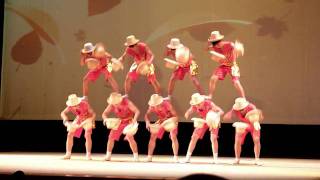
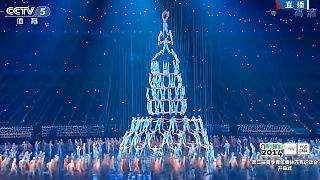
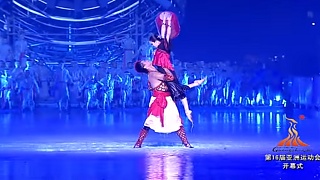
How to take good care of a priceless Ming Vase (acrobatics)

A performance at a Roast Duck restaurant in BeiJing. Amazing skill !


[640],shadow=true,start=10,stop=

Not impressed? Then how about this ;)


[320],shadow=true,start=6,stop=

Related Videos


Featured Videos

East Lake 东湖, ShaoXing 绍兴, ZheJiang province
ShàoXīng is a water-town not far from HangZhou. The East Lake is situated six kilometers (four miles) to the east of the historic ShaoXing city. The exquisite crescent-shaped lake is hemmed in by a hill formed of bluestone, a material widely used in building houses, bridges and roads. Stoneworkers have quarried from this hill since the Han Dynasty (206 BC-220 AD) and over time the hill became hollowed out, leaving only steep cliffs, a deep pool and a number of grottoes. During the Qing Dynasty (1644 - 1911 AD), the lake was beautified with diverse bridges, pavilions and willow trees. Bonus film - peach tree orchard in ShaoXing ...
Something different – on being single
"If you feel lonely when alone, you are in bad company" - Jean-Paul Sartre The meaning of life, is what you choose it to be - Albert Camus
Night walk in ZhenYuan ancient town, GuiZhou
With Walk East ... XiJiang QianHu, Miao village ... 'Little ShangHai' ...
PinXi Liu 六 品析, age 8, amazing rock guitarist
Born in TianMen, near ZhangJiaJie (think of the movie Avatar), HuBei province, she became interested in the guitar and started lessons at age six, with a penchant for heavy metal ! PinXi made her public debut in October 2015, at the China (ShangHai) Musical Instruments Exhibition, invited by the JOYO company as a guest performer; this is the first clip seen here - playing Cross-Ozielzinho. This montage also includes 'Angel of Darkness' by Andy James (age 9; PinXi, not Andy ;). Don't miss it ... Her favorite quote : Believe in yourself. PinXi exhibits that no-hesitation / no force expression strived for in the finest calligraphy, in which the hand and brush are as one. In Chinese this is known as Wu Wei or Wu Wei Wu - loosely translatable as action without effort.
Ten enduring fundamentals of China’s culture
1. Harmony and Balance (和谐 Héxié) Philosophical Roots: Derived from Confucianism, Daoism, and Buddhism, the concept of harmony emphasizes balance in social relationships, nature, and the universe. It promotes peaceful coexistence and cooperation. Social Application: In social and business contexts, maintaining harmony is crucial. Conflicts are often resolved through negotiation and compromise to preserve social stability. 2. Family and Filial Piety (孝 Xiào) Central Role of Family: The family is the cornerstone of Chinese society. Filial piety, respect for one’s parents and ancestors, is a key virtue. Social Structure: Family obligations often take precedence over individual desires, reflecting the collective nature of Chinese culture. 3. Collectivism Community Focus: Chinese culture emphasizes the importance of the group over the individual. This is evident in societal, family, and workplace dynamics. Shared Responsibility: Successes and failures are often viewed as collective rather than individual, fostering a strong sense of community and mutual support. 4. Win-Win Philosophy (共赢 Gòngyíng) Mutual Benefit: In business and diplomacy, the concept of win-win solutions is highly valued. It emphasizes creating outcomes that benefit all parties involved. Long-Term Relationships: Building long-term relationships and mutual trust is prioritized over short-term gains. 5. Respect for Hierarchy and Authority Confucian Influence: Respect for hierarchy is deeply ingrained, influenced by Confucian principles. This is evident in social, familial, and organizational structures. Role of Elders and Leaders: Elders and leaders are accorded high respect and their opinions are given significant weight in decision-making processes. 6. Education and Continuous Learning Value of Education: Education is highly valued and seen as a means to achieve personal and societal improvement. Historical reverence for scholars and intellectuals persists. Meritocracy: Historically, the imperial examination system reinforced the importance of education and merit in attaining social status and governmental positions. 7. Adaptability and Pragmatism Historical Adaptation: China has a long history of adapting to changing circumstances, whether through economic reforms or cultural assimilation. Pragmatic Approach: Practical solutions are often favored over rigid adherence to ideology, allowing for flexibility in governance and daily life. 8. Respect for Tradition and Cultural Heritage Preservation of Traditions: Despite modernization, traditional festivals, customs, and rituals remain integral to Chinese life. Cultural Continuity: There's a strong emphasis on preserving and passing down cultural heritage through generations. 9. Guanxi (关系) - Social Connections and Networks Importance of Relationships: Building and maintaining relationships is crucial in both personal and professional contexts. Guanxi can provide social support, opportunities, and resources. Reciprocity: Relationships are maintained through reciprocal exchanges of favors and support. 10. Yin and Yang (阴阳 Yīnyáng) Philosophical Concept: Represents the duality and interconnectedness of opposites in the natural world. Balance between yin (passive, dark, feminine) and yang (active, light, masculine) is sought. Application in Life: This concept influences various aspects of life, including health, environment, and personal relationships. Conclusion These enduring characteristics shape the Chinese worldview and influence behavior, relationships, and societal norms. Understanding these cultural elements provides valuable insights into the dynamics of Chinese society and its approach to both personal and professional interactions. These values continue to guide life in China into modernity and its international relations.
The magnificently beautiful Temple of Heaven 天坛, BeiJing 北京
South of the Forbidden City and Tian'AnMen Square in central BeiJing, the blue sky city, lies this amazing Taoist temple, set in an abundant area (now park) of trees and a great place to visit. The wonderful architecture is brimming with symbolism and the park as a whole is a favorite for locals to hang out and practice Tai Chi or play JianZi (hacky sack), etc ...
Discover ShangHai 上海城市旅游宣传片 …
Live more !
Yuan DaDu City Wall Park, BeiJing
With MisterVaughn ... Welcome to Yuan Dadu City Wall Park Discover the ancient walls of Beijing About Yuan Dadu City Wall Park Yuan Dadu City Wall Park is a historical park located in the northern part of Beijing, encompassing the remnants of the city walls from the Yuan Dynasty (1271-1368). The park preserves a section of the ancient city walls and provides visitors with a glimpse into the rich history of Beijing. The park stretches for several kilometers and is a popular spot for both locals and tourists to relax, exercise, and learn about the city's past. Main Attractions Ancient City Walls The park features well-preserved sections of the ancient Yuan Dynasty city walls. These walls, originally built to protect the capital, now stand as a testament to the architectural prowess and historical significance of the Yuan Dynasty. City Wall Relics Museum Located within the park, the City Wall Relics Museum offers an in-depth look at the history of the Yuan Dadu city walls. The museum displays artifacts, historical documents, and detailed models of the ancient city. Scenic Walkways The park features beautifully landscaped walkways that run alongside the ancient walls. These walkways are perfect for leisurely strolls and provide visitors with picturesque views of the park's greenery and historical structures. Peony Garden The Peony Garden, located in the park, is a must-visit during the blooming season in spring. The garden showcases a stunning variety of peonies and is a popular spot for photography and relaxation. Activities Morning Exercises Yuan Dadu City Wall Park is a popular spot for locals to perform morning exercises such as tai chi, dancing, and jogging. Visitors can join in or simply enjoy watching these traditional Chinese activities. Photography The park offers excellent opportunities for photography, especially around the ancient city walls and gardens. Capture the historical essence and natural beauty of the park in your photos. Seasonal Festivals Yuan Dadu City Wall Park hosts various cultural events and festivals throughout the year, such as the Peony Festival in spring and traditional Chinese cultural performances. These events provide a deeper understanding of the local culture and history. Transport Yuan Dadu City Wall Park is easily accessible from various parts of Beijing. Here are some ways to get there: By Subway: Take Line 10 to Jiandemen Station, then walk north for about 10 minutes to reach the park. By Bus: Multiple bus routes stop near Yuan Dadu City Wall Park, including routes 27, 55, and 305. Get off at the Dadu Ruins Park stop. By Taxi: Taxis are a convenient option, especially if you are traveling with a group or have heavy luggage. Just ask the driver to take you to Yuan Dadu City Wall Park (元大都城垣遗址公园).
Around SuQian 宿迁, JiangSu province
SuQian is a city with a cultural history of 2,500 years. The earliest use of the name was in 762 A.D. during the Tang Dynasty. The city is located on the North JiangSu Plain, with a highest elevation of 71 m over sea level and the lowest 2.8 m only. The elevation is gradually reduces along northwest to southeast. SuQian is abundant in water resources and the water surface area is close one third of its total land mass. There are two freshwater lakes in SuQian, Lake HongZe, which is one of the four largest freshwater lakes in China, and Lake LuoMa. Four rivers run through the city, including the the Grand Canal. Agriculture, including aquatic produce, accounts for about 25% of the area's economy. The population is around 5 million. Attractions include : * LuoMa Lake Scenic Area: Situated in the northwest of the city, it covers a total area of 375 square kilometers (145 square miles), dotted by many natural scenic spots and historical sites. * QianLong Temporary Palace: Named after the esteemed Qing dynasty emperor, this is a well-preserved building complex on the south bank of LuoMa Lake. It was first built around 1684. * ZhangShan Forest Park: 7 kilometers (4.3 miles) north of the city, the park has a beautiful mix of mountain and water landscapes.

Tag search ?