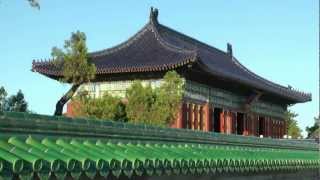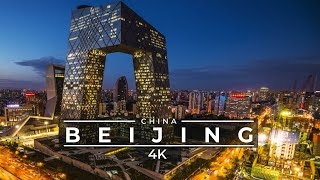
BeiJing 北京, the blue sky city – 1080p version

[640],shadow=true,start=,stop=

Rough-cut version - a polished version will appear here some day ...

Bonus films - 'One day in BeiJing', 'a 17 hours cycle ride around DongCheng, central BeiJing' and BeiJing's unicycle acrobatic stars on French TV; wow - awesome ...

[320],shadow=true,start=,stop=[320],shadow=true,start=,stop=[320],shadow=true,start=,stop=[320],shadow=true,start=,stop=

Love - is the only way ...

Beijing, the capital city of China, is a vibrant metropolis steeped in history, culture, and modernity. Here's a brief overview of what you can expect as a tourist in Beijing:

Historical Landmarks:
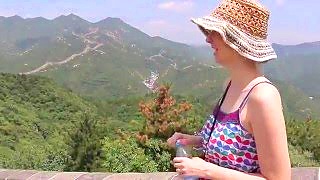
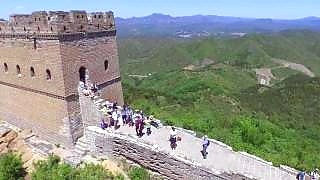
The Great Wall of China: One of the most iconic structures in the world, the Great Wall is easily accessible from Beijing. Mutianyu and Badaling sections are popular among tourists.

Forbidden City (Palace Museum): A UNESCO World Heritage Site, this vast imperial palace complex was home to Chinese emperors for over 500 years. It houses numerous halls, courtyards, and historical artifacts.

Temple of Heaven: A masterpiece of Chinese architecture, this ancient temple complex served as a place of worship for emperors to pray for good harvests.

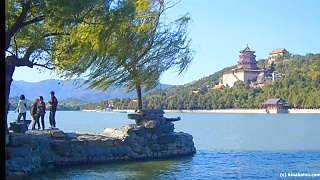
Summer Palace: A stunning ensemble of lakes, gardens, and palaces, the Summer Palace served as a retreat for emperors during the Qing dynasty.

Tiananmen Square: One of the largest city squares in the world, Tiananmen Square is flanked by important landmarks such as the Monument to the People's Heroes, the Great Hall of the People, and the Mausoleum of Mao Zedong.

Cultural Sites:
Beijing Hutongs: Explore the narrow alleyways and traditional courtyard residences of Beijing's historic neighborhoods. You can take a rickshaw tour or simply wander around on foot.

Beijing Opera: Experience traditional Chinese opera performances at venues like the Liyuan Theater or the Chang'an Grand Theatre.

798 Art District: A hub of contemporary art and culture, this former industrial area is now home to numerous galleries, studios, and cafes.

Modern Attractions:
Olympic Park: Visit iconic structures such as the Bird's Nest (National Stadium) and the Water Cube (National Aquatics Center) from the 2008 Beijing Olympics.

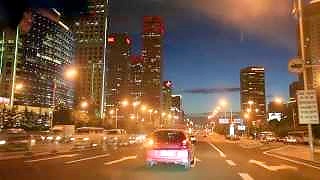
CBD (Central Business District): Marvel at the futuristic skyline of Beijing's modern business district, which includes landmarks like the CCTV Headquarters and the China World Trade Center Tower III.

Culinary Delights:
Peking Duck: Indulge in Beijing's most famous dish, crispy roast duck served with pancakes, scallions, and hoisin sauce.

Street Food: Explore the city's vibrant street food scene and sample local delicacies like jianbing (savory crepes), lamb skewers, and dumplings.

Practical Tips:
Transportation: Beijing has an extensive public transportation system, including the subway, buses, and taxis. However, traffic can be heavy, so plan your travels accordingly.

Language: While English is not widely spoken, especially outside tourist areas, many signs and transportation announcements are in English. It's helpful to carry a translation app or a phrasebook.

Weather: Beijing experiences four distinct seasons, with hot summers and cold winters. The best times to visit are spring (April to June) and autumn (September to October) when the weather is mild and comfortable.

Etiquette: Respect local customs and traditions, such as removing your shoes before entering someone's home and using both hands to pass or receive items.

Beijing offers a rich tapestry of experiences for tourists, blending ancient heritage with modern innovations. Whether you're fascinated by history, culture, or culinary delights, there's something for everyone in this dynamic city.

Related Videos


Featured Videos

The Potala Palace, Tibet, China – an architectural masterpiece
E-bike life in China
As we always say - live more ... : )
Exploring the beautiful HuangShan 黄山 mountain; part 1 (3/8)
In AnHui province.
ShenZhen’s beautiful new metro lines and stations
With Rafa Goes Around! ...
Hiking through the beautiful Tiger Leaping Gorge 虎跳峡
Tiger Leaping Gorge in YunNan province lies 60 kilometers north of LiJiang and is part of the UNESCO 'Three Parallel Rivers of Yunnan' World Heritage Site. The gorge in gorgeous 4K by Milosh Kitchovitch ... Hiking with Tim and Glo ... The site of the leaping rock close up, by Valpard ... The gorge is one of the world's deepest canyons and is populated by a few villages of the NaXi minority. Around 15 km in length, the gorge is located where the river passes between 5,600 meter high Jade Dragon Snow Mountain and the 5,400 meter high HaBa Snow Mountain in a series of rapids below steep 2000 meter cliffs. Legend says that in order to escape from a hunter, a tiger jumped across the river at its narrowest point (still 25 meters wide, though with a rock in the middle). There are a fair number of basic guesthouses for hikers, so your visit does not need to be rushed. These can also provide meals or snacks to passers by. The Hiking Trails. Hiking the entire length of the gorge is possible. There are two paths. The 'the high road' is well-maintained by the locals and marked, although sometimes narrow, and is used by the Naxi as part of everyday life. This trail is longer than the lower road, approximately 22 kilometers (14 miles), but more varied. It features a variety of micro-ecosystems and waterfalls, and is probably the best choice if you only take one of the paths. The 'low road' is a stretch of pavement (until recently a simple mule track) crossed by several waterfalls. This path more closely follows the Yangtze, so there are more views of the river and a stronger sense of being in a gorge. Where the high road descends to meet the lower road, one can climb down to the river near the Tiger Leaping Stone, the point at which the tiger is said to have leaped across in two bounds. Preparation That the gorge is outstandingly beautiful is coupled with the need for care. The environment is natural and so the almost absence of safety clutter puts the responsibility on the those visiting. Rockfalls are not unknown. Prepare for wet weather, which can arrive suddenly, and use suitable shoes. Take extra care when crossing wet rocks and in general don't take risks; think first. Don't go alone in case of accident. Take a mobile phone. Swimming and kayaking are extremely dangerous and must be avoided. Don't go off track; take a map (essential). Head back to your lodgings well before dusk as, being within a gorge, light fades quickly.
Autumn in TaChuan, AnHui province
Tachuan is 5 km northeast of HongCun, on the way to HuangShan.
The beautiful LongQing Gorge 龙庆峡, Beijing
90 kilometers (55 miles) north west of Beijing city, LongQing Gorge offers boating, hiking and more; plus an ice festival in winter. LóngQìng Xiá reminds one of the natural, soaring scenery around GuiLin and YangShuo ...
Pandas at the ChengDu 成都 Panda Research Center
Pandas doing their favorite thing - eating bamboo :) Filmed at the Chengdu Panda Research Center, ChengDu, SiChuan province, in 2008. The smaller Red Panda :
Amazing AnHui 安徽 province …
AnHui, 安徽, lies in East China, just to the west of JiangSu province and ShangHai, and noted for its cuisine and materials related to calligraphy (paper and inkstone). Tourist destinations include HuangShan mountain, HongCun and XiDi ancient villages, Chao Lake, TaiJi Cave, ZhenFeng Pagoda and ZuiWeng Pavilion.

Tag search ?