With Walk East ...
[640],shadow=true,start=,stop=SanHe ancient town ...
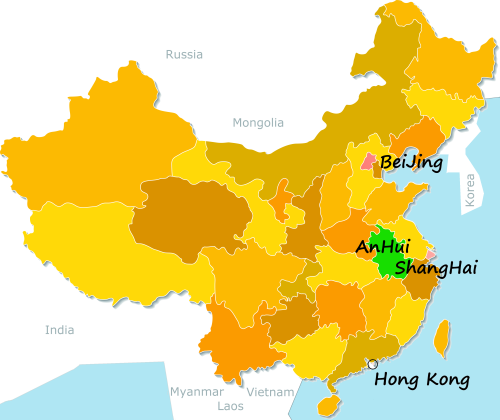
AnHui map
Live more ...
 HeFei city walk, AnHui province
With Walk East ...
[640],shadow=true,start=,stop=SanHe ancient town ...
|
|
Western MSM is pure propaganda / disinfo - it's an info war.
The so-called journalists know very well that they are lying - that's their job !
Video is currently unavailable - but it shows a visit to three hospitals in GuangDong - and things were quiet.
SAJoSkdktf4
Bonus film - The New Atlas with Carl Zha ...
Plus : on China - Russian relations and the multi-polar world; with Mark Sleboda and Carl Zha ...
With Garland Nixon ...
|

|
With Danny HaiPhong and Brian Berletic ...
*** Meanwhile ...
|
|
A very creative film - don't miss this ...
|
|
Firewood, rice, oil, salt, soy sauce, vinegar, and tea 柴米油盐酱醋茶.
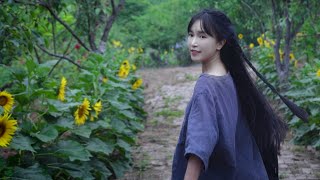
Apollo (YT) : The main focus of this video is salt. It is perhaps the most essential of the seven items important to Chinese culinary life: firewood, rice, oil, salt, soy sauce, vinegar, and tea. LiZiQi shows how salt is refined traditionally in SiChuan, an inland province of China : salt water is extracted from a well, concentrated by boiling in a big pot with firewood, purified by adding soybean milk to remove colored impurities (which float to the top and are skimmed off), and further concentrated to give salt crystals. She then used the salt to prepare/cook a variety of food, including PiDan (a kind of preserved duck egg with a very unique flavor), hand-beaten beef ball (so elastic that it could bounce like a Ping-Pong ball), potato, stewed beef, and more ...
Bonus film - LiZiQi, on white radish ...
A garden within a garden : )
|
|
ZheJiang province.
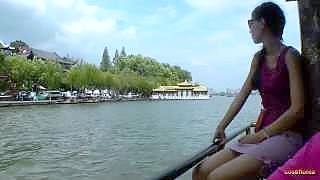
Xī Hú is a fresh water lake with the city on side. There are numerous temples, pagodas, gardens, bridges and artificial islands within and around the lake. West Lake is a UNESCO World Heritage Site as an outstanding example of Chinese garden arts and the guiding principle of harmony between human and nature.
|
|
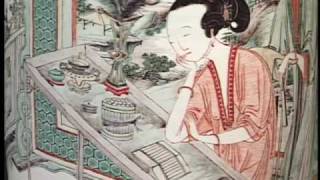
Illustrated by works from China at the Asian Art Museum of San Frascisco, one of the largest collections of Chinese art outside China.
|
|
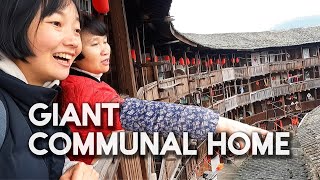
With Yan (Little Chinese Everywhere) ...
|
|
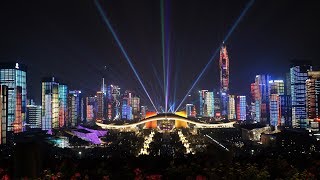
An extended version for the 70th anniversary of the People's Republic of China ...
|