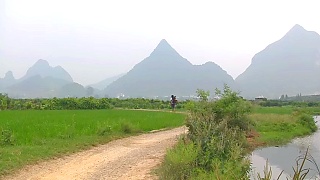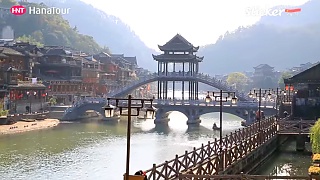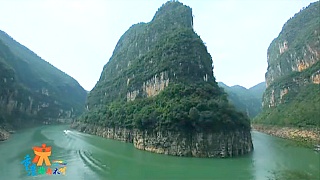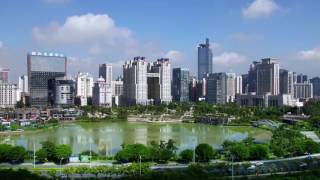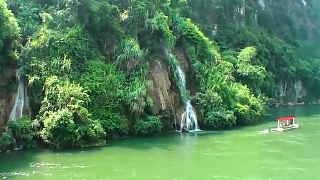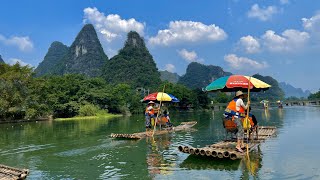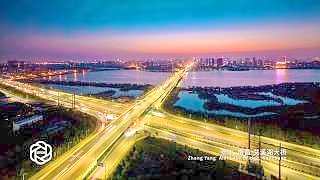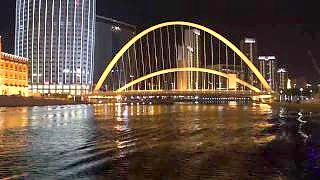
This is LiuZhou 柳州, GuangXi province

[640],shadow=true,start=,stop=
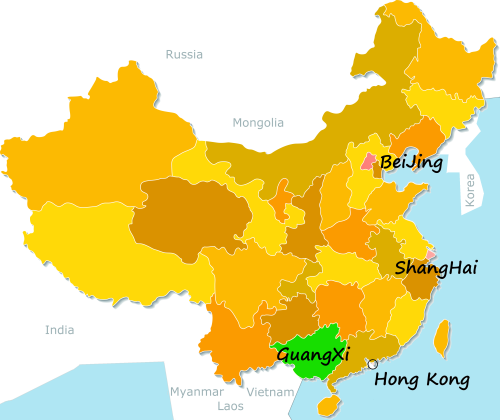
GuangXi map

Related Videos


Featured Videos

TianZhu Mountain (TianZhu Shan), AnHui province
With Travel East ... Travel Guide to Tianzhu Mountain Tianzhu Mountain, located in Anhui Province, is a renowned scenic area known for its stunning granite peaks, ancient temples, and rich cultural history. Its name, which means "Heavenly Pillar," refers to its iconic pillar-like peak that rises majestically above the landscape. Getting There By Air: The nearest airport is Hefei Xinqiao International Airport. From there, take a train or bus to Tianzhu Mountain Scenic Area. By Train: Take a high-speed train to Qianshan Railway Station, then transfer to a local bus or taxi to reach the mountain. By Bus: Regular buses are available from nearby cities such as Hefei and Anqing to the scenic area. Main Attractions Heavenly Pillar Peak The most iconic feature of Tianzhu Mountain, this towering granite peak offers breathtaking views and is a must-visit for hikers and photographers. Ancient Temples Discover centuries-old temples such as Zhenfeng Temple, where you can explore Buddhist culture and enjoy the serene environment. Waterfalls and Streams The mountain is home to numerous waterfalls and crystal-clear streams, providing tranquil spots to relax and enjoy nature. Rock Formations Tianzhu Mountain is famous for its unique granite formations, including caves, cliffs, and natural stone bridges, each with fascinating names and stories. Biodiversity The mountain is a haven for diverse flora and fauna. Nature enthusiasts will appreciate its rare plants and birdwatching opportunities. Activities Hiking: Explore well-maintained trails that lead to scenic viewpoints and hidden natural wonders. Temple Visits: Experience the spiritual side of the mountain by visiting its historic temples and participating in rituals. Photography: Capture stunning landscapes, unique rock formations, and picturesque waterfalls. Practical Tips Weather: Check the weather forecast and dress appropriately. Layers are recommended for varying temperatures. Footwear: Wear sturdy hiking shoes as trails can be steep and uneven. Entrance Fees: Be prepared to pay an entrance fee, which typically includes access to major attractions. Local Food: Enjoy Anhui cuisine at local restaurants near the scenic area. Specialty dishes are worth trying. Transportation: Shuttle buses are available within the scenic area to make getting around easier. Tianzhu Mountain is a captivating destination that combines natural beauty, cultural heritage, and outdoor adventure. Whether you're a hiker, a history enthusiast, or simply seeking a peaceful escape, Tianzhu Mountain offers something for everyone.
Best mountain hikes in China
Mountain Hiking Trips in China Huangshan 黄山 (Huángshān): Embark on an unforgettable journey to the Yellow Mountain, known for its dramatic peaks, deep valleys, and mystical beauty. Huangshan is a UNESCO World Heritage Site and has inspired countless poets and artists with its ethereal landscapes. Visitors can hike along scenic trails lined with ancient pine trees, explore hidden caves and waterfalls, and witness breathtaking views of the sea of clouds that often shroud the peaks. Emei Mountain 峨眉山 (Éméishān): Explore one of the Four Sacred Buddhist Mountains of China, known for its stunning scenery, ancient temples, and diverse wildlife. Emei Mountain is home to the majestic Golden Summit, where visitors can watch the sunrise over a sea of clouds and admire the towering statue of Samantabhadra. Along the way, hikers can encounter playful monkeys, explore serene forests, and visit historic Buddhist monasteries. Jiuhua Mountain 九华山 (Jiǔhuáshān): Discover the beauty and tranquility of Jiuhua Mountain, one of the Four Sacred Buddhist Mountains of China. Jiuhua Mountain is renowned for its sacred temples, including the Tiantai Temple and the Huacheng Temple, which house ancient Buddhist relics and offer stunning panoramic views of the surrounding landscape. Visitors can hike through lush forests, meditate in serene meditation halls, and immerse themselves in the spiritual atmosphere of this sacred mountain. Wudang Mountain 武当山 (Wǔdāngshān): Explore the birthplace of Wudang Kung Fu and the ancient Taoist culture at Wudang Mountain. This UNESCO World Heritage Site is famous for its magnificent ancient buildings, including the Golden Hall, the Purple Cloud Palace, and the Nanyan Temple. Visitors can practice Tai Chi in the peaceful surroundings, hike through scenic valleys and forests, and explore the rich cultural heritage of this historic mountain. Mount Tai 泰山 (Tàishān): Ascend the sacred Mount Tai, known as the "Eastern Mountain of the Five Sacred Mountains." Mount Tai has been a place of worship and pilgrimage for thousands of years and is renowned for its breathtaking natural beauty and cultural significance. Visitors can climb the 7,000 steps to the summit, visit ancient temples and shrines, and admire panoramic views of the surrounding landscape from the Jade Emperor Peak. Mt. Hua 华山 (Huàshān): Challenge yourself with a trek up the steep and rugged trails of Mount Hua, one of China's Five Great Mountains. Known for its precipitous cliffs, narrow plank paths, and breathtaking vistas, Mount Hua offers a thrilling adventure for hikers and outdoor enthusiasts. Visitors can hike to the famous Chess Pavilion, brave the spine-tingling plank walk along the cliff face, and enjoy panoramic views from the mountain's five peaks. Mount Gongga 贡嘎山 (Gònggǎshān): Explore the "King of Sichuan Mountains," known for its stunning glaciers, alpine lakes, and diverse ecosystems. Mount Gongga is one of the highest peaks in the Hengduan Mountains and offers spectacular scenery and challenging trekking opportunities. Visitors can trek through pristine wilderness, climb to high mountain passes, and enjoy panoramic views of the surrounding peaks, including the iconic Minya Konka. Haba Snow Mountain 哈巴雪山 (Hābā Xuěshān): Discover the rugged beauty of Haba Snow Mountain, located on the eastern edge of the Tibetan Plateau. Haba Snow Mountain is known for its dramatic landscapes, including towering peaks, deep gorges, and cascading waterfalls. Visitors can trek through alpine meadows adorned with colorful wildflowers, cross suspension bridges over rushing rivers, and summit the snow-capped peak for breathtaking views of the surrounding landscape. Jade Dragon Snow Mountain 玉龙雪山 (Yùlóng Xuěshān): Explore the stunning landscapes of Jade Dragon Snow Mountain, known for its towering peaks, deep gorges, and alpine meadows. Jade Dragon Snow Mountain is part of the UNESCO World Heritage-listed Three Parallel Rivers of Yunnan Protected Areas and is home to a rich diversity of flora and fauna. Visitors can take a cable car ride to the summit, hike along scenic trails, and admire the views of the famous "13 peaks." Mt. Siguniang 四姑娘山 (Sìgūniángshān): Journey to the "Four Sisters Mountains," known for their towering peaks, alpine lakes, and pristine forests. Mount Siguniang is located in the heart of the Qionglai Mountains and is part of the UNESCO World Heritage-listed Sichuan Giant Panda Sanctuaries. Visitors can trek through scenic valleys, visit Tibetan villages, and admire the stunning beauty of the snow-capped mountains, including the four distinct peaks that give the mountain its name.
Xi’An street view drive and bike around, ShaanXi province
With China Street View ... With Walk East ... With Ahead Of Thyme ...
Beautiful YiChang 宜昌, HuBei province
Includes the Three Gorges Dam.
Beautiful ShanDong 山东 province
ShānDōng lies on the coast in east China, roughly halfway between BeiJing and ShangHai. Provincial capital : JiNan. Also includes the city of QuFu, the birthplace of Confucius. Other well-known cities include QingDao, ZaoZhuang, YanTai, WeiFang, JiNing, LinYi and DeZhou. Among others, ShanDong is known for TaiShan sacred mountain, a large number of natural springs that arise from the mountains to the west (ShanDong means 'East of the Mountains), DaMing Lake formed from the spring waters, LaoShan Scenic Area, Thousand Buddha Mountain, LingYan Temple - one of the 4 most famous temples (四大名刹) from the Tang dynasty, PengLai Pavilion, wine-making and its distinctive cuisine, partly centered on seafood.
The beautiful Beihai Park 北海公园 in central BeiJing
Spring is coming soon - welcome ...
SanMing 三明, FuJian province
KunMing 昆明, provincial capital of YunNan
Starting with a beautiful timelapse ... Followed by a look around the city, including Green Lake.
First time in China – ShangHai to SuZhou by high speed rail – plus a guide for visitors
With Dany Dev ... A Guide to China's High-Speed Rail Network China's high-speed rail (HSR) network is the largest and most advanced in the world, offering an efficient, modern, and fast way to travel across the country. Since its inception, the network has revolutionized travel within China, making it easier and quicker to connect cities and regions that were once separated by long distances. Overview of the High-Speed Rail Network Size and Scope: As of 2024, China’s HSR network spans over 40,000 kilometers (25,000 miles), connecting nearly all major cities across the country. The network is continuously expanding, with new lines being constructed each year. Speed: Trains on the high-speed network typically travel at speeds ranging from 250 to 350 kilometers per hour (155 to 217 miles per hour). Some of the fastest trains, such as those on the Beijing–Shanghai line, can reach speeds up to 350 km/h. Key Routes: Beijing-Shanghai: This flagship route is one of the busiest and most popular, covering a distance of 1,318 kilometers (819 miles) in about 4.5 hours. Beijing-Guangzhou: One of the longest HSR routes in the world, spanning 2,298 kilometers (1,428 miles) and taking around 8 hours. Shanghai-Hong Kong: Connects the financial hub of Shanghai with the vibrant city of Hong Kong, covering 1,200 kilometers (746 miles) in approximately 8 hours. Xi’an-Chengdu: A scenic route that links the historic city of Xi’an with Chengdu, famous for its pandas, covering 658 kilometers (409 miles) in about 3 hours. Guangzhou-Shenzhen-Hong Kong: This line offers a rapid connection between the three major economic hubs, with a travel time of about 14 minutes from Shenzhen to Hong Kong. Features of China’s High-Speed Trains Train Classes: China’s high-speed trains are classified primarily into three categories based on speed and service: G-Class (Gaotie): The fastest trains, operating at speeds up to 350 km/h. These are typically used on major routes like Beijing-Shanghai. D-Class (Dongche): Slightly slower, operating at speeds up to 250-300 km/h. These trains are often used on shorter or less busy routes. C-Class: Suburban trains designed for short-distance travel, operating at speeds up to 200-250 km/h. Comfort and Amenities: Seating: HSR trains offer different classes of seating, including Second Class, First Class, and Business Class. Business Class offers the most luxurious experience, with wide reclining seats and more space. Facilities: Trains are equipped with modern amenities such as power outlets, Wi-Fi (on some trains), clean restrooms, and food and beverage services. Quiet carriages are also available for passengers who prefer a more serene environment. Punctuality: The HSR network is known for its punctuality, with trains typically departing and arriving on time. Key Stations and Infrastructure Major Hubs: Beijing South Railway Station: One of the largest and busiest HSR stations, serving as a key hub for northern and central China. Shanghai Hongqiao Railway Station: A massive transportation hub that integrates rail, air, and metro services, making it one of the most important stations in eastern China. Guangzhou South Railway Station: A key gateway to southern China, connecting the region with major cities like Shenzhen and Hong Kong. Wuhan Railway Station: A central hub in the heart of China, crucial for connections between the east and west. Modern Design: The stations are often architectural marvels, designed to handle large volumes of passengers efficiently. Many stations are integrated with other forms of transport, including metro lines and airports, making transfers seamless. Benefits of Using the High-Speed Rail Network Speed and Efficiency: High-speed trains are often faster than flying when considering the time spent on security checks and travel to and from airports. For distances up to 1,200 kilometers (746 miles), trains are often the quickest option. Convenience: With frequent departures, extensive coverage, and easy booking options (including online and mobile apps), the HSR network is extremely convenient for both domestic and international travelers. Environmental Impact: HSR is a greener option compared to air travel, contributing less to carbon emissions per passenger kilometer. Challenges and Future Prospects Expansion to Rural Areas: While the HSR network covers most major cities, there are ongoing efforts to expand services to more rural and remote areas, ensuring broader access. International Links: China is also exploring international HSR connections, such as a proposed high-speed rail link to Moscow, Russia, which could enhance connectivity beyond China's borders. Technological Advances: China is investing in maglev (magnetic levitation) technology, which could further increase speeds to around 600 km/h (373 mph), positioning China at the forefront of global rail innovation. Tips for Travelers Booking Tickets: Tickets can be booked online, at stations, or through travel agencies. During peak travel times, such as Chinese New Year, it is advisable to book tickets well in advance. Travel Documents: Foreign travelers will need to present their passports when booking tickets and boarding trains. Luggage: There are generous luggage allowances on HSR trains, with space available for larger items in overhead compartments or at the ends of carriages. Language: While English signage is available in major stations, it is useful to have your destination written in Chinese to show to station staff if needed. Conclusion China’s high-speed rail network is a remarkable achievement in modern transportation, offering an efficient, comfortable, and eco-friendly way to explore the vast and diverse landscapes of the country. Whether you are traveling for business or leisure, the HSR network provides an unparalleled travel experience that continues to set global standards.

Tag search ?