The world’s highest bridge

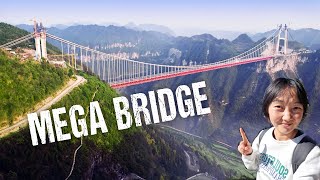
SiDuHe suspension bridge is the highest bridge in the world (drop).


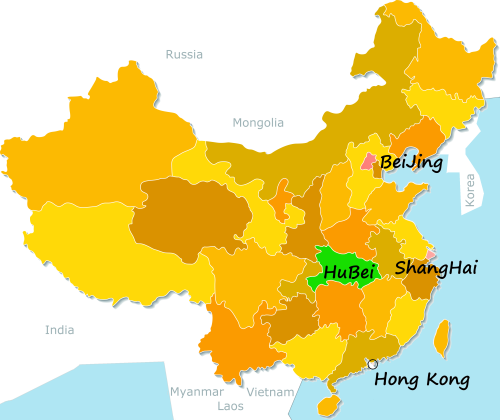
The first film shows SiDuHe bridge. While the Royal Gorge Bridge in America is a mighty 291 m (955 feet) high, the distance from the bridge to the bottom of the steep gorge at SiDeHu is a whopping 472 m (1,549 ft)! It is 1.2 km long (the central span is 900m) and opened at the end of 2009. It lies on the route from Shanghai to ChengDu in HuBei province.


The next two films show the LongTanHe Viaduct (also in HuBei province). This only just makes the top 40 highest bridges but as you will see from the videos, its almost 200m height is still most impressive; and another engineering marvel.


[640],shadow=true,start=,stop=
[320],shadow=true,start=,stop= [320],shadow=true,start=,stop=
HuBei map

Related Videos


Featured Videos

Cancer as a metabolic disease – stage 4 survival strategy
With Dr. Eric Berg and Guy Tenenbaum ... Note : prolonged fasting requires more than just water (plus green tea and a little black coffee), such as salt (lo-salt), about 1 and a 1/2 tsp / day (more as needed), electrolytes and other essential vitamins. No sugar, fruit or sweetener. Do research first and maybe start with as little as 1 or 2 days, intervened with OMAD (keto). Also see this video film ... Note : Missed curcumin, which has the most support in studies. Take with a little black pepper and EVOO. Up to 5 or 6g / day. Arguably, curcumin (a turmeric extract), ECGC (a green tea extract) and sulforaphane (a broccoli extract) are the most important three (see pubmed).
The ShangHai 上海 World Expo farewell concert
September 31st, 2010.
Walnuts 核桃 – harvesting and preparing
An open-air, walnut oil based family feast in YunNan province ...
A trip to LiShui, ZheJiang province
With Expat Natt ... Bonus film - ZhuJiaJiao water town, just outside ShangHai (one can travel there by metro) : with Eoin and Aisling ...
Aerial view of the beautiful LaoJunShan Mountain 老君山
Near LuoYang, provincial capital of HeNan, central China. There is a LaoZi Cultural Park near the foot of the mountain and a cable car is available to reach the top. The ancient sage LaoZi (in modern PinYin though one will still also see Lao-Tse or Lao-Tzu) who started Daoism (Taoism) and authored the Dao De Jing (Tao Te Ching), is said to have gained inspiration here around 550 BC. The Dao (道) which roughly translates as 'the way', in the sense of how things are, is a concept that existed in Chinese thought many centuries before LaoZi, but it was LaoZi who developed the concept considerably. Wu Wei (無爲), literally "non-action" or "not acting", is a central concept of the DaoDeJing. The concept of wu wei is multi-faceted, and reflected in the words' multiple meanings, even in English translation; it can mean "not doing anything", "not forcing", "not acting" in the theatrical sense, "creating nothingness", "acting spontaneously", and "flowing with the moment / 'here and now'". It is a concept used to explain ZiRan (自然), or harmony with the Dao. LaoZi used the term broadly with simplicity and humility as key virtues, often in contrast to selfish action. On a political level, it means avoiding such circumstances as war, harsh laws and heavy taxes. The 'ruler' can also refer to the 'self'. There is an overlap here with the Buddha's teachings that suffering stems from attachments and desires, ultimately to the notion of a separate self. In Chinese philosophy, Yin and Yang (陰陽 YīnYáng, "dark—light") describes how opposite or contrary forces are actually complementary, interconnected, and interdependent in the natural world, and how they give rise to each other as they interrelate to one another. While duality is found in many belief systems, Yin and Yang are parts of a Oneness that is also equated with the Dao. Yin and yang can be thought of as complementary (rather than opposing) forces that interact to form a dynamic system in which the whole is greater than the assembled parts; it is a holistic view. Everything has both yin and yang aspects, though either of the two major aspects may manifest more strongly in a particular object, depending on the criterion of the observation. Yin and Yang is a balance between two seeming opposites with a portion of the opposite element in each. Some of LaoZi's famous sayings include: "When goodness is lost, it is replaced by morality." "Without Darkness, there can be no Light." "The usefulness of a pot comes from its emptiness." "The best people are like water, which benefits all things and does not compete with them. It stays in lowly places that others reject. This is why it is so similar to the Way." "When people see some things as beautiful, other things become ugly. When people see some things as good, other things become bad." "Try to change it and you will ruin it. Try to hold it and you will lose it." "Those who know do not say. Those who say do not know." "When you realize there is nothing lacking, the whole world belongs to you." "Nature does not hurry, yet everything is accomplished." "A good traveler has no fixed plans, and is not intent on arriving." "Music in the soul can be heard by the universe." "A journey of a thousand miles starts under one's feet." "The more that laws and regulations are given prominence, the more thieves there will be." Alan Watts - 'The Daoist Way' ...
Exploring TengChong, YunNan province
With Clare Traveling Pandaland ... Tengchong, Yunnan Province: A Visitor's Guide Tengchong, located in the western part of Yunnan Province near the border with Myanmar, is a gem of natural beauty, rich history, and unique culture. Known for its volcanic landscapes, hot springs, and historical significance, it offers a mix of relaxation, adventure, and cultural exploration. How to Get There By Air: Tengchong Tuofeng Airport connects the city to major Chinese cities like Kunming and Chengdu. By Road: A scenic drive from Kunming takes around 8–10 hours by car or bus, passing through the mountainous Yunnan terrain. Top Attractions 1. Rehai Hot Springs Why Visit: Known as "Hot Sea," this geothermal area has over 80 hot spring pools, each with unique properties. Some are perfect for a relaxing soak, while others are too hot and are used for steaming food or traditional therapies. Don’t Miss: Try the therapeutic spa treatments or soak in an outdoor pool surrounded by lush greenery. 2. Tengchong Volcanic Geothermal National Park Highlights: Home to dormant volcanic craters and lava fields, this park offers hiking trails with breathtaking views. Activities: Climb up volcanoes like Dakongshan (Large Empty Mountain) for panoramic views, or explore the Lava Stone Forest. 3. Heshun Ancient Town Why Visit: A quaint town filled with cobbled streets, traditional Yunnan-style homes, and a rich history of overseas Chinese who returned home. Must-See: Visit the Heshun Library, one of the oldest private libraries in China, and explore the charming teahouses and ancestral halls. 4. Beihai Wetlands Overview: This serene area features floating meadows and diverse bird species. Activities: Take a boat ride through the wetlands or enjoy bird-watching during migratory seasons. 5. Yunfeng Mountain Why Visit: A sacred Taoist site with an ancient temple at its peak. What to Do: Hike or take a cable car up the mountain, then enjoy stunning views of the surrounding countryside. 6. Dianmian Anti-Japanese War Memorial Historical Importance: Tengchong was a key battleground during WWII. This memorial honors the local and international soldiers who fought against Japanese forces. What to See: Artifacts, photographs, and the reconstructed battle sites. Cultural Highlights Traditional Crafts: Tengchong is famous for its jade carving. Visit local workshops to see artisans at work or purchase unique jade jewelry. Ethnic Diversity: Experience the culture of the Bai, Dai, and Lisu ethnic groups through their festivals, dances, and cuisines. Local Cuisine Signature Dishes: Guoqiao Mixian (Crossing-the-Bridge Noodles): A flavorful noodle soup with a variety of toppings. Bamboo Rice: Sticky rice cooked in bamboo tubes. Tengchong Fried Pork: Crispy pork stir-fried with local spices. Mushroom Hotpot: A must-try with Yunnan’s diverse range of wild mushrooms. Snacks: Don’t miss the fengmi baba (honey glutinous rice cake) or fried potato balls. Best Time to Visit Spring and Autumn (March–May, September–November): These seasons offer mild weather and clear skies, perfect for outdoor exploration. Winter (December–February): Ideal for enjoying the hot springs, though mornings and evenings can be chilly. Shopping Jade and Gemstones: Tengchong is renowned for its high-quality jade. Look for authentic pieces in certified stores. Local Handicrafts: Embroidered textiles, wooden carvings, and bamboo products make great souvenirs. Tea: Yunnan is known for its Pu’er and black teas, widely available in Tengchong. Practical Tips Language: Mandarin is widely spoken, though some locals speak Yunnan dialects. Learn a few basic phrases for ease of communication. Currency: Bring enough cash, as rural areas may not accept cards or digital payments. Transportation: Rent a bicycle or use tuk-tuks to explore small towns like Heshun. Clothing: Pack layers, as temperatures can fluctuate between day and night, especially in the mountains. Day Trips Ruili: A bustling border town with vibrant markets and a mix of Chinese and Burmese cultures. Myanmar Border: Visit the border towns to experience the unique blend of Chinese and Burmese influences. Tengchong is a destination that beautifully combines natural wonders, cultural depth, and historical significance, offering something for every traveler.
HongYa Cave shopping area, ChongQing
With Walk East ... Downtown drive ...
Tim and Glo in Hong Hong 香港
Including the Dragon's Backbone hike to Big Wave Bay. A lovely film ... A short bonus film - the view from Victoria Peak, by Francis So ...
LuJiaZui 陆家嘴, ShangHai 上海

Tag search ?