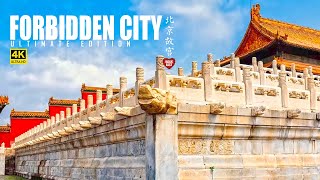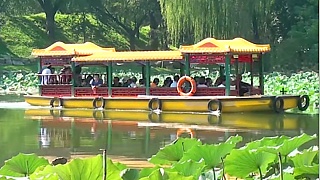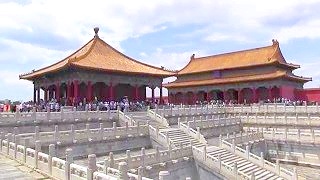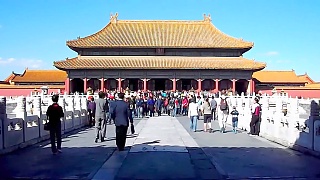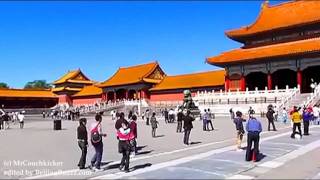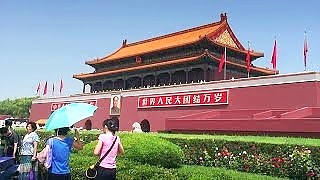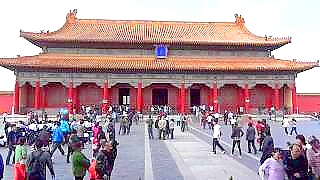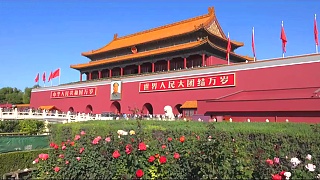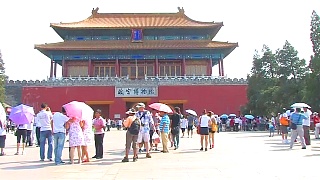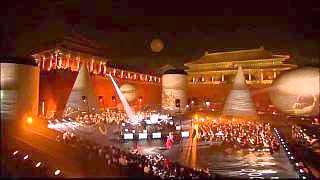
A look around the Forbidden City 紫禁城 in BeiJing

Filmed in July 2011


[640],shadow=true,start=,stop=

Video by Orien Travel http://www.orientravel.pl


The Forbidden City, located in the heart of Beijing, China, is one of the most iconic and historically significant attractions in the country. Here's a guide for tourists visiting the Forbidden City:

History and Significance:
Imperial Palace: The Forbidden City served as the imperial palace and political center of China for nearly 500 years, from the Ming Dynasty (13681644) to the end of the Qing Dynasty (16441912). It was home to emperors and their households and served as the ceremonial and political center of Chinese government.

Architecture: The Forbidden City is renowned for its magnificent architectural design, featuring grand halls, pavilions, courtyards, and ceremonial gates. It exemplifies traditional Chinese palace architecture and design principles, with intricate decorations and symbolic elements.

Visiting the Forbidden City:
Layout: The Forbidden City is rectangular in shape and covers an area of about 180 acres. It is surrounded by a large moat and high walls, with four main gates: the Meridian Gate (south), the Gate of Divine Might (north), and the East and West Glorious Gates.

Highlights: Key attractions within the Forbidden City include the Hall of Supreme Harmony, the Hall of Central Harmony, the Hall of Preserving Harmony, the Palace of Heavenly Purity, the Palace of Earthly Tranquility, and the Imperial Garden. Each building has its own unique architectural style and historical significance.

Exhibitions: The Forbidden City houses an extensive collection of artifacts, artwork, and cultural relics from China's imperial past. Visitors can explore exhibitions showcasing imperial treasures, ceremonial objects, calligraphy, paintings, and ancient manuscripts.

Guided Tours: Guided tours are available for visitors who want to learn more about the history, architecture, and cultural significance of the Forbidden City. Audio guides in multiple languages are also available for self-guided tours.

Tips for Tourists:
Tickets and Entry: Tickets to the Forbidden City can be purchased at the entrance gates or online in advance to avoid long queues, especially during peak tourist seasons.

Opening Hours: The Forbidden City is open to visitors every day except Mondays. It is advisable to check the opening hours and plan your visit accordingly.

Comfortable Footwear: The Forbidden City is vast, and exploring its many halls and courtyards involves a fair amount of walking. Wear comfortable footwear and clothing suitable for walking and climbing stairs.

Respect the Rules: Follow the rules and regulations of the Forbidden City, such as no smoking, no littering, and no touching or climbing on the historic structures.

Photography: Photography is permitted in most areas of the Forbidden City, but some sections may have restrictions or require an additional photography permit. Respect any signage and guidelines regarding photography.

Cultural Insights:
Historical Significance: Take the time to learn about the history and significance of the Forbidden City, including its role in Chinese imperial history and its architectural symbolism.

Symbolism and Design: Pay attention to the architectural features, symbolism, and layout of the Forbidden City, which reflect Chinese cosmology, philosophy, and imperial authority.

Imperial Lifestyle: Explore the living quarters, ceremonial halls, and gardens to gain insights into the lifestyle, customs, and rituals of China's imperial rulers and their families.

Visiting the Forbidden City offers a fascinating glimpse into China's imperial past, with its grandeur, history, and cultural heritage preserved for visitors to explore and appreciate.

Beijing, the capital city of China, is a vibrant metropolis steeped in history, culture, and modernity. Here's a brief overview of what you can expect as a tourist in Beijing:

Historical Landmarks:
The Great Wall of China: One of the most iconic structures in the world, the Great Wall is easily accessible from Beijing. Mutianyu and Badaling sections are popular among tourists.

Forbidden City (Palace Museum): A UNESCO World Heritage Site, this vast imperial palace complex was home to Chinese emperors for over 500 years. It houses numerous halls, courtyards, and historical artifacts.

Temple of Heaven: A masterpiece of Chinese architecture, this ancient temple complex served as a place of worship for emperors to pray for good harvests.

Summer Palace: A stunning ensemble of lakes, gardens, and palaces, the Summer Palace served as a retreat for emperors during the Qing dynasty.

Tiananmen Square: One of the largest city squares in the world, Tiananmen Square is flanked by important landmarks such as the Monument to the People's Heroes, the Great Hall of the People, and the Mausoleum of Mao Zedong.

Cultural Sites:
Beijing Hutongs: Explore the narrow alleyways and traditional courtyard residences of Beijing's historic neighborhoods. You can take a rickshaw tour or simply wander around on foot.

Beijing Opera: Experience traditional Chinese opera performances at venues like the Liyuan Theater or the Chang'an Grand Theatre.

798 Art District: A hub of contemporary art and culture, this former industrial area is now home to numerous galleries, studios, and cafes.

Modern Attractions:
Olympic Park: Visit iconic structures such as the Bird's Nest (National Stadium) and the Water Cube (National Aquatics Center) from the 2008 Beijing Olympics.

CBD (Central Business District): Marvel at the futuristic skyline of Beijing's modern business district, which includes landmarks like the CCTV Headquarters and the China World Trade Center Tower III.

Culinary Delights:
Peking Duck: Indulge in Beijing's most famous dish, crispy roast duck served with pancakes, scallions, and hoisin sauce.

Street Food: Explore the city's vibrant street food scene and sample local delicacies like jianbing (savory crepes), lamb skewers, and dumplings.

Practical Tips:
Transportation: Beijing has an extensive public transportation system, including the subway, buses, and taxis. However, traffic can be heavy, so plan your travels accordingly.

Language: While English is not widely spoken, especially outside tourist areas, many signs and transportation announcements are in English. It's helpful to carry a translation app or a phrasebook.

Weather: Beijing experiences four distinct seasons, with hot summers and cold winters. The best times to visit are spring (April to June) and autumn (September to October) when the weather is mild and comfortable.

Etiquette: Respect local customs and traditions, such as removing your shoes before entering someone's home and using both hands to pass or receive items.

Beijing offers a rich tapestry of experiences for tourists, blending ancient heritage with modern innovations. Whether you're fascinated by history, culture, or culinary delights, there's something for everyone in this dynamic city.

Related Videos


Featured Videos

China 中国 wedding
In a few hours it will be China's 'Singles Day' 11 / 11. Single ? Celebrate your freedom ;) Regardless, we hope all our visitors will one day find (or have found) their true love ... Romantic songs galore ... When love calls your name ... are you ready to believe ? Are you strong enough, to trust in love ...? No matter what ... Forever my baby; always yours ... A beautiful heart creates our paradise ... It can be a beautiful world, when you share your dream ... It's amazing ! You can count on me ... Three little words :Wo ai ni (I love you) ... Waiting for my chance,I was lost, then found,All I know is :We're all in the dance. One life ... one love ... Beginning with 'Superhero Wedding' ...
The Great Wall of China via High Speed Rail, BeiJing
BaDaLing railway station is the deepest High-speed railway station in the world, 102 meters below the ground. With Walk For You ... The Temple of Heaven, TianTan, in central BeiJing ... High speed rail in China; now 38,000 kilometers ...
The awesomely beautiful HuangShan Mountain 黃山  Don’t miss it
HuangShan lies in AnHui province, east China, to the west of HangZhou.
ShangHai 上海 city in timelapse
Tibet (XīZàng), China 西藏 (Scenic China Special, 2018 – 3)
Tiger Leaping Gorge hiking trek, YunNan province
With JHMedium ... Welcome to Tiger Leaping Gorge Explore one of the deepest gorges in the world About Tiger Leaping Gorge Tiger Leaping Gorge, located in Yunnan province, China, is one of the deepest and most spectacular river canyons in the world. It lies between Jade Dragon Snow Mountain and Haba Snow Mountain, with a maximum depth of approximately 3,790 meters (12,434 feet). The gorge is part of the Three Parallel Rivers of Yunnan Protected Areas, a UNESCO World Heritage Site. Hiking Trails High Trail The High Trail is the most popular route for hikers. It offers stunning views of the gorge and the surrounding mountains. The trail takes 2-3 days to complete and passes through various guesthouses and small villages. Lower Trail The Lower Trail follows the Jinsha River and provides an up-close experience with the river and the sheer cliffs. This trail is less challenging and can be done in a single day. Middle Gorge The Middle Gorge trail is a more adventurous option, featuring steep descents to the river and opportunities to get close to the Tiger Leaping Stone, where legend has it a tiger leaped across the gorge. Famous Guesthouses Jane's Guesthouse Located at the trailhead in Qiaotou, Jane's Guesthouse is a popular starting point for hikers. It offers basic accommodation, meals, and information about the trails. Tea Horse Guesthouse Situated along the High Trail, Tea Horse Guesthouse provides comfortable rooms and excellent views of the mountains. It's a great spot for an overnight stay. Halfway Guesthouse Halfway Guesthouse is known for its stunning panoramic views of the gorge. It is roughly halfway along the High Trail, making it a convenient stop for hikers. Tina's Guesthouse Located near the end of the High Trail, Tina's Guesthouse is a popular place to stay before heading to the Middle Gorge. It offers good food and comfortable accommodation. Transport Tiger Leaping Gorge is accessible from major cities in Yunnan province. Here are some ways to get there: From Lijiang: Buses and private transfers are available from Lijiang to Qiaotou, the starting point of the gorge. The journey takes about 2-3 hours. From Shangri-La: There are regular buses from Shangri-La to Qiaotou, taking approximately 4 hours. Private transfers are also an option. By Car: If you prefer driving, you can rent a car and drive from Lijiang or Shangri-La to Qiaotou. The roads are well-maintained, and the drive offers scenic views.
Happy New Year 2023 to all our visitors  : )( :
We wish you all the best - remember to Live More ... At BB, we have one (or two) bugs still to fix - mainly to do with tags - but we will be getting ever better throughout this year, and beyond. Many more culture and travel videos to come ... ~ The BB team.
ZhangZhou trip, FuJian province
Hong Kong family explore their ancestral origins, including the awesome Hakka tulou. With Cynny Goes To China ...
The extraordinary LongJi (Dragon’s Backbone) rice terraces, GuangXi province
With EpicGlobe Walks ... Visitor Guide to the Longji Dragon’s Backbone Rice Terraces Introduction The Longji Dragon’s Backbone Rice Terraces, Longsheng County, Guangxi Province, are one of the most breathtaking agricultural landscapes in the world. These terraces, which resemble a dragon’s scales, were first built during the Yuan Dynasty (1271–1368) and have been maintained by the local Zhuang and Yao communities for centuries. The terraces are a testament to human ingenuity and harmony with nature. Best Time to Visit The Longji Rice Terraces are stunning year-round, but the best times to visit are: Spring (April–May): The terraces are filled with water, creating a mirror-like effect that reflects the sky and surrounding mountains. Summer (June–August): The rice paddies are lush and green, offering a vibrant landscape. Autumn (September–October): The rice turns golden, creating a warm, picturesque scene. Winter (November–February): The terraces are sometimes covered in snow, offering a serene and unique view. How to Get There The Longji Rice Terraces are approximately 100 kilometers from Guilin. Here’s how to reach them: By Bus: Take a bus from Guilin Bus Station to Longsheng (about 2 hours). From Longsheng, transfer to a local bus or taxi to the terraces (another 1 hour). By Private Car: Hiring a private car or taxi from Guilin is a convenient option and takes about 2.5 hours. By Tour: Many tour operators in Guilin offer day trips to the terraces, including transportation and guided tours. Main Attractions 1. Ping’an Terraces The Ping’an Terraces are the most accessible and popular section of the Longji Rice Terraces. Highlights include: Seven Stars with Moon: A cluster of seven small rice paddies surrounding a larger one, resembling stars and the moon. Nine Dragons and Five Tigers: A scenic spot where the terraces resemble dragons and tigers. 2. Jinkeng Terraces The Jinkeng Terraces are less crowded and offer stunning views. Key spots include: Golden Buddha Peak: The highest point in the area, offering panoramic views of the terraces. Yao Minority Villages: Visit the traditional villages of the Yao people, known for their long hair customs. Activities Hiking: Explore the terraces on foot via well-marked trails. Popular routes include Ping’an to Jinkeng and vice versa. Photography: Capture the stunning landscapes, especially during sunrise and sunset. Cultural Experiences: Visit local villages to learn about the Zhuang and Yao cultures, including traditional dances and handicrafts. Tips for Visitors Wear Comfortable Shoes: The terrain is hilly and uneven, so sturdy footwear is essential. Bring Layers: The weather can change quickly, especially at higher elevations. Stay Hydrated: Carry water, especially if you plan to hike. Respect Local Customs: Be mindful of the local cultures and traditions. Cash is King: Many local vendors and small businesses do not accept credit cards. Where to Stay There are several accommodation options near the terraces, ranging from guesthouses to boutique hotels. Popular choices include: Ping’an Village: Offers a range of guesthouses with stunning terrace views. Dazhai Village: Known for its Yao culture and cozy lodgings. Conclusion The Longji Dragon’s Backbone Rice Terraces are a must-visit destination for nature lovers, photographers, and cultural enthusiasts. Whether you’re hiking through the terraces, learning about local traditions, or simply soaking in the breathtaking views, this UNESCO World Heritage Site promises an unforgettable experience.

Tag search ?