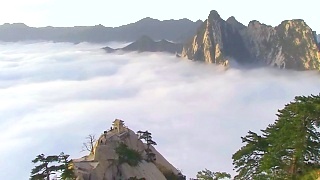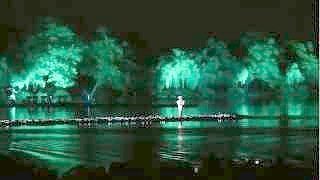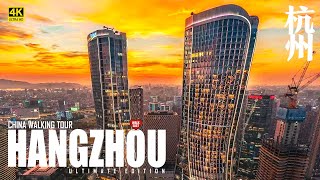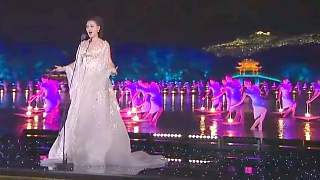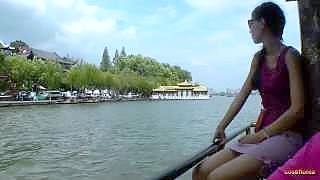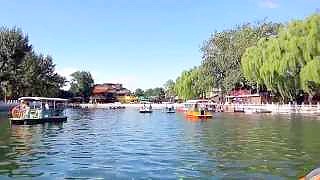
The West Lake, HangZhou, ZheJiang province

With Lincoln's Travel ...

[640],shadow=true,start=,stop=

Hangzhou, located in eastern China's Zhejiang province, is renowned for its picturesque West Lake, traditional tea culture, and historic sites. Here's a guide for tourists visiting Hangzhou:

West Lake and Scenic Areas:
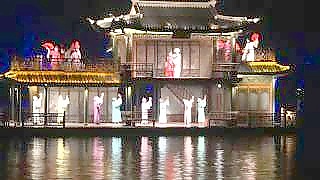
West Lake (Xi Hu): This UNESCO World Heritage Site is the centerpiece of Hangzhou's natural beauty, with its serene waters, pagodas, gardens, and surrounding hills. Visitors can take boat cruises, stroll along the lakeside paths, or rent bicycles to explore the area.

Leifeng Pagoda: Situated on the southern shore of West Lake, this historic pagoda offers panoramic views of the lake and the city skyline.

Lingyin Temple (Temple of the Soul's Retreat): One of the most important Buddhist temples in China, Lingyin Temple features ancient rock carvings, serene courtyards, and a large statue of Buddha.

Xixi Wetland Park: Explore the tranquil waterways, traditional villages, and lush greenery of this scenic wetland park, located on the outskirts of Hangzhou.

Tea Culture:
Longjing (Dragon Well) Tea Plantations: Hangzhou is famous for producing Longjing tea, one of China's most prized green teas. Visitors can tour the tea plantations in the nearby hills, learn about the tea-making process, and sample freshly brewed Longjing tea.

National Tea Museum: Learn about the history, cultivation, and cultural significance of tea in China at this informative museum located on the outskirts of Hangzhou.

Historic and Cultural Sites:
Six Harmonies Pagoda (Liuhe Pagoda): This ancient pagoda offers panoramic views of the Qiantang River and the surrounding countryside. It also houses a small museum showcasing Buddhist artifacts.

Hefang Street (Qinghefang Ancient Street): Stroll along this historic street lined with traditional shops, teahouses, and snack stalls selling local delicacies and handicrafts.

China National Silk Museum: Discover the art of silk production and the history of the silk trade in China at this museum, which features exhibits on silk weaving, dyeing techniques, and cultural artifacts.

Modern Attractions:
Hangzhou Grand Canal: Take a boat cruise along the Grand Canal, the world's longest and oldest canal, to admire the historic architecture and bustling waterfront scenes.

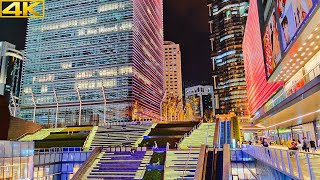
Hangzhou CBD (Central Business District): Explore the modern side of Hangzhou with its skyscrapers, shopping malls, and vibrant nightlife.

Practical Tips:
Transportation: Hangzhou has an extensive public transportation network, including buses, subways, and taxis. Bicycles and electric scooters are also popular options for getting around the city.

Weather: Hangzhou has a humid subtropical climate with hot, humid summers and mild, damp winters. Spring and autumn are the best times to visit when the weather is pleasant and the landscapes are at their most beautiful.

Language: Mandarin Chinese is the official language, but English may not be widely spoken outside of tourist areas. It's helpful to learn a few basic phrases or carry a translation app.

Hangzhou's blend of natural beauty, cultural heritage, and modern amenities makes it a captivating destination for tourists. Whether you're exploring historic sites, indulging in tea culture, or simply enjoying the tranquility of West Lake, Hangzhou offers a memorable experience for visitors of all interests.
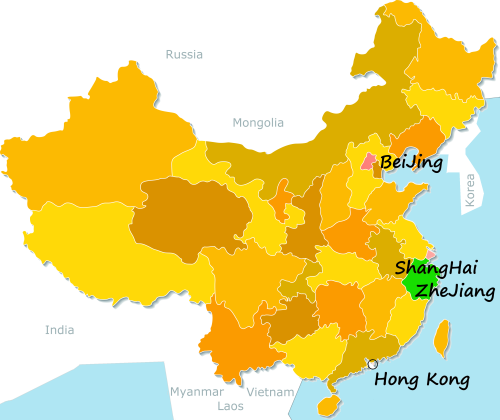
ZheJiang map

Related Videos


Featured Videos

Memories of the ShangHai 上海 World Expo 2010 (1)
May 1st - October 31st, 2010.
XiaMen 厦门 FuJian province
As a former treaty port, XiaMen has some colonial architecture. As part of China's Opening Up Policy in the early 1980s under Deng XiaoPing, XiaMen became one of the four original special economic zones opened to foreign investment and trade. XiaMen is well-regarded as a pleasant city. A film about a return to one's family's roots ...
‘Paris of the East’ in beautiful ShangHai
With Wei's Travel ... The French Concession in Shanghai is a place that condenses a century of history in modern Shanghai. It is the largest and most prosperous concession among the four concessions in old China. It was handed back to the Republic of China government in 1943, renamed the Eighth District. The French Concession in Shanghai was opened in 1849, experienced a slight expansion in 1900, and began to expand significantly in 1914 to establish the New French Concession. The French Concession maintained a high degree of independence in old Shanghai. The entire French Concession in Shanghai was the most high-end residential area in old Shanghai, and the architectural style can be said to be uniform. The reason why the Indigo tree is called French plane tree in China is also because it was first introduced by the French and planted in the French Concession in Shanghai. Shanghai's reputation as the "Paris of the East" is also named after the French Concession. Its architectural style is independent of the public concession and the Chinese border, and is almost the same as Paris thousands of miles away. The French had always maintained great control over the French Concession. 00:00 Highlights 精彩预览 01:40 ZIKAWEI Shopping Area 徐家汇商圈 04:22 Hengshan Lane 衡山坊 09:53 Xujiahui Park 徐家汇公园 22:07 EMI Building 百代小楼 25:10 Hengshan Boulevard 衡山路 27:29 Lipo Garden 丽波花园 31:08 Gaoan Garden 高安花园 33:57 Yongping Lane 永平里 38:52 No.8 Hengshan Avenue 衡山路8号园区 48:03 Hengshan Boulevard North Part 衡山路北段 50:32 Shanghai Symphony Orchestra 上海交响乐团 53:58 Clemen Apartment 克莱门公寓 58:31 Urumqi Middle Road 乌鲁木齐中路 01:07:58 Anfu Road 安福路 01:20:44 Wiggle Wiggle Flagship Store 01:29:36 Wukang Road 武康路 01:38:28 Ferguson Lane 武康庭 01:47:41 Wukang Building 武康大楼 01:52:03 CITE BOURGOGNE 步高里 01:54:57 Ruijin Hotel 瑞金宾馆 02:06:34 Yongkang Road 永康路 02:12:45 ICCF Garden 之禾卡纷花园 02:16:28 Shanghai Conservatory of Music 上海音乐学院 02:23:05 Old Downtown Highlights 梧桐街区精华
Happy New Year – 2019 – from BeiJingBuzzz
Wishing everyone a very happy 2019 - BeiJingBuzzz. Live more !! Please donate, we really need your help to keep going and to make this site even better - thank you from Panda88 and all the BeijingBuzzz team ...
BeiJing 北京 and ShangHai 上海 – winter trip
China in the snow; all in just 3 minutes ... Bonus film ...
The ruins of the Western-style palaces at YuanMingYuan 圆明园, BeiJing
YuanMingYuan, also known as the 'Old Summer Palace', was constructed during the 18th and early 19th century and was a wonderland of lakes and waterways, bridges, hills and pavilions. One third of the ground of YuanMingYuan was taken up by over 200 small hills with steep sides, secluded valleys, rock walls and stone caves. Half of the garderns are covered by the waters of lakes, winding streams and ponds. It was at YuanMingYuan that the emperors of the Qing Dynasty resided and handled government affairs - until it was destroyed; the Forbidden City was mostly used only for formal ceremonies at this time. The southern part of YuanMingYuan was where emperors handled state affairs, while the other parts were primarily for personal use and comprised of more than 150 scenic spots, involving rare exotic flowers and trees from different parts of the country. There were originally towers, terraces, pavilions, halls, corridors, pagodas and bridges with a total construction area of 150,000 square meters - corresponding in scale to that of the Imperial Palace. Artisans were recruited from all over China to enact the exquisite settings. The various styles of architecture, standing encircled by hills and rivulets, presented a most picturesque view. Many were reproductions of scenic mountains, rivers and famous gardens in China (mostly southern China). During his many tours of the country, emperor QianLong made it a point to have pictures of famous gardens and scenes drawn so that he could have replicas built in Beijing. Most famous of these were the ten scenic spots of the West Lake in HangZhou. The Old Summer Palace is often associated with the European-style palaces (Xi Yang Lou) that were built of stone. The designers of those structures, the Jesuits Giuseppe Castiglione and Michel Benoist, were employed by emperor QianLong to satisfy his taste for exotic buildings and objects. However, more than 95% of the Imperial Gardens consisted of essentially Chinese-style buildings. There were also a few buildings in Tibetan and Mongolian styles, reflecting the diversity of the Qing empire. In addition, hundreds of invaluable Chinese art masterpieces and antiquities were stored in the halls, including some unique copies of literary works and collections. In 1860, during the 'Second Opium War', the British and French expeditionary forces looted the Old Summer Palace. Later, on October 18 1860, a British general - despite protestations from the French (who in fact had began the looting) - gave the order to set fire to the huge complex, which burned to the ground. In 1900, those buildings that had partly survived or been restored were burnt for good by the Western expeditionary forces sent to quell the 'Boxer Rebellion'. Many priceless artifacts were plundered and made their way to museums and private collections in Europe. The ruins were further plundered by the warlords of the early republican period and further destruction of the ruins took place during the 'Cutural Revolution'. After all this destruction, what was left was truely just an empty shell. Empress dowager CiXi later directed the forming of YiHeYuan (Garden of Nurtured Harmony), into a new Summer Palace; this was near to the Old Summer Palace, but on a (somewhat) smaller scale. Nearest subway station : YuanMingYuan on line 4.
Beautiful HuaShan 华山 trip
Mount Hua mountain is located near the city of HuaYin in ShaanXi province, about 120 kilometers east of Xi'A, and one of the Five Great Mountains of China.
Happiness versus pleasure
One can see this distinction in the wider society too - East vs. West; cultures with different foundations - long term (family, infrastructure, community, the arts) versus short term (hype, sex, gossip, war). Mature versus immature. We versus me. The immature mind thinks 'me'; the mature mind understands that life is really about 'we'. Maturity is when one grows beyond the narcissism phase *. 'I' am just a small part of a bigger 'I' - humanity. With Dr. Robert Lustig ... One is controlled when one believes what one has been told (sold). Freedom is removing these mind chains and seeing reality. ----- * (footnote) At BB, we think that narcissism is a development phase that most transition out of; but some stay there and it can become exaggerated. The traditional views might also be true; likely, there is an interplay involved. ----- ----- Aside #1 : Q : Why does BB have so much content about health - nutrition and mental well-being ? A : Because it is fundamental to everything else; one cannot see the beauty of life if one's mind is mixed up; one cannot live life to the full if one is ill. ----- ----- Aside #2 : Confucius : One can grow from everybody one meets. On life's journey, one will meet wise people - learn from them; one will also meet foolish people - look deep within to see if one also has these follies.
ChongQing 重庆 night views …

Tag search ?