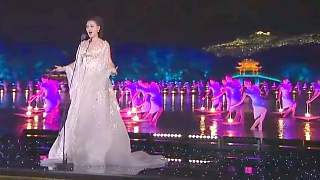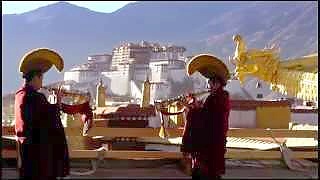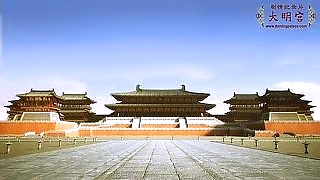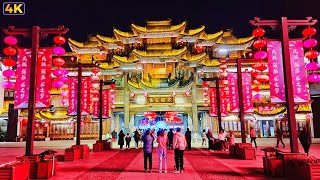
The beauty of the historical DaMing Palace 大明宫

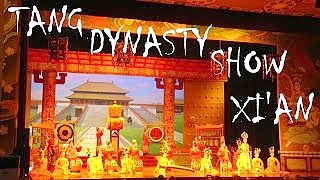
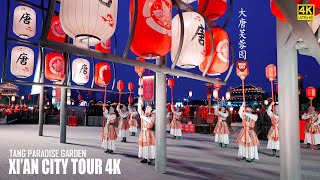
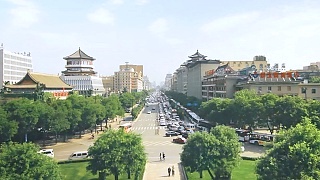
The DaMing Palace (DaMing Gong, Palace of Great Brilliance) was the imperial palace complex of the Tang Dynasty, located in its capital Chang'An. It served as the royal residence of the Tang emperors for more than 220 years.

Today, the DaMing Palace site is designated a National Heritage Site of China, located a little north east of present-day Xi'An city center, ShaanXi province, central China. One can take subway line 2 to DaMingGongXi (DaMing Palace West) station.

The palace complex was destroyed at the end of the Tang dynasty. The ruins were only discovered in the 1950s and some parts have now been reconstructed following careful archaeological analysis of the site. The reconstructions, museum and grounds opened to visitors in 2010.

[640],shadow=true,start=,stop=

A beautiful film ...

[320],shadow=true,start=,stop=

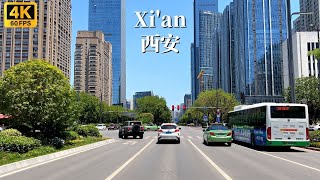
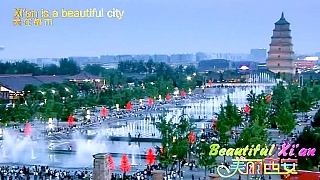
Xi'an, located in the heart of Shaanxi Province in northwest China, is one of the oldest cities in China and served as the capital for numerous dynasties, including the Qin, Han, and Tang. Renowned for its rich history, cultural heritage, and iconic landmarks, Xi'an is a must-visit destination for tourists. Here's a guide for tourists visiting Xi'an:

Historical and Cultural Significance:
Ancient Capital: Xi'an served as the capital of China for over 13 dynasties and played a crucial role in shaping Chinese history and civilization. It was the starting point of the ancient Silk Road, facilitating trade and cultural exchange between China and the West.

Terracotta Army: One of Xi'an's most famous attractions is the Terracotta Army, a vast collection of life-sized terracotta sculptures depicting the armies of Qin Shi Huang, the first Emperor of China. Discovered in 1974, the Terracotta Army is a UNESCO World Heritage site and a symbol of China's rich cultural heritage.

Top Attractions:
Terracotta Army Museum: Located about 30 kilometers east of Xi'an, the Terracotta Army Museum is home to thousands of intricately crafted terracotta warriors, horses, and chariots. Visitors can explore the excavation pits, marvel at the craftsmanship, and learn about the history of the Qin Dynasty.

Ancient City Wall: Xi'an is renowned for its well-preserved ancient city wall, which dates back to the Ming Dynasty. Stretching over 13 kilometers in length, the wall offers panoramic views of the city and is a popular spot for walking, cycling, and sightseeing.

Muslim Quarter: Explore the vibrant Muslim Quarter, located near the Drum Tower and Great Mosque of Xi'an. This bustling neighborhood is known for its lively street markets, traditional Islamic architecture, and delicious street food, including lamb skewers, roujiamo (Chinese hamburger), and hand-pulled noodles.

Big Wild Goose Pagoda: Built during the Tang Dynasty, the Big Wild Goose Pagoda is a prominent Buddhist landmark in Xi'an. Visitors can climb the pagoda for panoramic views of the city or explore the surrounding temple complex and gardens.

Shaanxi History Museum: Discover the rich history and culture of Shaanxi Province at the Shaanxi History Museum. The museum houses a vast collection of artifacts, including ancient pottery, bronze ware, jade, and Tang Dynasty murals, providing insights into the region's heritage.

Practical Tips:
Transportation: Getting around Xi'an is convenient with its extensive public transportation system, including buses, taxis, and the Xi'an Metro. Bicycle rentals are also available for exploring the city at a leisurely pace.

Weather: Xi'an has a continental climate with hot summers and cold winters. The best time to visit is during spring (April to May) and autumn (September to October) when the weather is pleasant and comfortable.

Language: Mandarin Chinese is the official language spoken in Xi'an, although English may not be widely spoken, especially in more remote areas. It's helpful to learn some basic phrases or carry a phrasebook or translation app.

Currency: The currency used in China is the Chinese Yuan (CNY). Credit cards are accepted at most hotels, restaurants, and shops in urban areas, but it's advisable to carry cash for small purchases and transactions.

Xi'an offers a fascinating blend of ancient history, cultural heritage, and modern urban life, making it an enchanting destination for tourists seeking to explore the wonders of ancient China. Whether marveling at the Terracotta Army, walking along the ancient city wall, or sampling delicious street food in the Muslim Quarter, Xi'an has something to offer for every traveler.
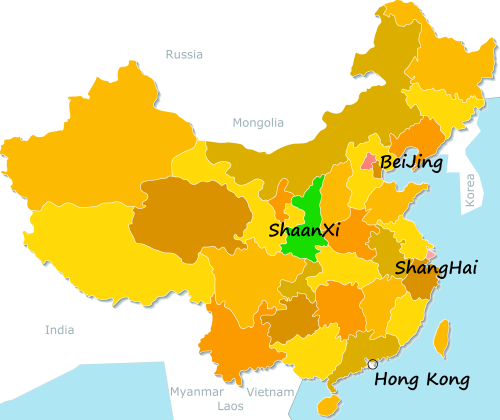
ShaanXi map

Related Videos


Featured Videos

LiWan Lake park – a relaxing morning in GuangZhou
With China Walking Tour ...
60 days around China
Wonder if you're being lied to ? - go see for yourself. With Willene Business & Lifestyle ...
The US panic as China escapes Western enslavement
Billions of dollars are spent by Western governments to manufacture negative stories (propaganda) about about China that one sees daily in the Western MSM, and online (there many agents out there). With Cyrus Janssen ... If you are Chinese, and thinking about studying in the US or UK, our advice is think again. These countries have openly declared China as a 'threat' and you would be putting yourself in danger.
‘A chance meeting in GuiLin 桂林’ – and more micro movies 微电影
Grab some popcorn and enjoy a night-in at the BeiJingBuzzz cinema. New love, love perturbed, love re-found, love passed ... 'Fate ?' 《天目湖漫生活》 远离喧嚣 追寻宁静 世外桃园 浪漫生活 风景片 'Love More' Bii 畢書盡 《LOVEMORE CuBii 愛神降臨》 微電影全球首播 《连云港渔湾》微电影 山上的特别美丽魅力风景(爱情) 'Let's Get Married' (2015) Title song by Jane Zhang 張靚穎 《咱們結婚吧》 電影版主題曲《終於等到你》 (短版 MV) We cannot decide all that happens in life, but we can control how we react. Love is there, if we are ready and open the door. Love is not hard to find (to be); but it is easy to lose. In the end, what we get counts for nothing; it is what we give (leave behind) that matters - and every moment leaves a ripple in the ocean of life. Sneakers are fine; but the bare-foot memories will be most chrished. Love doesn't just flow to the naturally beautiful; it is those with love in their hearts who shine ; it is love that creates beauty.
QuanZhou city, FuJian province
With Seiu Travel ...
21 amazing days in China …
With ClaireTrips ...
The ancient Silk Road of China
With Graeme Langford ... Ancient Silk Road Travel Guide Introduction The ancient Silk Road was a network of trade routes connecting the East and West, stretching from China to the Mediterranean Sea. It played a crucial role in cultural, commercial, and technological exchange between civilizations. This guide will help you explore the key destinations along the Silk Road, providing insights into historical sites, cultural experiences, and practical travel information. Key Destinations Xi'an, China (西安) Xi'an, the starting point of the Silk Road, is home to the famous Terracotta Army and the ancient city walls. Don't miss the Big Wild Goose Pagoda and the bustling Muslim Quarter. Dunhuang, China (敦煌) Dunhuang is known for the Mogao Caves, a treasure trove of Buddhist art. The Singing Sand Dunes and Crescent Lake are also must-see attractions. Kashgar, China (喀什) Kashgar is a melting pot of cultures, with its lively Sunday Bazaar and the Id Kah Mosque. The ancient city is a gateway to the western regions of the Silk Road. Bukhara, Uzbekistan (布哈拉) Bukhara is a UNESCO World Heritage site with over 140 architectural monuments, including the Ark Fortress, Bolo Haouz Mosque, and Lyab-i Hauz complex. Samarkand, Uzbekistan (撒马尔罕) Samarkand is one of the oldest cities in Central Asia, known for its stunning Registan Square, Shah-i-Zinda necropolis, and Bibi-Khanym Mosque. Merv, Turkmenistan (梅尔夫) Merv was once one of the largest cities in the world. Today, it is an archaeological site with impressive ruins, including the Sultan Sanjar Mausoleum and the Great Kyz Kala fortress. Tehran, Iran (德黑兰) Tehran, the capital of Iran, offers a mix of modernity and tradition. Key sites include the Golestan Palace, National Museum of Iran, and the bustling Grand Bazaar. Antioch, Turkey (安提阿) Antioch, now called Antakya, was an important center of early Christianity. The Hatay Archaeology Museum and St. Peter's Cave Church are highlights. Constantinople, Turkey (君士坦丁堡) Now Istanbul, this city was the terminus of the Silk Road. Visit the Hagia Sophia, Topkapi Palace, and the bustling Grand Bazaar to experience its rich history. Cultural Experiences Traditional Markets: Explore the vibrant markets along the Silk Road, such as the Kashgar Sunday Bazaar and Istanbul's Grand Bazaar, for a taste of local commerce and culture. Silk Weaving: Witness traditional silk weaving techniques in Xi'an, China, and Samarkand, Uzbekistan. These cities have been centers of silk production for centuries. Cuisine: Sample diverse culinary traditions, from Chinese dumplings and Uzbek plov to Persian kebabs and Turkish delights. The Silk Road has left a rich gastronomic legacy. Music and Dance: Enjoy traditional music and dance performances in various Silk Road cities. Each region has its unique cultural expressions, influenced by centuries of exchange. Historical Tours: Take guided tours of ancient ruins, mosques, and palaces to learn about the history and significance of the Silk Road. Knowledgeable guides can provide valuable insights. Practical Travel Information Best Time to Visit: The best time to explore the Silk Road is during the spring (April to June) and autumn (September to November) when the weather is mild and comfortable. Visas and Permits: Ensure you have the necessary visas and permits for each country along the Silk Road. Check with local embassies or consulates for up-to-date requirements. Transportation: Travel options include flights, trains, buses, and private tours. The Silk Road is well-connected, but some remote areas may require special arrangements. Accommodation: Accommodation ranges from luxury hotels to budget hostels and guesthouses. Booking in advance is recommended, especially during peak travel seasons. Health and Safety: Stay informed about health and safety precautions in each region. Carry a basic first-aid kit, stay hydrated, and respect local customs and regulations. Local Currency: Familiarize yourself with the local currencies and exchange rates. Carry some cash, but credit cards are also widely accepted in major cities. Conclusion The ancient Silk Road is a fascinating journey through history, culture, and breathtaking landscapes. From the bustling markets of Xi'an to the majestic ruins of Samarkand, each destination offers unique experiences and insights into the rich heritage of the Silk Road. Use this guide to plan your adventure and explore the wonders of this legendary trade route. Whether you're a history buff, a cultural enthusiast, or an intrepid traveler, the Silk Road promises an unforgettable journey. History of the Silk Road Introduction The Silk Road was an ancient network of trade routes that connected the East and West, facilitating not only commerce but also cultural exchange between civilizations. This guide delves into the history of the Silk Road, focusing on the trade of silk, horses, and tea, the travels of Marco Polo, and how the Silk Road ultimately influenced sea exploration and colonization. Trade on the Silk Road Silk Trade Silk, a luxurious fabric produced from the cocoon of the silkworm, was the most iconic commodity traded on the Silk Road. Originating in China during the Han Dynasty, silk quickly became a highly prized item in the West. Its light weight, ease of transport, and high value made it a staple of Silk Road commerce. The demand for silk spurred trade relations and cultural exchanges between the East and West, spreading Chinese inventions such as paper and gunpowder along the way. Horses Horses were another crucial trade item, especially prized by the Chinese for their military and agricultural utility. The Fergana horses, known for their strength and endurance, were particularly sought after. These horses, traded primarily with Central Asian tribes, significantly improved the cavalry capabilities of Chinese armies and facilitated the movement of goods along the Silk Road. Tea Trade Tea, originating from China, became a major export commodity during the Tang Dynasty. It was highly valued for its medicinal properties and became a popular beverage in Central Asia and beyond. The trade of tea along the Silk Road helped to establish cultural connections and the spread of tea culture to places such as Japan and the Middle East. The Travels of Marco Polo Marco Polo, the Venetian explorer, traveled the Silk Road in the 13th century. His journey began in 1271, when he accompanied his father and uncle on a voyage to Asia, eventually reaching the court of Kublai Khan, the Mongol ruler. Marco Polo spent 17 years in China, documenting his experiences in his book "The Travels of Marco Polo." His detailed accounts of the wealth, culture, and innovations of the East provided Europeans with one of the first comprehensive insights into Asian civilizations and spurred interest in exploration and trade. Impact on Sea Exploration and Colonization The Silk Road's decline in the 15th century, due in part to the rise of maritime trade routes, marked a shift in global commerce. European powers, motivated by the wealth and tales from the Silk Road, sought direct sea routes to Asia to bypass intermediaries and gain control over lucrative trade. This led to the Age of Exploration, during which explorers like Vasco da Gama and Christopher Columbus set out to discover new trade routes and lands. Portugal and Spain were at the forefront of this maritime expansion. Vasco da Gama's successful voyage to India in 1498 opened up a direct sea route from Europe to Asia, leading to increased trade and the establishment of colonial empires. Columbus's voyages, sponsored by Spain, led to the discovery of the Americas in 1492, further expanding European influence and colonization efforts. The maritime Silk Road, established by these explorers, connected Europe, Africa, and Asia, facilitating the exchange of goods, ideas, and cultures on an unprecedented scale. This era of sea exploration and colonization transformed global trade networks and laid the foundations for the modern world economy. Conclusion The Silk Road was more than just a trade route; it was a conduit for cultural, technological, and intellectual exchange that shaped the ancient world. From the trade of silk, horses, and tea to the travels of Marco Polo, the Silk Road's legacy is profound. Its influence on sea exploration and colonization further underscores its importance in global history. Exploring the history of the Silk Road offers a deeper understanding of the interconnectedness of human civilizations and the enduring impact of ancient trade routes.
Hiking Mount HuaShan 华山
HuaShan is located near the city of HuaYin in ShaanXi province, about 120 kilometers (75 miles) east of Xi'An. It is the western mountain of the Five Great Mountains of China, and has a long history of religious significance. HuaShan has five main peaks, the highest of which is the South Peak at 2,155 meters (7,070 feet).
Upcoming videos – November 2024
With SunKissed in Shangri-la, YunNan province ... First time in Tibet ... With mabelevollove ... A day in an all-inclusive Chinese spa, ChengDu, with Flora and Note ... HanFu experience in LiJiang, YunNan province, with Soph ... 24 hours in the backstreets of BeiJing, with Jack Aynsley Travel ... With Noah Kartha, in YuYuan ... With Bee Rose ... With 2Passports in ShenZhen ... LiJiang, YunNan province, with Because I'm Lizzy ... The romantic French Concession area of ShangHai, with Wei's Travel ... ChengDu city, with CoolVision ... First time in ChengDu, with Adam and Yaz ... With Just Us Travel ... First time in BeiJing, with Feeding Foca ... Exploring GuangZhou shopping malls, with On Tour With Dridgers ... Autumn in BeiJing, with linyi ... Hulunbuir, Arxan, Inner Mongolia, with Clare Traveling Pandaland ... A week in YunNan province, with Tiny Turtle Travels ...

Tag search ?