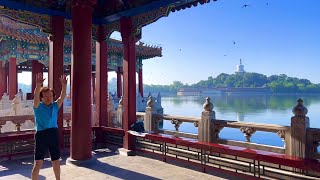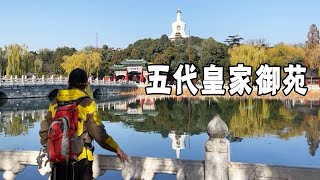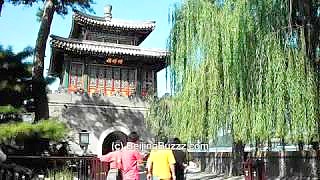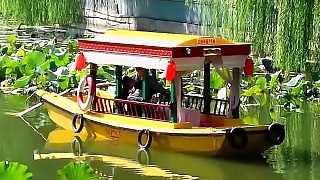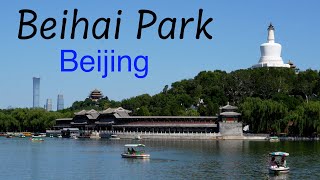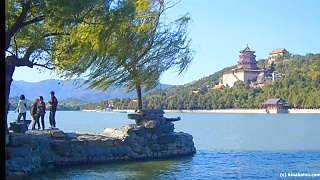
The beautiful BeiHai Park 北海公园, central BeiJing 北京

BěiHǎi GōngYuán is just a five minute walk (north west) from the Forbidden City (immediately west of sister JingShan Park).

[640],shadow=true,start=,stop=

Beijing, the capital city of China, is a vibrant metropolis steeped in history, culture, and modernity. Here's a brief overview of what you can expect as a tourist in Beijing:

Historical Landmarks:
The Great Wall of China: One of the most iconic structures in the world, the Great Wall is easily accessible from Beijing. Mutianyu and Badaling sections are popular among tourists.

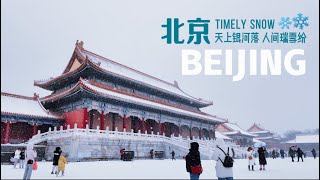
Forbidden City (Palace Museum): A UNESCO World Heritage Site, this vast imperial palace complex was home to Chinese emperors for over 500 years. It houses numerous halls, courtyards, and historical artifacts.

Temple of Heaven: A masterpiece of Chinese architecture, this ancient temple complex served as a place of worship for emperors to pray for good harvests.

Summer Palace: A stunning ensemble of lakes, gardens, and palaces, the Summer Palace served as a retreat for emperors during the Qing dynasty.

Tiananmen Square: One of the largest city squares in the world, Tiananmen Square is flanked by important landmarks such as the Monument to the People's Heroes, the Great Hall of the People, and the Mausoleum of Mao Zedong.

Cultural Sites:
Beijing Hutongs: Explore the narrow alleyways and traditional courtyard residences of Beijing's historic neighborhoods. You can take a rickshaw tour or simply wander around on foot.

Beijing Opera: Experience traditional Chinese opera performances at venues like the Liyuan Theater or the Chang'an Grand Theatre.

798 Art District: A hub of contemporary art and culture, this former industrial area is now home to numerous galleries, studios, and cafes.

Modern Attractions:
Olympic Park: Visit iconic structures such as the Bird's Nest (National Stadium) and the Water Cube (National Aquatics Center) from the 2008 Beijing Olympics.

CBD (Central Business District): Marvel at the futuristic skyline of Beijing's modern business district, which includes landmarks like the CCTV Headquarters and the China World Trade Center Tower III.

Culinary Delights:
Peking Duck: Indulge in Beijing's most famous dish, crispy roast duck served with pancakes, scallions, and hoisin sauce.

Street Food: Explore the city's vibrant street food scene and sample local delicacies like jianbing (savory crepes), lamb skewers, and dumplings.

Practical Tips:
Transportation: Beijing has an extensive public transportation system, including the subway, buses, and taxis. However, traffic can be heavy, so plan your travels accordingly.

Language: While English is not widely spoken, especially outside tourist areas, many signs and transportation announcements are in English. It's helpful to carry a translation app or a phrasebook.

Weather: Beijing experiences four distinct seasons, with hot summers and cold winters. The best times to visit are spring (April to June) and autumn (September to October) when the weather is mild and comfortable.

Etiquette: Respect local customs and traditions, such as removing your shoes before entering someone's home and using both hands to pass or receive items.

Beijing offers a rich tapestry of experiences for tourists, blending ancient heritage with modern innovations. Whether you're fascinated by history, culture, or culinary delights, there's something for everyone in this dynamic city.

Related Videos


Featured Videos

QiBao Ancient Town, ShangHai
With Roaming N Watching ... With Fyfy & Nyny ... QiBao Ancient Town visitor guide Overview QiBao Ancient Town, located in the MinHang district of ShangHai, is a picturesque water town known for its well-preserved ancient architecture, historical sites, and traditional culture. The name "QiBao" means "Seven Treasures," and the town is famous for its seven historic treasures, though only a few remain today. QiBao offers visitors a glimpse into China's rich cultural heritage and a chance to experience traditional JiangNan water town scenery. History QiBao Ancient Town has a history that dates back over a thousand years to the Northern Song Dynasty. It flourished during the Ming and Qing dynasties as a prosperous commercial hub. Today, QiBao retains much of its historical charm, with well-preserved buildings, stone bridges, and narrow canals that transport visitors back in time. Main Attractions QiBao Temple QiBao Temple is a significant religious and cultural site in the town. Originally built during the Song Dynasty, the temple has undergone several restorations. It is an important place of worship and a symbol of the town's spiritual heritage. QiBao Old Street QiBao Old Street is the heart of the ancient town, lined with traditional shops, teahouses, and food stalls. The street is divided into North Street and South Street, each offering unique experiences and local delicacies. QiBao Shadow Play Art Museum The QiBao Shadow Play Art Museum showcases the traditional Chinese art of shadow puppetry. Visitors can learn about the history of shadow plays, watch live performances, and even try their hand at manipulating the puppets. QiBao Zhuzhai (Old Residences) QiBao Zhuzhai are ancient residential buildings that offer a glimpse into the traditional lifestyle of QiBao's inhabitants. These well-preserved houses reflect the architectural style of the Ming and Qing dynasties and provide insight into the daily lives of ancient Chinese families. Culture and Traditions QiBao Ancient Town is a cultural gem that showcases traditional JiangNan water town culture. The town is known for its traditional crafts, local cuisine, and cultural performances. Visitors can explore the various workshops and studios where artisans create silk, paper-cuts, and other traditional handicrafts. Activities and Experiences Boat Rides One of the best ways to experience QiBao Ancient Town is by taking a boat ride along its narrow canals. The boat ride offers a unique perspective of the town's architecture and serene waterways, providing a peaceful and scenic experience. Food Tasting QiBao is renowned for its local delicacies, including QiBao rice cakes, braised pork, and stinky tofu. The food stalls and restaurants along QiBao Old Street offer a wide variety of traditional snacks and dishes that are a must-try for visitors. Cultural Performances Visitors to QiBao can enjoy various cultural performances, including traditional Chinese opera, shadow plays, and folk music. These performances are often held in public squares and cultural centers, providing an authentic cultural experience. Accommodation QiBao Ancient Town offers a range of accommodation options, from traditional guesthouses to modern hotels. Staying in a local guesthouse provides an immersive experience and a chance to enjoy the town's charm after the day-trippers have left. Travel Tips Best Time to Visit: The best time to visit QiBao Ancient Town is during spring (March to May) and autumn (September to November) when the weather is mild and pleasant. Getting There: QiBao Ancient Town is located about 18 kilometers from ShangHai city center. It is accessible by metro (Line 9, QiBao Station) or by taxi. The journey takes approximately 30-40 minutes. Opening Hours: The town is open to visitors daily from 8:30 AM to 4:30 PM. Entrance Fees: There is no entrance fee for the town itself, but some attractions and museums within the town may charge a small fee. Dress Comfortably: Wear comfortable walking shoes, as the town's streets are paved with cobblestones and can be uneven. Respect Local Customs: When visiting temples and cultural sites, be respectful of local customs and traditions. Always ask for permission before taking photos of people.
A drive around YunNan province
Plus drone footage ...
Home is wherever I’m with you …
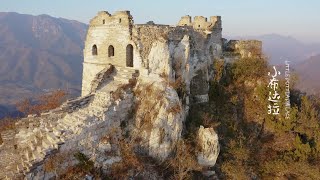
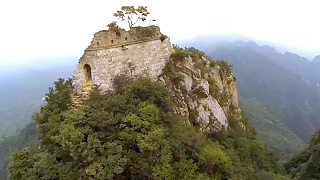
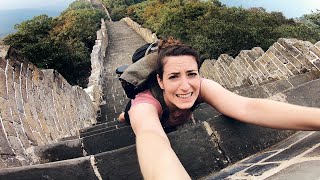
A trip to the wild Great Wall ... Love the ones you're with. Your partner, family, neighbours, the people you pass on the street. As this blue and green planet whizzes through space, we can all share the love with those around us. The goal of all sane people is to create a better world for our children ...
Relaxing in JingShan Park 景山公园, BeiJing
All kinds of pastime can be found here ...
On the road to happiness : XinJiang
The real XinJiang - don't miss it. With CGTN ...
TaiYuan ancient city walking tour, ShanXi province
With Walk East ... With Seiu Travel ... Visitor Guide to TaiYuan City, ShanXi Province Overview TaiYuan, the capital city of ShanXi Province, is a fascinating blend of ancient history and modern development. Known for its rich cultural heritage, TaiYuan offers visitors a glimpse into China's past while also showcasing its rapid modernization. Getting There By Air: TaiYuan WuSu International Airport (TYN) serves the city with both domestic and international flights. It is located about 15 kilometers from the city center, and you can reach downtown by taxi, airport shuttle, or public bus. By Train: TaiYuan Railway Station and TaiYuan South Railway Station connect the city with major destinations across China, including Beijing, Xi'an, and Shanghai. High-speed trains offer convenient and quick travel options. By Bus: Long-distance buses from nearby cities and provinces also provide access to TaiYuan. The main bus stations in TaiYuan are TaiYuan Long-Distance Bus Station and TaiYuan West Bus Station. Getting Around Public Transport: TaiYuan has an extensive public bus network and a developing metro system, making it easy to navigate the city. Taxis: Taxis are readily available and relatively inexpensive. Ride-hailing apps like DiDi are also widely used. Biking: Bike-sharing services are popular and provide a convenient way to explore the city at your own pace. Main Attractions JinCi Temple JinCi Temple, located about 25 kilometers southwest of TaiYuan, is a historic site with beautiful architecture, ancient trees, and intricate carvings. The temple, dating back over 1,400 years, is dedicated to the worship of Prince Shuyu of the Zhou Dynasty. ShanXi Museum ShanXi Museum, one of China's most important museums, offers a comprehensive look at the history and culture of ShanXi Province. The museum's exhibits include ancient relics, artifacts from the Silk Road, and displays on ShanXi's rich coal mining history. TaiYuan Ancient City Wall The TaiYuan Ancient City Wall is a significant historical landmark that reflects the city's ancient military architecture. Portions of the wall have been restored, and visitors can walk along it to enjoy panoramic views of the city. Fenhe Park Fenhe Park, situated along the Fen River, is a large urban park offering beautiful landscapes, walking paths, and recreational facilities. It's a great place to relax, enjoy nature, and experience the local lifestyle. Twin Pagoda Temple The Twin Pagoda Temple, also known as Yongzuo Temple, features two impressive pagodas dating back to the Ming Dynasty. The temple is a serene spot with beautiful gardens and ancient architecture. Local Cuisine TaiYuan offers a variety of local and regional dishes. Here are some must-try foods: ShanXi Sliced Noodles (DaoXiaoMian): A famous local dish made with hand-sliced noodles, usually served with a savory broth and various toppings. Vinegar Culture: ShanXi is known for its aged vinegar, which is a staple in many local dishes. Be sure to try dishes that highlight this unique flavor. ShanXi Meat Patties (RouJiaMo): Often referred to as the "Chinese hamburger," these meat-filled buns are a delicious and popular street food. Fenhe River Fish: Fresh fish from the Fen River, prepared in a variety of ways, is a local specialty. Shopping Liuxiang Pedestrian Street: A bustling shopping area offering a mix of traditional and modern shops, local snacks, and souvenirs. Chongshan Monastery Market: A market near Chongshan Monastery where you can find local handicrafts, antiques, and traditional ShanXi products. Coal Museum of China: The museum shop offers unique souvenirs related to ShanXi's coal mining history. Accommodation Luxury Hotels: TaiYuan has several high-end hotels offering excellent amenities and services, such as the Kempinski Hotel TaiYuan and the Shanxi Grand Hotel. Mid-Range Hotels: There are numerous mid-range options providing comfortable accommodations at reasonable prices, including international chains like Holiday Inn and local boutique hotels. Budget Accommodations: Budget travelers can find affordable guesthouses, hostels, and budget hotels throughout the city. Historical Background of TaiYuan TaiYuan, with a history spanning over 2,500 years, has been a significant political, economic, and cultural center in northern China. Founded during the Spring and Autumn period, the city has witnessed numerous historical events and developments. During the Tang Dynasty, TaiYuan was a strategic military base and the hometown of the Tang emperors. The city played a crucial role in various dynastic changes and military campaigns. In modern times, TaiYuan has developed into an industrial powerhouse, particularly known for its coal mining and steel production. Despite its industrialization, the city has preserved many of its historical and cultural sites, offering a rich tapestry of the ancient and modern. Tips for Visitors Best Time to Visit: The best times to visit TaiYuan are spring (April to June) and autumn (September to November) when the weather is mild and pleasant. Clothing: Wear comfortable walking shoes and dress in layers to accommodate changing temperatures. Bring a hat and sunscreen if you plan to spend time outdoors. Respect Local Customs: Be respectful of local customs and traditions, especially when visiting religious and cultural sites. Language: While Mandarin is widely spoken, learning a few basic phrases or using a translation app can be very helpful. Plan Your Visit: TaiYuan offers a mix of historical and modern attractions. Plan your visit to include both cultural sites and modern amenities to get a complete experience. Conclusion TaiYuan, with its rich historical heritage and vibrant modern culture, offers a unique and diverse travel experience. From ancient temples and city walls to modern parks and shopping streets, TaiYuan provides a fascinating journey through time. Whether you're exploring its historical landmarks, enjoying local cuisine, or experiencing the city's contemporary side, TaiYuan is a destination that promises a memorable visit. Plan your trip carefully to make the most of your time in this dynamic capital of ShanXi Province.
Fear of China is manufactured
With Pascal Coppens ... YT comments : As an ABC, I have traveled to China over a dozen times over the last 40 years. The changes over this period have been breathtaking, but the biggest change has been the deliverance of nearly 800,000,000 citizens out of poverty. Gob-smacked Americans are agape but have gone out of their way to minimize and demonize any Chinese accomplishments. It is getting tiresome hearing racist, biased Western politicians cry about "potential national security" risks. I just returned from another phenomenal trip to China (Shenzhen and Chengdu). Based on my interactions with friends and relatives in China, they are not preoccupied with Anti-American sentiment. America's hysteria about all things Chinese is rooted in unadulterated racism and the inability to accept that China could EVER be a formidable rival." "The following article is written by Ismail Bashmori, he is an Egyptian China watcher. The truth is that China is the greatest country on the face of the earth. It makes all other countries look insignificant and contemptible. It is the most brilliant, most industrious, most ambitious, most educated, meritocratic and technocratic, most modern, sophisticated, and civilised, and best-governed by far. . It is the first non-white, non-Western country to reach this status since the 1600s. The determination of this country is indescribable. Supernatural. There is no force that can stop it from accomplishing anything it wants to do. It doesn’t matter who we are. Egyptians, Syrians, Pakistanis, Indians, Africans, even Americans. Next to the Chinese, we are pathetic. We can’t do what they do. We would have a mountain, an Everest of changes to make, and we would whine and bicker and fail at every one of them. China’s story since the 1980s has been one of an almost divine metamorphosis. Next to China the entire Western world from Alaska to New Zealand has stagnated. Next to China the entire developing world from Brazil to Madagascar has progressed only at a crawl. China is the mother of all gargantuan bullet trains. Every day it manages to create something new and astonishing. And unlike the United States, unlike the British Empire, unlike the French, Dutch, Germans, Spanish, Portuguese or any other Western nation that had its turn at being a superpower in the past four centuries, China doesn’t need to run anybody over or take something from somebody else, to rise majestically. China is also standing up to the West all by herself. The West can’t believe their four-hundred-year-old global supremacy is being challenged. They hoped that the more China developed, the more it would submit to their influence, interests, and leadership. That didn’t happen. So now they will do anything possible, short of a nuclear war, to make China end. Their goal is to destroy this country. That’s why, although the United States has killed several million people and turned several regions of the earth into hellscapes. China is the worst fear of our planet’s Western masters. They want you to despise and dread a country that’s done nothing to you, that hasn’t invaded anyone, bombed or sanctioned anyone, that hasn’t overthrown any foreign government, or used its military on anything since 1979. China is the only major country in the nonwhite developing world, to stand up to the West. To look it in the eye when challenged or threatened. The Global South are simply Western puppets who submitted long ago. Even the most powerful ones. Saudi Arabia, Brazil, India. The 1500s—1000s BC were Egypt’s time. Antiquity belonged to the Greeks and Romans. The 1700s belonged to France, and the 1800s to Britain. From 1945 to the present, the world has been under American overlordship. And they call it the Pax Americana but there isn’t much Pax in it. There’s plenty of Pax if you’re in Europe or Australia. But the Middle East? Afghanistan, Iraq, Libya, Syria, Iran and Yemen in the past 20 years. Latin America? They’ve destroyed that part of the world beyond any hope of recovery. Africa? It’s only been spared because of disinterest. The US sees Africa as nothing. The whole West does. But in the twenty-first century, we are witnessing the rise of China. We are decades away from China becoming the greatest power on earth. This will be China’s time, and there’s nothing anyone can do about it. Attack China all you want, curse her and monger rumours and hysteria — but the truth is that none of your accusations are backed up by evidence. The Western press is under the thumb of Western governments that want to stay on top of the world for eternity. And the truth is that China is not affected by the noise and maneuvers of her enemies. For her first thirty years, from 1949 to 1979, China was basically blockaded and isolated economically and politically by the West. It didn’t even have a seat in the UN General Assembly. And it was dirt-poor in those days, barely a speck of the global economy, a tiny fraction of Japan’s or Germany’s GDP — not even able to prevent famine. And it still didn’t submit to pressure or take any orders. Why on earth would it do that now? China will be the next global power. There’s nothing that can be done about that. The first stage is that its economy only needs to grow at 4.7 percent per year to become the world’s largest by 2035. That means the usual, historical bare-minimum of 6 percent is already overkill. The US can build as many bases as it wants, slap as many sanctions as it wants, recognise whatever bogus genocides it wants. That’s what it’s been doing all along. Has any of it made a difference? China can adapt to any situation. It took China a mere ten years to go from being barred by the US Congress from participating in the “International” Space Station, to building its own Space Station from zero.
ShuHe ancient town, just north of LiJiang, YunNan province
"ShuHe Ancient Town, known as "ShaoWu" in NaXi language, was formed by the JuBao Mountain behind the village, which is shaped like a pile of peaks. It is also an important well-preserved market town on the Ancient Tea-Horse Road, a living specimen of the NaXi ancestors’ transition from farming civilization to commercial civilization, and a model of market town construction formed by opening up to the outside world and caravan activities. ShuHe Ancient Town, BaiSha Ancient Town and DaYan Ancient Town together form the World Heritage Site of LiJiang Ancient Town. Xu XiaKe once passed by ShuHe River when he visited JieTuo Forest in ZhiShan. "Ten Harmonies" is the ancient name of today's ShuHe." With Bob's Street Snapshots ...
The beautiful BeiHai Park 北海公园, central BeiJing 北京
BěiHǎi GōngYuán is just a five minute walk (north west) from the Forbidden City (immediately west of sister JingShan Park).

Tag search ?