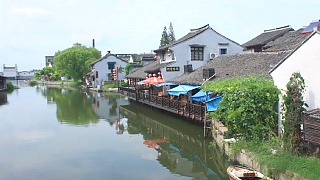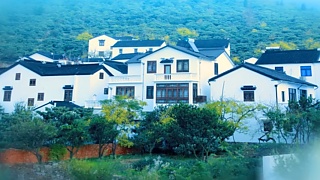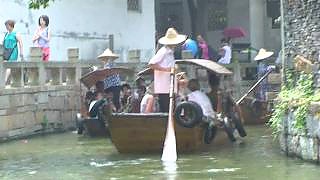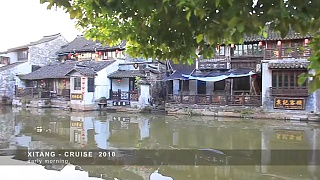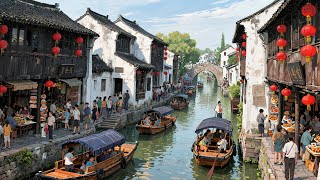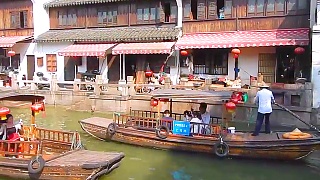
A walk through ZhuJiaJiao 朱家角 water town

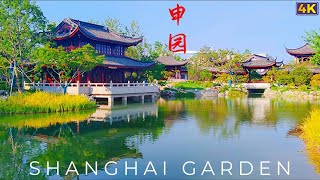
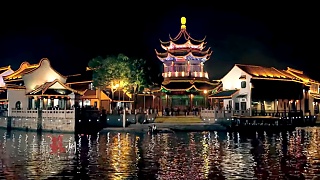
ZhūJiāJiǎo is an ancient water town now situated in the outskirt of ShangHai municipality.

The town has 36 beautiful bridges dating from the Ming and Qing dynasties.


[640],shadow=true,start=5,stop=

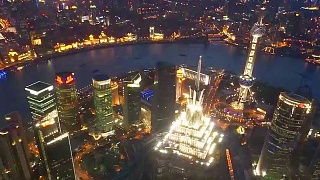
Shanghai is one of China's most dynamic and cosmopolitan cities, blending a rich history with modern skyscrapers and vibrant culture. Here's what you need to know as a tourist visiting Shanghai:

Historical and Cultural Landmarks:
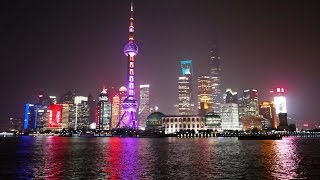
The Bund: This iconic waterfront promenade along the Huangpu River features colonial-era buildings on one side and futuristic skyscrapers on the other, offering stunning views of Shanghai's skyline.

Yu Garden: Dating back to the Ming dynasty, Yu Garden is a classical Chinese garden with pavilions, ponds, and rockeries. The nearby Yu Garden Bazaar is a great place to shop for souvenirs and traditional crafts.

Shanghai Museum: Home to an extensive collection of Chinese art and artifacts, including bronzes, ceramics, paintings, and calligraphy, the Shanghai Museum is a must-visit for history and art enthusiasts.

Jing'an Temple: One of Shanghai's most famous Buddhist temples, Jing'an Temple is known for its beautiful architecture, peaceful atmosphere, and towering golden Buddha statue.

Modern Attractions:
Shanghai Tower: Ascend to the observation deck of this iconic skyscraper, the tallest in China and the second-tallest in the world, for panoramic views of the city.

The Oriental Pearl TV Tower: Another iconic landmark, this futuristic tower offers observation decks, a glass-bottomed skywalk, and a revolving restaurant.

Shanghai Disneyland: Located in the Pudong district, Shanghai Disneyland offers a magical experience for visitors of all ages with its themed lands, attractions, and entertainment.

Shopping and Entertainment:
Nanjing Road: One of the world's busiest shopping streets, Nanjing Road is lined with department stores, boutiques, and restaurants. Don't miss the nearby pedestrian-friendly Nanjing Road East, known for its lively atmosphere and street performers.

Xintiandi: This upscale shopping, dining, and entertainment district features a mix of traditional Shikumen-style buildings and modern amenities, making it a popular destination for locals and tourists alike.

French Concession: Explore this historic neighborhood known for its tree-lined streets, charming cafes, boutiques, and art galleries.

Culinary Delights:
Shanghai Cuisine: Sample local specialties such as xiaolongbao (soup dumplings), shengjianbao (pan-fried dumplings), and Shanghai-style noodles.

Street Food: Wander through the city's bustling food markets and snack streets to taste a variety of street foods, from savory pancakes to grilled skewers.

Practical Tips:
Transportation: Shanghai has an efficient public transportation system, including the subway, buses, and taxis. Consider purchasing a rechargeable transportation card for convenience.

Language: While Mandarin is the official language, English is widely spoken in tourist areas, hotels, and restaurants.

Weather: Shanghai experiences four distinct seasons, with hot, humid summers and chilly winters. The best times to visit are spring (March to May) and autumn (September to November) when the weather is mild and comfortable.

Etiquette: Respect local customs and traditions, such as using polite language and avoiding loud behavior in public places.

Shanghai offers a captivating blend of old and new, with its historic landmarks, modern skyscrapers, vibrant culture, and delectable cuisine. Whether you're interested in history, architecture, shopping, or dining, Shanghai has something to offer every type of visitor.


Related Videos


Featured Videos

The magical scenery of GuangXi 广西 – from GuiLin 桂林 to YangShuo 阳朔
Sailing along the Li River and YuLong River, among beautiful karst mountain peaks ... Bonus films - starting with 'Let life be beautiful' ... Sung by Alu Azhou and the Mountain Wind Group 阿鲁阿卓, 山风组合 生如夏花. Inspired by Stray Birds by famous Indian poet Rabindranath Tagore, 1916 (生如夏花之绚烂,死如秋叶之静美 --飞鸟集, 泰戈尔, 1916). Lyrics and Music by PU Shu (朴树). "In this life, we can not stay so long ..." Plus, heading to the northern grasslands, Song of the Surging Water - title song of the 2015 movie Wolf Totem 汪峰 沧浪之歌(《狼图腾》主题曲). Sung by Wang Feng. Lyrics by WANG Feng (汪峰); music by Adam HUANG (HUANG Yong, 黄勇); with Alianuul (Morin Khuur solo) and NING FangLiang (violin solo). "I am broken, but I love flying ..." We are not here so long - let each day be full of love and beauty ...
Planning war on China – part 8
With The New Atlas ... Bonus film - with Daniel Dumbrill ... Bonus film 2 - with NuMuves ... Bonus film 3 - with Professor Michael Hudson ... Bonus film 4 - with George Galloway and Afshin Rattansi ... Bonus film 5 - propaganda theater ...
The ancient HuaYan, FaHua, HunYuan & ShanHua temples, DaTong, ShanXi province
With Andy see the World ... *** HuaYan Temple, located in DaTong, ShanXi province, is a magnificent example of Buddhist temple architecture and one of the best-preserved temples from the Liao and Jin dynasties. Its name, "Huayan," is derived from the Huayan Sutra, an important scripture in Chinese Buddhism, reflecting the temple's strong connection to the Huayan school of Buddhist thought. Key Features: Divided Structure: The temple is unique as it is divided into two parts: the Upper Temple and the Lower Temple. The Upper Temple, built on a hill, was primarily used for religious ceremonies, while the Lower Temple served as a residential and study area for monks. Grand Hall: The Great Buddha Hall in the Upper Temple is one of the largest remaining halls of its kind from the Liao dynasty. It features massive wooden beams, intricate carvings, and large Buddha statues that exude a sense of serenity. Murals and Sculptures: The temple is renowned for its well-preserved murals and Buddhist sculptures. These artworks depict scenes from Buddhist scriptures and stories, reflecting the artistic style and religious devotion of the era. Library of Sutras: The Lower Temple houses a library of Buddhist sutras, emphasizing the temple’s role as a center for learning and spiritual practice. Architectural Significance: The wooden structures of Huayan Temple showcase the advanced engineering and architectural techniques of ancient China. The use of dougong brackets (interlocking wooden brackets) is particularly impressive. Cultural Heritage: Huayan Temple is a testament to the flourishing of Buddhism in northern China during the Liao and Jin dynasties. It represents a blend of religious, artistic, and architectural achievements. Atmosphere: Visitors often find the temple serene and spiritually uplifting, with its quiet courtyards, ancient trees, and the scent of incense enhancing the experience. It is not just a historical site but also an active place of worship. Huayan Temple remains a significant cultural and spiritual landmark, drawing visitors and scholars from around the world to explore its beauty and historical importance. *** Shanhua Temple, located in Datong, Shanxi Province, is a stunning example of Chinese Buddhist architecture and history. Originally constructed during the Tang Dynasty, the temple has been preserved and renovated over the centuries, with its current structures mainly dating back to the Liao and Jin Dynasties. The temple complex is composed of three main halls arranged along a north-south axis: the Main Gate Hall, the Mahavira Hall, and the Sansheng Hall. These halls are surrounded by peaceful courtyards, ancient trees, and stone pathways, creating a serene environment for visitors. The Mahavira Hall is the centerpiece of the temple, housing large statues of the Buddha and bodhisattvas. The craftsmanship of these statues reflects the artistic style of the Liao Dynasty, with intricate details and vibrant colors. The Sansheng Hall, dedicated to the Three Saints of Hua-yen Buddhism, also contains exquisite statues and murals that are valuable cultural relics. One of the temple's unique features is its collection of wooden structures, which have survived numerous dynasties and demonstrate the sophisticated construction techniques of ancient Chinese architecture. The intricate carvings, painted beams, and symbolic motifs throughout the temple showcase the skill of artisans from different eras. Visitors to Shanhua Temple can also enjoy the surrounding scenery, as the temple is situated near other historical sites in Datong, such as the Nine-Dragon Wall and the Yungang Grottoes. Its peaceful ambiance and historical significance make it a must-visit destination for those exploring China's rich cultural heritage. *** The HunYuan Confucian Temple, located in Hunyuan County near Datong, Shanxi Province, is an important historical and cultural site dedicated to the teachings of Confucius. Known for its elegant architecture and serene atmosphere, the temple reflects the Confucian emphasis on education, morality, and respect for tradition. Originally built during the Yuan Dynasty, the temple has undergone several renovations and expansions over the centuries, with many of its current structures dating back to the Ming and Qing Dynasties. The layout of the temple follows traditional Confucian principles, with symmetrical courtyards and a central axis leading to the main halls. The temple complex includes several key structures, such as the Dacheng Hall, the Gate of Rites, and the Hall of Confucius’ Tablets. The Dacheng Hall, the centerpiece of the temple, houses a statue of Confucius and tablets honoring his disciples and other influential scholars. Its wooden beams and intricate carvings are a testament to the craftsmanship of ancient Chinese builders. The temple grounds are adorned with ancient cypress trees, stone tablets, and inscriptions that highlight the enduring legacy of Confucianism in Chinese culture. These elements create a tranquil environment for visitors, providing a space for reflection and appreciation of traditional values. Hunyuan Confucian Temple is not only a place of historical significance but also a symbol of the enduring influence of Confucian thought in shaping Chinese society. Its proximity to other attractions in the area, such as the Hanging Temple, makes it an excellent addition to any itinerary for visitors exploring the region. *** The Fahua Temple, located in Datong, Shanxi Province, is a historic Buddhist temple with a serene atmosphere and a rich cultural heritage. Known for its traditional Chinese architecture and intricate details, the temple provides a glimpse into the spiritual and artistic traditions of ancient China. Originally built during the Ming Dynasty, Fahua Temple has undergone renovations over the centuries, preserving its historic charm while maintaining its religious significance. The temple is dedicated to Buddhist teachings and serves as a place of worship, meditation, and cultural reflection. The layout of the temple includes several key structures, such as the main hall, bell tower, and various smaller pavilions. The main hall is adorned with statues of the Buddha and Bodhisattvas, as well as colorful murals that depict scenes from Buddhist scriptures. The bell tower houses an ancient bronze bell that is said to bring blessings and peace to those who hear its chime. The temple grounds are quiet and peaceful, with pathways lined by trees and flowers that enhance the meditative experience. Stone carvings and inscriptions throughout the temple complex reflect the devotion and artistic skills of past generations. Visitors often find the setting conducive to quiet reflection and spiritual exploration. Fahua Temple is an important cultural and religious site in Datong, offering visitors a chance to connect with Buddhist traditions and admire the craftsmanship of Chinese temple architecture. Its tranquil environment makes it a worthwhile stop for those seeking a deeper understanding of the region’s history and spiritual legacy.
ZhangJiaJie 张家界 scenes, HuNan province
Collaborative architecture leading to a better life
Small office, home office (SOHO); but with friends and colleagues. GuangZhou, GuangDong province ... BeiJing hutongs ...
More on the Nord Stream pipeline terrorist attack
No ! - look over here, at this weather balloon ; ) The 'Rules Based 'International' Order' - hmmmmm ...
The awesome karst mountain scenery of GuangXi province
With Little Chinese Everywhere ... Bonus film - with A German In China ...
The Harbin 哈尔滨 Snow and Ice Festival 2019
The beautiful WuYuan ancient town, JiangXi province
With JiangXi China ... WuYuan Ancient Town, located in JiangXi province, is a place of historical and cultural significance, known for its well-preserved architecture and picturesque scenery. The town is often referred to as a "living museum" of ancient Chinese culture, offering a glimpse into the country's rich historical past. Historical Significance Wuyuan Ancient Town has a history that dates back over a thousand years. It flourished during the Tang (618-907) and Song (960-1279) dynasties and continued to thrive through the Ming (1368-1644) and Qing (1644-1912) dynasties. The town's strategic location and prosperous agricultural economy contributed to its development as a cultural and commercial hub. Architecture The architecture of Wuyuan Ancient Town is a highlight, featuring traditional Chinese structures such as ancestral halls, temples, and residential buildings. These structures are characterized by their intricate woodwork, stone carvings, and tile-roofed houses. The well-preserved buildings reflect the elegance and craftsmanship of ancient Chinese architectural styles. Natural Beauty Wuyuan is also renowned for its stunning natural landscapes. The town is surrounded by lush mountains, winding rivers, and terraced fields, creating a picturesque setting that changes with the seasons. In spring, the blooming canola flowers turn the fields into a sea of yellow, attracting photographers and nature enthusiasts from all over the country. Culture and Traditions Wuyuan Ancient Town is rich in cultural heritage and traditions. The local customs, festivals, and folk arts are well-preserved, offering visitors a chance to experience traditional Chinese culture firsthand. The town hosts various cultural events, including lantern festivals, dragon boat races, and traditional opera performances. Notable Sites Some of the notable sites in Wuyuan Ancient Town include: Likeng Village: Known for its beautiful ancient buildings and tranquil environment, Likeng Village offers a glimpse into traditional rural life in China. Rainbow Bridge: A historic covered bridge that is one of the most iconic landmarks in Wuyuan, featuring unique wooden architecture. Xiaoqi Village: Famous for its ancient merchant houses and well-preserved cultural relics. Jiangwan Village: A historic village with a rich cultural heritage and traditional architecture. Tourism and Accessibility Wuyuan Ancient Town has become a popular tourist destination, attracting visitors with its historical charm and natural beauty. The town is easily accessible from major cities in Guangxi and neighboring provinces. Efforts have been made to preserve the town's cultural heritage while developing infrastructure to accommodate tourists.

Tag search ?