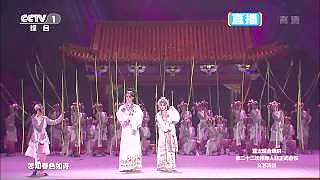
The Spring Festival Gala, 2024 – Don’t miss it
Some highlights from the annual spectacular.

Performers showcase Xinjiang's splendid musical culture ...

[640],shadow=true,start=,stop=

Reunion (awesome music and dance) ...

[320],shadow=true,start=,stop=

Celebration ...

[320],shadow=true,start=,stop=

Preparing for the Year of the Dragon (animation) ...

[320],shadow=true,start=,stop=

The poetic dance, "The Painting Journey – The Legend of a Panorama of Mountains and Rivers", highlights the aesthetics of traditional Chinese painting ...

[320],shadow=true,start=,stop=

Beautiful patterns ...

[320],shadow=true,start=,stop=

The magic of tea ...

[320],shadow=true,start=,stop=

Hanfu show, 'Ni Chang' ...

[320],shadow=true,start=,stop=

Martial arts dance ...

[320],shadow=true,start=,stop=

Hanfu dance ...

[320],shadow=true,start=,stop=

A special performance with the traditional Chinese instruments of the Sanxian and the Doumbek, as well as the Flamenco guitar - the sound of the dessert ...

[320],shadow=true,start=,stop=

Sending good wishes ...

[320],shadow=true,start=,stop=

More to come ...

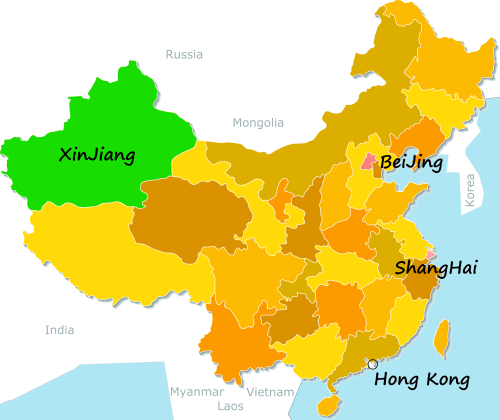
XinJiang map

Related Videos


Featured Videos

GuangZhou 广州 for two
Keep the love ... Excellent cinematography
Inside the YuTong bus factory
With Walkabout Rojo ...
The beautiful DuoYiHe River 多疑和河, LuoPing, YunNan province
Filmed in March 2011 ...
ShangHai Expo gardens walk
With Wei's Travel ...
A drive around ShangHai’s inner ring expressway
With Wei's Travel ...
HuangYao ancient town, GuangXi province – historic charm and natural beauty
With EpicGlobe Walks .. Huangyao Ancient Town Huangyao Ancient Town, GuangXi province, is a well-preserved historic town known for its ancient architecture, cobblestone streets, and serene environment. Here’s a detailed guide to everything you need to know about this hidden gem. History and Background Huangyao Ancient Town has a history dating back over 1,000 years, with its origins traced to the Song Dynasty (960–1279 AD). It flourished during the Ming (1368–1644) and Qing (1644–1912) dynasties as a bustling commercial hub due to its strategic location along trade routes. The town was named after the dominant Huang and Yao families who settled here. Unlike many other ancient towns in China, Huangyao has retained much of its original charm, avoiding over-commercialization. Architecture and Layout The town is a living museum of Ming and Qing dynasty architecture, with over 300 well-preserved ancient buildings. Key architectural features include: Black Tiles and White Walls: Traditional southern Chinese-style buildings with black-tiled roofs and whitewashed walls. Cobblestone Streets: The narrow, winding streets are paved with smooth cobblestones, polished by centuries of foot traffic. Courtyard Houses: Many homes feature central courtyards, reflecting traditional Chinese family life. Ancient Bridges: Stone bridges, such as the Dai Long Bridge, connect different parts of the town and add to its picturesque charm. Main Attractions Here’s a detailed look at the must-see spots in Huangyao: 1. Dai Long Bridge (带龙桥) A stunning ancient stone bridge that spans the Peacock River. Offers breathtaking views, especially during sunrise or sunset when the water reflects the surrounding karst mountains. A popular spot for photography and quiet contemplation. 2. Ancient Banyan Trees Huangyao is home to several ancient banyan trees, some over 1,000 years old. The most famous is the "Couple Tree", where two banyan trees have grown intertwined, symbolizing love and unity. 3. Baozi Mountain (宝珠山) A small hill located in the center of the town, offering panoramic views of Huangyao and its surroundings. At the top, you’ll find the Baozi Mountain Temple, a quiet place for reflection. 4. Ancestral Halls and Temples Huang Family Ancestral Hall: A well-preserved hall showcasing the history and achievements of the Huang family. Ouyang Temple: Dedicated to the Ouyang family, another prominent clan in the town. Guanyin Temple: A small temple dedicated to Guanyin, the Goddess of Mercy. 5. Peacock River (孔雀河) The river winds through the town, lined with ancient buildings and lush greenery. Visitors can take a bamboo raft ride to enjoy the serene scenery. 6. Ancient Theater Stage A historic stage where traditional operas and performances were held during festivals. The intricate carvings and decorations on the stage are a testament to the town’s cultural heritage. 7. Stone Tablet Inscriptions Scattered throughout the town, these inscriptions provide insights into Huangyao’s history and the lives of its inhabitants. Cultural Experiences Huangyao is not just about sightseeing; it’s also a place to immerse yourself in local culture: Traditional Festivals: If you visit during Chinese New Year or the Lantern Festival, you’ll witness lively celebrations with dragon dances, lantern displays, and traditional music. Local Handicrafts: The town is known for its handmade soy sauce and fermented bean paste, which you can watch being made in small workshops. You can also find locally crafted bamboo products and embroidery. Folk Performances: Occasional performances of Guangxi opera and folk songs are held in the ancient theater. Local Cuisine Huangyao’s food is simple yet flavorful, reflecting the town’s rural roots. Must-try dishes include: Huangyao Tofu Pudding (黄姚豆腐脑): A soft, silky tofu dish served with soy sauce, chili, and peanuts. Huangyao Rice Noodles (黄姚米粉): A hearty bowl of rice noodles topped with braised pork, pickled vegetables, and herbs. Stuffed Glutinous Rice Balls (酿糯米球): A local specialty made with glutinous rice and filled with meat or vegetables. Fermented Bean Paste (豆豉): A savory condiment made from fermented soybeans, often used to flavor dishes. Best Time to Visit Spring (March–May): Mild weather and blooming flowers make this an ideal time to visit. Autumn (September–November): Cool and comfortable, with clear skies and vibrant foliage. Avoid Summer (June–August): The weather can be hot and humid, and the town may attract more tourists. How to Get There Huangyao is located about 200 kilometers from Guilin and 120 kilometers from Yangshuo. Here’s how to reach the town: From Guilin: Take a bus from Guilin Bus Station to Huangyao (approx. 3–4 hours). Alternatively, hire a private car or join a guided tour. From Yangshuo: Buses and private transfers are available, taking around 2–3 hours. Where to Stay Huangyao offers a range of accommodations, from budget guesthouses to boutique hotels. Staying overnight is highly recommended to experience the town’s peaceful atmosphere after the day-trippers leave. Options include: Traditional Guesthouses: Stay in a restored ancient building for an authentic experience. Boutique Hotels: Some hotels offer modern amenities while maintaining traditional aesthetics. Travel Tips Wear Comfortable Shoes: The cobblestone streets can be uneven, so sturdy footwear is essential. Cash is King: Many small shops and vendors may not accept credit cards, so carry some cash. Respect Local Customs: Huangyao is a living community, so be mindful of residents’ privacy and traditions. Explore Early or Late: To avoid crowds, explore the town early in the morning or late in the afternoon. Learn Basic Chinese: While some locals may speak basic English, knowing a few Mandarin phrases can enhance your experience. Why Visit Huangyao? Huangyao Ancient Town is a perfect destination for travelers seeking: A glimpse into authentic rural Chinese life. Stunning natural scenery combined with historic architecture. A peaceful and less touristy alternative to more famous ancient towns like Lijiang or Fenghuang. Whether you’re a history buff, a photography enthusiast, or simply looking for a tranquil retreat, Huangyao Ancient Town promises an unforgettable experience.
MiuMiu at eight years old birthday – Pachelbel’s Canon in D, in rock guitar
Zhu Ni ShengRi KuaiLe (Happy Birthday to You) 祝你生日快乐 🎂 ! You rock 🎵 MiuMiu GuitarGirl's eighth birthday song. "I didn't expect that !" Thank you for the music :) 🎸 Awesome shredding - don't miss it ... Bonus film - SunnyDay (cover, Jay Chou) 周杰伦 晴天 翻唱 ... Plus - L'Internationale 国际歌 ... 'And this is my flamenco guitar masterclass' ... Guitar factory visit (fascinating) ... A Soft Heart | MiuMiu's MV 心太软 华语经典 ... Receiving a YouTube silver plaque ...

Waiting for my love – beautiful Han dynasty music …
‘Your Collar’, a haunting, romantic song from the imperial music of the Han Dynasty ... Plus, bonus music films ... 'I'm right here, where are you', sung by Alu Azhou and the Mountain Wind Group 阿鲁阿卓, 山风组合 生如夏花. Inspired by Stray Birds by famous Indian poet Rabindranath Tagore, 1916 (生如夏花之绚烂,死如秋叶之静美 --飞鸟集, 泰戈尔, 1916). Lyrics and Music by PU Shu (朴树). "In this life, we can not stay so long ..." Plus Song of the Surging Water - title song of the 2015 movie Wolf Totem 汪峰 沧浪之歌(《狼图腾》主题曲). Sung by Wang Feng. Lyrics by WANG Feng (汪峰); music by Adam HUANG (HUANG Yong, 黄勇); with Alianuul (Morin Khuur solo) and NING FangLiang (violin solo). "I am broken, but I love flying ..." 鄧紫棋 G.E.M. - 存在_我是歌手第二季 (2014年1月10日) (Life is like a) Na Ying, Warm Spring with Blooming Flowers 春暖花开 (when I am with you) ... Wang Feng song, 'I love you, China' 我爱你 中国 (Wo Ai Ni, Zhong Guo) from the CCTV New Year Gala ... If you can, please support this site with a donation; it really does help us keep going ... Thank you from the BeijingBuzzz team !
Shangri-la, YunNan province, food adventure, plus visitor guide
With Tucker Eats ... Welcome to Shangri-La, China Introduction History of Shangri-La Joseph Rock & His Influence Top Attractions Local Culture Local Cuisine Visitor Tips Introduction Shangri-La, located in the DiQing Tibetan Autonomous Prefecture in Yunnan Province, China, is a place of stunning natural beauty, rich Tibetan culture, and spiritual significance. Known for its snow-capped mountains, deep valleys, and pristine lakes, Shangri-La has become a popular destination for travelers seeking both adventure and tranquility. History of the Name "Shangri-La" The name "Shangri-La" originates from James Hilton's 1933 novel Lost Horizon, where it was depicted as a mystical, utopian valley in the Himalayas. The term has since become synonymous with an earthly paradise, a place of peace and perpetual happiness. In 2001, to promote tourism, the Chinese government officially renamed ZhongDian County in Yunnan Province to Shangri-La, claiming it to be the inspiration for Hilton's fictional paradise. Despite the debate over the true inspiration for Hilton’s novel, the renaming has significantly boosted the region's profile, transforming it into a major tourist destination. The area was already known for its Tibetan cultural heritage, and the new name further solidified its reputation as a place of mystical allure and natural beauty. Joseph Rock & His Influence on Shangri-La Joseph Francis Charles Rock was an Austrian-American explorer, botanist, and anthropologist who lived in China for more than 25 years during the early 20th century. He is particularly known for his extensive travels and research in the remote regions of Yunnan and Sichuan provinces, where he lived among the Naxi people, an ethnic minority with a rich cultural heritage. Rock’s detailed accounts of the Naxi culture, their language, and the stunning landscapes of the region were published in various journals, including National Geographic. These writings brought the hidden beauty of the region to the attention of the world and likely served as an inspiration for James Hilton's depiction of the fictional Shangri-La in his novel Lost Horizon. Rock's base in Lijiang, which is not far from the present-day Shangri-La, became the center of his studies on the Naxi people. He documented their ancient Dongba script, rituals, and way of life, contributing significantly to the preservation of their culture. The influence of his work is evident in the detailed descriptions of a harmonious, isolated valley in Hilton’s novel, which bears striking similarities to the areas where Rock lived and worked. Today, Joseph Rock’s legacy lives on in both the scientific community and the popular imagination, where he is remembered as a key figure who bridged the gap between the mysterious landscapes of southwest China and the Western world. Top Attractions in Shangri-La Songzanlin Monastery Often referred to as the "Little Potala Palace," Songzanlin Monastery is the largest Tibetan Buddhist monastery in Yunnan Province. Built in the 17th century, it is a stunning complex of golden roofs, ornate halls, and traditional Tibetan architecture. The monastery is an active religious site, home to hundreds of monks, and offers breathtaking views of the surrounding landscape. Pudacuo National Park Pudacuo National Park is one of the first national parks in China to meet international standards. Spanning over 1,300 square kilometers, the park is known for its diverse ecosystems, including alpine lakes, wetlands, forests, and meadows. Key attractions within the park include Shudu Lake, Bita Lake, and the vast, undisturbed wilderness that is home to a variety of rare flora and fauna. Tiger Leaping Gorge Tiger Leaping Gorge, one of the deepest and most spectacular gorges in the world, is located about 60 kilometers from Shangri-La. The gorge is carved by the Jinsha River, a tributary of the Yangtze, and offers thrilling trekking opportunities. The dramatic scenery of steep cliffs, roaring rapids, and snow-capped peaks makes it a must-visit for adventure seekers. Napa Lake Napa Lake is a seasonal lake located about 8 kilometers from Shangri-La. Surrounded by mountains, the lake appears during the rainy season and turns into a lush grassland in the dry season, where you can witness yaks and horses grazing. The area is also a sanctuary for migratory birds, including the rare black-necked crane. Dukezong Ancient Town Dukezong Ancient Town is a well-preserved Tibetan town with a history of over 1,300 years. The town features traditional Tibetan architecture, winding cobblestone streets, and the largest prayer wheel in the world. Dukezong is a great place to explore local culture, enjoy Tibetan cuisine, and shop for traditional crafts. Local Culture Shangri-La is a region deeply rooted in Tibetan culture. The local population predominantly consists of Tibetan people, who practice Tibetan Buddhism and maintain traditional customs and festivals. Major festivals include the Tibetan New Year (Losar), the Horse Racing Festival, and the Gedong Festival, where you can experience colorful religious dances, horse racing, and other cultural events. The region is also known for its vibrant Tibetan art, including Thangka paintings, wood carvings, and intricate metalwork. Visitors have the opportunity to engage with local artisans and learn about the traditional techniques passed down through generations. Local Cuisine The cuisine in Shangri-La is heavily influenced by Tibetan and Yunnanese flavors. Key dishes to try include: Tibetan Yak Butter Tea: A traditional Tibetan beverage made from tea, yak butter, and salt. It’s known for its unique taste and high energy content. Tsampa: A staple food made from roasted barley flour, often mixed with yak butter tea to form a dough. Yak Meat: A common ingredient in local dishes, yak meat is often stewed or grilled, and served with vegetables or rice. Momos: Tibetan-style dumplings filled with meat or vegetables, similar to the Chinese jiaozi. Wild Mushroom Hot Pot: A Yunnan specialty featuring a variety of locally-sourced wild mushrooms cooked in a flavorful broth. Visitors should also explore local markets for fresh produce, Tibetan bread, and artisanal cheeses made from yak milk. Visitor Tips Best Time to Visit: The best time to visit Shangri-La is from May to October, when the weather is mild and the landscapes are lush and green. During this period, the region is also alive with festivals and cultural events. Altitude: Shangri-La is located at an altitude of about 3,200 meters (10,500 feet). Visitors should be aware of the potential for altitude sickness and take it easy during the first few days of their visit. Getting There: Shangri-La can be reached by air via DiQing Shangri-La Airport, which has flights from major cities like Kunming, Chengdu, and Lhasa. There are also bus connections to Lijiang and Dali. Language: While Mandarin is widely spoken, many locals speak Tibetan. Having a translation app or a basic knowledge of Mandarin phrases can be helpful. Respect Local Customs: When visiting monasteries and other religious sites, dress modestly, remove your hat, and ask for permission before taking photographs. It’s also customary to walk clockwise around religious sites.

Tag search ?