Mount HuangShan 黄山 : a documentary

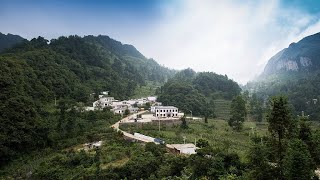
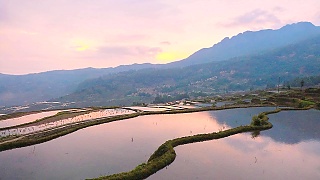
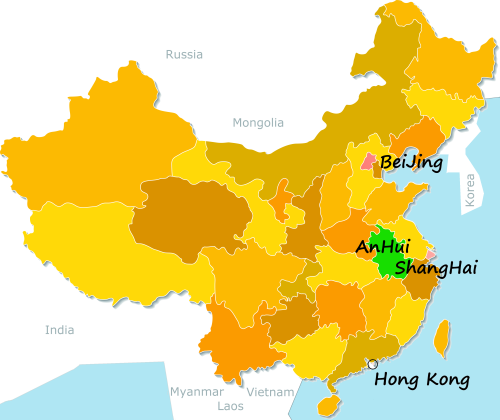
HuangShan (Yellow Mountain) is a group of mountains in AnHui province, east China.


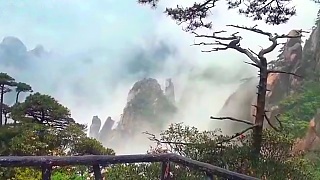
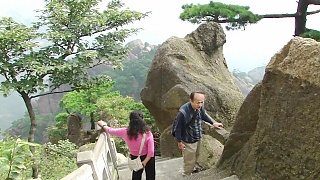
Famous for its rugged peaks, unusual rocks and tenacious pine trees, this beautiful landscape is a UNESCO World Heritage Site.


[640],shadow=true,start=,stop=
AnHui map
Related Videos


Featured Videos

WeiShan, YunNan province
With China Road Tales ...
MuTianYu and SiMaTai Great Wall from above
Two sections of the Great Wall of China north of BeiJing ... Plus - why not run the Great Wall Marathon 2018 on May 1st ...
Get ready for China – great food dishes
In BeiJing alone, there are around 200,000 places to eat, so you'll never be far from a tasty meal and there is so much to try that China is very much a foodie heaven. Here's BeiJingBuzzz's cheat sheet of popular food dishes that you will love. Feel free to print out for personal use ... Huo Guo (火锅) : 'Hotpot' - order what you like and cook it in a steaming broth that can be spicy, mild or both. Served with a sesame sauce topped with coriander and / or spring onion; with vinegar and soy sauce as additional options. Thinly sliced meats, all manner of vegetables, noodles, eggs, tofu and more. Be sure to try Dong Dofu (iced tofu) and Dofu skin - super delicious in Huo Guo. There are many independents but you cannot go wrong if you see a XiaBu XiaBu, a very popular restaurant chain. Mābo Dōfu (麻婆豆腐) : soft beancurd in a spicy sauce with minced pork BaoZi (包子) : steamed buns filled with meat or vegetables JiaoZi (饺子) : boiled or pan-fried dumplings filled with meat or vegetables RouJiaMo (肉夹馍) : a sandwich made with flatbread and filled with meat (most commonly pork) CongYou Bing (葱油饼) : spring onion / scallion pancakes - a savory flatbread made with scallions and flour ZhengJiao (蒸饺) : steamed or pan-fried dumplings filled with meat or seafood ZongZi (粽子) : glutinous rice dumplings wrapped in bamboo leaves GouBuLi BaoZi (狗不理包子) : steamed buns filled with meat or vegetables, popular in Tianjin DouHua (豆花) : sweet tofu pudding XiaoLongBao (小笼包) : steamed dumplings filled with meat or seafood and soup Xī Hóng Shì Chǎo JīDàn (西红柿炒蛋): egg and tomato - a popular dish in Chinese cuisine, it is often a simple and comforting dish, that can be found in many Chinese home-style cooking. It is typically made by stir-frying diced tomatoes and beaten eggs together with some seasonings, such as salt, pepper, and sometimes soy sauce. DanDan Mian (担担面): a spicy Szechuan noodle dish made with thin wheat noodles, a spicy chili oil-based sauce, and often ground meat JianShui Zhu (建水煮): fried vermicelli noodles popular in Yunnan province LanZhou LaMian (兰州拉面): hand-pulled noodles popular in Lanzhou, Gansu province ReGan Mian (热干面): Wuhan hot dry noodles - a spicy dish made with thin wheat noodles, chili oil and ground meat, popular in Wuhan, Hubei province ZhaJiang Mian (炸酱面): a dish of thick wheat noodles served with a fermented soybean paste sauce and vegetables, popular in northern China ZhaJiangMian (炸酱面): a dish of thick wheat noodles served with a bean paste sauce, popular in northeastern China GuoTie (锅贴): Chinese fried dumplings MaLaTang (麻辣烫): a spicy hotpot popular in Sichuan and Chongqing Di San Xian (第三鲜): a popular dish in Chinese cuisine, typically found in northern China, it is a type of stir-fry dish made with three main ingredients: potatoes, eggplant, and bell peppers, it is also called "Three Fresh" or "Three Precious Vegetables". It is typically stir-fried with garlic, ginger, and scallions, and seasoned with soy sauce, sugar, and sometimes oyster sauce. GōngBǎo JīDīng (宫保鸡丁) : also transcribed Gong Bao, Kung Pao or Kung Po, is a spicy, stir-fried Chinese dish made with cubes of chicken, peanuts, vegetables, and chili peppers. A classic dish in Sichuan cuisine. JīSī Liáng Miàn (鸡丝凉面) : Chinese Chicken Noodle Salad - Chinese chicken noodle salad features noodles tossed in a nutty savory sesame sauce and topped with shredded chicken and cucumber. Hei Jiao Niu Liu (黑椒牛柳) - Sliced tender beef with onions, peppers and black pepper. Huo Guo - hot pot There are also around 6,000 McDonalds in China, plus Burger King, KFC, Pizza Hut, Subway and more. And if you like cooking from scratch yourself, you'll find many huge supermarkets plus local markets.
Rooftop ShangHai 上海
Don't try this (and we mean that), but enjoy the views (if not feeling a tad dizzy and just about ready to fall, or jump, off) ... ShangHai travelling for $20, part 2.
Extreme Wild Great Wall hike
Due to its height this part of the Great Wall of China was single sided and narrow. Through the centuries of wind and rain it has become greatly eroded. Although that adds to the charm, it is a very dangerous hike that is NOT to be experienced first hand, but rather by this film. Enjoy the thrill from your armchair, only. And we mean that.
GuiLin 桂林, YangShuo  阳朔 and the Li River 漓江
GuangXi province
A walk in the rain, ChangSha, HuNan province
With Walk East ...
China – the threat of a good example
With Expat Adventuring in Asia ... "In this eye-opening video, we uncover the truth behind the growing tension between the United States and China. For years, the U.S. government has painted China as a looming enemy, a global threat that must be contained at all costs. But what if everything we’ve been told about China’s rise is a carefully constructed lie? Why is China seen as an enemy by the U.S. government? The answer is simpler than you think: China’s rise challenges the U.S. dominance — both economically and militarily. In this video, we expose the official U.S. policy that labels China as a threat not because of ideology or military aggression, but because China’s success threatens America’s role as the world's sole superpower. This policy — backed by years of documentation — is the core reason behind the U.S. narrative of China as the “enemy.” China’s peaceful rise versus U.S. domination. While the U.S. seeks to maintain global primacy and control, China has focused on development — building a massive economy, lifting over 800 million people out of poverty, and creating a modern, thriving nation through peaceful means. But the U.S. establishment is unwilling to accept that a country can prosper without following the West’s path. In this video, we reveal: • How U.S. foreign policy, dating back to the 1992 Defense Planning Guidance, explicitly states that any country, including China, that challenges U.S. dominance is labeled a threat. • The “primacy” doctrine and how it has shaped U.S. global strategies, including its ongoing campaign to undermine China’s rise. • The truth behind billions of dollars spent on anti-communist propaganda and “democracy promotion” to convince the world that China’s system is dangerous, despite its successes. • How the global power shift from unipolar to multipolar is already happening, and why the U.S. feels the need to hold onto a world that’s quickly evolving beyond its control. The reality that can’t be hidden Despite the constant anti-China rhetoric, China’s rise speaks for itself. The country’s GDP has grown from just $190 billion in 1980 to $18 trillion today, and it’s created the largest high-speed rail network in the world, alongside cutting-edge tech hubs and innovations that are reshaping the global economy. In contrast, the U.S. continues to face challenges at home, including income inequality, racial tensions, and a failing healthcare system. Yet, the U.S. media continues to promote the idea that China’s peaceful development is somehow a threat to the world. What the media doesn’t want you to know Behind the scenes, hundreds of millions of dollars have been funneled into think tanks, universities, and media outlets worldwide to shape global perceptions about China. We reveal how the Voice of America, National Endowment for Democracy (NED), and USAID fund anti-China narratives and distort the truth about China’s achievements. But no amount of money or propaganda can hide the undeniable truth: China’s success proves that a different system works. What does this mean for the future? As China continues to rise, the world is transitioning from a U.S.-dominated unipolar order to a multipolar world where countries cooperate, not compete. The future of global relations is changing, and China’s vision of cooperation is reshaping the way nations interact on the world stage. In this video, you’ll discover: • The hidden policies that fuel U.S. opposition to China. • How China’s peaceful rise is threatening the U.S. empire — not through war, but through smart, long-term development. • Why the real enemy isn’t China, but rather the U.S. control of global narratives and the unwillingness to share power with emerging nations. Why should you watch? • If you’re curious about the real reasons behind U.S.-China tensions, this video will give you answers based on facts, not propaganda. • If you want to understand global power dynamics and why China’s rise isn’t a threat but an opportunity for cooperation, this video is for you. • If you’ve ever wondered why the U.S. is so obsessed with maintaining global hegemony, this video will unveil the truth. 🔔 Don’t forget to subscribe for more deep dives into China’s rise, U.S. foreign policy, and the changing global order." In China, the people are king In the West, the people are livestock
The Harbin 哈尔滨 Snow and Ice Festival opens January 3rd
For over 30 years, the Harbin Snow and Ice World has wowed visitors from round the globe ...

Tag search ?