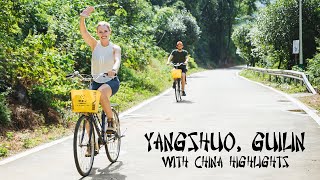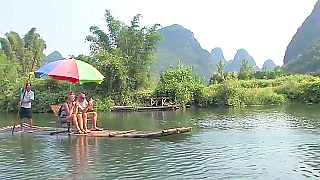
The unforgettable Li River 漓江 cruise from GuiLin 桂林 to YangShuo 阳朔

GuangXi province.

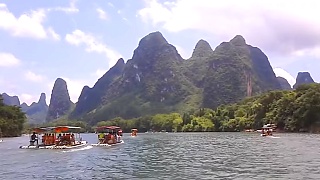
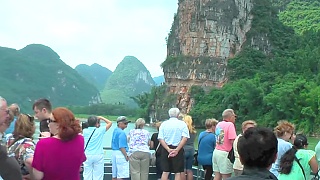
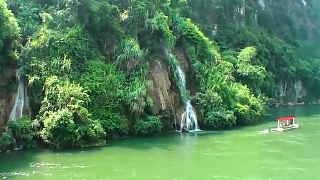
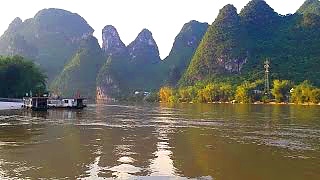
The four hour Li River cruise from GuiLin to YangShuo passes through spectacular karst peaks scenery, making it one of the top tourist attractions in China.

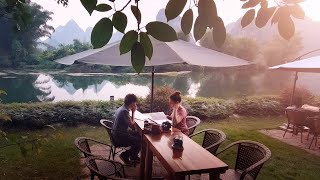
The film also includes views over YangShuo and a short boat trip from FuLi (down river from YangShuo) before sunset.

Very beautiful ...

[640],shadow=true,start=,stop=

Yangshuo, situated in Guangxi Zhuang Autonomous Region in southern China, is renowned for its breathtaking karst landscapes, serene rivers, and vibrant local culture. Here's a guide for visitors to Yangshuo:

Natural Beauty:
Karst Mountains: Yangshuo is famous for its iconic karst mountains, which rise sharply from the surrounding plains, creating a dramatic and picturesque landscape. Visitors can explore these unique limestone formations by hiking, biking, or taking boat cruises along the Li River.

Li River: The Li River, one of China's most scenic waterways, meanders through the karst mountains of Yangshuo, offering stunning vistas at every turn. A leisurely boat cruise along the Li River is a must-do activity for visitors, providing opportunities to admire the breathtaking scenery and capture iconic views of the karst peaks reflected in the water.

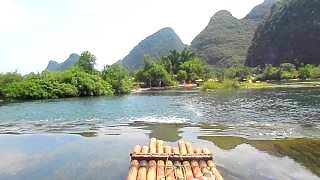
Yulong River: The Yulong River, a tributary of the Li River, is another picturesque waterway that flows through Yangshuo's countryside. Visitors can enjoy bamboo rafting or kayaking on the Yulong River, passing through idyllic villages, rice paddies, and bamboo groves along the way.

Outdoor Activities:
Cycling: Yangshuo is a cyclist's paradise, with scenic countryside roads and trails that wind through rice fields, orchards, and traditional villages. Renting a bicycle and exploring the surrounding countryside at a leisurely pace is a popular activity for visitors.

Rock Climbing: With its towering karst cliffs and limestone peaks, Yangshuo is a premier rock climbing destination in China. Experienced climbers and beginners alike can find suitable routes and climbing spots in the area, with options for guided tours and equipment rental available.

Cultural Experiences:
West Street: West Street (Xi Jie) is the main thoroughfare in Yangshuo's town center and a hub of activity for tourists and locals alike. Lined with shops, restaurants, cafes, and bars, West Street offers a vibrant atmosphere and is a great place to shop for souvenirs, sample local cuisine, and soak in the town's unique charm.

Impression Sanjie Liu: Directed by renowned filmmaker Zhang Yimou, Impression Sanjie Liu is a spectacular outdoor performance staged on the Li River. Featuring a cast of hundreds of performers, including local fishermen and farmers, the show combines music, dance, and light effects to showcase the natural beauty and cultural heritage of the area.

Practical Tips:
Weather: Yangshuo has a subtropical climate with mild winters and hot, humid summers. The best time to visit is during the spring (March to May) and autumn (September to November) when the weather is most pleasant and the landscapes are lush and green.

Accommodation: Yangshuo offers a range of accommodation options, including guesthouses, boutique hotels, and hostels catering to various budgets and preferences. Staying in the town center allows visitors to easily access attractions, restaurants, and transportation options.

Local Cuisine: Don't miss the opportunity to sample Yangshuo's delicious local cuisine, which includes specialties such as beer fish and Guilin rice noodles. Many restaurants in Yangshuo offer outdoor seating with panoramic views of the surrounding karst landscape.

Yangshuo's stunning natural scenery, outdoor activities, and vibrant cultural scene make it a popular destination for travelers seeking to explore the beauty of southern China. Whether cruising along the Li River, cycling through the countryside, or immersing oneself in the town's bustling street life, Yangshuo offers unforgettable experiences for visitors of all ages and interests.
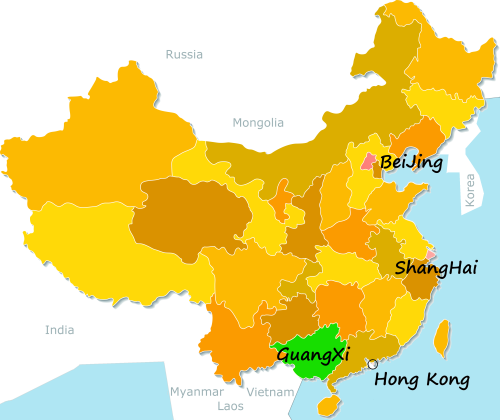
GuangXi map

Related Videos


Featured Videos

XiNing 西宁, provincial capital of QingHai province – aerial view
XiNing is the largest city on the Tibetan Plateau, west China. XiNing was a commercial hub along the Northern Silk Road for over 2000 years, and a stronghold of the Han, Sui, Tang and Song dynasties' resistance against nomadic attacks from the west.
BinZhou city, ShanDong province
With Valeriy Blank ...
Scenes from JiuZhaiGou 九寨沟
JiuZhaiGou Valley (九寨沟), literally 'Nine Villages Valley', is a nature reserve and national park located in the north of SiChuan province, near the GanSu border. JiuZhaiGou is part of the MinShan mountains on the edge of the Tibetan Plateau, and is known for its many multi-level waterfalls, colorful mineral lakes and snow-capped peaks. The elevation ranges from 2,000 to 4,500 meters (6,600 to 14,800 feet). It lies 330 km (205 miles) north of the provincial capital of Chengdu and is a UNESCO World Heritage Site. This remote region has been inhabited by various Tibetan and Qiang peoples for many centuries. The valleys here are lined with 55 km of roads for shuttle buses, as well as wooden boardwalks and small pavilions. The boardwalks are typically located on the opposite side of the lakes from the roads. Many visitors will first take the shuttle bus to the end of RiZe or ShuZheng valley, then make their way back downhill by foot on the boardwalks, taking the bus when the next site is deemed too distant. JiuZhaiGou is a ten hour bus ride from ChengDu, or one can fly from ChengDu or ChongQing to JiuZhai HuangLong Airport, then take an hour long bus ride to HuangLong, or a 90 minute ride to JiuZhaiGou. There is also a daily flight to Xi'An, in the peak season, and from BeiJing, ShangHai and HangZhou.
Planning war on China – part 38 – Don’t miss it !!
with Mark Sleboda and The Grayzone ... One world, one family. When grow up, one realizes that it is not about 'me'; it is about 'we'. One life, one chance to do the right thing.
The awesome FanJing Mountain, GuiZhou province
With Qingyunji ... Fanjing Mountain, located in Tongren City, Guizhou Province, is a stunning natural and cultural landmark known for its unique landscapes, biodiversity, and spiritual significance. Here's a detailed overview of Fanjing Mountain: ### Location and Overview - **Location**: Fanjing Mountain is situated in the Wuling Mountain range in Tongren City, northeastern Guizhou Province, China. - **Elevation**: The highest peak of Fanjing Mountain reaches an elevation of 2,570 meters (8,430 feet) above sea level. - **UNESCO World Heritage Site**: In 2018, Fanjing Mountain was designated a UNESCO World Heritage Site due to its rich biodiversity and unique geological features. ### Natural Beauty and Biodiversity 1. **Unique Geological Formations**: Fanjing Mountain is characterized by its distinctive rock formations, including the Red Cloud Golden Summit (HongYun JinDing), Mushroom Stone, and Old Golden Summit (LaoJinDing). These formations offer breathtaking views and are popular among photographers and nature enthusiasts. 2. **Biodiversity Hotspot**: The mountain is a biodiversity hotspot, home to numerous rare and endemic species. The area is particularly noted for its diverse plant life, including ancient ginkgo trees, fir forests, and a variety of medicinal herbs. 3. **Endangered Species**: Fanjing Mountain provides habitat for several endangered animal species, such as the Guizhou snub-nosed monkey (Rhinopithecus brelichi), Chinese giant salamander, and various rare birds and insects. ### Spiritual and Cultural Significance 1. **Buddhist Heritage**: Fanjing Mountain is one of the sacred Buddhist mountains in China. It is considered a place of enlightenment and has a long history of Buddhist worship. The mountain is associated with Maitreya Buddha (the future Buddha). 2. **Temples and Monasteries**: There are several ancient temples and monasteries on the mountain, including the Shizhong Temple and the Cheng’en Temple. These religious sites attract pilgrims and tourists alike, offering a peaceful and spiritual retreat. 3. **Pilgrimage Destination**: The mountain's spiritual significance makes it a popular pilgrimage destination for Buddhists, especially during religious festivals and important Buddhist dates. ### Tourist Attractions and Activities 1. **Hiking and Trekking**: Fanjing Mountain offers numerous hiking and trekking trails that cater to various levels of difficulty. The trails provide stunning views of the natural scenery and access to the mountain’s unique rock formations and temples. 2. **Cable Cars**: For those who prefer a less strenuous visit, cable cars are available to take visitors up to the scenic areas and major viewpoints, offering a comfortable and scenic ride. 3. **Panoramic Views**: The Golden Summit, one of the most famous peaks, offers panoramic views of the surrounding mountains and valleys. The sight of the sunrise and sunset from this vantage point is particularly spectacular. 4. **Photography**: The unique landscapes, diverse flora and fauna, and ancient temples make Fanjing Mountain a paradise for photographers. ### Conservation Efforts 1. **Protected Area**: Fanjing Mountain is part of a protected nature reserve, which helps to preserve its unique ecosystems and biodiversity. 2. **Sustainable Tourism**: Efforts are being made to promote sustainable tourism practices that minimize the impact on the natural environment and local communities while enhancing the visitor experience. ### Visitor Information 1. **Best Time to Visit**: The best time to visit Fanjing Mountain is during the spring (April to May) and autumn (September to October) when the weather is mild, and the natural scenery is at its most vibrant. 2. **Accessibility**: Fanjing Mountain can be accessed via Tongren, which is connected to major cities in China by train and air. From Tongren, visitors can take buses or taxis to the mountain’s entrance. 3. **Accommodation**: There are various accommodation options available, ranging from hotels in Tongren to guesthouses and inns near the mountain. ### Conclusion Fanjing Mountain in Guizhou is a place of extraordinary natural beauty and cultural significance. With its unique geological formations, rich biodiversity, and profound spiritual heritage, it offers a diverse and enriching experience for nature lovers, hikers, pilgrims, and tourists. The mountain’s combination of stunning landscapes, rare wildlife, and ancient temples makes it a must-visit destination in China.
Exploring ancient KaiFeng, HeNan province
With China Walking Tour ... 1. Daxiangguo Temple (大相国寺) Daxiangguo Temple is one of the most renowned Buddhist temples in China, located in the heart of Kaifeng. Originally built during the Northern Wei Dynasty (early 6th century), it has a history spanning over 1,400 years. The temple is famous for its grand architectural design and historical significance, as it was once a prominent center for Buddhist learning and cultural exchange. Visitors can admire its ancient wooden structures, exquisite carvings, and beautiful gardens. The temple is also known for housing numerous cultural relics, including ancient Buddhist scriptures and statues. 2. Shan, Shan, and Gan Guild Hall (山陕甘会馆) The Shan, Shan, and Gan Guild Hall, also known as the Shanxi, Shaanxi, and Gansu Guild Hall, is an impressive historical building that once served as a meeting place for merchants from these regions. Located near the Kaifeng Ancient City Wall, the guild hall is a fine example of traditional Chinese architecture, showcasing intricate woodwork, carved beams, and painted ceilings. It reflects the vibrant commercial life of Kaifeng during the Song Dynasty when it was a bustling trade hub. The hall also features a rich collection of artifacts that offer a glimpse into the merchant culture of the time. 3. Longting Park (龙亭公园) Longting Park, or Dragon Pavilion Park, is one of Kaifeng’s most famous scenic spots, known for its serene beauty and historical importance. The park is home to the Longting Pavilion, a magnificent structure originally built during the Song Dynasty as a royal palace. The pavilion has been reconstructed over the years, but it still retains its grandeur and historical charm. Surrounded by tranquil lakes and lush greenery, Longting Park is a perfect place to explore the fusion of nature and ancient Chinese architecture. It also houses several other historical buildings and cultural relics, making it a must-visit for anyone interested in Chinese history. 4. Chinese Han Garden (中国翰园) The Chinese Han Garden, or Zhongguo Han Yuan, is a unique cultural and architectural park dedicated to showcasing the history and achievements of the Han Dynasty. Located in Kaifeng, this garden beautifully blends traditional Chinese landscape design with ancient architectural styles. It features a collection of pavilions, bridges, and pathways that recreate the atmosphere of the Han Dynasty. The park is home to numerous stone tablets inscribed with famous Chinese calligraphy and poetry, providing visitors with an insight into the intellectual and artistic accomplishments of the era. The tranquil surroundings and impressive structures make it a peaceful retreat for history enthusiasts. These landmarks offer a deep dive into the rich history and architectural grandeur of Kaifeng, making them essential stops for any traveler exploring the city’s cultural heritage. Video 2 The Qingming Riverside Landscape Garden (Qingming Shanghe Yuan, 清明上河园) is a large-scale cultural and historical theme park located in Kaifeng, Henan Province, China. It is inspired by the famous ancient Chinese painting "Along the River During the Qingming Festival" (清明上河图) by the Song Dynasty artist Zhang Zeduan. The park recreates the bustling city life and natural scenery depicted in the painting, reflecting the prosperity of the Northern Song Dynasty (960–1127 AD). Historical Reproduction: The park meticulously reconstructs the architecture, streets, waterways, marketplaces, and daily life of Bianjing (modern-day Kaifeng), the capital of the Northern Song Dynasty. This immersive environment gives visitors a glimpse into the ancient city's urban culture and economic vitality. Performances and Activities: Qingming Riverside Landscape Garden offers daily performances showcasing traditional Chinese culture, including folk dances, acrobatics, and reenactments of Song Dynasty customs. Highlights include the Imperial Court Parade, martial arts demonstrations, and shadow puppet shows. Cultural Exhibits: Visitors can explore Song-era crafts, such as pottery, calligraphy, and silk weaving. The park also features exhibits about the technologies and trade practices of the time. Interactive Experiences: Guests can dress in traditional Song Dynasty attire, participate in ancient games, and take boat rides along the carefully designed canals that replicate the waterways in the painting. Festivals and Night Tours: During special occasions like the Qingming Festival and the Mid-Autumn Festival, the park hosts themed events and illuminates its buildings, creating a magical night-time atmosphere. Significance: Qingming Riverside Landscape Garden is not only a popular tourist attraction but also an important educational site, offering visitors insights into the rich history and culture of the Northern Song Dynasty. It serves as a living museum, celebrating the artistic and architectural achievements of ancient China. Whether you're a history enthusiast, a culture lover, or simply looking for a unique travel experience, this park is a must-visit destination in Henan Province.
A guide to the city of WuHu 芜湖, AnHui province
Traditional Chinese style oiled paper and bamboo umbrella
中国传统油纸伞
QianMen, BeiJing flash mob …
Beautiful music on National Day, October 1st, 2018, in the blue sky city. "I love you, China", 我爱你,中国, Wǒ ài nǐ, ZhōngGuó ... Bonus film - a flash mob dance ...

Tag search ?