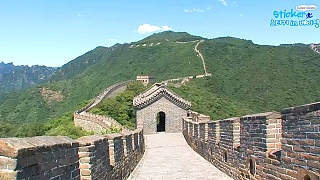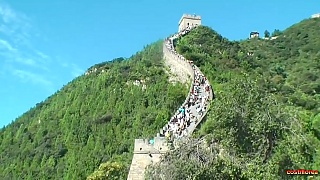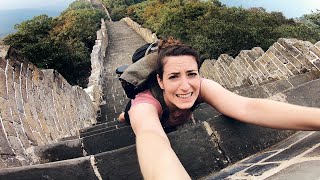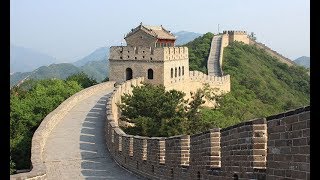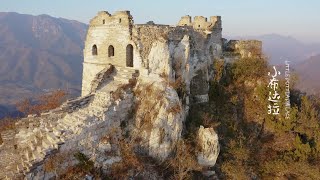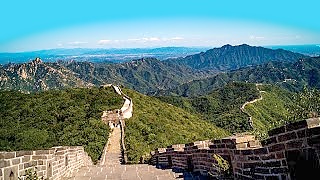
JianKou 万里 Great Wall 长城, BeiJing from the air

[640],shadow=true,start=,stop=The Great Wall of China is one of the most iconic and awe-inspiring attractions in the world, drawing millions of tourists each year. Here's a guide for tourists visiting the Great Wall:

History and Significance:
Historical Significance: The Great Wall of China is a series of fortifications built over centuries to protect China from invasions by nomadic tribes from the north. Its construction began as early as the 7th century BC and continued through different dynasties, with the most famous sections built during the Ming Dynasty (13681644 AD).

Length and Structure: Stretching over 13,000 miles (21,196 kilometers), the Great Wall is not a continuous wall but a series of walls, trenches, and natural barriers, including mountains and rivers. Its main purpose was to provide defense and control trade routes along the northern border of China.

Visiting the Great Wall:
Sections to Visit: While the entire Great Wall is massive, certain sections are more accessible and popular among tourists. The most visited sections include Badaling, Mutianyu, Jinshanling, and Simatai. Each section offers unique features and experiences.

Badaling: This section is the closest to Beijing and is one of the most well-preserved and accessible sections of the Great Wall. It can be crowded, especially during peak tourist seasons.

Mutianyu: Located about 1.5 to 2 hours' drive from Beijing, Mutianyu offers a less crowded but equally impressive experience. It features restored sections as well as more rugged and original parts.

Jinshanling and Simatai: These sections are farther from Beijing but are known for their scenic beauty and relatively fewer crowds. They offer a more authentic and adventurous hiking experience.

Tips for Tourists:
Best Time to Visit: The Great Wall can be visited year-round, but the best times are spring (April to June) and autumn (September to November) when the weather is pleasant, and the scenery is beautiful.

Avoiding Crowds: To avoid crowds, consider visiting the Great Wall early in the morning or during weekdays. Badaling tends to be busiest, so opting for less-visited sections like Jinshanling or Simatai can provide a more peaceful experience.

Wear Comfortable Clothing: The Great Wall involves a fair amount of walking and climbing stairs, so wear comfortable shoes and clothing suitable for hiking.

Stay Hydrated and Sun-Protected: Bring plenty of water, sunscreen, and a hat, especially during hot summer months, as there may be limited shade on the Wall.

Respect the Environment: Help preserve the Great Wall for future generations by refraining from littering, defacing, or damaging the structure.

Cultural Insights:
Learn about the History: Take the time to learn about the history and significance of the Great Wall through signage, guidebooks, or guided tours.

Capture Memories: Don't forget to bring a camera or smartphone to capture the breathtaking views and memories of your visit.

Interact with Locals: Engage with local vendors, tour guides, or fellow travelers to gain insights into Chinese culture and customs related to the Great Wall.

Visiting the Great Wall of China is a once-in-a-lifetime experience that offers not only breathtaking views and photo opportunities but also a deeper appreciation for one of the world's most remarkable architectural achievements.

Beijing, the capital city of China, is a vibrant metropolis steeped in history, culture, and modernity. Here's a brief overview of what you can expect as a tourist in Beijing:

Historical Landmarks:
The Great Wall of China: One of the most iconic structures in the world, the Great Wall is easily accessible from Beijing. Mutianyu and Badaling sections are popular among tourists.

Forbidden City (Palace Museum): A UNESCO World Heritage Site, this vast imperial palace complex was home to Chinese emperors for over 500 years. It houses numerous halls, courtyards, and historical artifacts.

Temple of Heaven: A masterpiece of Chinese architecture, this ancient temple complex served as a place of worship for emperors to pray for good harvests.

Summer Palace: A stunning ensemble of lakes, gardens, and palaces, the Summer Palace served as a retreat for emperors during the Qing dynasty.

Tiananmen Square: One of the largest city squares in the world, Tiananmen Square is flanked by important landmarks such as the Monument to the People's Heroes, the Great Hall of the People, and the Mausoleum of Mao Zedong.

Cultural Sites:
Beijing Hutongs: Explore the narrow alleyways and traditional courtyard residences of Beijing's historic neighborhoods. You can take a rickshaw tour or simply wander around on foot.

Beijing Opera: Experience traditional Chinese opera performances at venues like the Liyuan Theater or the Chang'an Grand Theatre.

798 Art District: A hub of contemporary art and culture, this former industrial area is now home to numerous galleries, studios, and cafes.

Modern Attractions:
Olympic Park: Visit iconic structures such as the Bird's Nest (National Stadium) and the Water Cube (National Aquatics Center) from the 2008 Beijing Olympics.

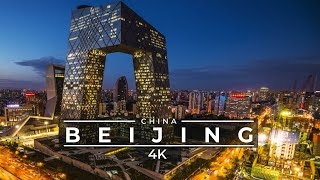
CBD (Central Business District): Marvel at the futuristic skyline of Beijing's modern business district, which includes landmarks like the CCTV Headquarters and the China World Trade Center Tower III.

Culinary Delights:
Peking Duck: Indulge in Beijing's most famous dish, crispy roast duck served with pancakes, scallions, and hoisin sauce.

Street Food: Explore the city's vibrant street food scene and sample local delicacies like jianbing (savory crepes), lamb skewers, and dumplings.

Practical Tips:
Transportation: Beijing has an extensive public transportation system, including the subway, buses, and taxis. However, traffic can be heavy, so plan your travels accordingly.

Language: While English is not widely spoken, especially outside tourist areas, many signs and transportation announcements are in English. It's helpful to carry a translation app or a phrasebook.

Weather: Beijing experiences four distinct seasons, with hot summers and cold winters. The best times to visit are spring (April to June) and autumn (September to October) when the weather is mild and comfortable.

Etiquette: Respect local customs and traditions, such as removing your shoes before entering someone's home and using both hands to pass or receive items.

Beijing offers a rich tapestry of experiences for tourists, blending ancient heritage with modern innovations. Whether you're fascinated by history, culture, or culinary delights, there's something for everyone in this dynamic city.

Related Videos


Featured Videos

HongQiao of Colorful Butterfly 崑曲
A KunQu Opera performance at the World Horticultural Exposition, BeiJing, 2019 ...
The ‘social credit system’ – reality
With Brian Berletic / The New Atlas ... Real freedom versus the illusion of freedom ...
ShenZhen 深圳 and surrounding area from the air
Geopolitics update – November 2024
With Jeffrey Sachs and ShangHaiEye ... With Nomad Capitalist and Cyrus Janssen ... With The Bridge Podcast and Ben Norton ... With BreakThrough News and Ben Norton ... With Richard Wolff ... With Brian Berletic ... With Daniel Dumbrill ...
How the ‘rules based international order’ is in reality a neo-colonial world order
How the 'West' subjugates the 'Rest' of the world (the great majority : 86% + many in the west who do not agree with the neo-colonial agenda) with sanctions, debt and vetoes, coups and puppets. This is the insane reality - a handful of supremacists in the West impoverish their own people in order to subjugate the rest of the world. And almost all of humanity is the loser. All the wars and famines that have resulted, and continue to this day. As for Western 'democracy' (it's all about the money), one only gets to choose between two puppets pre-chosen by the elite. Trump vs Biden - need one say more. Behind the theatrics, it is us and them (poverty equals 'freedom'). With Ben Norton ...
An evening cruise along the HuangPu river in ShangHai 上海
Within ShangHai, the HuangPu River has an average width of 400 meters and is crossed by many subway train lines, other tunnels, bridges and ferries. The river divides the city into two regions: PuDong to the east and PuXi (the older part of Shanghai that includes the Bund) to the west. It is the last major tributory of the YangTse River before the East China Sea. Bonus film - a stroll along the Bund, in 4k / UHD ...
Let life be beautiful … music selection …
Sung by Alu Azhou and the Mountain Wind Group 阿鲁阿卓, 山风组合 生如夏花. Inspired by Stray Birds by famous Indian poet Rabindranath Tagore, 1916 (生如夏花之绚烂,死如秋叶之静美 --飞鸟集, 泰戈尔, 1916). Lyrics and Music by PU Shu (朴树). "In this life, we can not stay so long ..." Plus Song of the Surging Water - title song of the 2015 movie Wolf Totem 汪峰 沧浪之歌(《狼图腾》主题曲). Sung by Wang Feng. Lyrics by WANG Feng (汪峰); music by Adam HUANG (HUANG Yong, 黄勇); with Alianuul (Morin Khuur solo) and NING FangLiang (violin solo). "I am broken, but I love flying ..." 鄧紫棋 G.E.M. - 存在_我是歌手第二季 (2014年1月10日) ‘Your Collar’, a haunting, romantic song from the imperial music of the Han Dynasty ... (Life is like a) Warm Spring with Blooming Flowers 春暖花开 (when I am with you) ... If you can, please support this site with a donation; it really does help us keep going ... Thank you from the BeijingBuzzz team !
ShenYang, provincial capital of LiaoNing, north east China
With Seiu Travel ... Introduction to ShenYang ShenYang is the capital city of LiaoNing province in northeast China. It is a major industrial and cultural center with a rich history dating back to ancient times. Known for its historical sites, modern infrastructure, and vibrant culture, Shenyang offers a diverse range of attractions for visitors. Getting There By Air: Shenyang Taoxian International Airport (SHE) serves the city with domestic and international flights. The airport is about 20 km south of the city center. By Train: Shenyang has several major railway stations, including Shenyang North Railway Station and Shenyang Railway Station, offering high-speed rail connections to many cities in China. By Bus: Long-distance buses connect Shenyang with other major cities in northeast China and beyond. Best Time to Visit The best time to visit Shenyang is during the spring (April to June) and autumn (September to October) when the weather is mild and pleasant. Summers can be hot and humid, while winters are cold with occasional snowfall. Main Attractions Shenyang Imperial Palace: Also known as Mukden Palace, this UNESCO World Heritage site is a smaller version of Beijing's Forbidden City and was the former imperial palace of the early Qing Dynasty. Zhao Mausoleum (Beiling Park): The mausoleum of the second Qing emperor, Huang Taiji, located within a beautiful park that is perfect for a leisurely stroll. Marshal Zhang's Mansion: The former residence of the warlord Zhang Zuolin and his son Zhang Xueliang, now a museum showcasing their lives and the history of the period. Shenyang Botanical Garden: A large botanical garden with diverse plant species, beautiful landscapes, and recreational facilities. 9.18 Historical Museum: A museum dedicated to the Mukden Incident (September 18, 1931) and the subsequent Japanese invasion of China, offering a poignant look at this period of history. Cultural Highlights Liaoning Provincial Museum: One of the oldest and largest museums in China, featuring extensive collections of artifacts, artworks, and historical exhibits. Shenyang Opera House: A modern venue hosting a variety of performances, including traditional Chinese opera, ballet, and concerts. Shenyang International Horticultural Expo Garden: A vast park with themed gardens, exhibitions, and cultural events, showcasing horticultural achievements from around the world. Accommodation Shenyang offers a wide range of accommodation options, from luxury hotels to budget-friendly hostels. Some recommended places to stay include: Kempinski Hotel Shenyang: A luxury hotel with excellent facilities and service, located in the city center. Marriott Hotel Shenyang: A modern hotel offering comfortable rooms and convenient access to major attractions. Shenyang LazyBee International Youth Hostel: A budget-friendly option popular with backpackers and young travelers. Dining Local Cuisine: Shenyang is known for its delicious Dongbei (Northeast) cuisine. Must-try dishes include Guo Bao Rou (sweet and sour pork), Dongbei Dumplings, and Laobian Dumplings. Restaurants: Recommended eateries include Laobian Dumpling Restaurant, Mukden Dumpling House, and Dongbei Ren (Northeasterners). Practical Tips Language: Mandarin Chinese is the primary language spoken in Shenyang. Learning a few basic phrases can be helpful, and a translation app can be useful for non-Mandarin speakers. Currency: The local currency is the Chinese Yuan (CNY). Credit cards are widely accepted, but it's always good to have some cash on hand for small purchases. Health and Safety: Shenyang is generally a safe city, but it's always wise to stay aware of your surroundings. Tap water is not recommended for drinking; opt for bottled water instead. Transportation: Shenyang has an extensive public transportation system, including buses and a metro system, making it easy to get around the city. Conclusion Shenyang is a vibrant city with a rich history and cultural heritage. Whether you're exploring ancient palaces, enjoying local cuisine, or experiencing the city's modern attractions, Shenyang offers a diverse and memorable travel experience.
Exploring China’s north east
HeiLongJiang province, with Katherine's Journey to the East 阳离子东游记, with surprise guest - Charlie ...

Tag search ?