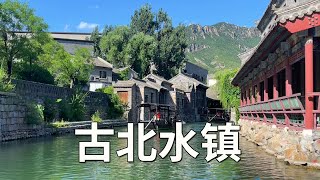
GuBei Water Town (BeiJing) 古北水乡(北京)

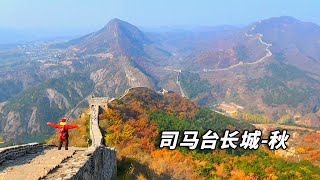
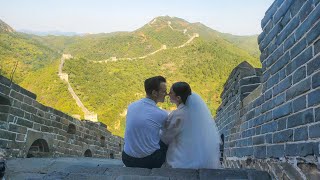
Plus the adjacent SiMaTai Great Wall at night.

Located in MiYun County, about two and a half hours drive north of central Beijing.

[640],shadow=true,start=,stop=

Beijing, the capital city of China, is a vibrant metropolis steeped in history, culture, and modernity. Here's a brief overview of what you can expect as a tourist in Beijing:

Historical Landmarks:
The Great Wall of China: One of the most iconic structures in the world, the Great Wall is easily accessible from Beijing. Mutianyu and Badaling sections are popular among tourists.

Forbidden City (Palace Museum): A UNESCO World Heritage Site, this vast imperial palace complex was home to Chinese emperors for over 500 years. It houses numerous halls, courtyards, and historical artifacts.

Temple of Heaven: A masterpiece of Chinese architecture, this ancient temple complex served as a place of worship for emperors to pray for good harvests.

Summer Palace: A stunning ensemble of lakes, gardens, and palaces, the Summer Palace served as a retreat for emperors during the Qing dynasty.

Tiananmen Square: One of the largest city squares in the world, Tiananmen Square is flanked by important landmarks such as the Monument to the People's Heroes, the Great Hall of the People, and the Mausoleum of Mao Zedong.

Cultural Sites:
Beijing Hutongs: Explore the narrow alleyways and traditional courtyard residences of Beijing's historic neighborhoods. You can take a rickshaw tour or simply wander around on foot.

Beijing Opera: Experience traditional Chinese opera performances at venues like the Liyuan Theater or the Chang'an Grand Theatre.

798 Art District: A hub of contemporary art and culture, this former industrial area is now home to numerous galleries, studios, and cafes.

Modern Attractions:
Olympic Park: Visit iconic structures such as the Bird's Nest (National Stadium) and the Water Cube (National Aquatics Center) from the 2008 Beijing Olympics.

CBD (Central Business District): Marvel at the futuristic skyline of Beijing's modern business district, which includes landmarks like the CCTV Headquarters and the China World Trade Center Tower III.

Culinary Delights:
Peking Duck: Indulge in Beijing's most famous dish, crispy roast duck served with pancakes, scallions, and hoisin sauce.

Street Food: Explore the city's vibrant street food scene and sample local delicacies like jianbing (savory crepes), lamb skewers, and dumplings.

Practical Tips:
Transportation: Beijing has an extensive public transportation system, including the subway, buses, and taxis. However, traffic can be heavy, so plan your travels accordingly.

Language: While English is not widely spoken, especially outside tourist areas, many signs and transportation announcements are in English. It's helpful to carry a translation app or a phrasebook.

Weather: Beijing experiences four distinct seasons, with hot summers and cold winters. The best times to visit are spring (April to June) and autumn (September to October) when the weather is mild and comfortable.

Etiquette: Respect local customs and traditions, such as removing your shoes before entering someone's home and using both hands to pass or receive items.

Beijing offers a rich tapestry of experiences for tourists, blending ancient heritage with modern innovations. Whether you're fascinated by history, culture, or culinary delights, there's something for everyone in this dynamic city.
Related Videos


Featured Videos

The classical gardens of SuZhou, JiangSu 苏州 (Scenic China Special, 2018 – 6)
ChangSha night walk, HuNan province
With Walk East ...
The awesomely beautiful HuangShan Mountain 黃山  Don’t miss it
HuangShan lies in AnHui province, east China, to the west of HangZhou.
The awesome ChengDe – China’s ancient royal summer retreat / mountain resort
With CGTN / Travelogue ... The eight surrounding temples - with Beijing Old Liu ... With Silver Walks ... ChengDe visitor guide Overview ChengDe, located in HeBei province, is home to China's ancient royal summer retreat, known as the ChengDe Mountain Resort. This UNESCO World Heritage Site is a historical complex of palaces, gardens, and temples used by the Qing dynasty emperors as a summer escape. The resort, surrounded by beautiful natural landscapes, showcases the grandeur and elegance of Chinese imperial architecture. History Construction of the ChengDe Mountain Resort began in 1703 under the reign of Emperor Kangxi of the Qing dynasty and took nearly 90 years to complete. The resort served as a summer residence for Qing emperors, providing a cooler climate and a peaceful retreat from the summer heat of Beijing. It also served as a political center for managing affairs with ethnic minorities and foreign dignitaries. Main Attractions Rehe Palace The Rehe Palace is the central area of the ChengDe Mountain Resort, where the emperors conducted state affairs and received guests. The palace complex includes several halls and pavilions, each with its unique architectural features and historical significance. Lake Area The lake area of the resort is a serene and picturesque section featuring a series of interconnected lakes and islands. The lakes are surrounded by pavilions, bridges, and gardens, offering stunning views and a peaceful ambiance. Plain Area The plain area is an expansive open space designed to mimic the landscapes of the northern grasslands. It includes grazing areas, hunting grounds, and fields used for archery and other activities. The area reflects the Qing emperors' admiration for the vast, open plains of their Manchu heritage. Temple of Universal Peace (PuNing Temple) The Temple of Universal Peace, also known as PuNing Temple, is one of the Eight Outer Temples built around the ChengDe Mountain Resort. The temple is famous for its large wooden statue of Avalokitesvara (Guanyin) and its beautiful architectural blend of Han and Tibetan styles. Temple of Putuo Zongcheng The Temple of Putuo Zongcheng, inspired by the Potala Palace in Tibet, is another significant temple near the resort. It was built to celebrate the emperor's birthday and to strengthen ties with Tibetan Buddhism. The temple complex is an impressive display of Tibetan-style architecture. Culture and Traditions ChengDe Mountain Resort and its surrounding temples are a testament to the Qing dynasty's cultural and religious diversity. The site reflects the harmonious coexistence of Han Chinese, Tibetan, Mongolian, and other ethnic traditions. Visitors can witness traditional Chinese architecture, Tibetan Buddhist art, and Mongolian cultural elements, all within the resort complex. Activities and Experiences Guided Tours Consider joining a guided tour to explore the ChengDe Mountain Resort and its temples. Knowledgeable guides provide insights into the history, architecture, and cultural significance of the site, enhancing your visit. Hiking and Nature Walks The resort is surrounded by beautiful natural landscapes, including mountains, forests, and rivers. Visitors can enjoy hiking and nature walks along the well-maintained trails, offering stunning views and a chance to appreciate the area's natural beauty. Local Cuisine While in ChengDe, be sure to sample the local cuisine. The region is known for its unique dishes, such as ChengDe roasted lamb, Manchu-style hotpot, and various traditional snacks. Local restaurants and food stalls offer a taste of authentic HeBei flavors. Accommodation ChengDe offers a range of accommodation options, from luxury hotels to budget-friendly guesthouses. Staying in a local hotel provides convenient access to the resort and other attractions in the area. Many hotels offer traditional Chinese decor and modern amenities, ensuring a comfortable and memorable stay. Travel Tips Best Time to Visit: The best time to visit ChengDe is during spring (April to June) and autumn (September to November) when the weather is mild and the scenery is at its best. Getting There: ChengDe is accessible by train or bus from Beijing. The high-speed train from Beijing to ChengDe takes approximately 2 hours. Local transportation options include taxis and buses. Opening Hours: The ChengDe Mountain Resort is open daily from 8:00 AM to 5:00 PM. The surrounding temples have similar opening hours. Entrance Fees: There is an entrance fee for the ChengDe Mountain Resort and additional fees for visiting the surrounding temples. Combo tickets are available for multiple attractions. Dress Comfortably: Wear comfortable walking shoes and dress in layers, as the weather can change quickly, especially in the mountainous areas. Respect Local Customs: When visiting temples and historical sites, be respectful of local customs and traditions. Always ask for permission before taking photos of people.
Official racism. Reality is so very different from the ‘official’ / MSM narrative / fairy tale – DON’T MISS THIS !
Planning War On China part 40 (the encore). From now, all similar content will be on the new Geopolitics page, so do check that out and bookmark. Something Different, health, and psychology videos are likely to also move to their own pages. So we will still cover all these aspects of life, but have more time to focus on Chinese culture and China travel. *************************** Official racism is a very important fact to consider, and because it is is based on propaganda, can be easily missed for what it really is. Yet once seen, it is all so clear. Us and Them - is the sales pitch of supremacists and bomb companies. That is ALL it is. There is no 'us and them'; that is just a scam to fool you into obedience / subservience / enslavement. The real schism is that there are real / open-eyed people, and then there are the brainwashed / believers people. Simple as that. Puppets at the top; puppets at the bottom. One life, one world, one family. One has love, or one does not. Real love doesn't have targets; real love is a light that shines in all directions. Onto the video film ... With George Galloway in conversation with Jerry's Take on China ... Bonus films ... George at his very best - don't miss it ... What is more important - life or money (power) ? Simply believe ? Or be free to see reality ?? No longer puppet. Live more ... Because it is not about 'me' (that is the scam / fantasy, and a big topic in itself - 'your problems are all your fault', is part of it); it is really about 'WE'. In China, the people are family. In the West, the people are livestock. And that is the 'threat'. [ video v=fIxPv2Dn_P0 ] Oliver Stone interviews Vladimir Putin ... Taiwan the next Ukraine ? ... Lee Camp ... [ video v=OSkpIq3T-Zc ] Racism is racism is racism. There is NO excuse, no matter how 'official' it is sold to you. Something like 3 million died in the Vietnam war (not including the carpet bombing of Laos and Cambodia), alone. This is what racism entails. How many times will this lie play out ? Meanwhile ... Peace.
The amazing growth of China’s high-speed rail network
YT comment : dominique ridoux : True story: I once visited a couple of friends in their flat in downtown Shanghai city. When I arrived the whole street was under construction, the road, the side walks, everything... We had lunch, played mahjong, then dinner. When I went out after the evening dinner, the street was completely finished! New asphalt, sidewalks paved and new trees planted all the way. I even went back thinking my friend's building had 2 entrances... The big difference with us in Europe is when a decision is made the do some infrastructure work, they will put as many workers as needed to do it very quickly, they cannot afford to have streets blocked for weeks in a city of 23 million people like Shanghai. In China everything is about efficiency because they have no other choice. Can you afford to queue for tickets and so on in a city of 23 millions? No! Ok, let's all use Wechat and Alipay to increase efficiency... Done in a few years! Almost nobody is using cash anymore in China! They apply the same mindset to everyday activity, may it be transportation, food industry or even paying your taxes! The result is (as far as I am concerned) a full body check (including check in, CT scan, blood work etc) in less than 2 hours including a complementary breakfast for less than 400 Euros. Or Visa application done in 20 minutes. All car parkings are using plate recognition technology decreasing time wasting again and again. High speed train are efficient, can move large amounts of people at a fantastic pace. Also as mentioned by many people, they build "hubs", you get out of the train and you have 2 or even 3 subway lines to bring you to your final destination, more and more you even have the airport hub at a walking distance! We have a similar hub in Paris (CDG with RER and TGV within the airport walking distance) but the size of it in Shanghai makes it spectacular! YT comment : rhn94 China spent 1 Trillion USD over 10-15 years building this network, that is 1/4th the cost of the Iraq War the US paid. YT comment : Pal Sih China is building their country. USA is destroying other countries. YT comment : thata xx The best part of China's high speed train is you can order food from any of the restaurants in the station on your phone and designate at what time during which stop to have it delivered to you. During the 2-3 minutes stop, your food is already there waiting to be distributed to you on the train. I miss it so much.
The beautiful Summer Palace 頤和園, BeiJing
Wonderful sweeping scenes ...
3 days in ShangHai and HangZhou
With Lisa and Josh...
SuZhou Encounter 邂逅姑苏
A beautiful film from JiangSu province, east China ... Includes scenes from TaiHu Lake Scenic Area, just to the west of SuZhou.   SuZhou - A city for the poetic life 苏州:诗意生活 A wonderful animation in traditional Chinese painting style ... The classical gardens, temples and canals of SuZhou

Tag search ?