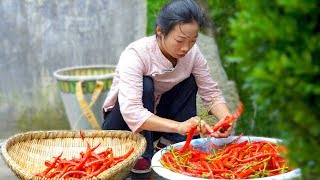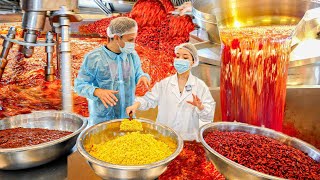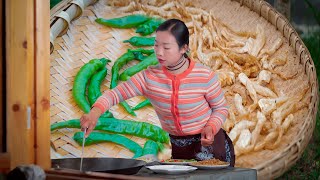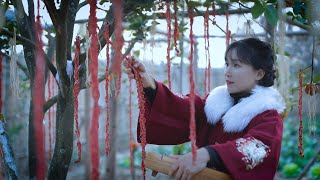
Crushed dried chillies plus – how to make and some dishes

[640],shadow=true,start=,stop=

Chinese cuisine is an intricate tapestry of flavors, techniques, and regional specialties that has evolved over thousands of years. From the fiery spices of Sichuan to the delicate dim sum of Cantonese cuisine, every region of China offers its own culinary delights. For visitors to China, exploring the diverse and dynamic world of Chinese food is an essential part of experiencing the country's rich cultural heritage. Here's a more extensive exploration of Chinese cuisine for visitors:

Regional Diversity:
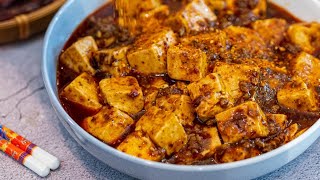
Sichuan Cuisine: Hailing from the southwestern province of Sichuan, this cuisine is famed for its bold, spicy, and numbing flavors. Sichuan peppercorns, chili peppers, and aromatic spices are used liberally in dishes like Mapo Tofu, Dan Dan Noodles, and Sichuan Hot Pot, creating a symphony of flavors that tingles the taste buds.

Cantonese Cuisine: With its emphasis on fresh ingredients and delicate flavors, Cantonese cuisine is highly regarded for its seafood dishes, roasted meats, and dim sum. Steamed fish, Char Siu (barbecue pork), and Har Gow (shrimp dumplings) are just a few examples of the exquisite dishes that showcase Cantonese culinary mastery.

Shanghai Cuisine: Reflecting its coastal location and cosmopolitan history, Shanghai cuisine combines influences from Jiangsu, Zhejiang, and Anhui provinces. Sweet and Sour Mandarin Fish, Shanghai Soup Dumplings (Xiaolongbao), and Drunken Chicken are some of the signature dishes that highlight the diverse flavors and textures of this culinary tradition.

Beijing Cuisine: As the capital of China, Beijing boasts a rich culinary heritage deeply rooted in imperial traditions. Peking Duck, a dish with crispy skin and succulent meat served with pancakes and hoisin sauce, is a quintessential Beijing delicacy. Other notable dishes include Zhajiangmian (Beijing Noodles), Mongolian Hot Pot, and Beijing-style meat pies.

Hunan Cuisine: Known for its bold and aromatic flavors, Hunan cuisine features dishes that are spicy, sour, and intensely flavorful. Chairman Mao's Red-Braised Pork, Dong'an Chicken, and Steamed Fish Head with Chopped Chili exemplify the fiery and robust nature of Hunanese cooking, which makes ample use of chili peppers, garlic, and fermented ingredients.

Street Food and Snacks:
Jianbing: This savory Chinese crepe is a popular breakfast option, consisting of a thin pancake filled with eggs, scallions, cilantro, and various fillings such as crispy fried dough, pickled vegetables, or chili sauce.

Baozi: These steamed buns are filled with a variety of savory or sweet fillings, including pork, vegetables, or red bean paste. Baozi are a popular street food snack and can be found in teahouses, markets, and street stalls across China.

Roujiamo: Often referred to as Chinese Hamburgers, roujiamo features savory braised meat stuffed inside a flatbread, offering a hearty and flavorful snack that's perfect for on-the-go eating.

Dining Etiquette and Customs:
Family-Style Dining: Chinese meals are typically served family-style, with multiple dishes shared among diners seated around a table. It's customary to use chopsticks to pick up food from communal dishes and to serve elders before oneself.

Toasting and Ganbei: When dining with Chinese hosts, expect toasts (ganbei) with alcohol, usually baijiu (Chinese liquor). It's polite to reciprocate the toast and drink in moderation, but declining politely is acceptable if you don't drink alcohol.

Tea Culture: Tea is an integral part of Chinese dining culture, with a wide variety of teas available to complement different dishes. Green tea, oolong tea, and pu'er tea are among the most popular choices, and serving tea to guests is a sign of hospitality and respect.

Street Markets and Night Markets:
Wangfujing Snack Street, Beijing: Located near the Forbidden City, this bustling street market offers a wide variety of traditional snacks, street food, and local delicacies. Visitors can sample everything from scorpions on a stick to traditional Beijing snacks like Jianbing and Tanghulu (candied fruit skewers).

Shanghai Old Street, Shanghai: Nestled in the heart of the city's historic district, Shanghai Old Street is a bustling marketplace where visitors can explore narrow alleyways lined with traditional shops, street vendors, and food stalls. From steamed dumplings and stinky tofu to hand-pulled noodles and sugar-coated haws, there's something to satisfy every craving.

Dietary Considerations:
Vegetarian and Vegan Options: While Chinese cuisine traditionally features a wide range of meats and animal products, vegetarian and vegan options are becoming increasingly available, especially in larger cities and tourist destinations. Buddhist restaurants (????, ssh c?nt?ng) often offer meat-free versions of classic dishes, and plant-based ingredients like tofu, mushrooms, and seasonal vegetables are widely used in Chinese cooking.

Exploring the diverse and delicious world of Chinese cuisine is an essential part of any visit to China. From regional specialties and street food snacks to dining etiquette and cultural customs, the culinary landscape of China offers a rich tapestry of flavors, traditions, and experiences that are sure to delight and inspire visitors from around the world. Bon apptit!.

Related Videos


Featured Videos

ShangHai night walk – including seasonal lights
Bonus film - QingDao (a port city south east of BeiJing) ... Bonus film 2 - TianJin (a port city a little to the east of BeiJing) at Christmas ... Bonus film 3 - MiuMiu Guitar girl ...
Beautiful rainy night walk in ShangHai
With Wei's Travel ...
FengHuang 凤凰 ancient town, and ZhangJiaJie 张家界 national forest park
HuNan province. FengHuang is an ancient water town based on a river. The WuLingYuan scenic area within ZhangJiaJie is also a nature reserve. Both are UNESCO World Heritage Sites.
FuRong Town, HuNan province
Night walk in an ancient town clinging to waterfalls. With Walk East ...
A trip to scenic XiTang 西塘, ZheJiang province
XīTang is a picturesque, ancient water-town in JiaShan County, ZheJiang province; within the flat-lands of the YangTse River delta. Its history dates back to at least the Spring and Autumn Period when it was located at the border of the ancient states of Yue and Wu. XiTang is crisscrossed by nine rivers and many canals, linked by a multitude of distinct stone bridges. In the older parts of town, the buildings are set along the banks of the canals, which serve as the main transportation thoroughfares. The town has maintained a tranquil ambiance and scenic beauty, making it a popular tourist attraction and has been frequently depicted in traditional Chinese landscape painting. In XiTang, there are well-preserved groups of buildings from the Ming dynasty (1368-1644) and the Qing dynasty (1644-1911). XiTang also contains numerous antique residences and temples, such as the Temple of the Seven Masters and a 1,200 meter canal-side, tiled-roof long-corridor. Other places of interest include : XiYuan Garden, with trees and plants, lakes and bridges, pavilions and fountains all harmoniously integrated. Xue's House, which is a typical wooden courtyard of the rich merchant from this region during the later Qing dynasty. WangXian Bridge, which was constructed during the Song dynasty, more than a thousand years ago. XiTang can be explored on a day-trip from Shanghai or HangZhou. From Shanghai, the journey takes around 1:45 hours by coach. Alternatively, one can first take a train or bus to JiaShan, from where there is a bus leaving for XiTang every 10 minutes, a distance of around ten kilometers. One might choose to stay overnight in XiTang or JiaShan to take in the evening or early morning ambiance.
Sun Kissed in WuHan city, HuBei province
Fun trip to HaiNan 海南 and YunNan 云南 provinces
University exchange to SanYa University 三亚 大学 (SānYà DàXué), HaiNan, plus a trip to south YunNan ...
Simple Chinese language phrases to enhance your China trip (pinyin and pronunciation)
PinYin - English : pronunciation. ~ is used where there are two sounds in one syllable. Ou[ch] means use the first sound of the word 'ouch'; same sound as ow[l]. *** Greetings Nǐ Hǎo - Hello / Hi (literally, you good?) : nee how Zài Jiàn - Goodbye / bye : z~eye jee~ann HuānYíng (GuāngLín) - Welcome ! (You'll often hear this when enter a restaurant) DaJia Hao ! - Hello everybody ! *** Introductions Nǐ - you / your : nee Wǒ - I / my : woh What is your name? - Nǐ jiào shénme míngzì? : Nee j~ou[ch] shen mer ming zuh? My name is ... - Wǒ de míngzì shì ... : Woh der ming zuh sh ... *** XièXiè - : Thanks : shee~air shee~air (second is a little softer/quieter) XièXiè Nǐ ! - Thank you! : shee~air shee~air nee! *** DuìBuQǐ - Excuse me / sorry : der boo chee BúKèQì - No problem / you're welcome : boo ker chee Mei guan xi - No problem / you're welcome : may goo~ann shee Qǐng - Please : ching Mei / MeiHǎo - Beautiful : may / may how *** Interations DuWei - That's right : doo~way (quickly, and often said twice) Yes and no have no direct translations in Chinese, but the following will be fine is answer to common questions, although they are more like 'to be' and 'not to be' if translated literally; however, these are real colloquial uses. Bú shì - no : boo shh Bú shì can also be used in reply to 'Thank you !' with the meaning 'you're welcome' / 'no need to say' / 'it's nothing' Shì de - yes : shh der E.g. LàJiāo ? - lah jee~ou[ch] (chillies ?) : Shì de / Bú shì *** Wǒ - I / me : woh Nǐ - You : nee Tā - He / she : tah *** Shopping and restaurants Wǒ Yào - I want / would like I would like one of these : Wǒ yào Yī ge Zhè ge (woh yow ee guh jay guh) *** ZhèGe - This : jay guh NàGe - That : nay guh *** Yī Ge - One (of) : ee guh Lian Ge - Two (of) : lee~ann guh (Two as a simple number is Er, pronounced 'are') Sān Ge - Three (of) : san guh *** Duō Shǎo Qián? - How much? (price) : doo~or sh~ow[l] chee~ann? Zhège duōshǎo qián? - How much is this? : jay guh Nàgè duōshǎo qián? - How much is that? : nay guh Tài Guì Le! - too expensive! : tie gwee ler! *** nǐhǎo ma? - How are you? : nee how mar ? Hǎo De - ok : how der Hěn Hǎo - Good : hen how Bù Hǎo - Not good : boo how *** ShénMe? - When? : shen mer NǎLi? - Where : nah lee? Nǎr - There (gesturing) : nah Qĭng wèn - Excuse me (before asking a stranger a question) : ching wen Qĭng wèn, weì shēng jiān (zài) nă lĭ? - Where is the restroom? : Ching wen. Way sheng jee~ann z~eye (nah) lee? Qĭng wèn, dìtiě zhàn (zài) nǎ lǐ? - Where is the metro station? : Ching wen, dee tee~air z~eye (nah) lee? You might hear zai nar in norther China (e.g. BeiJing) *** 小 Xiǎo - Small : sh~ow[l] 大 Dà - Big : dah Tai - Too : tie *** Bin De - Ice-cold : bin der Lian De - Cold : lee~ann der Rè de - Hot : rer der Rè chá - hot tea : rer char Bīng píjiǔ - Cold beer : bing pee jee~oh *** La - Spicy : lah Bu La - not spicy : boo lah Xiao La - a little spicy : shee~ow[l] lah Da La - Very spicy : dah lah Tai La! - too spicy! : tie lah! *** Noodles - Miàn : mee~ann Dumplings - JiǎoZi : jee~ow[l] zuh Rice - MiFàn / Fàn : mee fan / fan Eggs - JīDàn : jee dan Beef - NiúRòu 牛肉 : nee~you row Lamb - YángRòu 羊肉 : yang row Chicken - JīRòu 鸡肉 : jee row Pork - ZhūRòu 猪肉 : joo row Fish - YúRòu 鱼肉 : yoo row Tofu - DòuFu 豆腐 : doh foo (See BeijingBuzzz's food cheat sheet for much more) (Wo) Chī bǎole! - (I'm) full! : Woh ch b~ou[ch] ler! (Ni) Chī bǎole ma? - (Are you) full? : (Nee) ch b~ou[ch] ler maa? Ma is appended to change a statement into a question. *** ZhōngGuó - China : jong goo~woh YīngGuó - England : ying goo~woh MěiGuó - America : may goo~woh ZhōngWén - Chinese nationality : jong ren YīngWén - English nationality : ying ren *** Hótel - Hotel FànDiàn - Hotel / Restaurant : fan dee~ann Wǒ Bù ZhīDào - I don't know : woh boo juh~dow Tīng Bù Dǒng - I don't understand : ting boo dong ZhèGe Duōshǎo Qián? / DuōShǎo Qián? - How much is this? : doo~or sh~ow[l} chee~ann? Tài guìle ! - Too expensive ! : tie-gwee lah ! Wo Yao ... - I would like ... : woh yow ... Wǒ Yào ZhèGe - I want this one : woh yow jay~guh *** 5 yuan (kwai) / 2 pieces (items) 5元 / 2个 or 5元 2个 8 折 (bā zhé), which directly translates as '8 discount'. This means that the discounted price is 80% of the original price (20% off). 人 Rén - Person : ren 5元 / 2人 - 5 yuan for 2 people *** For toilet doors / WCs : 男 - Man 女 - Woman *** BúShì - No : boo shh ShìDe - Yes : Shh der Hǎo de - Okay : how der MéiYǒu - none / out of stock : may~oh *** Wǒ ài ... - I love ... : woh eye ... - I love this! : woh eye jay-guh! Wǒ ài ZhōngGuó - I love China : woh eye jong goo~woh *** Hǎo Chī - Delicious (literally good eat) : how ch Bú Hǎo Chī - Not tasty : boo how ch One can think of 'Bú' as meaning 'not' *** Wǒ Bù LiǎoJiě - I don't understand : woh boo lee~ow[l]~jee~air *** Chi - eat : ch Wǒ Xiǎng ... - I would like ... : woh shee~ang ... Wǒ Xiǎng Chī ... - I would like to eat ... : woh she~ang ch ... *** Directions Bei - North : bay Nan - South : nan Xi - West : shee Dong - East : dong *** DìTiě - Subway train : dee tee~air Dìtiě nali ma? - Where is the subway? : dee tee~air nah~lee ma Zhan - Train station : zahn Men - gate : men Yuan / kwai - rmb (currency) : yoo~ann / kw~eye (more common) Gong yuan - Park : gong yoo~ann *** KāFēi - Coffee : kah fay Chá - Tea : chah kěLè - Cola : ker ler PiJiou - Beer : pee jee~oh Shui - Water : shway Wo yao liang ge pijiou liande - I would like two cold beers : woh yow[l] lee~ann guh pee jee~oh lee~ann der *** Jia Yo! - Let's go! / Go! (encouraging) : jee~ah yoh! Wǒ Bù Shuō Hànyǔ / ZhōngWén - I don't speak Chinese (huh?!) Or simply Bù ZhōngWén : boo jong wen *** Numbers Numbers are easy (there are finger position numbers too, but that's not so easy) : 1 - Yī : ee 2 - Èr : are 3 - Sān : san 4 - Sì : si (the sound is the first half of 'soot') (short sound) 5 - Wǔ : woo~oh 6 - Liù : lee~oo 7 - Qī : chee 8 - Bā : bah 9 - Jiǔ : jee~oo 10 - Shí : shhh (longer sound) Example of 11 - 99 : 73 - Qi Shí Sān (7x10) + 3 : chee shhh san (7 10 3) 70 - Qi Shí (7x10) : chee shhh (7 10) 100 - Bǎi : buy Example of 101 - 999 : 357 - Sān Bǎi Wǔ Shí Qī (3x100 + 5x10 + 7) : san buy woo~oh shhh chee (3 100 5 10 7) 300 - Sān Bǎi (3x100) : san buy (3 100) One small complication - two (of) - rather than the number two) is liǎng ge : lee~ang ger *** Cheers! - GānBēi! : gan bey!
If I could fly – Joe Satriani – cover by YOYO
If I could fly - Joe Satriani - cover by YOYO (October 2020). Awesome ... Loving it ... Go, YoYo, Go ! ... Not the most technically challenging (YoYo level), but really has passion and feeling; a beautiful realisation of a beautiful song. We hear so much here, from Chris Rea to ZZ Top, Dire Straits to Gary Moore, to Jimmy Page; full of nuance; so great. The slides, timing and guitar tuning (balance of pure and grunge) all excellent; all made to look easy, which means the spirit if soaring ! Imagine - imagine the billion people across this planet who'd like to fly, if they had the chance. All the talent and all the dreams and all the love quashed, by those who clip our wings in the name of profit, or hegemony, or whatever ... Imagine no fear of poverty; no being taught to fear 'the other'. Just imagine - if we could all fly ... All of us. What a wonderful world that would be.

Tag search ?