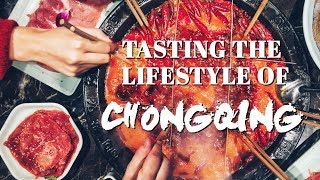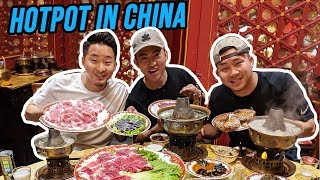
Spicy SiChuan hot-pot

With Trevor / The Food Ranger ...

[640],shadow=true,start=,stop=
[320],shadow=true,start=,stop=

Chinese cuisine is an intricate tapestry of flavors, techniques, and regional specialties that has evolved over thousands of years. From the fiery spices of Sichuan to the delicate dim sum of Cantonese cuisine, every region of China offers its own culinary delights. For visitors to China, exploring the diverse and dynamic world of Chinese food is an essential part of experiencing the country's rich cultural heritage. Here's a more extensive exploration of Chinese cuisine for visitors:

Regional Diversity:
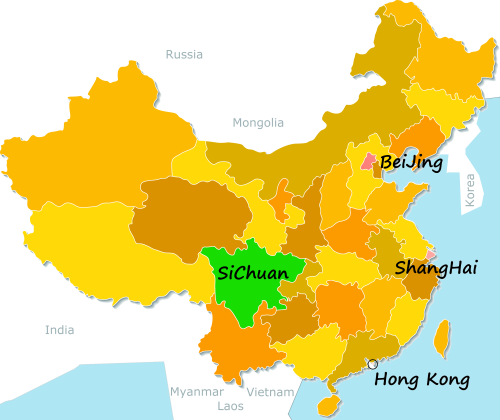
Sichuan Cuisine: Hailing from the southwestern province of Sichuan, this cuisine is famed for its bold, spicy, and numbing flavors. Sichuan peppercorns, chili peppers, and aromatic spices are used liberally in dishes like Mapo Tofu, Dan Dan Noodles, and Sichuan Hot Pot, creating a symphony of flavors that tingles the taste buds.

Cantonese Cuisine: With its emphasis on fresh ingredients and delicate flavors, Cantonese cuisine is highly regarded for its seafood dishes, roasted meats, and dim sum. Steamed fish, Char Siu (barbecue pork), and Har Gow (shrimp dumplings) are just a few examples of the exquisite dishes that showcase Cantonese culinary mastery.

Shanghai Cuisine: Reflecting its coastal location and cosmopolitan history, Shanghai cuisine combines influences from Jiangsu, Zhejiang, and Anhui provinces. Sweet and Sour Mandarin Fish, Shanghai Soup Dumplings (Xiaolongbao), and Drunken Chicken are some of the signature dishes that highlight the diverse flavors and textures of this culinary tradition.

Beijing Cuisine: As the capital of China, Beijing boasts a rich culinary heritage deeply rooted in imperial traditions. Peking Duck, a dish with crispy skin and succulent meat served with pancakes and hoisin sauce, is a quintessential Beijing delicacy. Other notable dishes include Zhajiangmian (Beijing Noodles), Mongolian Hot Pot, and Beijing-style meat pies.

Hunan Cuisine: Known for its bold and aromatic flavors, Hunan cuisine features dishes that are spicy, sour, and intensely flavorful. Chairman Mao's Red-Braised Pork, Dong'an Chicken, and Steamed Fish Head with Chopped Chili exemplify the fiery and robust nature of Hunanese cooking, which makes ample use of chili peppers, garlic, and fermented ingredients.

Street Food and Snacks:
Jianbing: This savory Chinese crepe is a popular breakfast option, consisting of a thin pancake filled with eggs, scallions, cilantro, and various fillings such as crispy fried dough, pickled vegetables, or chili sauce.

Baozi: These steamed buns are filled with a variety of savory or sweet fillings, including pork, vegetables, or red bean paste. Baozi are a popular street food snack and can be found in teahouses, markets, and street stalls across China.

Roujiamo: Often referred to as Chinese Hamburgers, roujiamo features savory braised meat stuffed inside a flatbread, offering a hearty and flavorful snack that's perfect for on-the-go eating.

Dining Etiquette and Customs:
Family-Style Dining: Chinese meals are typically served family-style, with multiple dishes shared among diners seated around a table. It's customary to use chopsticks to pick up food from communal dishes and to serve elders before oneself.

Toasting and Ganbei: When dining with Chinese hosts, expect toasts (ganbei) with alcohol, usually baijiu (Chinese liquor). It's polite to reciprocate the toast and drink in moderation, but declining politely is acceptable if you don't drink alcohol.

Tea Culture: Tea is an integral part of Chinese dining culture, with a wide variety of teas available to complement different dishes. Green tea, oolong tea, and pu'er tea are among the most popular choices, and serving tea to guests is a sign of hospitality and respect.

Street Markets and Night Markets:
Wangfujing Snack Street, Beijing: Located near the Forbidden City, this bustling street market offers a wide variety of traditional snacks, street food, and local delicacies. Visitors can sample everything from scorpions on a stick to traditional Beijing snacks like Jianbing and Tanghulu (candied fruit skewers).

Shanghai Old Street, Shanghai: Nestled in the heart of the city's historic district, Shanghai Old Street is a bustling marketplace where visitors can explore narrow alleyways lined with traditional shops, street vendors, and food stalls. From steamed dumplings and stinky tofu to hand-pulled noodles and sugar-coated haws, there's something to satisfy every craving.

Dietary Considerations:
Vegetarian and Vegan Options: While Chinese cuisine traditionally features a wide range of meats and animal products, vegetarian and vegan options are becoming increasingly available, especially in larger cities and tourist destinations. Buddhist restaurants (????, ssh c?nt?ng) often offer meat-free versions of classic dishes, and plant-based ingredients like tofu, mushrooms, and seasonal vegetables are widely used in Chinese cooking.

Exploring the diverse and delicious world of Chinese cuisine is an essential part of any visit to China. From regional specialties and street food snacks to dining etiquette and cultural customs, the culinary landscape of China offers a rich tapestry of flavors, traditions, and experiences that are sure to delight and inspire visitors from around the world. Bon apptit!.

SiChuan map

Related Videos


Featured Videos

MiuMiu, GuitarGirl
Twilight ... See you again ... MV - my hometown, NanJing ... Flowers (one girl band) ... A little flamenco ... Can you feel my love ? - with JoySide ...
ShangHai 上海 city in timelapse
On the US desperation to use Taiwan to attack the rest of China
With Danny Haiphong and Brian Berletic ...
The West is cutting itself off from ‘the rest’ – Don’t miss it
With Ben Norton ... With Brian Berletic ... With FridayEveryday ... *** BeijingBuzzz does not necessarily agree with everything in each video *** With Owen Jones ... With Richard Medhurst ... With Yanis Varoufakis on Double Down News ...
Happy in Shanghai … and Macau … and Hong Kong … and ShenZhen …  :  )(  :
With a great song by Pharrell Williams Bonus film ... Family and friends from the Philippines on a trip to Beijing ...
Thoughts on freedom in China and a look around KunMing
With Jason / Living in China ... Plus, a look around Harbin ...
Taiwan – the next Ukraine, destroyed for US hegemony ?
With The GrayZone ... With The New Atlas / Brian Berletic ...
Aerial view of the beautiful LaoJunShan Mountain 老君山
Near LuoYang, provincial capital of HeNan, central China. There is a LaoZi Cultural Park near the foot of the mountain and a cable car is available to reach the top. The ancient sage LaoZi (in modern PinYin though one will still also see Lao-Tse or Lao-Tzu) who started Daoism (Taoism) and authored the Dao De Jing (Tao Te Ching), is said to have gained inspiration here around 550 BC. The Dao (道) which roughly translates as 'the way', in the sense of how things are, is a concept that existed in Chinese thought many centuries before LaoZi, but it was LaoZi who developed the concept considerably. Wu Wei (無爲), literally "non-action" or "not acting", is a central concept of the DaoDeJing. The concept of wu wei is multi-faceted, and reflected in the words' multiple meanings, even in English translation; it can mean "not doing anything", "not forcing", "not acting" in the theatrical sense, "creating nothingness", "acting spontaneously", and "flowing with the moment / 'here and now'". It is a concept used to explain ZiRan (自然), or harmony with the Dao. LaoZi used the term broadly with simplicity and humility as key virtues, often in contrast to selfish action. On a political level, it means avoiding such circumstances as war, harsh laws and heavy taxes. The 'ruler' can also refer to the 'self'. There is an overlap here with the Buddha's teachings that suffering stems from attachments and desires, ultimately to the notion of a separate self. In Chinese philosophy, Yin and Yang (陰陽 YīnYáng, "dark—light") describes how opposite or contrary forces are actually complementary, interconnected, and interdependent in the natural world, and how they give rise to each other as they interrelate to one another. While duality is found in many belief systems, Yin and Yang are parts of a Oneness that is also equated with the Dao. Yin and yang can be thought of as complementary (rather than opposing) forces that interact to form a dynamic system in which the whole is greater than the assembled parts; it is a holistic view. Everything has both yin and yang aspects, though either of the two major aspects may manifest more strongly in a particular object, depending on the criterion of the observation. Yin and Yang is a balance between two seeming opposites with a portion of the opposite element in each. Some of LaoZi's famous sayings include: "When goodness is lost, it is replaced by morality." "Without Darkness, there can be no Light." "The usefulness of a pot comes from its emptiness." "The best people are like water, which benefits all things and does not compete with them. It stays in lowly places that others reject. This is why it is so similar to the Way." "When people see some things as beautiful, other things become ugly. When people see some things as good, other things become bad." "Try to change it and you will ruin it. Try to hold it and you will lose it." "Those who know do not say. Those who say do not know." "When you realize there is nothing lacking, the whole world belongs to you." "Nature does not hurry, yet everything is accomplished." "A good traveler has no fixed plans, and is not intent on arriving." "Music in the soul can be heard by the universe." "A journey of a thousand miles starts under one's feet." "The more that laws and regulations are given prominence, the more thieves there will be." Alan Watts - 'The Daoist Way' ...
ShaoXing city and ancient water town, ZheJiang province
With KiraVideo ... Welcome to ShaoXing Discover the rich history and cultural heritage of Shaoxing, China. Introduction Shaoxing is a city located in the Zhejiang province of China, known for its rich cultural heritage, ancient architecture, and scenic waterways. It is renowned for its historical significance and contributions to Chinese literature, arts, and politics. Location Shaoxing is situated in eastern China, within the Zhejiang province. It is approximately 200 kilometers southwest of Shanghai and 60 kilometers southeast of Hangzhou. History Shaoxing boasts a history that spans over 2,500 years. It has been an important cultural and economic center since ancient times. The city is famous for being the hometown of notable historical figures such as the ancient calligrapher Wang Xizhi and the modern writer Lu Xun. Its rich cultural heritage is evident in its well-preserved ancient architecture, traditional water towns, and numerous historical sites. Attractions East Lake (Donghu): A beautiful lake surrounded by cliffs, known for its serene boat rides and picturesque scenery. Lu Xun's Former Residence: The home of the famous Chinese writer Lu Xun, now a museum dedicated to his life and works. Orchid Pavilion (Lanting): A historical site where Wang Xizhi composed the famous calligraphy work "Preface to the Poems Composed at the Orchid Pavilion." Shen Garden: A classical Chinese garden known for its romantic associations with the famous poet Lu You and his love story with Tang Wan. Bazi Bridge: An ancient stone bridge offering scenic views of the surrounding canals and traditional buildings. Qiu Jin's Former Residence: The former home of Qiu Jin, a well-known female revolutionary and poet. Da Yu Mausoleum: The mausoleum of the legendary figure Yu the Great, known for controlling floods and founding the Xia Dynasty. Keyan Scenic Area: A picturesque area featuring ancient caves, rock formations, and traditional Chinese architecture. Activities Exploring historical sites and museums Taking boat rides on scenic waterways Enjoying traditional Chinese gardens Sampling local cuisine and Shaoxing wine Participating in cultural festivals and events Shopping for local handicrafts and souvenirs Facilities Visitor Center Restrooms Gift Shops Cafes and Restaurants Parking Lots Guided Tour Services Public Transportation Hotels and Accommodations Visitor Tips Wear comfortable walking shoes. Bring water and snacks, especially if you plan to stay for several hours. Visit early in the morning or late in the afternoon to avoid crowds. Check the weather forecast and dress appropriately. Respect the cultural and historical significance of the site; behave appropriately and follow all rules and guidelines. Take advantage of guided tours to learn more about the rich history and culture of Shaoxing. Try the local cuisine, especially the famous Shaoxing rice wine and local dishes.

Tag search ?