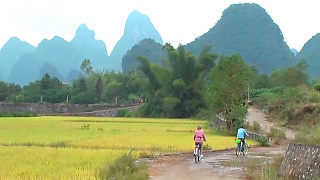
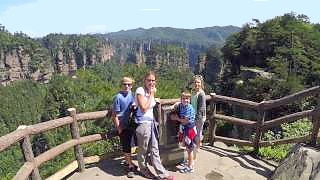
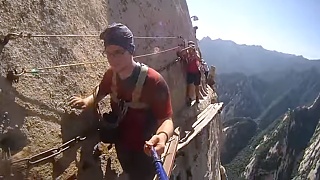
GuangXi province.
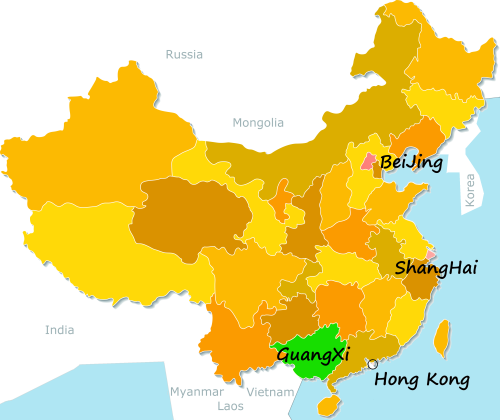
[640],shadow=true,start=15,stop=GuangXi map
Live more ...
 A tour of the Li River 漓江 and the LongSheng rice terraces 龙胜梯田
GuangXi province.
[640],shadow=true,start=15,stop=
|
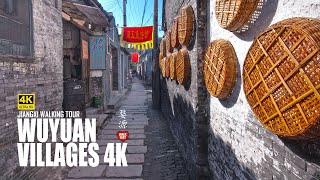
WuYuan, known as the "most beautiful countryside in China", with at least 50 old villages, is located in the northeast of JiangXi province, and near Mount HuangShan and JingDeZhen.
With Walk East ...
Max (Walk East) :
Wuyuan is home to a few of the well-preserved ancient architecture in China. Each of those ancient structures has a unique appearance as well as structure.
They emerge from among the emerald green mountains and trees, clear rivers along with the crisscrossing paths between the fields.
Those structures were built in 740 during the Tang Dynasty; its remoteness and inconvenient transportation protecting its villages' beauty from a large amount of tourists.
Local people there can enjoy the pure, clean brooks, seemingly delicate wooden buildings, unique bridges as well as the tranquil lifestyle, etc...
This village has turned into a ecological, cultural as well as tourist demonstration center of China. The ancient Architectural complexes,caves, blue water, trees as well as rural sceneries; all these form a typical Chinese countryside scene
Wuyuan has become a well known town in the world features in famous Huizhou local culture as well as charming idyllic scenery.
Beijing Opera, Hui Opera, the Luo Dance known as the "Dance Live Fossil" as well as the charming tea performance, all these make Wuyuan fascinating tourism destination.
【Likeng Village】
Likeng Village is a cluster of houses constructed along a brook. It is said to be the most scenically beautiful village in the town.
The brook is two to three meters wide spanned at different points by makeshift bridges. A rolling stream through the village lived by 260 peasant households along with ancient buildings with its pink walls, black tiles as well as beautiful girls who are washing laundry reflecting from the stream look like a natural scenery.
【Visit Local Ancient Village in Hui-style】
Wuyuan is the birthplace of the Huizhou culture. Villages around are must go, and you will be attracted by the quiet and simple countryside life there.
noticeable Huizhou-style architecture can be found in these old villages, such as, arches, stone tablets, stone bridges, ancient stages, etc.
Wuyuan is a county in northeastern Jiangxi province. It is renowned for its beautiful countryside and well-preserved ancient Huizhou villages and architecture. Many of the buildings and villages date from the Tang dynasty and have been protected by the county’s remoteness and relatively inconvenient transportation.
Highlights and Travel Tips
The area is famous for the fields of yellow rapeseed flowers that surround the villages in March and April, which are among the most beautiful in China and will delight photographers. One of the best places to see the flowers is hills surrounding the village of Jiangling.
Popular villages and sights around the county include Likeng Village, Mount Dazhang (a beautiful area filled with soaring mountains and crashing waterfalls that is as yet undiscovered by tourism), Rainbow Bridge (a covered bridge), and Jiangling Village.
|
|
With Professor Richard Wolff / Democracy At Work ...
On the Occupy Wall Street movement ...
On capitalism, with RJ Eskow ...
|
|
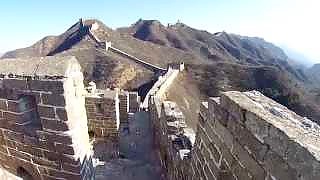
JinShanLing to SiMaTai, north east of Beijing city.
The last film shows various sections of the Great Wall as seen from a 'toy' helicopter.
If you can, please support this site with a donation - thank you !
|
|
JiangSu province.
With Walk East ...
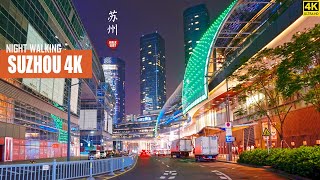
SuZhou's ancient alleys ...
YT comment : I can’t believe this is the country that is portrayed as evil in western media. These people seem so happy, dress nicely, have a smile, and do whatever they want on the street at night.
YT comment : Love the old style architecture. its great how they blend in the old historic buildings with modern culture ... Beautiful !
|
|
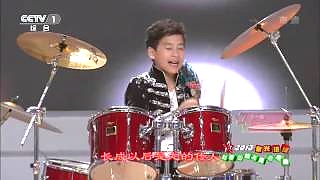
The delightful China Central TV concert of 2013 ...
* Children of the Dragon (HOU Dejian, 侯德健), performed by Green QIU (QIU Wutong, 邱梧桐, 10 years old), Xiaolong (小龙, 11 years old), and JIN Zhuofan (金卓凡, 12 years old), all from China.
* Memory (musical Cats, Andrew Loyd Webber), performed by Jessie Hillel (11 years old) from New Zealand.
* You Raise Me Up, performed by LI Zewei (李泽维, 11 years old), ZHONG Chenle (钟辰乐, 11 years old), and LIU Bo (柳博, 10 years old), all from China.
* Turkish March (土耳其进行曲), by Wolfgang Amadeus Mozart (莫扎特), performed by ZOU Yufei (邹宇飞, 4 years old), WANG Liya (王丽雅, 11 years old), ZHU Zihe (朱梓赫, 8 years old), and YE Zifan (叶子凡, 12 years old), all from China.
* He is a Pirate, performed by CHEN Qingli (陈庆丽) from Hong Kong, China.
* I can fly, performed by Teressa from the U.S. (5 years old). Teressa is of Chinese and American heritage.
* Baby, performed by NIE Jieming (聂杰铭, English name: James Robert Nicol, 11 years old) from Australia.
* Spicy Girl, performed by Tianyuan (Chinese name:恬源, English name: Tyerra, 8 years old) from the U.S. Tianyuan is of Chinese and American heritage.
* Kalinka, performed by Russian children from Russian Embassy School in Beijing, and Xiao Ding Dang Childrens Choir of the Russian Culture Center in Beijing.
* Love to Flowers and Earth Song, performed by Fairies in Rain Forest (Chinese name:雨林精灵, Pinyin: Yu Lin Jing Ling). Fairies in Rain Forest is formed by two sisters: Linda LEE (李林妲, LI Linda) and Wanda LEE (李宛妲, LI Wanda) of Chinese and German heritage. Their fater, Josef Margraf, is a German ecologist. Love to Flowers is a folk song of ethnic Hani Chinese, sung in the Hani language. Earth Song by Michael Jackson.
* I Just Can't Wait to be King (from The Lion King), performed by the Popcorn Band (Chinese name: 爆米花乐团) from China and Chelsey Mark (Chinese name: 麦小龙, Pinyin: MAI Xiaolong) from Canada; Chelsey Mark is a well-known host of CCTV.
* You'll Be in My Heart (Phil Collins), performed by Ming-An Fasquelle (11 years old, French-American, born in France, raised in Beijing).
* I Have a Dream (Abba), performed by WANG Xinyi (王馨怡, 10 years old) from China.
* ABC (Jackson 5) performed by SH' Boss Boys from the U.S.
* We Will Rock You (Brian May / Queen), performed by Xiaolong (小龙), Huolong (火龙), LI Shuxi (李淑昕), ZHENG Xiao (郑宵), Tianyuan (恬源), 奥斯卡 (Oscar), 成宇朵儿 (CHENGYU Duo-Er), Popcorn Band (爆米花乐队), Zaizai (仔仔), and Kent Niepert (Xiaolong's dad).
|

|
|
With One Shot Adventures ...
|

|
Very beautiful scenes - don't miss it ...
|

|
Too many things to cover, but one is the attempt to portray China as 'hiding something' and that according to 'reports' (never cited, but no doubt intel fronts) things are 'really bad' ('trust us' - lol).
This is a good example of where 'news' is not really news at all, but the attempt to instigate uprising by pedaling false information. In one of its latest salvos, it notes one young death of a celebrity and then adds some more, all of which were over 80. One could explain why this is so absurd, but it is obvious.
That is one reason why BB recommends Chinese people to not travel to, study in, or invest in, the UK (a small US puppet island off the west coast of Europe).
Still want to go to the UK ? Remember that if you get stabbed (common), you could be waiting over 24 hours for an ambulance, spend many more hours lying in it before being off-loaded onto a trolley in a hospital corridor, before maybe being treated (if still alive). That's how it is there; just so you know. See the BBC ; ) No wonder they need to try and divert one's attention with smoke and mirrors (lies) ...
So, which country really has the health crisis ???
|