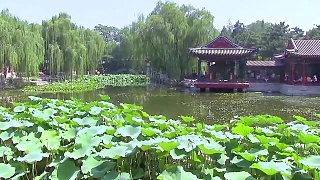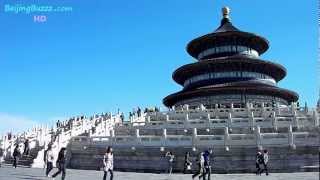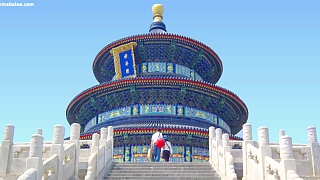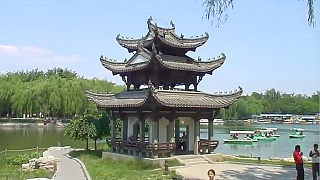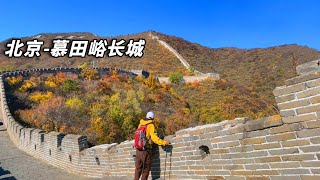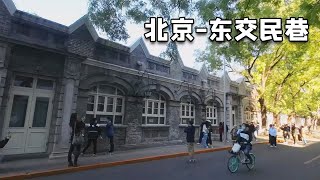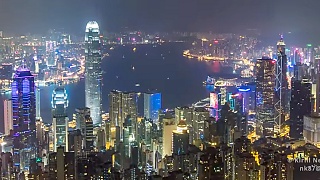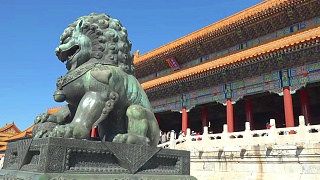
The magnificently beautiful Temple of Heaven 天坛, BeiJing 北京

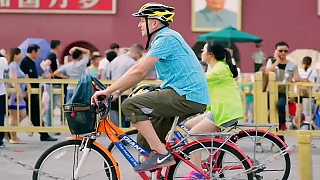
South of the Forbidden City and Tian'AnMen Square in central BeiJing, the blue sky city, lies this amazing Taoist temple, set in an abundant area (now park) of trees and a great place to visit.

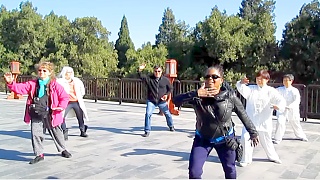
The wonderful architecture is brimming with symbolism and the park as a whole is a favorite for locals to hang out and practice Tai Chi or play JianZi (hacky sack), etc ...

[640],shadow=true,start=,stop=

Beijing, the capital city of China, is a vibrant metropolis steeped in history, culture, and modernity. Here's a brief overview of what you can expect as a tourist in Beijing:

Historical Landmarks:
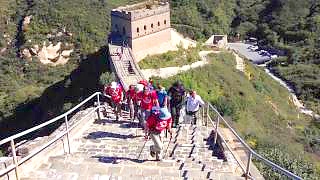
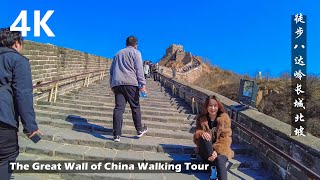
The Great Wall of China: One of the most iconic structures in the world, the Great Wall is easily accessible from Beijing. Mutianyu and Badaling sections are popular among tourists.

Forbidden City (Palace Museum): A UNESCO World Heritage Site, this vast imperial palace complex was home to Chinese emperors for over 500 years. It houses numerous halls, courtyards, and historical artifacts.

Temple of Heaven: A masterpiece of Chinese architecture, this ancient temple complex served as a place of worship for emperors to pray for good harvests.

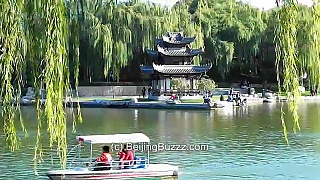
Summer Palace: A stunning ensemble of lakes, gardens, and palaces, the Summer Palace served as a retreat for emperors during the Qing dynasty.

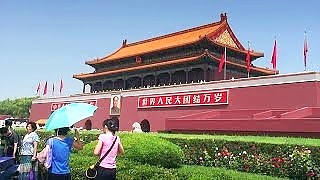
Tiananmen Square: One of the largest city squares in the world, Tiananmen Square is flanked by important landmarks such as the Monument to the People's Heroes, the Great Hall of the People, and the Mausoleum of Mao Zedong.

Cultural Sites:
Beijing Hutongs: Explore the narrow alleyways and traditional courtyard residences of Beijing's historic neighborhoods. You can take a rickshaw tour or simply wander around on foot.

Beijing Opera: Experience traditional Chinese opera performances at venues like the Liyuan Theater or the Chang'an Grand Theatre.

798 Art District: A hub of contemporary art and culture, this former industrial area is now home to numerous galleries, studios, and cafes.

Modern Attractions:
Olympic Park: Visit iconic structures such as the Bird's Nest (National Stadium) and the Water Cube (National Aquatics Center) from the 2008 Beijing Olympics.

CBD (Central Business District): Marvel at the futuristic skyline of Beijing's modern business district, which includes landmarks like the CCTV Headquarters and the China World Trade Center Tower III.

Culinary Delights:
Peking Duck: Indulge in Beijing's most famous dish, crispy roast duck served with pancakes, scallions, and hoisin sauce.

Street Food: Explore the city's vibrant street food scene and sample local delicacies like jianbing (savory crepes), lamb skewers, and dumplings.

Practical Tips:
Transportation: Beijing has an extensive public transportation system, including the subway, buses, and taxis. However, traffic can be heavy, so plan your travels accordingly.

Language: While English is not widely spoken, especially outside tourist areas, many signs and transportation announcements are in English. It's helpful to carry a translation app or a phrasebook.

Weather: Beijing experiences four distinct seasons, with hot summers and cold winters. The best times to visit are spring (April to June) and autumn (September to October) when the weather is mild and comfortable.

Etiquette: Respect local customs and traditions, such as removing your shoes before entering someone's home and using both hands to pass or receive items.

Beijing offers a rich tapestry of experiences for tourists, blending ancient heritage with modern innovations. Whether you're fascinated by history, culture, or culinary delights, there's something for everyone in this dynamic city.


Related Videos


Featured Videos

Amazing AnHui 安徽 province …
AnHui, 安徽, lies in East China, just to the west of JiangSu province and ShangHai, and noted for its cuisine and materials related to calligraphy (paper and inkstone). Tourist destinations include HuangShan mountain, HongCun and XiDi ancient villages, Chao Lake, TaiJi Cave, ZhenFeng Pagoda and ZuiWeng Pavilion.
Views of the LongSheng, LongJi Rice Terraces 龙胜梯田, GuangXi
The beautiful Dragon's Backbone rice terraces; about 60km from GuiLin ...
SongZanLin Tibetan monastery, ShanGri-La, YunNan province
With Perfect Day Pursuit ...
Get ready for China – transportation
Metro systems The two largest metro systems in the world are in ShangHai and BeiJing. There are also metro systems in many other Chinese cities. These are all super modern, spacious, artistically appealing and easy to use for visitors with announcements in both Chinese and English, with signs both in Chinese and PinYin. Check out our videos on various Chinese metro systems. The Beijing metro system has over 600 miles of track and over 600 stations. It carries over 10 billion passengers annually, making it one of the busiest subway systems in the world. It operates one of the world's largest fleets of subway cars, with over 4,000 cars in service. The Beijing metro is also one of the most technologically advanced subway systems in the world, with many of its trains and stations equipped with advanced features such as automated train control, platform screen doors, and real-time passenger information systems. The Beijing metro is known for its distinctive architecture and design, with many stations featuring works of art, sculptures, and other design elements. It is also known for its efficient and fast service, with trains running at high frequencies and minimal delays. The Beijing metro is also very affordable and accessible, with fares starting from as low as CNY3 (about $0.4 / £0.35) for a single journey with discounts for frequent users. It has also been made more convenient for tourists by allowing the use of contactless payment methods such as WeChat Pay, Alipay and UnionPay. Taxis In China, taxis are easy to find and very affordable, unlike in the West; they are widely used by nearly everyone. For example, Beijing has approximately 66,000 registered taxi vehicles operating in the city as of 2021. The standard taxi fare in Beijing is around ¥13 (or about $2 / £1.40) for the first 3 kilometers (about 1.8 miles) plus an additional ¥2.3 (about $0.35 / £0.25) for each additional kilometer. There can be higher tariffs for night time (after midnight). High speed rail China has built one of the most extensive high-speed rail networks in the world, which is known for its speed, efficiency, and connectivity. China has the world's largest high-speed rail network, with over 22,000 miles of track and over 350 stations. The high-speed rail network operates at speeds of up to 217 mph, making it one of the fastest in the world. China's high-speed rail system carries over 3 billion passengers annually, making it the busiest high-speed rail networks in the world. China's high-speed rail system is also affordable and accessible, with fares starting from as low as CNY50 (about $7) for a single journey and discounts for frequent users. China has also been exporting its high-speed rail technology and know-how to other countries such as Indonesia, Turkey, Russia and more. Air travel Air travel is an important part of China's transportation system, with several major airports and a rapidly growing number of passengers. Here are some facts about air travel in China: China has over 220 commercial airports, making it the country with the second-largest number of airports in the world, behind the United States. China's three major airports are Beijing Capital International Airport, Shanghai Pudong International Airport, and Guangzhou Baiyun International Airport. These three airports handle a large number of passengers annually, with Beijing Capital International Airport handling over 100 million passengers in 2020. China's domestic air travel market is the second-largest in the world, behind the United States, with over 600 million passengers in 2020 and over 60 million international passengers. China's air travel market has been expanding rapidly in recent years, with several new airports and routes being added. China's major airlines, such as Air China, China Eastern Airlines, and China Southern Airlines, are among the largest in the world, and they operate a large fleet of modern aircraft. It is also becoming more affordable, with the increasing competition between airlines leading to lower fares. China's air travel market is also becoming more convenient for travelers, with the increasing use of online booking and check-in, as well as the introduction of e-visas for some countries. It is also becoming more sustainable, with many airlines investing in more fuel-efficient aircraft and implementing more environmentally-friendly practices. China's air travel market is a modern, efficient, and highly-used transportation system that connects many of the country's major cities and helps to keep the country moving. It is constantly evolving to match the country's needs and to make the passenger experience more pleasant, but also to reduce its impact on the environment.
ZiXing city and DongJiang Lake, HuNan province
With Walk East ...
Cancer as a metabolic disease – 2
With Dr Thomas Seyfried ... Our research of pubmed over the years has found four natural extracts that limit glutamine use by cancer cells : curcumin, green tea extract (inc. EGCG), quercetin and berberine. I would add a fifth for other reasons : sulphoraphane. All have effects on multiple pathways, such as preventing angiogenesis. Ideally one would be working with a skilled doctor, but as a rough guide, large doses would be needed; up to 20 of each per day; so capsules emptied into water would be best; build up over time. Plus zero carbs, low protein (to promote autophagy - hopefully tumor shrinkage; eg 3 egg yolks) and time restricted eating. And fresh air walks. The '100 diet' : * curcumin * green tea extract * quercetin * berberine * sulphoraphane Probably best taken with a meal (e.g. leafy greens) drizzled with MCT, coconut or Extra Virgin olive oils. Add a few tablespoons of Hemp Seed Oil for extra effect (CBD).
ChengDu metro and TianFu airport – the art of infrastructure
Infrastructure at its finest, China style ... With Walk East ... With 12 subway lines and 1 light rail line, the ChengDu metro ranks 4th largest in the world after BeiJing, ShangHai and GuangZhou. YT comment by Helghast73 : Yeah I can see this tour will just highlight what I was saying in the last Chengdu video Max, “plan for the future and then plan some more” 😂 It’s hard to believe that all this will celebrate its 12th birthday in September. Just stop and think for a moment, 12 years ago none of it was there and fast forward to now and you’ve 373 stations network, mind blowing. The idea of giving each line an actual visual identity is great, it’s not just a line colour on a network map but station platforms and train carriages too. Line 8 with it’s green and white colour scheme is super bright. Line 5 with it’s older heritage look and darker tones used but still bright. Line 18 with it’s nods to Zaha Hadid I’d say haha superb also looks like a mini Beijing Daxing with the clinical white look. Line 6 with it’s coral looking sub aquatic look. Line 9 with it’s lilac scifi.
BeiJing’s hutongs
With Aaron and Char ... With Beyond A to B ... With DS Travel ... With Travelogue ...
Rethinking ‘freedom’ (2) – the reality, from a 14-year expat
With Chris / Expat Adventuring in Asia ... "What if everything you thought you knew about China… was wrong? If your image of China is still based on grainy news footage, filtered headlines, or Cold War stereotypes, then you’re missing the most important story of the 21st century. Because the truth is — China has changed. Radically. Quietly. And in ways the West never expected. In this video, I take you on a firsthand journey into the China you’ve never seen — not the one framed by fear or misinformation, but the one I experience daily as a foreigner who has lived here for over 14 years." Peace : )( :

Tag search ?