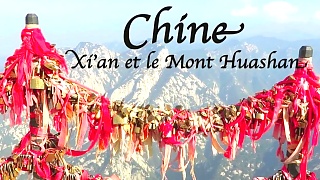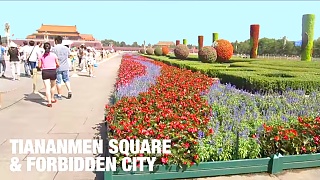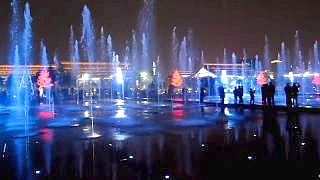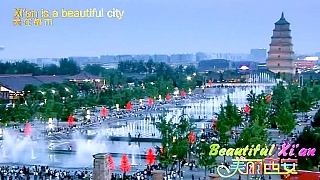
The ancient capital, Xi’An 西安

[640],shadow=true,start=,stop=
[320],shadow=true,start=,stop=

Related Videos


Featured Videos

A drive through the grasslands of GanSu province
With Walk China ... Grasslands of Gansu Province travel guide Introduction The grasslands of Gansu Province are a breathtaking natural wonder, offering vast expanses of rolling hills, lush meadows, and vibrant wildflowers. These grasslands are home to diverse wildlife and traditional nomadic cultures, providing visitors with a unique and immersive experience. This guide will help you explore the beauty of Gansu's grasslands, including must-see attractions, local culture, and practical travel tips. Must-See Grasslands Maqu Grassland (玛曲草原) Maqu Grassland, located in the southern part of Gansu Province, is one of the most beautiful and well-preserved grasslands in China. The area is known for its rich biodiversity, including rare species of plants and animals. Visitors can experience traditional Tibetan nomadic culture, including horseback riding and staying in yurts. Gannan Tibetan Autonomous Prefecture (甘南藏族自治州) Gannan Tibetan Autonomous Prefecture is a region in Gansu known for its stunning landscapes and vibrant Tibetan culture. The grasslands here are dotted with monasteries, prayer flags, and nomadic camps. Highlights include the Labrang Monastery, one of the six great monasteries of the Gelug school of Tibetan Buddhism, and the Sangke Grassland, a perfect spot for camping and picnicking. Ruoergai Grassland (若尔盖草原) Ruoergai Grassland, also known as Zoige Grassland, is located at the border of Gansu and Sichuan provinces. It is one of the largest and most picturesque grasslands in China, featuring vast wetlands, rivers, and lakes. The area is home to numerous bird species, making it a paradise for bird watchers. Langmusi (郎木寺) Langmusi is a small town located on the border of Gansu and Sichuan provinces, known for its beautiful grasslands and Tibetan Buddhist monasteries. The town is surrounded by lush meadows and mountains, offering excellent opportunities for hiking and horse riding. The local monasteries, such as the Kirti Monastery and Sertri Monastery, are also worth visiting. Local Culture The grasslands of Gansu are home to a diverse range of ethnic groups, including Tibetans, Mongolians, and Hui Muslims. These communities have preserved their traditional ways of life, including nomadic herding, Tibetan Buddhism, and unique culinary traditions. Visitors can immerse themselves in local culture through homestays, attending festivals, and participating in traditional activities. Tibetan Festivals Tibetan festivals are an integral part of the cultural landscape in Gansu's grasslands. Key festivals include Losar (Tibetan New Year), Shoton (Yogurt Festival), and the Horse Racing Festival. These events feature traditional music, dance, religious rituals, and sports competitions, providing a vibrant and immersive cultural experience. Traditional Nomadic Life Experiencing the traditional nomadic lifestyle is a highlight of any visit to the grasslands. Visitors can stay in yurts, ride horses, and learn about the herding practices that have sustained these communities for centuries. This offers a unique insight into the symbiotic relationship between the nomads and their natural environment. Practical Travel Tips Best Time to Visit: The best time to visit the grasslands of Gansu is during the summer months (June to September) when the weather is mild, and the grasslands are in full bloom. Getting Around: Due to the vast and remote nature of the grasslands, hiring a local guide or joining a tour is recommended. Public transportation options are limited, and having a guide will enhance your experience. Accommodation: Accommodation options range from basic guesthouses to traditional yurts. Staying in a yurt provides a unique cultural experience, but it's essential to book in advance, especially during peak tourist season. Health and Safety: The high altitude of some grassland areas can cause altitude sickness. It's important to acclimatize gradually and stay hydrated. Be prepared for varying weather conditions and pack appropriate clothing. Respect Local Customs: When visiting Tibetan and other ethnic communities, respect local customs and traditions. Seek permission before taking photographs, especially in religious sites and of local people. Conclusion The grasslands of Gansu Province offer a unique and unforgettable travel experience, combining stunning natural landscapes with rich cultural heritage. Whether you're exploring the vast meadows, learning about nomadic traditions, or immersing yourself in Tibetan culture, the grasslands of Gansu provide a deep and enriching connection to the natural and cultural wonders of China. Use this guide to plan your journey and make the most of your visit to this extraordinary region.
A vegan taste of China – DiSanXian / 3 treasures of the earth (Potato, Pepper, and Aubergine)
DiSanXian (Potato, Pepper, and Aubergine) Introduction DiSanXian (地三鲜) is a popular Chinese dish from the northeastern region of China. The name "DiSanXian" translates to "Three Earthly Treasures," referring to the main ingredients: potatoes, peppers, and aubergines (eggplants). This dish is loved for its rich flavors and satisfying texture, making it a perfect vegan option for those looking to enjoy authentic Chinese cuisine. Ingredients 2 large potatoes 2 medium aubergines (eggplants) 1 green bell pepper 1 red bell pepper 2 cloves garlic, minced 2 tablespoons soy sauce 1 tablespoon vinegar 1 teaspoon sugar Salt to taste Cooking oil Chopped spring onions (optional, for garnish) Preparation DiSanXian is a straightforward dish to prepare, requiring basic cooking techniques and common ingredients. Here's how to make it: Step 1: Prepare the Vegetables Peel the potatoes and cut them into thin slices or wedges. Cut the aubergines into bite-sized pieces. Remove the seeds from the bell peppers and cut them into strips. Step 2: Fry the Vegetables Heat oil in a wok or large frying pan over medium-high heat. Fry the potato slices until they are golden and crispy, then remove and set aside. Next, fry the aubergine pieces until they are tender and slightly browned, then remove and set aside. Finally, fry the bell pepper strips for a few minutes until they are slightly softened. Step 3: Combine and Season In the same wok or pan, add a little more oil if needed and sauté the minced garlic until fragrant. Add the fried potatoes, aubergines, and bell peppers back into the pan. Stir in the soy sauce, vinegar, sugar, and a pinch of salt. Toss everything together until the vegetables are well-coated with the sauce and heated through. Step 4: Serve Transfer the DiSanXian to a serving plate and garnish with chopped spring onions, if desired. Serve hot with steamed rice for a complete and satisfying meal. Tips and Variations Adjusting Spice Level: If you prefer a spicier version, add some chopped chili peppers or a pinch of chili flakes to the dish. Additional Vegetables: Feel free to add other vegetables like carrots, onions, or zucchini for more variety and nutrition. Low-Oil Option: For a healthier version, you can roast the vegetables instead of frying them. Toss them with a little oil and roast in the oven until tender and lightly browned. Sauce Variations: Experiment with different sauces, such as adding a touch of hoisin sauce for sweetness or using black bean sauce for a deeper flavor. Nutritional Information DiSanXian is not only delicious but also nutritious. Here is an approximate nutritional breakdown for a typical serving of DiSanXian: Calories: 250-300 kcal Protein: 4-6 grams Carbohydrates: 30-35 grams Fat: 12-15 grams Fiber: 5-7 grams Vitamins and Minerals: High in Vitamin C, potassium, and antioxidants from the vegetables. This makes DiSanXian a well-rounded dish that provides energy, essential nutrients, and dietary fiber. Where to Find DiSanXian in China DiSanXian is a popular dish in northeastern China but can be found in many Chinese restaurants throughout the country. Look for restaurants that specialize in northeastern Chinese cuisine or those that offer a wide range of vegetable dishes. You can also find DiSanXian in some vegetarian and vegan restaurants. Conclusion DiSanXian is a delicious and versatile vegan dish that highlights the simple yet rich flavors of Chinese cuisine. Whether you're a seasoned vegan or just looking to try something new, DiSanXian is sure to please your taste buds with its satisfying combination of potatoes, peppers, and aubergines. Enjoy this delightful dish at home or seek it out during your travels in China for an authentic culinary experience.
The amazing Stone Forest (ShíLín 石林)
昆明~石林…奇峰異石 Approximately 90 km (55 miles) from the provincial capital of YunNan, KunMing.
The US war on China (and everyone else)
The 'and everyone else' is the part most don't get. And it is true even if you are in the US. Everyone 'else'. Weather balloons, earthquakes, pipelines and more, with George Galloway, Bryce Greene and Jamie Wright ... With Garland Nixon on the pipeline ... With Danny HaiPhong ... With The New Atlas and Angelo Giuliano on the US war plans to enforce its hegemony ... Hegemony - keeping everyone else down; divide and rule.
Beautiful HangZhou 杭州 and West Lake 西湖
Capital city of ZheJiang province, near ShangHai in east China. Plus a beautiful time-lapse film by MaoShan Tang 走進浙江秋季 ...
A trip through central and south China 中国
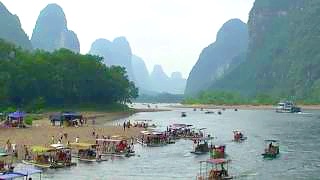
Including PingYao, Xi`An, GuiLin, the Dragon`s Backbone Rice Terraces, a Yao minority village, and the Li River ...
Why is Western media so biased against China ?
With Cyrus Janssen ... Comment by Gustavo Andrés ... There is an overwhelming assumption in the West that China’s Achilles heel is the state: that it lacks legitimacy. This is the underlying reason why Westerners believe that China’s transformation is unsustainable: that the political system cannot survive. It would be wrong to suggest that attitudes have not shifted: the endurance of the reform period, now over 35 years old, and the scale of its achievement have bred a growing if still grudging respect, and a less apocalyptic view of Chinese political change. Few now regard it to be imminent and many have extended their time horizons somewhat into the future. Nevertheless, most Westerners still regard China’s present political order as lacking legitimacy and as ultimately unsustainable. In the post 1945 period, Westerners have come to believe that Western-style democracy – essentially universal suffrage and a multi-party system – is more or less the sole source of a government’s legitimacy. This is a superficial and ahistorical position. Western-style democracy does not ensure the legitimacy of a regime in the eyes of its people: Italy is perhaps the classic example, with successive governments over a long historical period experiencing a chronic lack of legitimacy. And what of China? Although it does not have Western-style democracy, there is plenty of evidence – for example the Pew Global Attitude surveys and the work of Tony Saich at the Harvard Kennedy School – that the Chinese government enjoys high levels of support and legitimacy, much higher indeed than those of Western governments. How do we explain this? Clearly the reason is not Western-style democracy because China has not chosen this path. The late Lucian W. Pye, in his book ‘Asian Power and Politics’, argues that Western scholars have, in their understanding of politics, prioritised political systems over political cultures: Pye argues, correctly in my view, that the opposite is the case. His insight is highly relevant to the Chinese case. The relationship between the state and society in China is very different from that which characterises Western societies. There are three key elements. First, China is primarily a civilization-state rather than a nation-state, with the overriding and extremely difficult age-old task of government being to maintain the unity of China and its civilization. This has lent the state an enduring authority, importance and centrality in China that is very different from the Western nation-state tradition. The state is intrinsic to China in a way that this is not true in Western societies: they are, in effect, in large degree synonymous. Furthermore the Chinese regard the state in some degree as an expression and extension of themselves. Second, whereas in Western societies the state is seen in an instrumentalist and utilitarian way – in other words, what will it do for me? – in China, following from the Confucian tradition and the idea that the Emperor should model himself on the father’s role as the head of the family, the state is perceived in a familial way, whence the expression ‘nation-family’, or the idea of China as an extended family. Or, to put it another way, in Western societies the state is viewed as an external and somewhat artificial construct, for the Chinese it is an intimate. Third, a much higher premium is placed on the efficiency and efficacy of the state than in the West, whence the importance of meritocracy in the recruitment of public servants. In the West, discussion about the state largely revolves around the manner by which the government is selected, in China, by way of contrast, the competence of the state assumes priority. Fourthly, following from the previous point, the state is expected and required to deliver in China. Over the last few decades, of course, it has presided over and masterminded a huge transformation, the most remarkable in modern economic history. The contrast between the performance of the Chinese and Western economies is manifest. In summary, the relationship between the state and society in China and the West is profoundly different and the reasons lie in the historical and cultural differences between them. They can and should learn from each other but they will remain distinct. So what of the future? As I mentioned at the outset, it is axiomatic in the West that sooner or later China will face a crisis of governance that will result in profound reform along Western lines. In reality, it seems far more likely that the crisis of governance will occur in the West than China. The United States and Europe are in decline and, as a consequence, their ruling elites and political systems are already suffering from declining legitimacy and authority, a process that is likely to continue. China, in contrast, is a rising power whose ruling elite is likely to enjoy growing status and prestige as a consequence. China, though, faces its own kind of governance challenge. The country is changing at extraordinary speed. If one thinks of how the life of an ordinary person has changed over the course of the last three decades, then this is a measure of how everything else, including political rule, must also change in order to survive. Of course, transparency, representivity and accountability have been transformed since Mao’s death, but this is a dynamic process and arguably the greatest changes still lie in the future. It is not that China needs to or should change its system – it has stood the test of time and managed to stay abreast of and lead the wider transformations – but, this notwithstanding, more profound ways must be found to modernise the political system and its institutions if they are to meet the demands and expectations of a very different society.
Who really is the aggressor ?  (geopolitics)
With Double Down News ... With Danny HaiPhong and Brian Berletic ...
Wandering the backstreets of outer ShenZhen
With Nico ... ShenYang with Blondie in China ... Bonus films - back in ShenZhen - with Walk For You ... With Colorful World ...

Tag search ?