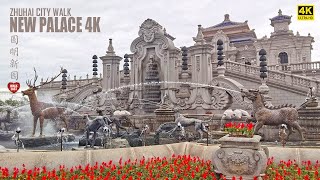
ShenZhen – early morning walk

GuangDong province.

With Walk East ...

[640],shadow=true,start=,stop=

Shenzhen is a modern metropolis located in Guangdong Province, bordering Hong Kong to the south. Known as China's first Special Economic Zone, Shenzhen has transformed from a fishing village into a bustling city known for its innovation, technology, and vibrant culture. Here's what you need to know as a tourist visiting Shenzhen:

Modern Landmarks and Skyscrapers:
Shenzhen Bay Park: This expansive waterfront park offers stunning views of Shenzhen's skyline and the Hong Kong skyline across the bay. It's a popular spot for leisurely strolls, cycling, and picnics.

Shenzhen Civic Center: Admire the futuristic architecture of the Shenzhen Civic Center, which includes landmarks such as the Shenzhen Concert Hall, Shenzhen Library, and Shenzhen Museum.

Ping An Finance Centre: Marvel at one of the tallest skyscrapers in China and the fourth-tallest in the world, featuring an observation deck on the 116th floor offering panoramic views of the city.

Theme Parks and Entertainment:
Window of the World: Explore miniature replicas of famous landmarks from around the world, including the Eiffel Tower, the Taj Mahal, and the Great Wall of China, all in one place.

Happy Valley: This amusement park offers thrilling rides, live entertainment, and themed areas catering to visitors of all ages, making it a popular destination for families and thrill-seekers.

Shopping and Dining:
Huaqiangbei Electronics Market: Known as the world's largest electronics market, Huaqiangbei is a paradise for tech enthusiasts, offering everything from gadgets and components to accessories and repairs.

Coco Park: This upscale shopping and dining district features a wide range of boutiques, department stores, restaurants, bars, and cafes, catering to both locals and tourists.

Cultural and Historical Sites:
Dafen Oil Painting Village: Explore this vibrant artist community known for its reproduction oil paintings, where you can watch artists at work and purchase artworks at affordable prices.

Fairy Lake Botanical Garden: Escape the urban hustle and bustle at this expansive botanical garden, featuring lush greenery, scenic walking trails, and a diverse collection of plants and flowers.

Practical Tips:
Transportation: Shenzhen has a well-developed public transportation system, including the metro, buses, and taxis. The metro is the most convenient way to get around the city, with signs and announcements in both Chinese and English.

Language: Mandarin is the official language, but Cantonese and English are also widely spoken, especially in tourist areas, hotels, and restaurants.

Weather: Shenzhen has a subtropical climate with mild, dry winters and hot, humid summers. The best times to visit are spring (March to May) and autumn (September to November) when the weather is pleasant and comfortable.

Visa: Depending on your nationality, you may need a visa to enter China. Check the latest visa requirements and apply in advance if necessary.

Shenzhen offers a dynamic mix of modern attractions, cultural experiences, and shopping opportunities, making it an exciting destination for tourists seeking a taste of urban life in China. Whether you're interested in technology, entertainment, or simply exploring a vibrant city, Shenzhen has something for everyone.
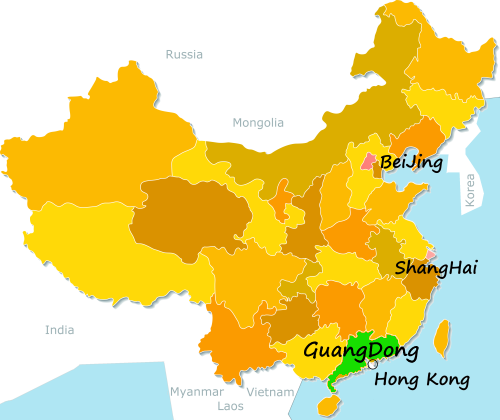
GuangDong map

Related Videos


Featured Videos

A thought on the latest BBC’s daily China hate article
Quote (from the BBC 'news' website, 19th February 2023) : "Meanwhile, friends of the detainees [supposedly lockdown protesters], anxious and worried for their own personal safety, continue to keep tabs on the situation and share information. Many of them live overseas and did not attend the November protests ... [about saving lives with lockdowns]." The lockdowns might have been over the top, but doubtless saved many lives - so that is a matter of debate; and the 'protesters' might have had some good arguments [one might say], but the key thing here is whether in reality it was all a Western attempt at subverting China; and if one looks at other articles around the same time / leading up to these 'protests' [greatly exaggerated], that seems to indeed be the case. Again, in the BBC's own words : Many of them LIVE OVERSEAS. In the BBC's own words : Many of them LIVE OVERSEAS. LIVE OVERSEAS. This is a very important point to keep in mind : these people were not there, but somehow have something to say, and their 'not even there' tale is being pushed by MSM. It is the XinJiang / HK scam repeated over, and over, and over again. Who are these people and who do they work for ? [Well hidden of course] Not knowing these facts, why trust them ??? Enough of the BBC - they have no credibility; we are not going to do this every day [when see excrement, step over it, it is not worth analysing]; the lies are easy to spot, if you look. Open your eyes ... And always remember that propaganda is the first move in war - demonise your 'enemy' [everyone 'else']. While frustration can be understood, covert agendas [and foreign recruits?] are another thing. For sure, though, the 'daily hate' will continue; and shame on them. *** Once the venom is extracted, the disease is cured. *** Bonus film - the US spent millions of dollars shooting down $12 hobby balloons ...
NanJing, with MiuMiu, the Guitar Girl
JiangSu province ...
Best foods to support your liver
With Dr. Eric Berg ...
This is FuZhou, FuJian province
With Seiu Travel ...
Something different – more about narcissism (psychology)
At root, narcissism ('life is all about me') is self-loathing projected onto someone else (the scapegoat, who might be driven to death - through illness, madness, suicide; let's call it what it is - emotional torture; in contrast, all others are shown a completely opposite, OTT, 'lovely' persona; and many will be deceived by this). Narcissism is very destructive; and not often recognized. This is not a rare thing; it could well be 1 in 5 people. Don't miss this; Dr. Ramani is awesome. Ramani Durvasula in conversation with Lewis Howes ... Narcissistic fathers and the damage they do to their children ... Narcissistic mothers and the damage they do to their children ... Narcissism and society ... On how a narcissist will try to destroy you ... Is your depression a symptom of being in a narcissistic relationship? Relationships need some work, including self-reflection; but they shouldn't be hard work - that's a sign it might never work out; if one feels a need to be treading on egg shells, that's confirmation it is doomed. Real relationships are based on mutual respect, flexibility and compassion (unconditional love - no ifs or buts)*; narcissists have none of these attributes. In a time of stress, does the other stay positive and chip in, or start a blame game? Things like this are the signs to look out for. Does the other help you reach your dreams, or belittle you ? Are they present in the moment or in their own little bubble ? A narcissist can't stand your success or happiness. Psychopathologies are all about distortions between reality and self, between inner self and behavior. When there is the absence of such distortions - masks, projections, defense mechanisms, etc., there is authenticity. That's going from acting, to really living. * without needing that person, or allowing oneself to be walked upon. One must be at least somewhat authentic / love oneself first; not trying to complete oneself, etc.
China in numbers (2020)
1. 1.4 billion - China's population, making it the most populous country in the world. 2. 23 - The number of provinces in China. 3. 56 - The number of recognized ethnic groups in China. 4. 9,596,960 square kilometers - China's total land area. 5. 1949 - The year the People's Republic of China was founded. 6. 70 - The percentage of the world's total silk production that comes from China. 7. 2,000 - The approximate number of years the Great Wall of China has been in existence. 8. 1971 - The year when China was admitted to the United Nations. 9. 34 - The number of UNESCO World Heritage Sites in China. 10. 4,000 - The years of recorded history in China. 11. 3.7 million square kilometers - The area covered by China's desert, the Gobi Desert. 12. 88 - The number considered lucky in Chinese culture. 13. 40,000 - The length of China's high-speed railway network in kilometers. 14. 1.4 trillion - The approximate number of disposable chopsticks used in China each year. 15. 4 - The number of official Chinese characters on the national flag. 16. 2nd - China's rank in the world for the largest economy. 17. 2008 - The year Beijing hosted the Summer Olympics. 18. 7 - The number of consecutive years China has been the world's largest exporter. 19. 1.4 billion - The number of mobile phone users in China. 20. 60 million - The approximate number of empty homes in China. 21. 40,000 - The approximate number of characters in the Chinese language. 22. 1,411 meters - The height of the Shanghai Tower, the second-tallest building in the world. 23. 8.98 million - The size, in square kilometers, of the Tibetan Plateau, often called the "Roof of the World." 24. 800 million - The number of internet users in China. 25. 50,000 - The number of rivers in China, each with a basin exceeding 100 square kilometers. 26. 300 million - The number of Chinese people practicing Buddhism. 27. 20 million - The number of Chinese Muslims. 28. 64 - The average life expectancy in China. 29. 45 - The percentage of China's population living in urban areas. 30. 1.39 billion - The number of active social media users in China. 31. 7,546 - The length, in kilometers, of the Grand Canal, the world's longest artificial waterway. 32. 15 million - The number of babies born in China each year. 33. 37 - The number of UNESCO Intangible Cultural Heritage items in China. 34. 2003 - The year China became the third country to launch a manned space mission. 35. 2.3 million - The size, in square kilometers, of the Taklamakan Desert, China's largest desert. 36. 12,000 - The number of terracotta warriors buried with China's first emperor, Qin Shi Huang. 37. 520 - A term in Chinese internet culture representing "I love you." 38. 100 million - The number of tourists who visit the Great Wall of China annually. 39. 2 - The number of pandas given as gifts by China to foreign countries as goodwill ambassadors. 40. 65 - The percentage of the world's total production of solar panels that comes from China. 41. 2,300 - The length, in kilometers, of the Yangtze River, China's longest river. 42. 1 - The number of children per couple allowed under China's one-child policy (recently replaced by a two-child policy). 43. 7 - The number of Chinese astronauts who have been in space. 44. 200 million - The number of bicycles in China. 45. 5,000 - The number of years tea has been consumed in China. 46. 300 - The number of TV channels in China. 47. 1.1 billion - The number of Chinese people who watch the annual CCTV Spring Festival Gala. 48. 221 BC - The year Qin Shi Huang unified China and became the first emperor. 49. 4 million - The number of college graduates in China each year. 50. 5 - The number of autonomous regions in China. 51. 3,300 - The length, in kilometers, of the Yellow River, China's second-longest river. 52. 49 - The percentage of the world's total coal consumption that comes from China. 53. 16,000 - The length, in kilometers, of the Great Wall of China, including all of its branches. 54. 1949 - The year when the Chinese currency, the Renminbi (RMB), was introduced. 55. 2.5 million - The number of electric vehicles sold in China in 2020. 56. 2,200 - The length, in kilometers, of the Mekong River, which originates in China. 57. 22 - The number of provinces, regions, and municipalities directly under the central government. 58. 150 million - The number of square meters of new construction added daily in China. 59. 8,848 meters - The height of Mount Everest, which straddles the border between China and Nepal. 60. 1966-1976 - The years of the Cultural Revolution in China. 61. 80 - The percentage of the world's total rare earth elements produced by China. 62. 8 - The number of major Chinese cuisines, including Sichuan, Cantonese, and Shandong. 63. 1.4 billion - The number of people covered by China's national health insurance. 64. 2 - The number of sessions of the National People's Congress held each year. 65. 1980 - The year China implemented its one-child policy. 66. 7 - The number of national holidays in China. 67. 80 million - The number of people who visit the Forbidden City in Beijing annually. 68. 5 trillion - The total value, in U.S. dollars, of China's foreign exchange reserves. 69. 1,417 meters - The depth of the South China Sea, China's marginal sea. 70. 10 - The number of Renminbi (RMB) denominations, including the yuan and jiao. 71. 26 million - The number of university students in China. 72. 9 - The number of dragon's pearls on the Chinese national flag. 73. 1,100 - The number of Giant Pandas remaining in the wild. 74. 25 - The percentage of the world's total steel production that comes from China. 75. 3,300 - The number of characters in a standard Chinese dictionary. 76. 1978 - The year China began economic reforms under Deng Xiaoping. 77. 2 million - The number of people employed in the Chinese military, the largest in the world. 78. 40 - The percentage of global e-commerce transactions that take place in China. 79. 7.6 million - The length, in kilometers, of China's highway system. 80. 35 - The percentage of the world's total cotton production that comes from China. 81. 700 million - The number of Chinese people lifted out of poverty since economic reforms began. 82. 9,144 kilometers - The length of China's land borders. 83. 600 BC - The approximate date of the earliest recorded Chinese characters. 84. 10 - The number of years it took to build the Bird's Nest Stadium for the 2008 Olympics. 85. 20 - The percentage of the world's total energy consumption that comes from China. 86. 1971 - The year when ping pong diplomacy improved relations between China and the United States. 87. 2 - The number of pandas sent to the U.S. as a result of ping pong diplomacy. 88. 70 - The percentage of the world's total solar water heater capacity installed in China. 89. 2,213 meters - The height of Mount Lushan, China's most famous mountain. 90. 200 million - The number of Chinese tourists who travel abroad each year. 91. 1969 - The year China successfully tested its first nuclear bomb. 92. 2,000 - The number of years the Chinese have been drinking tea. 93. 4 million - The number of square kilometers of arable land in China. 94. 10 million - The number of university graduates in China each year. 95. 120 - The number of years the Qing Dynasty ruled China (1644-1912). 96. 30 - The number of world heritage sites in China. 97. 100 - The percentage of electric buses in Shenzhen, the first city in the world to achieve this. 98. 1949 - The year China adopted the "five-star" national flag. 99. 70 million - The number of Chinese households that play Mahjong regularly. 100. 80 - The percentage of global Bitcoin mining that takes place in China.
Something different – the wisdom of Mark Twain
Explore the Temple of Heaven (TianTan) in BeiJing
With Seiu Travel ... "The Temple of Heaven in Beijing has stood for over 600 years—a sacred site where emperors once worshipped the heavens. This solemn sanctuary not only witnessed the grandeur of the Ming and Qing dynasties but also preserved countless ancient rituals and stories. In this video, we begin our journey at the South Gate of the Temple of Heaven, retracing the footsteps of emperors past. From the Circular Mound to the Echo Wall, and finally to the magnificent Hall of Prayer for Good Harvests, every step brings us deeper into history. Beyond the altars, the Temple of Heaven Park also offers tranquil corners: the serene Zhai Palace in the west, the poetic Double Ring Longevity Pavilion, and the relaxed vibes of the Hundred Flowers Garden shaded by ancient pines. Just beyond the temple walls, old Beijing comes alive—with smoky alleyways, time-honored snacks, and the rhythm of daily life. Here, history and life are only a street apart. Whether you're drawn to imperial rituals or local flavor, the Temple of Heaven is an unmissable chapter of Beijing."
DaHu Old Town, HuNan province
With Walk East ...

Tag search ?