 Philosophical Ideas
There are a number of ancient philosophical ideas that link with each other in various ways and permeate Chinese culture. Feng Shui Feng Shui (pronounced 'fung shway') literally 'Wind Water' is the ancient Chinese concern for placement and arrangement of a space to achieve harmony with the environment. For a place to have 'good Feng Shui' is for it to be in harmony with nature, whereas to have 'bad Feng Shui' is to be incongruous with nature. Feng Shui draws together a wide mix of geographical, religious, philosophical, mathematical, aesthetic and astrological ideas. Sometimes intuitive and derivable from common sense and our feeling of what is natural. Underlying the practical guidelines of feng shui is the theory of Qi. The 'Book of Changes' ('I Ching') and 'The Five Elements are also sometimes brought into play. Qi Nature is generally held to be a discrete organism that breathes Qi (a kind of life force or spiritual energy). The details about the metaphysics of what nature is, what Qi is and does, and what breath consists in vary. However, it is not generally understood as physical, but neither is it meant to be metaphorical although it can be thought of that way. The Five Elements The Qi energy can be found in various forms identified as Wu Xing (5 Phases) - Wood, Fire, Earth, Metal and Water. These energy phases are so-named because they tend to behave somewhat like the physical entities. The notion of the Five Elements is found in Chinese medicine and Feng Shui. Do not confuse the 5 elements of Chinese Metaphysics with the 5 elements of Greek philosophy (Wind, Water, Earth, Ether and Sky). Yin Yang This is the idea that opposites both contain each other and give rise to each other. These ideas are captured beautifully in the symbolisation of ... Further, that we need to take a holistic view and seek balance between opposites. Any two opposites are defined by reference to each other and in a dynamic relationship. Although the origins probably predate Taoism, the idea is elaborated quite explicitly in the Tao Te Ching, if not by name. Yin : Moon, water, cold, feminine, dark, passive force, ... Yang : Sun, fire, hot, masculine, bright, active force, ... Everything has an opposite, and opposites are relative, not absolute. They are interdependent. There is always a trace of one in the other, like stars in the night sky. There can not be absolute darkness or absolute brightness, coldness or whatever. One can transform into the other. For example, night becomes day becomes night. And if we look from space, we see that night and day actually coexist! There are four possible imbalances: excess Yin, excess Yang, Yin deficiency, and Yang deficiency. They can again be seen as a pair: by excess of Yin there is a Yang deficiency and vice versa. The imbalance is also a relative factor: the excess of Yang 'forces' Yin to be more 'concentrated'. The darker the night, the brighter the stars look. Yin / Yang is an important concept in Chinese medicine. Symptoms categorised as yin would be treated by foods that are said to yang. The 'I Ching' ('Book of Changes') The 'I Ching' attempts to elaborate on the nature of the universe. Simplicity. The fundamental law underlying everything in the universe is actually utterly plain and simple, no matter how abstruse or complex some things may appear to be. Variability. Everything in the universe is continually changing. By comprehending this one may realize the importance of flexibility in life and cultivate the proper attitude for dealing with a multiplicity of diverse situations. Persistency. While everything in the universe seems to be changing, there is a persistent principle, a central rule, which does not vary with space and time. This book is based on 64 diagrams that represent all the different ways to combine six 0s and 1s (yin or yang). For example, 101101. An unbroken line can be used to represent Yang and a broken line Yin. This gives 64 hexagrams that can be used as an oracle; providing an input for a new way of looking at a problem. Dragon and Phoenix The dragon and the phoenix, mythical creatures that date back into antiquity and only gradually took the form we know today, served in classical art and literature as symbolic of people of high virtue and rare talent. Together, the two symbolize happiness and married love. The dragon symbolizes supreme power and was associated with the emperor. There is no connection with the Western dragon which symbolizes evil power. The first emperor, Shi HuangDi, is said to have incorporated the emblem or totem of each tribe he conquered into his own. This may be part of the explanation of how the dragon took on its composite form. A dragon has the body of a snake, the scales and tail of a fish, the antlers of a stag, the face of a camel, the talons of an eagle, the ears of a bull, the feet of a tiger and the eyes of a demon. The dragon is associated with water and the number 9. Han Chinese often refer to themselves as 'descendants of the dragon'. In the West, it has also become a symbol of China itself although in China the panda is the preferred national symbol today. The Phoenix (FengHuang) symbolizes virtue, foresight and devotion and was associated with the empress. The phoenix derived from the combination of the first two mythical phoenixes - the Feng which was male and Huang that was female - to symbolize a harmony of Yin and Yang. The phoenix carries with it eternal truths and is immortal - able to rise from the ashes of death. The phoenix will only stay where there is just rule. The feathers of the phoenix are often depicted containing the five fundamental colors: black/blue, white, red, green and yellow that relate to the 'Five Elements'. The phoenix or similar mythical 'fire-birds' appear in many ancient cultures, including that of ancient Greece, but there are some differences. The dragon and phoenix are still embodied in traditional celebrations such as the Chinese New Year. Numbers The number 9, being the highest value digit, is associated with the dragon and the emperor. Nine is often found in architectural and other features associated with the emperor, such as the imperial red doors with their 9 rows of 9 golden bolts. 10,000 was a number used to denote infinity. Hence the Forbidden City was often cited as having 9,999 rooms - just less than the mythical number of rooms in Heaven. Further, odd numbers are considered to be Yang while even numbers are associated with Yin. All the other digits have various associations too, with complicated rationales based in various ancient beliefs such as the Five Elements. Even today, 8 is considered to be a lucky number associated with prosperity and happiness, while 4 is an unlucky number. In some multi-storied buildings there is no floor marked as floor 4. A telephone number with lots of 8s and no 4s is the most expensive.
Related Videos



Featured Videos
|
With Brian Berletic / The New Atlas ...
Real freedom versus the illusion of freedom ...
|
|
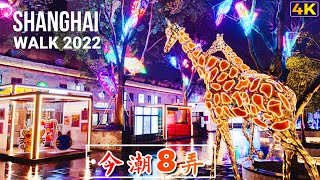
ShangHai Silent Rainy Night Walk Tour in Brand New Fashion Lane 宁静的雨夜漫步在上海时尚新地标“今潮8弄”文艺街区|四川北路新面貌
“The Fashion Lane 8” is located on SiChuan North Road, HongKou District, ShangHai. 66 old buildings distributed in 8 old-fashioned lanes are completely preserved here. This is a gorgeously transformed old alley. Each space has its own historical story, allowing tourists to feel the deep history and culture. It is also a good place for people to feel nostalgic. There are various art exhibitions & shows, specialty restaurants, coffee shops and individual bars, which have injected a lot of fresh vitality into the old buildings.
今潮8弄位于上海虹口区的四川北路,这里完整保留了分布在8条老式里弄内的66幢老建筑,这是经过华丽变身的老弄堂,每一处空间都有各自的历史故事,让游客感受到浓浓的历史人文气息,也是人们怀旧的一个好地方。这里有各种文艺展览和演出,特色餐厅,咖啡店和个性酒吧,给老建筑注入了许多新鲜活力。
With Wei's Travel ...
|
|
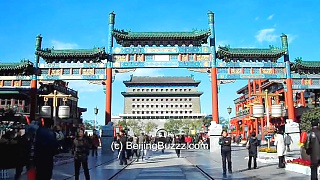
Immediately south of TianAnMen Square ...
|
|
With Perfect Day Pursuit ...
|
|
Beijing, indeed China, is an embrace of both ancient and modern, diverse yet cohesive, humanity in harmony with nature - in short, it is :
☯
Bonus film - DongCheng district, the heart of Beijing ...
|
|
GuangDong province.
|
|
How to be free.
Warning : lots of f-bombs in the video; but it is full of wisdom.
|
|
Eckhart Tolle in conversation with Deepak Chopra and Wayne Dyer ...
|
|
"Meet the new 'boss'; same as the old 'boss'" ... (and who's the real boss ?)
How long will this go on ... till most can see : that they've just been fooled again ...
Only less than 1% of those who 'represent' us work for us; the rest work for the less than 1%.
|