On the difference between observing and thinking (philosophy / psychology)

Truth lies in being able to see 'what is', without preconception. No what 'I already know' or what 'should be'. First, must come clear sight of that what is (the solution always lies within the question).

Is one a figment of the past, and conditioning, or really alive in the present moment? Half blind or of clear sight ?

With Jiddu Krishnamurti ...

[640],shadow=true,start=,stop=
[320],shadow=true,start=,stop=

Bonus film - with Alan Watts - on Being There, rather than merely Passing By ...

[320],shadow=true,start=,stop=

Related Videos


Featured Videos

30 Chinese drinks
30 popular drinks and beverages you might encounter in China, including traditional favorites and popular choices: Green Tea (绿茶, lǜchá) - Refreshing and commonly served in Chinese restaurants and households. Black Tea (红茶, hóngchá) - Another classic tea variety enjoyed across China. Oolong Tea (乌龙茶, wūlóngchá) - Semi-oxidized tea with a diverse range of flavors. Jasmine Tea (茉莉花茶, mòlìhuā chá) - Fragrant tea infused with jasmine flowers. Pu-erh Tea (普洱茶, pǔ'ěrchá) - A fermented tea known for its earthy flavor and health benefits. Chrysanthemum Tea (菊花茶, júhuā chá) - Light and floral tea made from chrysanthemum flowers. Hawthorn Juice (山楂汁, shānzhā zhī) - Tart and slightly sweet juice made from hawthorn berries. Coconut Water (椰子水, yēzi shuǐ) - Refreshing and hydrating natural drink from young coconuts. Soy Milk (豆浆, dòu jiāng) - Nutty and creamy beverage made from soybeans. Milk Tea (奶茶, nǎichá) - Popular sweetened tea with milk, often served cold or hot. Bubble Tea (珍珠奶茶, zhēnzhū nǎichá) - Sweetened tea or milk drink with chewy tapioca pearls. Lemon Tea (柠檬茶, níngméng chá) - Tea infused with lemon juice, often served cold. Lü Cheng Ice Tea (绿茶, lǜchá) - A popular bottled tea often found in convenience stores. Chrysanthemum Tea (菊花茶, júhuā chá) - Light and floral tea made from chrysanthemum flowers. Soy Milk (豆浆, dòu jiāng) - Nutty and creamy beverage made from soybeans. Milk Tea (奶茶, nǎichá) - Popular sweetened tea with milk, often served cold or hot. Bubble Tea (珍珠奶茶, zhēnzhū nǎichá) - Sweetened tea or milk drink with chewy tapioca pearls. Lemon Tea (柠檬茶, níngméng chá) - Tea infused with lemon juice, often served cold. Lü Cheng Ice Tea (绿茶冰, lǜchá bīng) - Bottled green tea served chilled with ice. Beer (啤酒, píjiǔ) - Commonly enjoyed alcoholic beverage in China, with popular brands like Tsingtao and Snow Beer. Rice Wine (米酒, mǐjiǔ) - Traditional Chinese alcoholic beverage made from fermented rice. Baijiu (白酒, báijiǔ) - Strong Chinese distilled spirit made from grains, commonly consumed during celebrations. Plum Juice (酸梅汤, suān méi tāng) - Tangy and sweet juice made from preserved plums. Winter Melon Tea (冬瓜茶, dōngguā chá) - Refreshing tea made from winter melon, often sweetened. Red Bean Soup (红豆汤, hóngdòu tāng) - Sweet soup made from boiled red beans, served hot or cold. Honey Citron Tea (柚子蜂蜜茶, yòuzi fēngmì chá) - Tea infused with honey and citron fruit, served hot. Laba Congee (腊八粥, làbā zhōu) - Sweet rice porridge traditionally enjoyed on Laba Festival, made with various ingredients like nuts and dried fruits. Wolfberry Tea (枸杞茶, gǒuqǐ chá) - Tea made from goji berries (wolfberries), known for their health benefits. Osmanthus Tea (桂花茶, guìhuā chá) - Fragrant tea made from osmanthus flowers, often sweetened. Lemon Water (柠檬水, níngméng shuǐ) - Simple infused water made with lemon slices and water. These are just a few examples of the diverse and delightful drinks you can enjoy in China. Each region may have its own specialties and variations of these beverages.
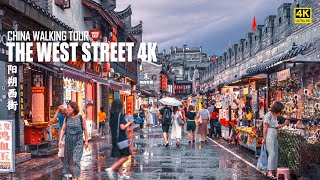
Night walk in YangShuo 阳朔
With Walk East ...
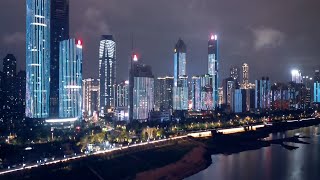
NanChang, provincial capital city, JiangXi
With Fly Over China ...
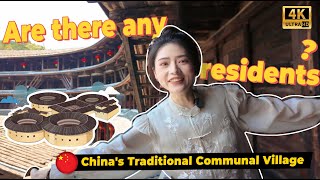
A trip to the Hakka TuLou in FuJian province
The Hakka Tulou are unique, fortress-like buildings located in the mountainous areas of Fujian Province. These large, circular or rectangular earthen structures were built by the Hakka people, an ethnic group known for their migratory history. The Tulou are notable for their communal living spaces, defensive features, and remarkable architectural design. Who are the Hakka People? The Hakka are a subgroup of the Han Chinese, known for their migratory history and resilience. Originating from northern China, the Hakka migrated southwards over several centuries, settling in the mountainous regions of southern China. The name "Hakka" means "guest people," reflecting their history of migration and settlement in new areas. Hakka culture places a strong emphasis on education, family unity, and community cooperation. Despite facing hardships and displacement, the Hakka have maintained their unique cultural identity and traditions. Historical and Cultural Background Origins and History The construction of Tulou began during the Song Dynasty (960-1279) and continued through the Ming (1368-1644) and Qing (1644-1912) Dynasties. These buildings were designed to provide protection and communal living for large families or clans, often housing up to 80 families in a single Tulou. Cultural Significance The Tulou reflect the Hakka people's need for security and their communal lifestyle. The buildings are designed to be self-sufficient, with living quarters, storage areas, and defensive structures all incorporated into the design. The Hakka culture values family unity, and the Tulou are a physical manifestation of this principle. Architectural Features Design and Structure Tulou are typically large, multi-storied structures built with thick earthen walls that provide insulation and protection. The outer walls are made from rammed earth, mixed with stone, bamboo, and wood, making them extremely durable. The interiors are organized around a central courtyard, with rooms for living, storage, and communal activities. Defensive Capabilities The design of the Tulou includes defensive features such as narrow windows and a single, reinforced entrance. These elements were intended to protect the inhabitants from bandits and wild animals. The circular shape of many Tulou also allows for effective communication and defense within the building. Communal and Social Aspects Living Arrangements The Tulou were built to house entire clans, with each family having its own designated area within the structure. The central courtyard served as a communal space for social activities, celebrations, and meetings. This layout fostered a strong sense of community and cooperation among the inhabitants. Self-Sufficiency The Tulou were designed to be self-sufficient, with areas designated for food storage, livestock, and agricultural activities. This self-sufficiency was essential, as the Tulou were often located in remote, mountainous areas where resources needed to be carefully managed. UNESCO World Heritage Status Recognition In 2008, several Fujian Tulou were inscribed as UNESCO World Heritage Sites. This recognition highlights their architectural uniqueness, cultural significance, and historical importance. The Tulou are considered outstanding examples of communal living and defensive architecture. Conservation Efforts Efforts to preserve the Tulou focus on maintaining the traditional construction techniques and protecting the buildings from modern threats such as tourism pressure and environmental degradation. These efforts aim to ensure that the Tulou remain a living part of Hakka culture. Conclusion The Hakka Tulou are extraordinary structures that embody the resilience, ingenuity, and communal spirit of the Hakka people. These architectural marvels continue to stand as a testament to the Hakka's ability to adapt and thrive in challenging environments. As both historical treasures and vibrant communities, the Tulou attract visitors from around the world, offering a glimpse into a unique way of life. With How To Do? In China ...
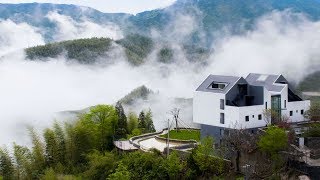
Poetry and architecture
On a trip to Yunhe Terrace in Lishui, Zhejiang in 2016, mother fell in love with the beautiful views and fresh air there. Recalling that mother sold family house in hometown to raise money for his tuition to study abroad 16 years ago, Tian rent a 2-mu land 1030 meters above the sea level and built his mother a new house surrounded by mountains and clouds. The spare rooms are used to run a guesthouse. 2016年,建築師田景海帶著母親去浙江麗水的雲和梯田旅遊,母親愛上了這兒的好山好水好空氣。想起16年前母親為了籌措自己留學的學費,賣掉老家的房子,田景海便在麗水租下2畝地,在海拔1030米的雲海山間,為媽媽造了一個新宅,空餘房間則用來做民宿。 Ye Hui is a poet. He is passionate about the fate of people, and his poems have been selected many times in the "Chinese Annual Poetry". Meanwhile he is an architect, specializing in old building renovation. In 2014, Ye Hui bought a lakeview villa in Nanjing. Living in a house with 400-square-meter indoor area and an 800-square-meter courtyard, he spends most of his time in a 3-square-meter space. 葉輝是詩人,他的詩作飽含情感地關注著人的命運,多次入選《中國年度詩歌》,同時他也是一位建築師,擅長老建築改造。2014年,葉輝買下南京的一套湖景別墅,室內空間400㎡,內院800㎡,不過他最常待的工作空間,只有3㎡。
First time in China – ShangHai to SuZhou by high speed rail – plus a guide for visitors
With Dany Dev ... A Guide to China's High-Speed Rail Network China's high-speed rail (HSR) network is the largest and most advanced in the world, offering an efficient, modern, and fast way to travel across the country. Since its inception, the network has revolutionized travel within China, making it easier and quicker to connect cities and regions that were once separated by long distances. Overview of the High-Speed Rail Network Size and Scope: As of 2024, China’s HSR network spans over 40,000 kilometers (25,000 miles), connecting nearly all major cities across the country. The network is continuously expanding, with new lines being constructed each year. Speed: Trains on the high-speed network typically travel at speeds ranging from 250 to 350 kilometers per hour (155 to 217 miles per hour). Some of the fastest trains, such as those on the Beijing–Shanghai line, can reach speeds up to 350 km/h. Key Routes: Beijing-Shanghai: This flagship route is one of the busiest and most popular, covering a distance of 1,318 kilometers (819 miles) in about 4.5 hours. Beijing-Guangzhou: One of the longest HSR routes in the world, spanning 2,298 kilometers (1,428 miles) and taking around 8 hours. Shanghai-Hong Kong: Connects the financial hub of Shanghai with the vibrant city of Hong Kong, covering 1,200 kilometers (746 miles) in approximately 8 hours. Xi’an-Chengdu: A scenic route that links the historic city of Xi’an with Chengdu, famous for its pandas, covering 658 kilometers (409 miles) in about 3 hours. Guangzhou-Shenzhen-Hong Kong: This line offers a rapid connection between the three major economic hubs, with a travel time of about 14 minutes from Shenzhen to Hong Kong. Features of China’s High-Speed Trains Train Classes: China’s high-speed trains are classified primarily into three categories based on speed and service: G-Class (Gaotie): The fastest trains, operating at speeds up to 350 km/h. These are typically used on major routes like Beijing-Shanghai. D-Class (Dongche): Slightly slower, operating at speeds up to 250-300 km/h. These trains are often used on shorter or less busy routes. C-Class: Suburban trains designed for short-distance travel, operating at speeds up to 200-250 km/h. Comfort and Amenities: Seating: HSR trains offer different classes of seating, including Second Class, First Class, and Business Class. Business Class offers the most luxurious experience, with wide reclining seats and more space. Facilities: Trains are equipped with modern amenities such as power outlets, Wi-Fi (on some trains), clean restrooms, and food and beverage services. Quiet carriages are also available for passengers who prefer a more serene environment. Punctuality: The HSR network is known for its punctuality, with trains typically departing and arriving on time. Key Stations and Infrastructure Major Hubs: Beijing South Railway Station: One of the largest and busiest HSR stations, serving as a key hub for northern and central China. Shanghai Hongqiao Railway Station: A massive transportation hub that integrates rail, air, and metro services, making it one of the most important stations in eastern China. Guangzhou South Railway Station: A key gateway to southern China, connecting the region with major cities like Shenzhen and Hong Kong. Wuhan Railway Station: A central hub in the heart of China, crucial for connections between the east and west. Modern Design: The stations are often architectural marvels, designed to handle large volumes of passengers efficiently. Many stations are integrated with other forms of transport, including metro lines and airports, making transfers seamless. Benefits of Using the High-Speed Rail Network Speed and Efficiency: High-speed trains are often faster than flying when considering the time spent on security checks and travel to and from airports. For distances up to 1,200 kilometers (746 miles), trains are often the quickest option. Convenience: With frequent departures, extensive coverage, and easy booking options (including online and mobile apps), the HSR network is extremely convenient for both domestic and international travelers. Environmental Impact: HSR is a greener option compared to air travel, contributing less to carbon emissions per passenger kilometer. Challenges and Future Prospects Expansion to Rural Areas: While the HSR network covers most major cities, there are ongoing efforts to expand services to more rural and remote areas, ensuring broader access. International Links: China is also exploring international HSR connections, such as a proposed high-speed rail link to Moscow, Russia, which could enhance connectivity beyond China's borders. Technological Advances: China is investing in maglev (magnetic levitation) technology, which could further increase speeds to around 600 km/h (373 mph), positioning China at the forefront of global rail innovation. Tips for Travelers Booking Tickets: Tickets can be booked online, at stations, or through travel agencies. During peak travel times, such as Chinese New Year, it is advisable to book tickets well in advance. Travel Documents: Foreign travelers will need to present their passports when booking tickets and boarding trains. Luggage: There are generous luggage allowances on HSR trains, with space available for larger items in overhead compartments or at the ends of carriages. Language: While English signage is available in major stations, it is useful to have your destination written in Chinese to show to station staff if needed. Conclusion China’s high-speed rail network is a remarkable achievement in modern transportation, offering an efficient, comfortable, and eco-friendly way to explore the vast and diverse landscapes of the country. Whether you are traveling for business or leisure, the HSR network provides an unparalleled travel experience that continues to set global standards.
ShangHai 上海 city in timelapse
MiuMiu at eight years old birthday – Pachelbel’s Canon in D, in rock guitar
Zhu Ni ShengRi KuaiLe (Happy Birthday to You) 祝你生日快乐 🎂 ! You rock 🎵 MiuMiu GuitarGirl's eighth birthday song. "I didn't expect that !" Thank you for the music :) 🎸 Awesome shredding - don't miss it ... Bonus film - SunnyDay (cover, Jay Chou) 周杰伦 晴天 翻唱 ... Plus - L'Internationale 国际歌 ... 'And this is my flamenco guitar masterclass' ... Guitar factory visit (fascinating) ... A Soft Heart | MiuMiu's MV 心太软 华语经典 ... Receiving a YouTube silver plaque ...
Something different – Our beautiful Earth

Tag search ?