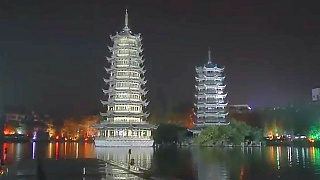
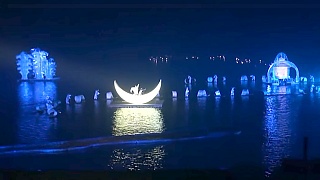
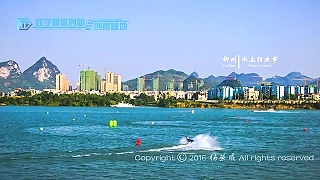
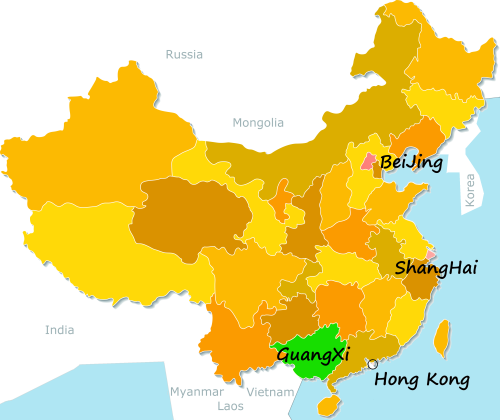
GuangXi map
Live more ...
 LiuZhou 柳州 city, GuangXi province

|
10,000 pearls of wisdom; when follow The Way, it is one pearl.
The truths found in the Tao Te Ching are universal and timeless. A book of wisdom written by a sage named Lao-Tzu / Lao Zi, circa 500 BC, China.
Read by the late Wayne Dyer ...
The audio as well as the translation of the version you hear is from a book called Living The Wisdom of The Tao: Change Your Thoughts - Change Your Life by Wayne Dyer. His book includes a detailed commentary on each of the verses ...
|
|
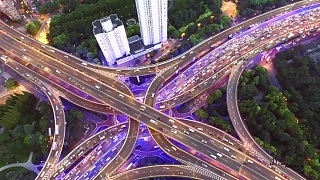
A very creative film - don't miss this ...
|

|
|
With Einar Tangen, CGTN ...
|
|
With Walk East ...
|
|
With Walk For You ...
|
|
With Cyrus Janssen ...
Comment by Gustavo Andrés ...
There is an overwhelming assumption in the West that China’s Achilles heel is the state: that it lacks legitimacy. This is the underlying reason why Westerners believe that China’s transformation is unsustainable: that the political system cannot survive. It would be wrong to suggest that attitudes have not shifted: the endurance of the reform period, now over 35 years old, and the scale of its achievement have bred a growing if still grudging respect, and a less apocalyptic view of Chinese political change. Few now regard it to be imminent and many have extended their time horizons somewhat into the future.
Nevertheless, most Westerners still regard China’s present political order as lacking legitimacy and as ultimately unsustainable. In the post 1945 period, Westerners have come to believe that Western-style democracy – essentially universal suffrage and a multi-party system – is more or less the sole source of a government’s legitimacy. This is a superficial and ahistorical position. Western-style democracy does not ensure the legitimacy of a regime in the eyes of its people: Italy is perhaps the classic example, with successive governments over a long historical period experiencing a chronic lack of legitimacy. And what of China? Although it does not have Western-style democracy, there is plenty of evidence – for example the Pew Global Attitude surveys and the work of Tony Saich at the Harvard Kennedy School – that the Chinese government enjoys high levels of support and legitimacy, much higher indeed than those of Western governments.
How do we explain this? Clearly the reason is not Western-style democracy because China has not chosen this path. The late Lucian W. Pye, in his book ‘Asian Power and Politics’, argues that Western scholars have, in their understanding of politics, prioritised political systems over political cultures: Pye argues, correctly in my view, that the opposite is the case. His insight is highly relevant to the Chinese case. The relationship between the state and society in China is very different from that which characterises Western societies.
There are three key elements. First, China is primarily a civilization-state rather than a nation-state, with the overriding and extremely difficult age-old task of government being to maintain the unity of China and its civilization. This has lent the state an enduring authority, importance and centrality in China that is very different from the Western nation-state tradition. The state is intrinsic to China in a way that this is not true in Western societies: they are, in effect, in large degree synonymous. Furthermore the Chinese regard the state in some degree as an expression and extension of themselves.
Second, whereas in Western societies the state is seen in an instrumentalist and utilitarian way – in other words, what will it do for me? – in China, following from the Confucian tradition and the idea that the Emperor should model himself on the father’s role as the head of the family, the state is perceived in a familial way, whence the expression ‘nation-family’, or the idea of China as an extended family. Or, to put it another way, in Western societies the state is viewed as an external and somewhat artificial construct, for the Chinese it is an intimate.
Third, a much higher premium is placed on the efficiency and efficacy of the state than in the West, whence the importance of meritocracy in the recruitment of public servants. In the West, discussion about the state largely revolves around the manner by which the government is selected, in China, by way of contrast, the competence of the state assumes priority.
Fourthly, following from the previous point, the state is expected and required to deliver in China. Over the last few decades, of course, it has presided over and masterminded a huge transformation, the most remarkable in modern economic history. The contrast between the performance of the Chinese and Western economies is manifest.
In summary, the relationship between the state and society in China and the West is profoundly different and the reasons lie in the historical and cultural differences between them. They can and should learn from each other but they will remain distinct.
So what of the future?
As I mentioned at the outset, it is axiomatic in the West that sooner or later China will face a crisis of governance that will result in profound reform along Western lines. In reality, it seems far more likely that the crisis of governance will occur in the West than China. The United States and Europe are in decline and, as a consequence, their ruling elites and political systems are already suffering from declining legitimacy and authority, a process that is likely to continue. China, in contrast, is a rising power whose ruling elite is likely to enjoy growing status and prestige as a consequence.
China, though, faces its own kind of governance challenge. The country is changing at extraordinary speed. If one thinks of how the life of an ordinary person has changed over the course of the last three decades, then this is a measure of how everything else, including political rule, must also change in order to survive. Of course, transparency, representivity and accountability have been transformed since Mao’s death, but this is a dynamic process and arguably the greatest changes still lie in the future. It is not that China needs to or should change its system – it has stood the test of time and managed to stay abreast of and lead the wider transformations – but, this notwithstanding, more profound ways must be found to modernise the political system and its institutions if they are to meet the demands and expectations of a very different society.
|
|
ZheJiang province.
|

|
The three lakes here - XiHai, HouHai and QianHai - were where boats from HangZhou would dock after travelling the Grand Canal.
There are still some hutongs in this area, just north of BeiHai Park, which has become a lively destination, especially in the evenings around the lakes.
|