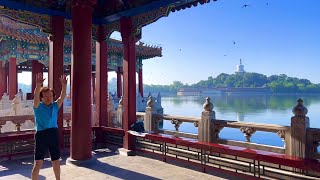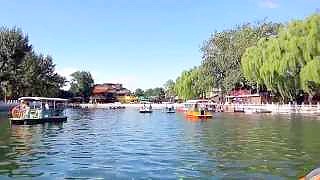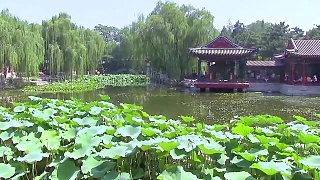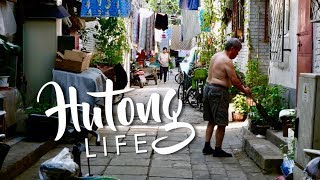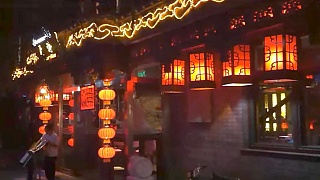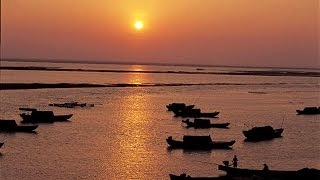
ShiChaHai 什刹海 scenes, BeiJing

The three lakes here - XiHai, HouHai and QianHai - were where boats from HangZhou would dock after travelling the Grand Canal.

There are still some hutongs in this area, just north of BeiHai Park, which has become a lively destination, especially in the evenings around the lakes.

[640],shadow=true,start=,stop=

Beijing, the capital city of China, is a vibrant metropolis steeped in history, culture, and modernity. Here's a brief overview of what you can expect as a tourist in Beijing:

Historical Landmarks:
The Great Wall of China: One of the most iconic structures in the world, the Great Wall is easily accessible from Beijing. Mutianyu and Badaling sections are popular among tourists.

Forbidden City (Palace Museum): A UNESCO World Heritage Site, this vast imperial palace complex was home to Chinese emperors for over 500 years. It houses numerous halls, courtyards, and historical artifacts.

Temple of Heaven: A masterpiece of Chinese architecture, this ancient temple complex served as a place of worship for emperors to pray for good harvests.

Summer Palace: A stunning ensemble of lakes, gardens, and palaces, the Summer Palace served as a retreat for emperors during the Qing dynasty.

Tiananmen Square: One of the largest city squares in the world, Tiananmen Square is flanked by important landmarks such as the Monument to the People's Heroes, the Great Hall of the People, and the Mausoleum of Mao Zedong.

Cultural Sites:
Beijing Hutongs: Explore the narrow alleyways and traditional courtyard residences of Beijing's historic neighborhoods. You can take a rickshaw tour or simply wander around on foot.

Beijing Opera: Experience traditional Chinese opera performances at venues like the Liyuan Theater or the Chang'an Grand Theatre.

798 Art District: A hub of contemporary art and culture, this former industrial area is now home to numerous galleries, studios, and cafes.

Modern Attractions:
Olympic Park: Visit iconic structures such as the Bird's Nest (National Stadium) and the Water Cube (National Aquatics Center) from the 2008 Beijing Olympics.

CBD (Central Business District): Marvel at the futuristic skyline of Beijing's modern business district, which includes landmarks like the CCTV Headquarters and the China World Trade Center Tower III.

Culinary Delights:
Peking Duck: Indulge in Beijing's most famous dish, crispy roast duck served with pancakes, scallions, and hoisin sauce.

Street Food: Explore the city's vibrant street food scene and sample local delicacies like jianbing (savory crepes), lamb skewers, and dumplings.

Practical Tips:
Transportation: Beijing has an extensive public transportation system, including the subway, buses, and taxis. However, traffic can be heavy, so plan your travels accordingly.

Language: While English is not widely spoken, especially outside tourist areas, many signs and transportation announcements are in English. It's helpful to carry a translation app or a phrasebook.

Weather: Beijing experiences four distinct seasons, with hot summers and cold winters. The best times to visit are spring (April to June) and autumn (September to October) when the weather is mild and comfortable.

Etiquette: Respect local customs and traditions, such as removing your shoes before entering someone's home and using both hands to pass or receive items.

Beijing offers a rich tapestry of experiences for tourists, blending ancient heritage with modern innovations. Whether you're fascinated by history, culture, or culinary delights, there's something for everyone in this dynamic city.
Related Videos


Featured Videos

LuJiaZui 陆家嘴, ShangHai 上海
US aggression in Thailand, Pakistan and Malaysia (to isolate China)
The West's new cold war is hotting up. What is the US up to in all China's neighbors ... Derailing China's Belt and Road Initiative, this time in Pakistan ... Malaysia ...
A view of ShenZhen 深圳
Planning war on China – part 15
“Socialism never took root in America because the poor see themselves not as an exploited proletariat, but as temporarily embarrassed millionaires.” ― John Steinbeck On the 'China threat' scam - with The Geopolitics In Conflict Show ... A talk with historian Alfred McCoy - don't miss it (though he seems not seem to realize that China's South China Sea actions are defensive, countering Western aggression and encirclement) ... With Professor Richard Wolff (exaggerates China's problems but otherwise worth a listen) ... On the BBC's Uyghur propaganda BS ... US semi-boycott of the BeiJing Winter Olympics ? Infantile ? Xi (and Putin) outclass Biden again and again ... Just 90 seconds to THE END (doomsday clock) - can we stop the madness - not sure, but we must try - (musical interlude, with Roger Walters and band) ... There is no 'them'. It is only a scam that the elite uses to convince you of your subservience.
Starve the poor with sanctions to get control of a country – same old story
What the West / US have done in Cuba, is what they are also doing in XinJiang (and many other places around the world) - it is always to advance Western / US hegemony (slavery) and NOT about anyone (else)'s human rights / well-being - that's just marketing BS - it is ALWAYS for the benefit of the aggressors who claim to be in support of 'the people' (they starved) to subjugate the country. "When the rich take money from the poor, it's called business, When poor people resist, it's called violence." - Mark Twain
Chinese plums
With DianXi XiaoGe ...
The truth on how the violent Hong Kong riots were indeed a US / UK coup attempt
As in Tibet, BeiJing (89), and XinJiang, violent separatists have been created, aided and spurred on by the West. Rational protests were hijacked by foreign powers and their proxies. This is all about trying to undermine China, to keep it down. None worked, but now they are doubling down. This is what the US has and still does the world over. Central and south america, Africa and Asia, never allowed to fulfill their potential; coups and wars always snuffing out the possibilities. Even in Europe and the Middle East, as we see today. Fact : Hong Kong people never had the right to vote for their leaders under UK rule; not until China took back the reign from British colonial power. Thanks to the National Security Law, peace has finally returned to Hong Kong after a year of destructive riots and terror that wrecked Hong Kong's international image and economy. To China, the people of Hong Kong are family. To the West, they are just pawns in trying to bring down all of China and its people. With Cyrus Janssen ... YT comment : "The colonizer not only colonizes territory, they also colonize the local people's minds, through promoting their own culture over theirs, and also by devising education systems to inculcate their values into the local children. Even after the colonizer leaves, the minds of the people often remain enslaved and loyal to their former masters. This "colonial mentality" remains predominate in Hong Kong, India, the Philippines and other former colonies. Many in Hong Kong (though not all) tend to have the colonial mentality. Colonial mentality is the internalized perception of ethnic or cultural inferiority felt by people as a result of colonization. Such people tend to display a preference for the cultures of the Anglo-Saxons, while harboring a disdain for any "non-Anglo" culture, including their own! Hong Kong people had to bow to the British and stand for their National Anthem. They were treated as second rate citizens." "'You are free to agree, but not free to differ on the official truth'." "The ultimate hypocrisy is the UK supporting 'democracy' for HK when they never introduced it in all the 152 years of colonial rule. In 1967, HK anti colonial protests ended in the shooting of civilians, and I remember being teargassed in our apartment as a child. Young HK people need to learn from history. Foreign interference is anathema to any country." "'Any country that is not a slave is our enemy' - the US" Bonus films - With Danny HaiPhong ... Ben Norton on the NEW Cold War and Europe's economic suicide ... On the CIA, with Jeffrey Sachs ... With Brian Berletic ...
JiaYuGuan Pass at the western end of the Great Wall of China
With Walk East - the Great Wall of China. JiaYu Pass is not only the western starting point of the Ming Great Wall, but also a vital pass on the ancient Silk Road. It's the joining place of the cultures of the Silk Road ...
ShangHai city drive around
With Walk East ... And evening walk around ...

Tag search ?