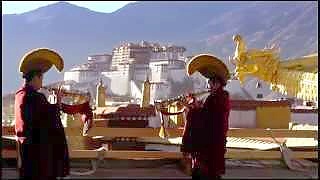
Lhasa, Tibet (西藏), China trip

[640],shadow=true,start=,stop=
[320],shadow=true,start=,stop=
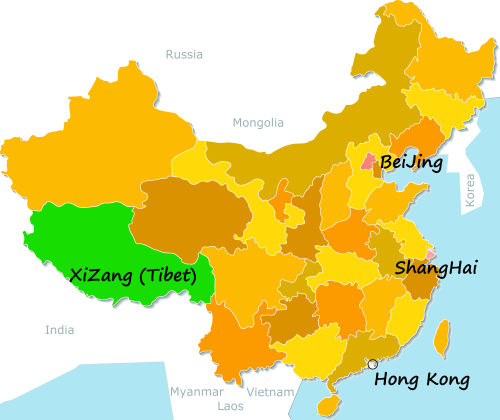
Tibet map

Related Videos


Featured Videos

Views of BeiJing 北京
A beautiful new film by David Lee ...
A tour of SuZhou 苏州, JiangSu province – video
SuZhou, an exquisite water town, lies on the banks of the YangTse river and next to TaiHu lake. SuZhou is 45 minutes from Shanghai by train. This film includes the classical gardens and the SuZhou Art Museum.
The JinShanLing 金山岭 to SiMaTai 司马台 Great Wall hike
The most thrilling and picturesque part of the Great Wall of China that's not far from BeiJing (120 kilometers).
GuangZhou’s new BaiYun high speed rail station
With Rafa Goes Around! ...
A guide to beautiful GuiZhou 贵州 province
GuiZhou is a mountainous province in south China, known for its awesome scenery, ancient rural villages and diverse ethnic cultures. GuiZhou borders SiChuan and ChongQing to the north, YunNan to the west, GuangXi to the south and HuNan to the east. The provincial capital is GuiYang. Many Chinese ethnic minorities have been living in this region for many centuries; these include the Miao, Yao, Yi, Qiang, Dong, Zhuang, BouYei, Bai, TuJia, GeLao and Sui.
Preserving the Great Wall of China
White radish 白萝卜 – growing, pickling and cooking
A mild-flavored winter radish usually characterized by fast-growing leaves and a long, white, napiform root. It is similar in appearance to fresh horseradish but packs a lighter peppery punch similar to watercress. Unlike other radishes, it is as good cooked as it is raw. A very beautiful film and culinary masterclass with LiZiQi 李子柒. Dishes include SiChuan pickles, NorthEast sauerkraut and several types of XianCai, salty side-dish, and SuanCai, sour cabbage, with spice and without. Similar to Korean kimchi - Korean is one of the 56 ethnic groups in China. Don't miss it ... Rimo Z : 0:23 Rapeseed flowers 2:50 White Radish 3:37 Carrot 4:31 Chinese Cabbage 6:03 Mustard, then dehydrate the vegetables 7:58 Smear chilli sauce 8:28 Sealed for 1 month 8:51 Pine leaves for smoking the meat (Bacon) 9:03 Orange or clementine 9:10 Pomelo on the tree 9:22 Start smoking the sausage and meat 9:30 Add the pomelo and orange peel to enrich the flavor 10:16 Add salt and chilli powder, start pickling the dehydrated radish and carrots 10:36 Dried fish 11:58 put the dried fish, sausage and meat (or bacon) for boiling before eating or further cooking, this step helps to clean the food and reduce the salt 12:47 stir fry with ginger and then start stewing with green onion and orange peel 13:34 Fermented pickle cabbage (non-spicy) 13:49 Fermented pickle cabbage (spicy) 14:06 Minced meat with oil, spice powder, green onions, soy sauce, ginger and 14:14 hot oil to increase the aroma 14:26 Chop the pickle Chinese cabbage 14:38 Mix the minced meat and pickled cabbage, start making dumplings 15:53 Cut the salted meat, stir fry with green onion and stew with the dried vegetables 15:52 Add spicy pickled cabbages 16:16 Add some hot oil on top of the pickle dishes to excite the fragrance 16:42 Cut the boiled sausage, salted meat etc. 17:49 Looks like rose tea 17:55 Just white congee 米老鼠 : Kimchi first appeared in the book of songs. It was interpreted as sauerkraut in China. Korean kimchi originated in the Tang Dynasty. Tang Dynasty general Xue Rengui was assigned to Korea (today's Korea) by the government to settle down in Korea. Many of his entourage were from Jiangbei County, Chongqing, who could make kimchi in his hometown. Since then, Chongqing kimchi has entered Korea. Several wars in Korea have brought this kind of dish into Korean civilian families. Kimchi went through several stages before it became the real Korean kimchi. The first stage is the Three Kingdoms period, when the pickled dishes or radish, cucumber, etc., introduced to South Korea after adding leeks and other fresh vegetables. In the second stage, in the Korean period, the production methods began to be enriched, and the raw materials were added to the base. The third stage is that cabbage has become the main raw material, which is what we eat now.
Going home …
A short story for the Chinese New Year. The Spring Festival is about a new year, a new beginning. A time of renewal, and hope and a fresh start, a time of good-will. For example, fireworks, apart from being a joy to all, are to scare away bad spirits. One can see this symbolize the breaking of old habits of thought - a spring clean of the mind. A new year is a new chance for a better life - if you will take it. Keep your eyes open, heart abundant, and strive for a better world. Help others on their journey whenever you can and always share a smile. It may help another, but it will certainly be good for you. Someday, even the mountains will be gone. But right now we are alive, and we can make a difference. When faced with bad-will, take it on the chin and return only affection. It might leave a seed for the future; at least, it will not get you down. As the film says, yes, it is love that brings us closer to happiness ... Above all, the Spring Festival is a time for family. And ultimately, we are all sisters and brothers breathing the same air ...
HuaWei – the truth
Nathan Rich lays it out ...

Tag search ?