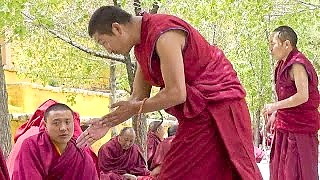
Extraordinary Journeys into Tibet 非凡之旅《进藏》

This outstanding, feature length documentary follows travelers taking six different routes to Tibet - via SiChuan, QingHai, XinJiang, YunNan and the Himalayas.

Very beautiful ...

[640],shadow=true,start=,stop=
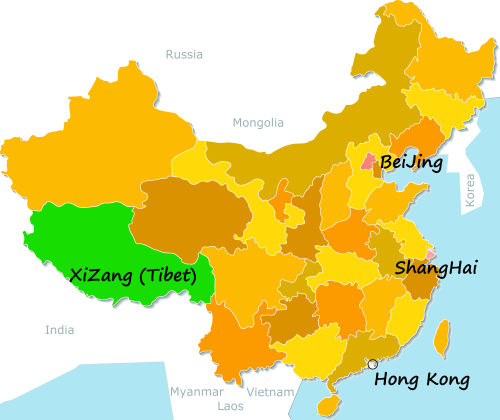
Tibet map

Related Videos


Featured Videos

ChengDu Plus
Provincial capital of SiChuan. Lacquer artist ... ChengDu TianFu airport ... 3 a.m. ...
Born billionaires – how to use our heartbeats wisely (don’t miss it)
With Mo Gawdat and Rangan Chatterjee ...
China 中国 in the snow …
Tropical Hainan Island to Harbin in China's north east The Harbin Snow and Ice Festival (every January) Beijing - the Forbidden City ZhangJiaJie HuangShan Snowboarding at NanShan, Beijing 'My Shangri-la - a trip through Yunnan province 'One can never forget LiJiang' - Yunnan province 'Beautiful snow county is my home' - HeiLongJiang province
Pandas !
The awesome ShenZhen Library North Branch
With Time Walker ... "Shenzhen Library North is one of the first major cultural facilities of the new era built and completed in Shenzhen. It has a construction area of ​​about 72,000 square meters, 6 floors above ground and 3 floors underground. It is designed to hold 8 million books and provide 2,500 seats. Its total investment is about 1.2 billion yuan. The library is positioned as a large-scale comprehensive and intelligent library integrating document collection, national reading, social education, ideological exchange, cultural inheritance and creative creation. It not only has the functions of a public library, but also serves as the city's document adjustment library and Shenzhen's "City of Libraries" joint editing center, network data center and document allocation center. The library has many special libraries and interactive learning spaces, and has the largest underground intelligent three-dimensional library in the country, equipped with advanced facilities such as large-scale rapid sorting system, vertical track access system and electronic seeding wall system. As of July 2024, Shenzhen Library North was officially opened on December 28, 2023. After the opening, 6,000 reservations will be available in the public service area and 2,000 reservations will be available in the children's area every day. Readers can submit a reservation for admission through the Shenzhen Library WeChat official account one day in advance, and present the reservation voucher to enter the venue after arriving at the library. The specific opening hours are from Tuesday to Sunday 9:00-21:00. The housekeeping is done on Mondays. The 1F Reading Hall is open from Monday to Sunday 7:00-23:00. Legal holidays will be notified separately. Location: Located at the intersection of Tenglong Road and Zhongmei Road in Longhua District. Transportation: • Subway: Take Line 4 or Line 6 to Hongshan Station and walk to the library in a few minutes. • Bus: There are many bus lines stopping nearby, such as [specify the specific bus number and stop]. Architectural Features: The exterior adopts a unique design similar to white fish scales, creating a visually stunning effect. The interior space is spacious, with a large atrium and elegant book walls. Opening hours: Open from 9:00 to 21:00 from Tuesday to Sunday. The 1F reading room is open from 7:00 to 23:00. Collection Features: The collection is rich and covers various fields and genres. There are rare and precious books, as well as newly published books to meet different interests. Exhibition Features: Regularly hold a variety of exhibitions, including art exhibitions, historical displays and cultural exhibitions, providing a rich visual and intellectual experience. When you visit: • Remember to make an appointment in advance through the Shenzhen Library WeChat official account. • Take your time to explore each floor and enjoy the peaceful reading atmosphere."
GuanDi Temple (Temple of Guan Yu), DaTong, ShanXi province
With Andy see the World ... Guandi Temple (关帝庙), commonly referred to as the Grand Temple, is dedicated to the worship of Guan Yu, a revered general from the Three Kingdoms period. Originally built during the Yuan Dynasty, the temple remarkably retains its original Yuan Dynasty hall, making it the only surviving Yuan Dynasty structure within the Datong Ancient City. The architectures in the scenic area include: Shanmen (Mountain Gate): The entrance to Guandi Temple is marked by the Shanmen, a three-bay wide structure with a suspended mountain-style roof. The gate is adorned with a couplet inscribed on it, reading “Loyalty to the Han dynasty in the three kingdoms, ambition in one book of Spring and Autumn,” which reflects the values and aspirations attributed to Guan Yu. Chongsheng Hall (Passing Hall): Inside the Chongsheng Hall, a majestic bronze statue of Guan Yu riding a horse dominates the space. Standing at 3.3 meters tall and weighing two tons, the statue exudes the heroic and commanding presence of Guan Yu as a military leader. Main Hall (Wusheng Hall): The Wusheng Hall is the central structure of the temple complex, notable for its single-eave nine-ridge roof covered with glittering glazed tiles. The interior of the hall features a three-bay shrine at the front, connected by two finely carved golden columns. The shrine includes intricate wooden niches designed in the style of ancient wooden structures, with detailed carvings and a double-eave hip-and-gable roof. The niches are adorned with decorative patterns, and the space is embellished with colored paintings and gold-plated elements, showcasing the exquisite craftsmanship of the Qing Dynasty. Jieyi Garden (Brotherhood Garden): Located in the west courtyard, Jieyi Garden houses the Jieyi Hall and the Wuhou Shrine. In spring, the garden comes alive with blossoming peach flowers, filling the air with a delightful fragrance. Guandi Temple (Temple of Guan Yu), Datong Guandi Temple, also known as the Temple of Guan Yu, is a historic and culturally significant site located in Datong, Shanxi province. Dedicated to Guan Yu, a legendary general from the Three Kingdoms period, the temple is a testament to his enduring legacy as a symbol of loyalty, righteousness, and bravery. Here’s a detailed guide to everything you need to know about this remarkable temple. History and Background The Guandi Temple in Datong dates back to the Yuan Dynasty (1271–1368), with subsequent renovations during the Ming (1368–1644) and Qing (1644–1912) dynasties. Guan Yu, the temple’s namesake, was a revered general during the Three Kingdoms period and later deified as a god of war and loyalty. The temple was built to honor his virtues and has since become a place of worship and cultural significance. Architecture and Layout The temple is a fine example of traditional Chinese temple architecture, featuring: Grand Hall (Main Hall): The central hall houses a large statue of Guan Yu, depicted in his iconic pose with a long beard and a guandao (a type of pole weapon). Stone Tablets: Inscriptions on stone tablets detail the history of the temple and the life of Guan Yu. Courtyards: The temple complex includes several courtyards, each with its own unique features, such as ancient trees and decorative carvings. Roof Decorations: The roofs are adorned with intricate glazed tiles and statues of mythical creatures, symbolizing protection and good fortune. Main Attractions Here’s a detailed look at the must-see spots within the Guandi Temple: 1. Statue of Guan Yu The centerpiece of the temple is the imposing statue of Guan Yu, which stands in the Grand Hall. The statue is crafted with meticulous detail, showcasing Guan Yu’s威严 (majestic presence) and his iconic weapon, the Green Dragon Crescent Blade. 2. Stone Tablets and Inscriptions Scattered throughout the temple, these tablets provide historical insights into Guan Yu’s life and the temple’s construction. Some inscriptions are written in ancient calligraphy, adding to the temple’s cultural value. 3. Ancient Trees The temple grounds are home to several ancient trees, some of which are hundreds of years old. These trees add to the serene and timeless atmosphere of the temple. 4. Decorative Carvings The temple features intricate wood and stone carvings, depicting scenes from Chinese mythology and Guan Yu’s legendary exploits. These carvings are a testament to the skill and artistry of ancient Chinese craftsmen. Cultural Significance Guandi Temple is not just a place of worship but also a cultural landmark that reflects the values of loyalty, righteousness, and bravery embodied by Guan Yu. Key cultural aspects include: Worship of Guan Yu: Guan Yu is worshipped as a god of war, loyalty, and righteousness, and is also considered a protector of businesses. Visitors often pray for success, protection, and good fortune. Festivals and Rituals: During important festivals, such as Guan Yu’s Birthday (24th day of the 6th lunar month), the temple hosts ceremonies and performances. These events attract devotees and tourists alike, creating a vibrant atmosphere. Symbolism: The temple’s architecture and artifacts are rich in symbolism, reflecting traditional Chinese beliefs and values. How to Get There Guandi Temple is located in the heart of Datong, making it easily accessible: By Public Transport: Take a local bus or taxi to the temple. It’s a short ride from Datong’s city center. By Car: If you’re driving, parking is available near the temple. Best Time to Visit Spring (April–June): Pleasant weather and blooming flowers make this an ideal time to visit. Autumn (September–October): Cool temperatures and clear skies provide perfect conditions for exploring. During Festivals: Visiting during Guan Yu’s Birthday or other festivals offers a unique cultural experience. Travel Tips Dress Modestly: As a place of worship, it’s respectful to dress modestly when visiting the temple. Respect Local Customs: Follow temple etiquette, such as not touching artifacts and maintaining a quiet demeanor. Hire a Guide: Consider hiring a local guide to gain deeper insights into the temple’s history and significance. Combine with Other Attractions: Datong is home to other famous sites like the Yungang Grottoes and Hanging Temple, so plan a combined itinerary. Why Visit Guandi Temple? Guandi Temple is a must-visit destination for: History Enthusiasts: Learn about Guan Yu’s legendary life and the temple’s rich history. Cultural Explorers: Experience traditional Chinese architecture, art, and religious practices. Spiritual Seekers: Pay homage to Guan Yu and seek blessings for loyalty, success, and protection. Whether you’re drawn by history, culture, or spirituality, Guandi Temple in Datong offers a fascinating and enriching experience.
A wonderful family trip through China 中国
A must see, beautiful film if you're thinking of traveling to China - one of the very best films of its type : great adventures, lovely family. Places visited include BeiJing, Xi'An, ZhangJiaJie, GuiLin, Hong Kong, HuaShan, the LongJi rice terraces, and more ...
Dream of Red Mansions – classical garden in NanJing, JiangSu province
Dream of the Red Chamber or The Story of the Stone is a Chinese novel composed by Cao XueQin in the mid-18th century. With Middle Kingdom Productions ... Bonus film - a Vertical Forest architecture in NanJing ...
Twenty cities aerial view
Shanghai Beijing Shenzhen Guangzhou Chongqing Suzhou Chengdu Hangzhou Wuhan Nanjing Tianjin Ningbo Qingdao Wuxi City Changsha Zhengzhou Nantong Foshan Quanzhou Hefei City

Tag search ?