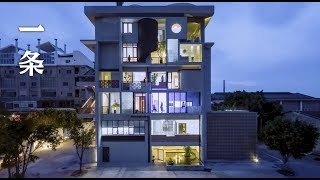
 Tree house apartment
An indoor garden lifestyle, in BeiJing ...
[640],shadow=true,start=,stop=Related Videos



Featured Videos
|
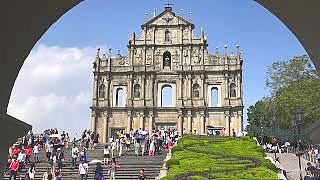
There is much more to beautiful Macau than casinos; there is also the historical legacy of Portuguese / Asian fusion ...
澳门 is actually ÀoMén ('Bay Gateway') in PinYin Chinese, but the Portugese name is most commonly used.
In the first beautiful film are the following locations :
In the video - the principal buildings and public spaces that form the Historic Center of Macau: A-Ma Temple (0:05), Lilau Square (0:39), Mandarin's House (0:50), St. Lawrence's Church (1:13), St. Joseph's Seminary and Church (1:36), Sir Robert Ho Tung Library (1:45), St. Augustine's Square (2:01), St. Augustine's Church (2:07), Dom Pedro V Theatre (2:17), Senado Square (2:35), Holy House of Mercy (2:42), 'Leal Senado' Building (3:12), Sam Kai Vui Kun (Kuan Tai Temple) (3:34), St. Dominic's Church (3:47), Cathedral (4:07), Lou Kau Mansion (4:12), Ruins of St. Paul's (4:29), Mount Fortress (5:01), Section of the Old City Walls (5:44), Na Tcha Temple (5:44), St. Anthony's Church (5:55), Casa Garden (6:06), Protestant Cemetery (6:20), Guia Fortress (including Lighthouse) (6:35).
|

|
Beautiful Natural Landscapes Tour of China
Week 1-2: Southwest China
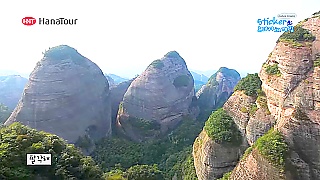
Explore the karst landscapes of Guilin and Yangshuo, including Li River cruises and bamboo rafting, GuangXi province.
Visit the terraced rice fields of Longji and ethnic minority villages, GuangXi province.
Explore the unique rock formations and caves of Zhangjiajie National Forest Park, HuNan province.
Week 3: Yunnan Province
Discover the diverse landscapes of Yunnan, including the UNESCO World Heritage Site of Three Parallel Rivers and the Dongchuan Red Land.
Visit the ancient town of Lijiang and hike Tiger Leaping Gorge.
Explore the picturesque scenery of Shangri-La and visit the Songzanlin Monastery.
Week 4: Tibet
Experience the stunning landscapes and cultural heritage of Tibet, including the Potala Palace and Jokhang Temple in Lhasa.
Visit Namtso Lake, one of the highest saltwater lakes in the world.
Explore the Everest Base Camp and hike in the Himalayas.
|
|
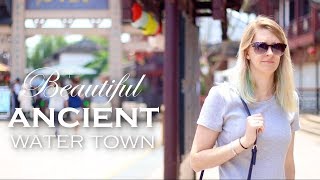
ZhouZhuang water town lies near to both SuZhou and ShangHai, in JiangSu province ...
|
|
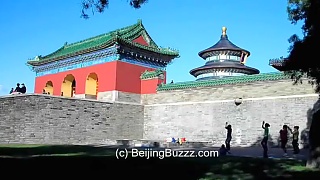
The magnificent Temple of Heaven (TianTan) was constructed between 1406 and 1420 (Ming dynasty) during the reign of the emperor YongLe who also oversaw the construction of the Forbidden City.The Temple of Heaven was where emperors of the Ming and Qing dynasties would offer sacrifices to heaven and pray for good harvests.
The temple complex was extended during the reign of emperor JiaJing during the 16th century (Ming dynasty). JiaJing also constructed three other key temples in Beijing : the Temple of the Sun in the east, the Temple of the Moon in the west, and the Temple of Earth in the north.
Emperor QianLong directed a renovation of the Temple of Heaven during the 18th century (Qing dynasty).
The architecture and layout of the Temple of Heaven is based on elaborate symbolism and numerology. One example is that the buildings and their settings reflect ancient Chinese religious beliefs that imagine heaven as round and earth as square.
Because the Temple of Heaven was to be the place representing Heaven on Earth, it needed to be larger than the Forbidden City; it covers approximately twice the area and is about 2 kilometers from north to south, the primary axis with three main structures; indeed, it is the largest group of constructions for worship in the world.
In 1998, the Temple of Heaven was added to the UNESCO World Heritage List. In early 2005, the Temple of Heaven underwent a 47 million yuan (6 million USD) renovation that was completed on May 1st, 2006.
The Temple of Heaven is a delightful place to spend some time. Arrive in the early morning to watch the Tai Chi experts, although the park is lively all day and into the evening with kite flyers, musicians, singers, dancers and games players (from badminton to Chinese chess).
|
|
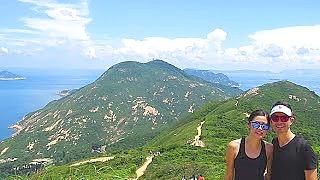
Including the Dragon's Backbone hike to Big Wave Bay.
A lovely film ...
A short bonus film - the view from Victoria Peak, by Francis So ...
|
|
|
ShàoXīng is a water-town not far from HangZhou.
The East Lake is situated six kilometers (four miles) to the east of the historic ShaoXing city. The exquisite crescent-shaped lake is hemmed in by a hill formed of bluestone, a material widely used in building houses, bridges and roads. Stoneworkers have quarried from this hill since the Han Dynasty (206 BC-220 AD) and over time the hill became hollowed out, leaving only steep cliffs, a deep pool and a number of grottoes. During the Qing Dynasty (1644 - 1911 AD), the lake was beautified with diverse bridges, pavilions and willow trees.
Bonus film - peach tree orchard in ShaoXing ...
|
|
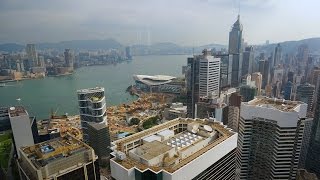
With a roof-top action camera ...
|

|
Dr Rangan Chatterjee talks with Jay Shetty ...
|