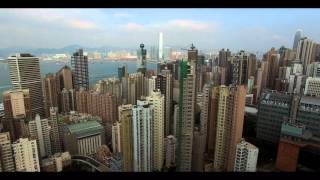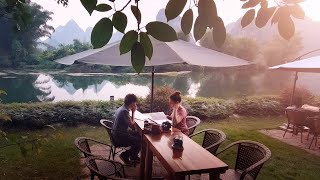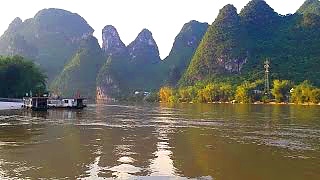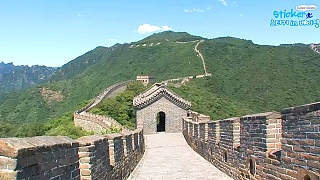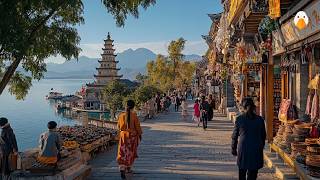
Around YangShuo 阳朔 and GuiLin 桂林, GuangXi province

With Sticker Travel ...


[640],shadow=true,start=28,stop=

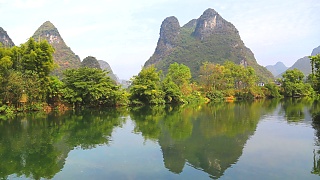
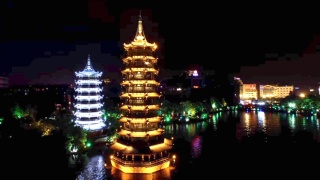
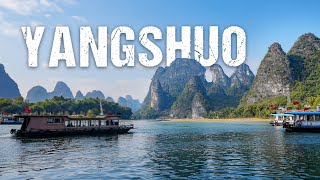
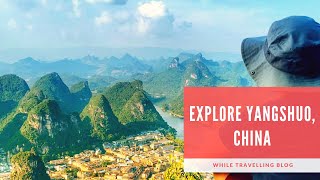
Yangshuo, situated in Guangxi Zhuang Autonomous Region in southern China, is renowned for its breathtaking karst landscapes, serene rivers, and vibrant local culture. Here's a guide for visitors to Yangshuo:

Natural Beauty:
Karst Mountains: Yangshuo is famous for its iconic karst mountains, which rise sharply from the surrounding plains, creating a dramatic and picturesque landscape. Visitors can explore these unique limestone formations by hiking, biking, or taking boat cruises along the Li River.

Li River: The Li River, one of China's most scenic waterways, meanders through the karst mountains of Yangshuo, offering stunning vistas at every turn. A leisurely boat cruise along the Li River is a must-do activity for visitors, providing opportunities to admire the breathtaking scenery and capture iconic views of the karst peaks reflected in the water.

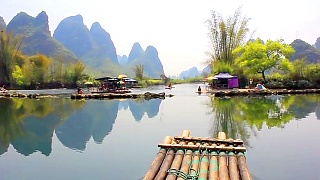
Yulong River: The Yulong River, a tributary of the Li River, is another picturesque waterway that flows through Yangshuo's countryside. Visitors can enjoy bamboo rafting or kayaking on the Yulong River, passing through idyllic villages, rice paddies, and bamboo groves along the way.

Outdoor Activities:
Cycling: Yangshuo is a cyclist's paradise, with scenic countryside roads and trails that wind through rice fields, orchards, and traditional villages. Renting a bicycle and exploring the surrounding countryside at a leisurely pace is a popular activity for visitors.

Rock Climbing: With its towering karst cliffs and limestone peaks, Yangshuo is a premier rock climbing destination in China. Experienced climbers and beginners alike can find suitable routes and climbing spots in the area, with options for guided tours and equipment rental available.

Cultural Experiences:
West Street: West Street (Xi Jie) is the main thoroughfare in Yangshuo's town center and a hub of activity for tourists and locals alike. Lined with shops, restaurants, cafes, and bars, West Street offers a vibrant atmosphere and is a great place to shop for souvenirs, sample local cuisine, and soak in the town's unique charm.

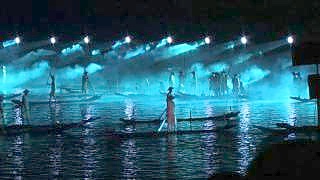
Impression Sanjie Liu: Directed by renowned filmmaker Zhang Yimou, Impression Sanjie Liu is a spectacular outdoor performance staged on the Li River. Featuring a cast of hundreds of performers, including local fishermen and farmers, the show combines music, dance, and light effects to showcase the natural beauty and cultural heritage of the area.

Practical Tips:
Weather: Yangshuo has a subtropical climate with mild winters and hot, humid summers. The best time to visit is during the spring (March to May) and autumn (September to November) when the weather is most pleasant and the landscapes are lush and green.

Accommodation: Yangshuo offers a range of accommodation options, including guesthouses, boutique hotels, and hostels catering to various budgets and preferences. Staying in the town center allows visitors to easily access attractions, restaurants, and transportation options.

Local Cuisine: Don't miss the opportunity to sample Yangshuo's delicious local cuisine, which includes specialties such as beer fish and Guilin rice noodles. Many restaurants in Yangshuo offer outdoor seating with panoramic views of the surrounding karst landscape.

Yangshuo's stunning natural scenery, outdoor activities, and vibrant cultural scene make it a popular destination for travelers seeking to explore the beauty of southern China. Whether cruising along the Li River, cycling through the countryside, or immersing oneself in the town's bustling street life, Yangshuo offers unforgettable experiences for visitors of all ages and interests.
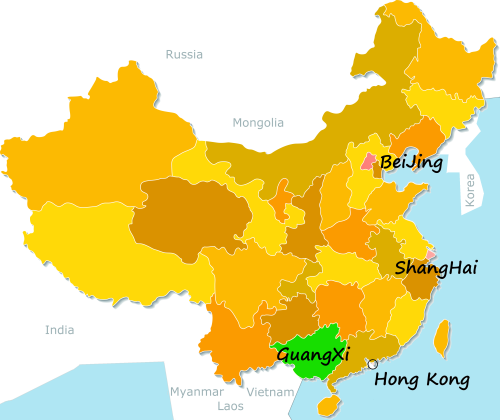
GuangXi map

Related Videos


Featured Videos

The awesome and beautiful JianKou wild Great Wall of China, BeiJing, by drone – Don’t Miss It
With Heretic1988 ... On the ongoing restoration efforts ... We do not recommend trying to hike here, because of the significant dangers involved, but enjoy the beautiful aerial film, and here's some information about the location. From the filmmaker : "Aerial photography of JianKou Great Wall, West Line-East Line (from Jiuyan Building in the west to Zhenbei Building in the east) is a complete record of all important nodes. It was like witnessing a miracle for the first time. The slender white lines of the white boulders whispered silently on the top of the towering peak, looking up at the huge city wall in front of them, and overlooking the steep curve that leaped up the ridge and spread endlessly, and the wind blew through the masonry. Passing through the gate of the enemy building, a piece of history pushes the dust under your feet to the legend of the ghostly craftsmanship on the mountain at the end of the line of sight, staggering forward, unable to tolerate half a moment of hesitation, faith is as strong as a rock, and it grows wildly between the cliffs, using humble courage to tighten Every stone crevice climbed cautiously, listening to a soul-stirring long song with a startled mind." Visitor Guide to JianKou Wild Great Wall of China, BeiJing Getting There Location: JianKou is a section of the Great Wall of China located in the Huairou District, about 73 kilometers north of BeiJing. By Public Transport: Take bus 916 or 936 from Dongzhimen Bus Station in BeiJing to Huairou, then transfer to a local minibus or hire a private car to Xizhazi Village, the starting point for hiking JianKou. By Car: If you prefer to drive, you can rent a car or hire a private car service from BeiJing. The drive takes about 2 hours. Hiking and Safety Tips Difficulty: The JianKou section is known for its steep and rugged terrain, making it suitable for experienced hikers. It is not recommended for beginners or those afraid of heights. Safety Gear: Wear sturdy hiking boots, and consider bringing gloves for climbing steep sections. A hiking stick can also be helpful. Weather: Check the weather forecast before your trip. Avoid hiking during rainy or snowy conditions, as the wall can become slippery and dangerous. Guides: Hiring a local guide is recommended for first-time visitors. Guides can provide valuable information about the trail and ensure your safety. Emergency Supplies: Carry plenty of water, snacks, a first-aid kit, and a fully charged mobile phone. There are no facilities along the trail. Main Attractions Notable Sections and Towers The "Zhengbeilou" Watchtower: One of the highest points on the JianKou section, offering panoramic views of the Great Wall snaking through the mountains. This is a popular spot for photography. The "Ox Horn Edge" (Niujiaobian): A dramatic and steep section of the wall that looks like the shape of an ox horn. It is challenging to climb but rewards hikers with spectacular views. The "Sky Stairs" (Tianti): A nearly vertical section of steps that test the courage and stamina of hikers. This is one of the most thrilling parts of the JianKou hike. Natural Scenery Mountain Views: The JianKou section offers stunning views of lush mountains and valleys, especially during spring and autumn when the foliage is at its most vibrant. Wildflowers: In spring, the hillsides are covered with wildflowers, adding a burst of color to the rugged landscape. Photography: JianKou is a favorite spot for photographers due to its dramatic scenery and the wild, unrestored state of the wall. Sunrise and sunset are particularly beautiful times for capturing photos. Nearby Attractions Mutianyu Great Wall: Located close to JianKou, the Mutianyu section is more restored and accessible, making it a good option for those who want a less strenuous hike. Beijing Huairou Scenic Area: Explore the scenic beauty of Huairou District, including rivers, mountains, and other historical sites. Dining and Accommodation While there are no dining facilities on the JianKou Great Wall itself, nearby villages and towns offer a variety of options: Local Restaurants: Enjoy traditional Chinese meals in local restaurants in Xizhazi Village and Huairou town. Dishes often feature fresh, locally sourced ingredients. Farm Stays: Experience rural life by staying in a local farmhouse. Many farm stays offer home-cooked meals and comfortable accommodations. Guesthouses: There are several guesthouses in the area, providing basic but comfortable lodging. Book in advance, especially during peak hiking seasons. Tips for Visitors Best Time to Visit: The best times to hike JianKou are spring (April to June) and autumn (September to November) when the weather is mild and the scenery is at its best. Permits and Restrictions: Check for any necessary permits or restrictions before your visit. Some areas of the wall may be closed for conservation or safety reasons. Leave No Trace: Help preserve the natural beauty and historical significance of JianKou by carrying out all your trash and minimizing your impact on the environment. Conclusion The JianKou Wild Great Wall of China offers an unforgettable hiking experience with its breathtaking scenery, challenging trails, and rich history. Whether you're an avid hiker or a history enthusiast, JianKou provides a unique and rewarding adventure in BeiJing. Plan your visit carefully, respect the natural and historical sites, and enjoy the beauty of this wild and stunning section of the Great Wall.
China – the threat of a good example
With Expat Adventuring in Asia ... "In this eye-opening video, we uncover the truth behind the growing tension between the United States and China. For years, the U.S. government has painted China as a looming enemy, a global threat that must be contained at all costs. But what if everything we’ve been told about China’s rise is a carefully constructed lie? Why is China seen as an enemy by the U.S. government? The answer is simpler than you think: China’s rise challenges the U.S. dominance — both economically and militarily. In this video, we expose the official U.S. policy that labels China as a threat not because of ideology or military aggression, but because China’s success threatens America’s role as the world's sole superpower. This policy — backed by years of documentation — is the core reason behind the U.S. narrative of China as the “enemy.” China’s peaceful rise versus U.S. domination. While the U.S. seeks to maintain global primacy and control, China has focused on development — building a massive economy, lifting over 800 million people out of poverty, and creating a modern, thriving nation through peaceful means. But the U.S. establishment is unwilling to accept that a country can prosper without following the West’s path. In this video, we reveal: • How U.S. foreign policy, dating back to the 1992 Defense Planning Guidance, explicitly states that any country, including China, that challenges U.S. dominance is labeled a threat. • The “primacy” doctrine and how it has shaped U.S. global strategies, including its ongoing campaign to undermine China’s rise. • The truth behind billions of dollars spent on anti-communist propaganda and “democracy promotion” to convince the world that China’s system is dangerous, despite its successes. • How the global power shift from unipolar to multipolar is already happening, and why the U.S. feels the need to hold onto a world that’s quickly evolving beyond its control. The reality that can’t be hidden Despite the constant anti-China rhetoric, China’s rise speaks for itself. The country’s GDP has grown from just $190 billion in 1980 to $18 trillion today, and it’s created the largest high-speed rail network in the world, alongside cutting-edge tech hubs and innovations that are reshaping the global economy. In contrast, the U.S. continues to face challenges at home, including income inequality, racial tensions, and a failing healthcare system. Yet, the U.S. media continues to promote the idea that China’s peaceful development is somehow a threat to the world. What the media doesn’t want you to know Behind the scenes, hundreds of millions of dollars have been funneled into think tanks, universities, and media outlets worldwide to shape global perceptions about China. We reveal how the Voice of America, National Endowment for Democracy (NED), and USAID fund anti-China narratives and distort the truth about China’s achievements. But no amount of money or propaganda can hide the undeniable truth: China’s success proves that a different system works. What does this mean for the future? As China continues to rise, the world is transitioning from a U.S.-dominated unipolar order to a multipolar world where countries cooperate, not compete. The future of global relations is changing, and China’s vision of cooperation is reshaping the way nations interact on the world stage. In this video, you’ll discover: • The hidden policies that fuel U.S. opposition to China. • How China’s peaceful rise is threatening the U.S. empire — not through war, but through smart, long-term development. • Why the real enemy isn’t China, but rather the U.S. control of global narratives and the unwillingness to share power with emerging nations. Why should you watch? • If you’re curious about the real reasons behind U.S.-China tensions, this video will give you answers based on facts, not propaganda. • If you want to understand global power dynamics and why China’s rise isn’t a threat but an opportunity for cooperation, this video is for you. • If you’ve ever wondered why the U.S. is so obsessed with maintaining global hegemony, this video will unveil the truth. 🔔 Don’t forget to subscribe for more deep dives into China’s rise, U.S. foreign policy, and the changing global order." In China, the people are king In the West, the people are livestock
ShangHai night walk – including seasonal lights
Bonus film - QingDao (a port city south east of BeiJing) ... Bonus film 2 - TianJin (a port city a little to the east of BeiJing) at Christmas ... Bonus film 3 - MiuMiu Guitar girl ...
A trip to the beautiful HuangShan 黄山 mountain
With rugged peaks soaring to over 1,800 meters, ancient pines and a myriad of breath-taking walkways, it is easy to see why HuangShan is perhaps the best known mountain area in China and famous in Chinese art and poetry. Filmed in July 2011, AnHui province.
China trip clips – LiJiang 丽江 and Tiger Leaping Gorge 虎跳峡
YunNan province.
Exploring JiNan, provincial capital city of ShanDong – night and day
With China Walking Tour ... Visitor Guide to JiNan, ShanDong Province Overview JiNan, the capital city of ShanDong Province, is known for its natural springs, rich history, and vibrant culture. Often referred to as the "City of Springs," JiNan is a blend of historical landmarks and modern development, making it a fascinating destination for travelers. Getting There By Air: JiNan Yaoqiang International Airport (TNA) is located about 33 kilometers northeast of the city center. It offers both domestic and international flights. You can take an airport shuttle bus, taxi, or the JiNan Metro to reach the city center. By Train: JiNan is a major railway hub with two main stations: JiNan Railway Station and JiNan West Railway Station. Both stations offer high-speed rail connections to major cities like BeiJing, ShangHai, and Xi’an. By Bus: Long-distance buses connect JiNan to various cities in ShanDong Province and beyond. The main bus stations are JiNan Long-Distance Bus Terminal and JiNan East Bus Station. Getting Around Public Transport: JiNan has an extensive bus network and a growing metro system. The metro is convenient for getting around the city quickly. Taxis: Taxis are readily available and relatively inexpensive. Ensure the driver uses the meter or agree on a fare beforehand. Biking: Bike-sharing services are popular and convenient for short trips around the city. Main Attractions Baotu Spring Park Baotu Spring Park is one of JiNan's most famous attractions, known for its clear and gushing springs. The park is a beautiful place to relax and enjoy the natural scenery, traditional pavilions, and cultural performances. Daming Lake Daming Lake is a large natural lake in the heart of JiNan, surrounded by lush gardens, ancient pavilions, and historic temples. It is a popular spot for boating, picnicking, and enjoying the serene environment. Thousand Buddha Mountain (Qianfo Shan) This mountain is famous for its ancient Buddhist statues and temples. Visitors can hike to the top for a panoramic view of the city or explore the many caves and carvings along the way. ShanDong Provincial Museum ShanDong Provincial Museum houses a vast collection of cultural relics, historical artifacts, and natural exhibits. It offers a comprehensive overview of ShanDong's history and culture. Black Tiger Spring Black Tiger Spring is another renowned spring in JiNan, known for its powerful jets of water that resemble a tiger's roar. The spring is located in a scenic park with beautiful landscaping and walking paths. Local Cuisine JiNan's cuisine is characterized by its use of fresh ingredients and traditional cooking techniques. Here are some must-try dishes: JiNan Roast Duck: A local specialty, this roast duck is known for its crispy skin and tender meat, served with pancakes and hoisin sauce. Sweet and Sour Carp: Fresh carp from Daming Lake, prepared in a tangy and sweet sauce, is a signature dish of JiNan. JiNan Noodles: These hand-pulled noodles are often served with a variety of toppings, including meat, vegetables, and spicy sauces. Fried Dumplings: Crispy on the outside and juicy on the inside, JiNan's fried dumplings are a popular street food. Shopping Furong Street: A bustling pedestrian street lined with shops, street food vendors, and souvenir stalls. It's a great place to try local snacks and buy traditional crafts. Quancheng Road: One of JiNan's main shopping streets, offering a mix of modern malls, boutique shops, and local markets. JiNan Wanda Plaza: A large shopping mall with a variety of international and domestic brands, restaurants, and entertainment options. Accommodation Luxury Hotels: For a high-end stay, consider hotels like the Shangri-La Hotel JiNan or the Hyatt Regency JiNan, both offering excellent amenities and service. Mid-Range Hotels: Options such as the Sofitel JiNan Silver Plaza and Holiday Inn JiNan City Center provide comfortable accommodations at reasonable prices. Budget Hotels: For budget travelers, hostels and budget hotels like the JiNan Blue Horizon Hotel offer affordable and convenient lodging. Tips for Visitors Best Time to Visit: The best times to visit JiNan are spring (April to June) and autumn (September to November) when the weather is mild and pleasant. Clothing: Wear comfortable walking shoes and dress in layers to accommodate changing temperatures. An umbrella or raincoat is useful during the rainy season. Respect Local Customs: Be respectful of local customs and traditions. Dress modestly and be mindful of local etiquette, especially when visiting historical and cultural sites. Language: While Mandarin is widely spoken, learning a few basic phrases or using a translation app can be very helpful. Plan Your Visit: JiNan is best explored at a leisurely pace. Take your time to wander through the parks, visit local shops, and enjoy the tranquil atmosphere. Conclusion JiNan, with its rich history, vibrant culture, and stunning natural springs, offers a unique and memorable travel experience. Whether you're exploring ancient temples, savoring the local cuisine, or strolling along the scenic lakes and springs, JiNan provides an unforgettable experience. Plan your visit carefully to make the most of your trip to this fascinating city in ShanDong Province.
SiChuan pepper
With ErMi ChuiYan ...
The Hong Kong flower show 香港花卉展 2018
With some nice Canto-pop. A film by Ben Cheung ...
China 中国 trip, BeiJing, ShangHai, Xi’An, GuiLin – don’t miss it
With MyWorldAt5feet ... Bonus film - diabolo around China ...

Tag search ?