Winter China trip – Beijing to the Harbin Ice Festival, 2015

Open roughly January and February every year (weather dependent); HeiLongJiang province, north East China. Nearest big city - Beijing.

[640],shadow=true,start=29,stop=

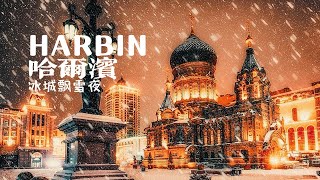
Harbin, located in the northeastern part of China's Heilongjiang province, is known for its bitterly cold winters, Russian-influenced architecture, and the world-famous Harbin International Ice and Snow Sculpture Festival. Here's a guide for tourists visiting Harbin:

Ice and Snow Sculpture Festival:
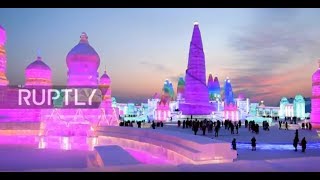
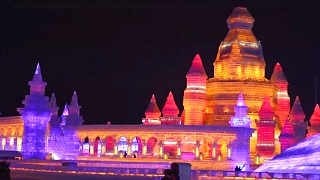
Harbin Ice and Snow World: This massive winter wonderland features elaborate ice and snow sculptures, illuminated by colorful lights. Visitors can marvel at ice castles, sculptures of famous landmarks, and intricate ice carvings.

Sun Island International Snow Sculpture Art Expo: Located on Sun Island in the Songhua River, this exhibition showcases large-scale snow sculptures created by artists from around the world.

Ice Lantern Festival: Held in Zhaolin Park, the Ice Lantern Festival features stunning ice lanterns, sculptures, and ice slides. Visitors can also enjoy cultural performances, fireworks, and traditional activities like ice fishing.

Russian Influence:
Central Avenue (Zhongyang Street): This pedestrian street is lined with European-style buildings dating back to the early 20th century, reflecting Harbin's history as a Russian trading outpost. Visitors can explore shops, cafes, and restaurants housed in these historic buildings.

St. Sophia Cathedral: This iconic landmark is one of the largest Orthodox churches in China. Built in the Russian Byzantine style, the cathedral now serves as a museum showcasing Harbin's multicultural history.

Cultural Attractions:
Harbin Confucian Temple: This ancient temple complex dates back to the Qing Dynasty and is dedicated to the philosopher Confucius. Visitors can explore traditional Chinese architecture, gardens, and historic artifacts.

Harbin Snow Sculpture Art Expo: Held in Sun Island Scenic Area during the winter months, this exhibition features intricate snow sculptures created by talented artists from around the world.

Modern Attractions:
Harbin Polarland: This theme park offers the opportunity to see a variety of Arctic animals up close, including polar bears, beluga whales, and Arctic foxes. Visitors can also enjoy animal performances and interactive exhibits.

Siberian Tiger Park: Located on the outskirts of Harbin, this wildlife park is home to over 500 Siberian tigers, as well as other exotic animals such as lions, leopards, and lynxes. Visitors can take guided tours and observe the animals from a safe distance.

Practical Tips:
Weather: Harbin experiences extremely cold winters, with temperatures often dropping below freezing. Visitors should dress warmly and be prepared for snow and icy conditions.

Transportation: Harbin has an extensive public transportation system, including buses and trams, as well as taxis and ride-hailing services. The city is also served by Harbin Taiping International Airport.

Language: Mandarin Chinese is the official language, but English may not be widely spoken outside of tourist areas. It's helpful to learn a few basic phrases or carry a translation app.

Harbin's unique blend of Russian and Chinese influences, coupled with its spectacular winter festivities, makes it a captivating destination for tourists. Whether you're marveling at ice sculptures, exploring historic landmarks, or experiencing the city's cultural heritage, Harbin offers a memorable and immersive travel experience.

Beijing, the capital city of China, is a vibrant metropolis steeped in history, culture, and modernity. Here's a brief overview of what you can expect as a tourist in Beijing:

Historical Landmarks:
The Great Wall of China: One of the most iconic structures in the world, the Great Wall is easily accessible from Beijing. Mutianyu and Badaling sections are popular among tourists.

Forbidden City (Palace Museum): A UNESCO World Heritage Site, this vast imperial palace complex was home to Chinese emperors for over 500 years. It houses numerous halls, courtyards, and historical artifacts.

Temple of Heaven: A masterpiece of Chinese architecture, this ancient temple complex served as a place of worship for emperors to pray for good harvests.

Summer Palace: A stunning ensemble of lakes, gardens, and palaces, the Summer Palace served as a retreat for emperors during the Qing dynasty.

Tiananmen Square: One of the largest city squares in the world, Tiananmen Square is flanked by important landmarks such as the Monument to the People's Heroes, the Great Hall of the People, and the Mausoleum of Mao Zedong.

Cultural Sites:
Beijing Hutongs: Explore the narrow alleyways and traditional courtyard residences of Beijing's historic neighborhoods. You can take a rickshaw tour or simply wander around on foot.

Beijing Opera: Experience traditional Chinese opera performances at venues like the Liyuan Theater or the Chang'an Grand Theatre.

798 Art District: A hub of contemporary art and culture, this former industrial area is now home to numerous galleries, studios, and cafes.

Modern Attractions:
Olympic Park: Visit iconic structures such as the Bird's Nest (National Stadium) and the Water Cube (National Aquatics Center) from the 2008 Beijing Olympics.

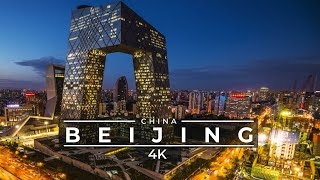
CBD (Central Business District): Marvel at the futuristic skyline of Beijing's modern business district, which includes landmarks like the CCTV Headquarters and the China World Trade Center Tower III.

Culinary Delights:
Peking Duck: Indulge in Beijing's most famous dish, crispy roast duck served with pancakes, scallions, and hoisin sauce.

Street Food: Explore the city's vibrant street food scene and sample local delicacies like jianbing (savory crepes), lamb skewers, and dumplings.

Practical Tips:
Transportation: Beijing has an extensive public transportation system, including the subway, buses, and taxis. However, traffic can be heavy, so plan your travels accordingly.

Language: While English is not widely spoken, especially outside tourist areas, many signs and transportation announcements are in English. It's helpful to carry a translation app or a phrasebook.

Weather: Beijing experiences four distinct seasons, with hot summers and cold winters. The best times to visit are spring (April to June) and autumn (September to October) when the weather is mild and comfortable.

Etiquette: Respect local customs and traditions, such as removing your shoes before entering someone's home and using both hands to pass or receive items.

Beijing offers a rich tapestry of experiences for tourists, blending ancient heritage with modern innovations. Whether you're fascinated by history, culture, or culinary delights, there's something for everyone in this dynamic city.
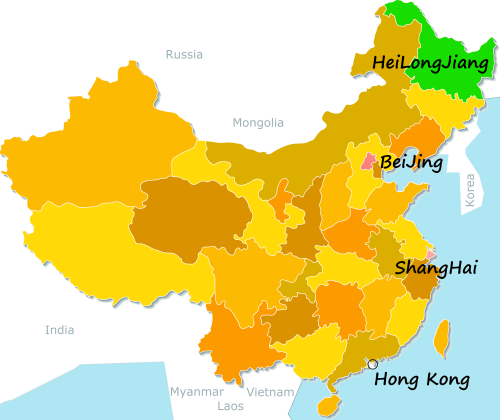

HeiLongJiang map

Related Videos


Featured Videos

A family trip to ZhuHai, GuangDong province
With Silberventures ... ZhuHai Travel Guide Overview Zhuhai, located in southern Guangdong province, is a coastal city known for its beautiful islands, relaxed atmosphere, and proximity to Macau. It is often called the "City of a Hundred Islands" and is famous for its clean air, well-planned urban layout, and charming seaside attractions. Top Attractions Zhuhai Fisher Girl Statue: The city’s iconic landmark, located at Xianglu Bay, representing beauty and romance. Chimelong Ocean Kingdom: One of the world’s largest ocean-themed parks with exciting rides, aquariums, and live animal shows. Dong'ao Island: A scenic island with crystal-clear waters, perfect for relaxation and water sports. Wailingding Island: A lesser-known but stunning island offering beautiful beaches and hiking trails. Lovers’ Road: A picturesque coastal promenade ideal for walking or cycling while enjoying sea views. New Yuanming Palace: A replica of Beijing’s Old Summer Palace, with classical Chinese gardens and cultural performances. Zhuhai Grand Theatre: A unique shell-shaped architectural masterpiece hosting various performances. Best Activities Island Hopping: Visit islands like Hebao Island and Dong'ao Island for beaches and snorkeling. Hot Springs: Relax in Imperial Hot Spring Resort for a rejuvenating experience. Seafood Dining: Enjoy fresh seafood at Wanzai Seafood Street. Macau Day Trip: Take a quick trip to Macau via the Hong Kong-Zhuhai-Macau Bridge. Shopping Gongbei Underground Shopping Mall: A great place for bargain shopping near the Macau border. Huafa Mall: A modern shopping center with international brands. Zhuhai Duty-Free Shops: Good for tax-free shopping on luxury goods. Local Cuisine Seafood: Try local specialties such as steamed crabs and salt-baked prawns. Yufu Noodles: A famous local noodle dish. Macanese Influence: Due to proximity to Macau, Macanese-style dishes are common. Getting Around Public Buses: Affordable and convenient for getting around the city. Taxis & Ride-Sharing: Widely available, though it helps to have your destination in Chinese. Bicycles & E-Scooters: Many areas are bike-friendly, especially along Lovers’ Road. Best Time to Visit Zhuhai has a subtropical climate, with mild winters and warm summers. The best time to visit is from October to April, when temperatures are comfortable and rainfall is low. Where to Stay Luxury: Chimelong Hengqin Bay Hotel, St. Regis Zhuhai. Mid-Range: Sheraton Zhuhai Hotel, Palm Spring Hotel. Budget: GreenTree Inn, 7 Days Inn.
On the Chinese Onion
With DianXi XiaoGe ... Bonus film - wasabi ... Bonus film - cherries ... Bonus film - taro flowers ...
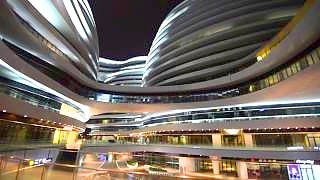
A trip to ‘The Place’, BeiJing 北京
The Place is a shopping and leisure center in the north of the CBD district. Take a late evening ride from GuoMao along the east 3rd ring; DaWang Lu to YongAnLi.
The magical scenery of GuangXi 广西 – from GuiLin 桂林 to YangShuo 阳朔
Sailing along the Li River and YuLong River, among beautiful karst mountain peaks ... Bonus films - starting with 'Let life be beautiful' ... Sung by Alu Azhou and the Mountain Wind Group 阿鲁阿卓, 山风组合 生如夏花. Inspired by Stray Birds by famous Indian poet Rabindranath Tagore, 1916 (生如夏花之绚烂,死如秋叶之静美 --飞鸟集, 泰戈尔, 1916). Lyrics and Music by PU Shu (朴树). "In this life, we can not stay so long ..." Plus, heading to the northern grasslands, Song of the Surging Water - title song of the 2015 movie Wolf Totem 汪峰 沧浪之歌(《狼图腾》主题曲). Sung by Wang Feng. Lyrics by WANG Feng (汪峰); music by Adam HUANG (HUANG Yong, 黄勇); with Alianuul (Morin Khuur solo) and NING FangLiang (violin solo). "I am broken, but I love flying ..." We are not here so long - let each day be full of love and beauty ...
Blue sky BeiJing 北京
[May 15th 2017] Heat-wave ahead ! Summer is hotting up in BeiJing this week - into the high 30s C (90s F in old money). Keep cool (keep hydrated), be cool (sensible, giving and creative), keep in touch (we love your feedback and input), and above all - love life (live more; BE love) ... Like our site ? - help us with a donation. Something to share ? - your own film or something you like - let us know ! To have and to be - huh ? The two big verbs - to have and to be ... Thinking through this seemingly abstract concept could change your life, for the better. Two very different ways to live; or rather - really live or not really live. To have is good, to a point; but can be a holding onto more than we really need, and a baggage of the past dragged into the future that prevents us living in the real now. For what we 'have' is not just physical stuff - it is also the clutter and beliefs in our mind. To be, is to live, free of the past and all that we 'have' (and 'know'). Live more ... be more ... Listen less (to others and beliefs), and look more (and think more, based on what is, not on what you have heard). Someone once said that to love is much better than to be loved; to give so much better than to receive (have); and so it is with to have and to be ... To be is the way. Everything taken, comes to an end. Everything given ripples through time for an eternity. To ask for nothing, and give all - that is love. To be, not to have. ~~~ You might like to read Erich Fromm's To Have or To Be, and The Art of Love, which also explore this concept, and is essentially what the Buddha told us. Easy read; concise and potent. Also good reading : Jiddhu Krishnamurthi - for example, Commentaries on Living (three easy read volumes), and Alan Watts - for example, The Way of Zen.
The awesome BeiHai Park 北海公园 in BeiJing
With MisterVaughn ... With ABingYOLO ... With Downtown China ... Welcome to BeiHai Park Explore the historical and cultural wonders of BeiHai Park in Beijing. Introduction Beihai Park is one of the oldest, largest, and best-preserved ancient imperial gardens in China. It is located in the heart of Beijing and offers visitors a beautiful blend of traditional Chinese architecture, gardens, and waterways. Location Beihai Park is situated in the Xicheng District of central Beijing, just north of the Forbidden City. History Beihai Park has a history of over 1,000 years, dating back to the Liao Dynasty. It was extensively renovated and expanded during the Jin, Yuan, Ming, and Qing dynasties, with significant contributions from Emperor Kublai Khan of the Yuan Dynasty. The park has served as an imperial garden and a place of worship for several Chinese dynasties. Attractions White Dagoba: An iconic white stupa located on Qionghua Island, built in 1651 to honor the visit of the 5th Dalai Lama to Beijing. Qionghua Island: The central island of Beihai Park, featuring beautiful pavilions, halls, and scenic views. Nine-Dragon Screen: A 27-meter-long, 6.65-meter-high glazed-tile wall depicting nine vivid dragons playing in the clouds, built in 1756. Five-Dragon Pavilions: A group of five connected pavilions overlooking the lake, perfect for relaxing and enjoying the scenery. Jade Flowery Islet: An islet with lush vegetation, bridges, and historical buildings, including the Hall of the Heavenly King. Yong'an Temple: A Buddhist temple on Qionghua Island, featuring stunning architecture and peaceful gardens. Round City: A small city within Beihai Park, surrounded by high walls and featuring the Chengguang Hall, which houses a large jade Buddha statue. Eastern Shore Area: Includes attractions like the Hao Pu Creek Garden and the Iron Screen Wall. Western Shore Area: Features the Pavilion of One Thousand Buddhas and the Garden of Tranquil Heart. Jingxin Studio Western Heaven Temple Fangshan Restaurant Activities Boating on Beihai Lake Strolling through the gardens Photography Visiting historical and cultural sites Enjoying traditional Chinese performances Participating in seasonal festivals and events Facilities Visitor Center Restrooms Gift Shops Cafes and Restaurants Parking Lots Boat Rental Services Guided Tour Services Visitor Tips Wear comfortable walking shoes. Bring water and snacks, especially if you plan to stay for several hours. Visit early in the morning or late in the afternoon to avoid crowds. Check the weather forecast and dress appropriately. Respect the cultural and historical significance of the site; behave appropriately and follow all rules and guidelines. Take advantage of the boat rental services to explore Beihai Lake from a unique perspective.
China and South-East Asia can rise together
With Angelo Giuliano and Brian Berletic / The New Atlas ... With Jeffrey Sachs ... Oliver Stone on JFK ... Glenn Greenwald talks with Vincent Bevins - the CIA, coups and dictatorships, 'anti-communism'. The threat of a good example - taking care of ALL the people - is a major motivation for a Western elite that desires to retain its extreme privilege ... Bonus film - with The Geopolitics In Conflict Show ... In China, the people are family. In The West, the people are livestock.
Beautiful China !
With Scenic Relaxation ... The beautiful natural landscapes of China Mountains Himalayas Location: Southwestern China, bordering Nepal and Bhutan. Highlights: Home to Mount Everest (Qomolangma), the world's highest peak, and numerous other towering peaks. The region is known for its dramatic landscapes, deep gorges, and rich cultural heritage. Yellow Mountain (HuangShan) Location: Anhui Province. Highlights: Famous for its granite peaks, hot springs, and ancient pine trees. The iconic sea of clouds and picturesque sunrises attract photographers and hikers. Zhangjiajie Location: Hunan Province. Highlights: Known for its towering sandstone pillars, lush forests, and deep ravines. The landscape inspired the floating mountains in the movie "Avatar." Rivers and Lakes Yangtze River Location: Flows from the Tibetan Plateau to the East China Sea. Highlights: The longest river in Asia, featuring the Three Gorges, which offer stunning cliffs, dense forests, and cultural sites along its banks. Li River Location: Guangxi Province. Highlights: Famous for its karst mountain scenery and crystal-clear waters. A boat cruise from Guilin to Yangshuo is a popular way to enjoy the breathtaking landscapes. Qinghai Lake Location: Qinghai Province. Highlights: The largest saltwater lake in China, surrounded by mountains and grasslands. It's a haven for birdwatchers and nature enthusiasts. Deserts and Plateaus Gobi Desert Location: Northern China and southern Mongolia. Highlights: Known for its vast, barren landscapes, sand dunes, and unique rock formations. The desert is rich in dinosaur fossils and ancient Silk Road sites. Tibetan Plateau Location: Southwestern China. Highlights: Often referred to as the "Roof of the World," it's the highest and largest plateau in the world. The region features expansive grasslands, glacial lakes, and the sacred Mount Kailash. Forests and Grasslands Jiuzhaigou Valley Location: Sichuan Province. Highlights: Known for its multi-colored lakes, waterfalls, and snow-capped peaks. The valley is a UNESCO World Heritage Site and a paradise for hikers and nature lovers. Hulunbuir Grassland Location: Inner Mongolia. Highlights: One of the most beautiful and well-preserved grasslands in China, known for its vast, rolling green plains, rivers, and traditional nomadic culture. Coastal and Island Landscapes Hainan Island Location: South China Sea. Highlights: Known for its tropical climate, sandy beaches, and clear blue waters. The island is a popular destination for beachgoers and water sports enthusiasts. Zhoushan Archipelago Location: Zhejiang Province. Highlights: Comprising over a thousand islands, it offers beautiful beaches, rocky coastlines, and traditional fishing villages. Caves and Karst Formations Reed Flute Cave Location: Guilin, Guangxi Province. Highlights: A natural limestone cave known for its stunning stalactites, stalagmites, and colorful lighting. Stone Forest (ShiLin) Location: Yunnan Province. Highlights: A UNESCO World Heritage Site, this area features towering limestone pillars that resemble a forest made of stone. Unique Natural Wonders Danxia Landform Location: Several provinces including Gansu, Guangdong, and Hunan. Highlights: Characterized by red sandstone formations and steep cliffs, the Danxia landscapes are known for their vibrant colors and unique rock shapes. Rainbow Mountains (Zhangye Danxia National Geological Park) Location: Gansu Province. Highlights: Famous for its colorful, layered rock formations that create a stunning "rainbow" effect across the mountains. Conclusion China's natural landscapes are incredibly varied and offer a wealth of experiences for travelers. From the towering peaks of the Himalayas to the serene waters of the Li River, and from the vast expanses of the Gobi Desert to the lush valleys of Jiuzhaigou, there is something for everyone to explore and admire. These diverse environments not only showcase the natural beauty of the country but also reflect its rich cultural heritage and deep connection to the land.
Discover ShanXi 山西 province ..
ShanXi province lies west / south west of BeiJing / HeBei. Best known places include PingYao, the YunGang Grottoes and JinCi Temple. ShanXi is packed with ancient Chinese culture.

Tag search ?