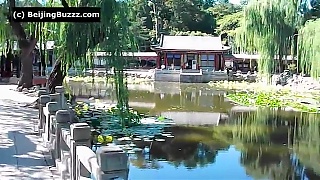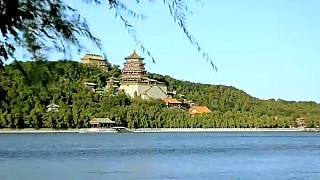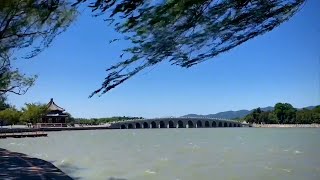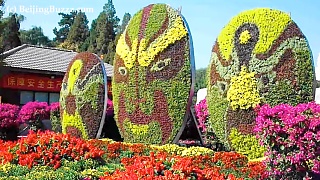
The beautiful Summer Palace 頤和園 in BeiJing (2)

Filmed in 2011 ...


[640],shadow=true,start=50,stop=261

Beijing, the capital city of China, is a vibrant metropolis steeped in history, culture, and modernity. Here's a brief overview of what you can expect as a tourist in Beijing:

Historical Landmarks:
The Great Wall of China: One of the most iconic structures in the world, the Great Wall is easily accessible from Beijing. Mutianyu and Badaling sections are popular among tourists.

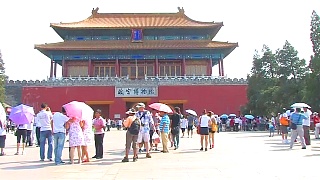
Forbidden City (Palace Museum): A UNESCO World Heritage Site, this vast imperial palace complex was home to Chinese emperors for over 500 years. It houses numerous halls, courtyards, and historical artifacts.

Temple of Heaven: A masterpiece of Chinese architecture, this ancient temple complex served as a place of worship for emperors to pray for good harvests.

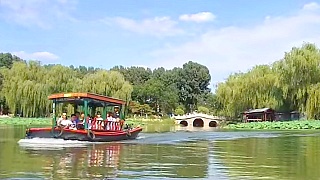
Summer Palace: A stunning ensemble of lakes, gardens, and palaces, the Summer Palace served as a retreat for emperors during the Qing dynasty.

Tiananmen Square: One of the largest city squares in the world, Tiananmen Square is flanked by important landmarks such as the Monument to the People's Heroes, the Great Hall of the People, and the Mausoleum of Mao Zedong.

Cultural Sites:
Beijing Hutongs: Explore the narrow alleyways and traditional courtyard residences of Beijing's historic neighborhoods. You can take a rickshaw tour or simply wander around on foot.

Beijing Opera: Experience traditional Chinese opera performances at venues like the Liyuan Theater or the Chang'an Grand Theatre.

798 Art District: A hub of contemporary art and culture, this former industrial area is now home to numerous galleries, studios, and cafes.

Modern Attractions:
Olympic Park: Visit iconic structures such as the Bird's Nest (National Stadium) and the Water Cube (National Aquatics Center) from the 2008 Beijing Olympics.

CBD (Central Business District): Marvel at the futuristic skyline of Beijing's modern business district, which includes landmarks like the CCTV Headquarters and the China World Trade Center Tower III.

Culinary Delights:
Peking Duck: Indulge in Beijing's most famous dish, crispy roast duck served with pancakes, scallions, and hoisin sauce.

Street Food: Explore the city's vibrant street food scene and sample local delicacies like jianbing (savory crepes), lamb skewers, and dumplings.

Practical Tips:
Transportation: Beijing has an extensive public transportation system, including the subway, buses, and taxis. However, traffic can be heavy, so plan your travels accordingly.

Language: While English is not widely spoken, especially outside tourist areas, many signs and transportation announcements are in English. It's helpful to carry a translation app or a phrasebook.

Weather: Beijing experiences four distinct seasons, with hot summers and cold winters. The best times to visit are spring (April to June) and autumn (September to October) when the weather is mild and comfortable.

Etiquette: Respect local customs and traditions, such as removing your shoes before entering someone's home and using both hands to pass or receive items.

Beijing offers a rich tapestry of experiences for tourists, blending ancient heritage with modern innovations. Whether you're fascinated by history, culture, or culinary delights, there's something for everyone in this dynamic city.

Related Videos


Featured Videos

Something different – great music – don’t miss it
Snow Patrol - 'Run' - acoustic cover - with Julia Westin and David MeShow - just awesome - connect your bestest amp - that celtic influence and those chord changes - wow! - gotta love this - soooo beautiful ... Bravo the sound engineers, as well as these two great artists; plus Snow Patrol, for creating this pure and poignant artwork. PLUS : 'Number 1' - with Touch & Go / Buddha Bar - there's something about the rhythm here that makes this special ...
Hong Kong 香港 through the seasons, in Ultra HD / 4K
A very beautiful timelapse film by Jeffrey Poon ...
LiWan Lake park – a relaxing morning in GuangZhou
With China Walking Tour ...
The ancient HuaYan, FaHua, HunYuan & ShanHua temples, DaTong, ShanXi province
With Andy see the World ... *** HuaYan Temple, located in DaTong, ShanXi province, is a magnificent example of Buddhist temple architecture and one of the best-preserved temples from the Liao and Jin dynasties. Its name, "Huayan," is derived from the Huayan Sutra, an important scripture in Chinese Buddhism, reflecting the temple's strong connection to the Huayan school of Buddhist thought. Key Features: Divided Structure: The temple is unique as it is divided into two parts: the Upper Temple and the Lower Temple. The Upper Temple, built on a hill, was primarily used for religious ceremonies, while the Lower Temple served as a residential and study area for monks. Grand Hall: The Great Buddha Hall in the Upper Temple is one of the largest remaining halls of its kind from the Liao dynasty. It features massive wooden beams, intricate carvings, and large Buddha statues that exude a sense of serenity. Murals and Sculptures: The temple is renowned for its well-preserved murals and Buddhist sculptures. These artworks depict scenes from Buddhist scriptures and stories, reflecting the artistic style and religious devotion of the era. Library of Sutras: The Lower Temple houses a library of Buddhist sutras, emphasizing the temple’s role as a center for learning and spiritual practice. Architectural Significance: The wooden structures of Huayan Temple showcase the advanced engineering and architectural techniques of ancient China. The use of dougong brackets (interlocking wooden brackets) is particularly impressive. Cultural Heritage: Huayan Temple is a testament to the flourishing of Buddhism in northern China during the Liao and Jin dynasties. It represents a blend of religious, artistic, and architectural achievements. Atmosphere: Visitors often find the temple serene and spiritually uplifting, with its quiet courtyards, ancient trees, and the scent of incense enhancing the experience. It is not just a historical site but also an active place of worship. Huayan Temple remains a significant cultural and spiritual landmark, drawing visitors and scholars from around the world to explore its beauty and historical importance. *** Shanhua Temple, located in Datong, Shanxi Province, is a stunning example of Chinese Buddhist architecture and history. Originally constructed during the Tang Dynasty, the temple has been preserved and renovated over the centuries, with its current structures mainly dating back to the Liao and Jin Dynasties. The temple complex is composed of three main halls arranged along a north-south axis: the Main Gate Hall, the Mahavira Hall, and the Sansheng Hall. These halls are surrounded by peaceful courtyards, ancient trees, and stone pathways, creating a serene environment for visitors. The Mahavira Hall is the centerpiece of the temple, housing large statues of the Buddha and bodhisattvas. The craftsmanship of these statues reflects the artistic style of the Liao Dynasty, with intricate details and vibrant colors. The Sansheng Hall, dedicated to the Three Saints of Hua-yen Buddhism, also contains exquisite statues and murals that are valuable cultural relics. One of the temple's unique features is its collection of wooden structures, which have survived numerous dynasties and demonstrate the sophisticated construction techniques of ancient Chinese architecture. The intricate carvings, painted beams, and symbolic motifs throughout the temple showcase the skill of artisans from different eras. Visitors to Shanhua Temple can also enjoy the surrounding scenery, as the temple is situated near other historical sites in Datong, such as the Nine-Dragon Wall and the Yungang Grottoes. Its peaceful ambiance and historical significance make it a must-visit destination for those exploring China's rich cultural heritage. *** The HunYuan Confucian Temple, located in Hunyuan County near Datong, Shanxi Province, is an important historical and cultural site dedicated to the teachings of Confucius. Known for its elegant architecture and serene atmosphere, the temple reflects the Confucian emphasis on education, morality, and respect for tradition. Originally built during the Yuan Dynasty, the temple has undergone several renovations and expansions over the centuries, with many of its current structures dating back to the Ming and Qing Dynasties. The layout of the temple follows traditional Confucian principles, with symmetrical courtyards and a central axis leading to the main halls. The temple complex includes several key structures, such as the Dacheng Hall, the Gate of Rites, and the Hall of Confucius’ Tablets. The Dacheng Hall, the centerpiece of the temple, houses a statue of Confucius and tablets honoring his disciples and other influential scholars. Its wooden beams and intricate carvings are a testament to the craftsmanship of ancient Chinese builders. The temple grounds are adorned with ancient cypress trees, stone tablets, and inscriptions that highlight the enduring legacy of Confucianism in Chinese culture. These elements create a tranquil environment for visitors, providing a space for reflection and appreciation of traditional values. Hunyuan Confucian Temple is not only a place of historical significance but also a symbol of the enduring influence of Confucian thought in shaping Chinese society. Its proximity to other attractions in the area, such as the Hanging Temple, makes it an excellent addition to any itinerary for visitors exploring the region. *** The Fahua Temple, located in Datong, Shanxi Province, is a historic Buddhist temple with a serene atmosphere and a rich cultural heritage. Known for its traditional Chinese architecture and intricate details, the temple provides a glimpse into the spiritual and artistic traditions of ancient China. Originally built during the Ming Dynasty, Fahua Temple has undergone renovations over the centuries, preserving its historic charm while maintaining its religious significance. The temple is dedicated to Buddhist teachings and serves as a place of worship, meditation, and cultural reflection. The layout of the temple includes several key structures, such as the main hall, bell tower, and various smaller pavilions. The main hall is adorned with statues of the Buddha and Bodhisattvas, as well as colorful murals that depict scenes from Buddhist scriptures. The bell tower houses an ancient bronze bell that is said to bring blessings and peace to those who hear its chime. The temple grounds are quiet and peaceful, with pathways lined by trees and flowers that enhance the meditative experience. Stone carvings and inscriptions throughout the temple complex reflect the devotion and artistic skills of past generations. Visitors often find the setting conducive to quiet reflection and spiritual exploration. Fahua Temple is an important cultural and religious site in Datong, offering visitors a chance to connect with Buddhist traditions and admire the craftsmanship of Chinese temple architecture. Its tranquil environment makes it a worthwhile stop for those seeking a deeper understanding of the region’s history and spiritual legacy.
Beautiful SiMaTai Great Wall and the nearby GuBei water-town
SiMaTai Great Wall lies about 159 kilometers NNE from BeiJing city and connects with JinShanLing Great Wall.
New York Times’ Hong Kong Propaganda
Apart from a very few fair and independent news outlets, such as GlobalResearch.ca and rt.com/usa/ (though both these have some BS now and then), this is true of all MSM in the West. Nathan Rich breaks it down ...
MoGao Grottoes and DunHuang night market tour
GanSu's UNESCO World Heritage Site ...
Tiger Leaping Gorge hiking trek, YunNan province
With JHMedium ... Welcome to Tiger Leaping Gorge Explore one of the deepest gorges in the world About Tiger Leaping Gorge Tiger Leaping Gorge, located in Yunnan province, China, is one of the deepest and most spectacular river canyons in the world. It lies between Jade Dragon Snow Mountain and Haba Snow Mountain, with a maximum depth of approximately 3,790 meters (12,434 feet). The gorge is part of the Three Parallel Rivers of Yunnan Protected Areas, a UNESCO World Heritage Site. Hiking Trails High Trail The High Trail is the most popular route for hikers. It offers stunning views of the gorge and the surrounding mountains. The trail takes 2-3 days to complete and passes through various guesthouses and small villages. Lower Trail The Lower Trail follows the Jinsha River and provides an up-close experience with the river and the sheer cliffs. This trail is less challenging and can be done in a single day. Middle Gorge The Middle Gorge trail is a more adventurous option, featuring steep descents to the river and opportunities to get close to the Tiger Leaping Stone, where legend has it a tiger leaped across the gorge. Famous Guesthouses Jane's Guesthouse Located at the trailhead in Qiaotou, Jane's Guesthouse is a popular starting point for hikers. It offers basic accommodation, meals, and information about the trails. Tea Horse Guesthouse Situated along the High Trail, Tea Horse Guesthouse provides comfortable rooms and excellent views of the mountains. It's a great spot for an overnight stay. Halfway Guesthouse Halfway Guesthouse is known for its stunning panoramic views of the gorge. It is roughly halfway along the High Trail, making it a convenient stop for hikers. Tina's Guesthouse Located near the end of the High Trail, Tina's Guesthouse is a popular place to stay before heading to the Middle Gorge. It offers good food and comfortable accommodation. Transport Tiger Leaping Gorge is accessible from major cities in Yunnan province. Here are some ways to get there: From Lijiang: Buses and private transfers are available from Lijiang to Qiaotou, the starting point of the gorge. The journey takes about 2-3 hours. From Shangri-La: There are regular buses from Shangri-La to Qiaotou, taking approximately 4 hours. Private transfers are also an option. By Car: If you prefer driving, you can rent a car and drive from Lijiang or Shangri-La to Qiaotou. The roads are well-maintained, and the drive offers scenic views.
A walk through Nan Lian Garden 南莲园 in Hong Kong
Nán Lián Yuán is a fine and beautiful example of Chinese garden arts ...

Tag search ?