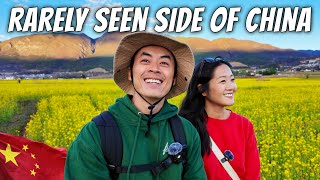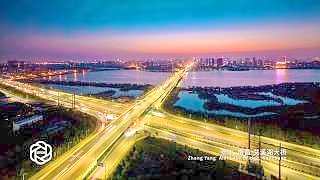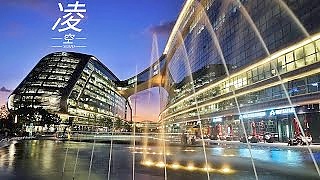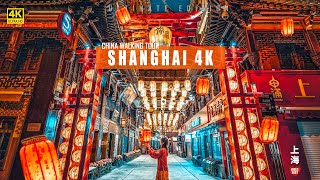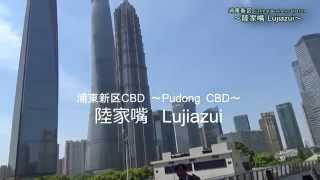
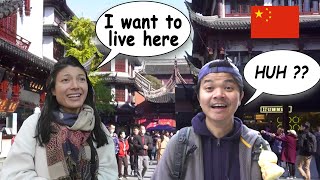
First time in ShangHai

With Flora and Note ...

[640],shadow=true,start=,stop=

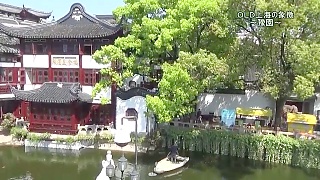
Bonus films - A weekend in ShangHai : with luisa reus ...

[320],shadow=true,start=,stop=

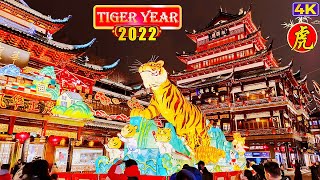
Spring Festival in YuYuan, ShangHai : with Zina ...

[320],shadow=true,start=,stop=

Shanghai is one of China's most dynamic and cosmopolitan cities, blending a rich history with modern skyscrapers and vibrant culture. Here's what you need to know as a tourist visiting Shanghai:

Historical and Cultural Landmarks:
The Bund: This iconic waterfront promenade along the Huangpu River features colonial-era buildings on one side and futuristic skyscrapers on the other, offering stunning views of Shanghai's skyline.

Yu Garden: Dating back to the Ming dynasty, Yu Garden is a classical Chinese garden with pavilions, ponds, and rockeries. The nearby Yu Garden Bazaar is a great place to shop for souvenirs and traditional crafts.

Shanghai Museum: Home to an extensive collection of Chinese art and artifacts, including bronzes, ceramics, paintings, and calligraphy, the Shanghai Museum is a must-visit for history and art enthusiasts.

Jing'an Temple: One of Shanghai's most famous Buddhist temples, Jing'an Temple is known for its beautiful architecture, peaceful atmosphere, and towering golden Buddha statue.

Modern Attractions:
Shanghai Tower: Ascend to the observation deck of this iconic skyscraper, the tallest in China and the second-tallest in the world, for panoramic views of the city.

The Oriental Pearl TV Tower: Another iconic landmark, this futuristic tower offers observation decks, a glass-bottomed skywalk, and a revolving restaurant.

Shanghai Disneyland: Located in the Pudong district, Shanghai Disneyland offers a magical experience for visitors of all ages with its themed lands, attractions, and entertainment.

Shopping and Entertainment:
Nanjing Road: One of the world's busiest shopping streets, Nanjing Road is lined with department stores, boutiques, and restaurants. Don't miss the nearby pedestrian-friendly Nanjing Road East, known for its lively atmosphere and street performers.

Xintiandi: This upscale shopping, dining, and entertainment district features a mix of traditional Shikumen-style buildings and modern amenities, making it a popular destination for locals and tourists alike.

French Concession: Explore this historic neighborhood known for its tree-lined streets, charming cafes, boutiques, and art galleries.

Culinary Delights:
Shanghai Cuisine: Sample local specialties such as xiaolongbao (soup dumplings), shengjianbao (pan-fried dumplings), and Shanghai-style noodles.

Street Food: Wander through the city's bustling food markets and snack streets to taste a variety of street foods, from savory pancakes to grilled skewers.

Practical Tips:
Transportation: Shanghai has an efficient public transportation system, including the subway, buses, and taxis. Consider purchasing a rechargeable transportation card for convenience.

Language: While Mandarin is the official language, English is widely spoken in tourist areas, hotels, and restaurants.

Weather: Shanghai experiences four distinct seasons, with hot, humid summers and chilly winters. The best times to visit are spring (March to May) and autumn (September to November) when the weather is mild and comfortable.

Etiquette: Respect local customs and traditions, such as using polite language and avoiding loud behavior in public places.

Shanghai offers a captivating blend of old and new, with its historic landmarks, modern skyscrapers, vibrant culture, and delectable cuisine. Whether you're interested in history, architecture, shopping, or dining, Shanghai has something to offer every type of visitor.

Related Videos


Featured Videos

GuanDi Temple (Temple of Guan Yu), DaTong, ShanXi province
With Andy see the World ... Guandi Temple (关帝庙), commonly referred to as the Grand Temple, is dedicated to the worship of Guan Yu, a revered general from the Three Kingdoms period. Originally built during the Yuan Dynasty, the temple remarkably retains its original Yuan Dynasty hall, making it the only surviving Yuan Dynasty structure within the Datong Ancient City. The architectures in the scenic area include: Shanmen (Mountain Gate): The entrance to Guandi Temple is marked by the Shanmen, a three-bay wide structure with a suspended mountain-style roof. The gate is adorned with a couplet inscribed on it, reading “Loyalty to the Han dynasty in the three kingdoms, ambition in one book of Spring and Autumn,” which reflects the values and aspirations attributed to Guan Yu. Chongsheng Hall (Passing Hall): Inside the Chongsheng Hall, a majestic bronze statue of Guan Yu riding a horse dominates the space. Standing at 3.3 meters tall and weighing two tons, the statue exudes the heroic and commanding presence of Guan Yu as a military leader. Main Hall (Wusheng Hall): The Wusheng Hall is the central structure of the temple complex, notable for its single-eave nine-ridge roof covered with glittering glazed tiles. The interior of the hall features a three-bay shrine at the front, connected by two finely carved golden columns. The shrine includes intricate wooden niches designed in the style of ancient wooden structures, with detailed carvings and a double-eave hip-and-gable roof. The niches are adorned with decorative patterns, and the space is embellished with colored paintings and gold-plated elements, showcasing the exquisite craftsmanship of the Qing Dynasty. Jieyi Garden (Brotherhood Garden): Located in the west courtyard, Jieyi Garden houses the Jieyi Hall and the Wuhou Shrine. In spring, the garden comes alive with blossoming peach flowers, filling the air with a delightful fragrance. Guandi Temple (Temple of Guan Yu), Datong Guandi Temple, also known as the Temple of Guan Yu, is a historic and culturally significant site located in Datong, Shanxi province. Dedicated to Guan Yu, a legendary general from the Three Kingdoms period, the temple is a testament to his enduring legacy as a symbol of loyalty, righteousness, and bravery. Here’s a detailed guide to everything you need to know about this remarkable temple. History and Background The Guandi Temple in Datong dates back to the Yuan Dynasty (1271–1368), with subsequent renovations during the Ming (1368–1644) and Qing (1644–1912) dynasties. Guan Yu, the temple’s namesake, was a revered general during the Three Kingdoms period and later deified as a god of war and loyalty. The temple was built to honor his virtues and has since become a place of worship and cultural significance. Architecture and Layout The temple is a fine example of traditional Chinese temple architecture, featuring: Grand Hall (Main Hall): The central hall houses a large statue of Guan Yu, depicted in his iconic pose with a long beard and a guandao (a type of pole weapon). Stone Tablets: Inscriptions on stone tablets detail the history of the temple and the life of Guan Yu. Courtyards: The temple complex includes several courtyards, each with its own unique features, such as ancient trees and decorative carvings. Roof Decorations: The roofs are adorned with intricate glazed tiles and statues of mythical creatures, symbolizing protection and good fortune. Main Attractions Here’s a detailed look at the must-see spots within the Guandi Temple: 1. Statue of Guan Yu The centerpiece of the temple is the imposing statue of Guan Yu, which stands in the Grand Hall. The statue is crafted with meticulous detail, showcasing Guan Yu’s威严 (majestic presence) and his iconic weapon, the Green Dragon Crescent Blade. 2. Stone Tablets and Inscriptions Scattered throughout the temple, these tablets provide historical insights into Guan Yu’s life and the temple’s construction. Some inscriptions are written in ancient calligraphy, adding to the temple’s cultural value. 3. Ancient Trees The temple grounds are home to several ancient trees, some of which are hundreds of years old. These trees add to the serene and timeless atmosphere of the temple. 4. Decorative Carvings The temple features intricate wood and stone carvings, depicting scenes from Chinese mythology and Guan Yu’s legendary exploits. These carvings are a testament to the skill and artistry of ancient Chinese craftsmen. Cultural Significance Guandi Temple is not just a place of worship but also a cultural landmark that reflects the values of loyalty, righteousness, and bravery embodied by Guan Yu. Key cultural aspects include: Worship of Guan Yu: Guan Yu is worshipped as a god of war, loyalty, and righteousness, and is also considered a protector of businesses. Visitors often pray for success, protection, and good fortune. Festivals and Rituals: During important festivals, such as Guan Yu’s Birthday (24th day of the 6th lunar month), the temple hosts ceremonies and performances. These events attract devotees and tourists alike, creating a vibrant atmosphere. Symbolism: The temple’s architecture and artifacts are rich in symbolism, reflecting traditional Chinese beliefs and values. How to Get There Guandi Temple is located in the heart of Datong, making it easily accessible: By Public Transport: Take a local bus or taxi to the temple. It’s a short ride from Datong’s city center. By Car: If you’re driving, parking is available near the temple. Best Time to Visit Spring (April–June): Pleasant weather and blooming flowers make this an ideal time to visit. Autumn (September–October): Cool temperatures and clear skies provide perfect conditions for exploring. During Festivals: Visiting during Guan Yu’s Birthday or other festivals offers a unique cultural experience. Travel Tips Dress Modestly: As a place of worship, it’s respectful to dress modestly when visiting the temple. Respect Local Customs: Follow temple etiquette, such as not touching artifacts and maintaining a quiet demeanor. Hire a Guide: Consider hiring a local guide to gain deeper insights into the temple’s history and significance. Combine with Other Attractions: Datong is home to other famous sites like the Yungang Grottoes and Hanging Temple, so plan a combined itinerary. Why Visit Guandi Temple? Guandi Temple is a must-visit destination for: History Enthusiasts: Learn about Guan Yu’s legendary life and the temple’s rich history. Cultural Explorers: Experience traditional Chinese architecture, art, and religious practices. Spiritual Seekers: Pay homage to Guan Yu and seek blessings for loyalty, success, and protection. Whether you’re drawn by history, culture, or spirituality, Guandi Temple in Datong offers a fascinating and enriching experience.
Why is Western media so biased against China ?
With Cyrus Janssen ... Comment by Gustavo Andrés ... There is an overwhelming assumption in the West that China’s Achilles heel is the state: that it lacks legitimacy. This is the underlying reason why Westerners believe that China’s transformation is unsustainable: that the political system cannot survive. It would be wrong to suggest that attitudes have not shifted: the endurance of the reform period, now over 35 years old, and the scale of its achievement have bred a growing if still grudging respect, and a less apocalyptic view of Chinese political change. Few now regard it to be imminent and many have extended their time horizons somewhat into the future. Nevertheless, most Westerners still regard China’s present political order as lacking legitimacy and as ultimately unsustainable. In the post 1945 period, Westerners have come to believe that Western-style democracy – essentially universal suffrage and a multi-party system – is more or less the sole source of a government’s legitimacy. This is a superficial and ahistorical position. Western-style democracy does not ensure the legitimacy of a regime in the eyes of its people: Italy is perhaps the classic example, with successive governments over a long historical period experiencing a chronic lack of legitimacy. And what of China? Although it does not have Western-style democracy, there is plenty of evidence – for example the Pew Global Attitude surveys and the work of Tony Saich at the Harvard Kennedy School – that the Chinese government enjoys high levels of support and legitimacy, much higher indeed than those of Western governments. How do we explain this? Clearly the reason is not Western-style democracy because China has not chosen this path. The late Lucian W. Pye, in his book ‘Asian Power and Politics’, argues that Western scholars have, in their understanding of politics, prioritised political systems over political cultures: Pye argues, correctly in my view, that the opposite is the case. His insight is highly relevant to the Chinese case. The relationship between the state and society in China is very different from that which characterises Western societies. There are three key elements. First, China is primarily a civilization-state rather than a nation-state, with the overriding and extremely difficult age-old task of government being to maintain the unity of China and its civilization. This has lent the state an enduring authority, importance and centrality in China that is very different from the Western nation-state tradition. The state is intrinsic to China in a way that this is not true in Western societies: they are, in effect, in large degree synonymous. Furthermore the Chinese regard the state in some degree as an expression and extension of themselves. Second, whereas in Western societies the state is seen in an instrumentalist and utilitarian way – in other words, what will it do for me? – in China, following from the Confucian tradition and the idea that the Emperor should model himself on the father’s role as the head of the family, the state is perceived in a familial way, whence the expression ‘nation-family’, or the idea of China as an extended family. Or, to put it another way, in Western societies the state is viewed as an external and somewhat artificial construct, for the Chinese it is an intimate. Third, a much higher premium is placed on the efficiency and efficacy of the state than in the West, whence the importance of meritocracy in the recruitment of public servants. In the West, discussion about the state largely revolves around the manner by which the government is selected, in China, by way of contrast, the competence of the state assumes priority. Fourthly, following from the previous point, the state is expected and required to deliver in China. Over the last few decades, of course, it has presided over and masterminded a huge transformation, the most remarkable in modern economic history. The contrast between the performance of the Chinese and Western economies is manifest. In summary, the relationship between the state and society in China and the West is profoundly different and the reasons lie in the historical and cultural differences between them. They can and should learn from each other but they will remain distinct. So what of the future? As I mentioned at the outset, it is axiomatic in the West that sooner or later China will face a crisis of governance that will result in profound reform along Western lines. In reality, it seems far more likely that the crisis of governance will occur in the West than China. The United States and Europe are in decline and, as a consequence, their ruling elites and political systems are already suffering from declining legitimacy and authority, a process that is likely to continue. China, in contrast, is a rising power whose ruling elite is likely to enjoy growing status and prestige as a consequence. China, though, faces its own kind of governance challenge. The country is changing at extraordinary speed. If one thinks of how the life of an ordinary person has changed over the course of the last three decades, then this is a measure of how everything else, including political rule, must also change in order to survive. Of course, transparency, representivity and accountability have been transformed since Mao’s death, but this is a dynamic process and arguably the greatest changes still lie in the future. It is not that China needs to or should change its system – it has stood the test of time and managed to stay abreast of and lead the wider transformations – but, this notwithstanding, more profound ways must be found to modernise the political system and its institutions if they are to meet the demands and expectations of a very different society.
GuangZhou tram, HuangPu, line 1
With Walk For You ...
Preserving the Great Wall of China
First day in ShangHai (2)
With Dan and Lyn ... Bonus films - the ShangHai metro, with KING KWESI ... Gym time - with Sabrina in China ...
Hyper-imperialism, with Vijay Prashad
Coming soon – the BeiJing Winter Olympics 2022 加油北京
BeiJing and the surrounding HeBei province (YanQing and ZhangJiaKou). Begins Friday, 4 February, 2022, to 20th February. "Together for a Shared Future 一起向未来". With Rafa Goes Around! ...
A beautiful guide to WuHan 武汉
WuHan is the provincial capital of HuBei province in central-east China. Welcome to WuHan ...
Twenty cities aerial view
Shanghai Beijing Shenzhen Guangzhou Chongqing Suzhou Chengdu Hangzhou Wuhan Nanjing Tianjin Ningbo Qingdao Wuxi City Changsha Zhengzhou Nantong Foshan Quanzhou Hefei City

Tag search ?