HuBei province.
[640],shadow=true,start=83,stop=
HuBei map

Live more ...
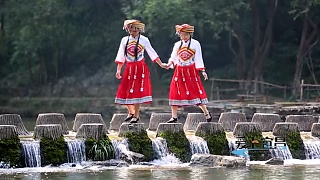
 A sanpan ride along the ShenNong Stream 神农流 – a YangTse River tributary
HuBei province.
|
With China Road Tales ...
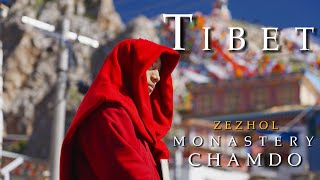
Zezhol Monastery, a spiritual beacon of the Bon Religion
Perched dramatically on the cliffs of the renowned holy mountain, Mt. Zezhol, Zezhol Monastery stands as a remarkable testament to the enduring legacy of the Bon religion, one of the oldest spiritual traditions in Tibet; indeed, the indigenous faith of the Qinghai-Tibet Plateau. Located in DingQing County, Chamdo, in eastern Tibet, this sacred site is situated at an impressive altitude of 4,800 meters, making it not only one of the highest monasteries in Tibet but also one of the most significant centers for the Bon religion. The monastery lies approximately 37 kilometers from the county town, adding to its mystique and remoteness, which only enhances its spiritual aura.
The Bon Religion: A Deep-Rooted Tradition
The Bon religion predates the introduction of Buddhism to Tibet and is believed to have originated in the ancient kingdom of Zhangzhung, centered around the sacred Mount Kailash. Bon has played a crucial role in shaping the spiritual and cultural landscape of Tibet, and despite the dominance of Tibetan Buddhism, Bon continues to thrive in certain areas, particularly in eastern Tibet and in communities that maintain strong ties to their indigenous spiritual heritage.
Bon is characterized by its unique practices and rituals, which include worship of nature spirits, ancestor reverence, and a rich tradition of oral teachings. The religion encompasses a wide array of rituals intended to harmonize with natural forces, protect communities from malevolent spirits, and promote the well-being of individuals and society as a whole. Central to Bon is the belief in the interconnectedness of all life, the importance of living in harmony with nature, and the pursuit of spiritual enlightenment.
Zezhol Monastery: A Center of Bon Spirituality
Zezhol Monastery is not only a religious site but also a living repository of Bon teachings and practices. The monastery's location on Mt. Zezhol, a mountain revered as sacred in the Bon tradition, underscores its importance as a place of pilgrimage and spiritual refuge. The faithful believe that the mountain itself is imbued with spiritual power, and the monastery, perched precariously on its cliffs, serves as a conduit between the physical and spiritual realms.
Founded centuries ago, Zezhol Monastery has been a pivotal center for the preservation and dissemination of Bon teachings. It houses ancient scriptures, sacred relics, and thangka paintings that depict the Bon deities and cosmology. The monastery’s monks continue to perform traditional Bon rituals, including offerings to the mountain spirits, ceremonies to ensure harmony between humans and nature, and the recitation of ancient Bon texts.
The Continuing Influence of Bon Today
Despite the rise of Tibetan Buddhism, the Bon religion has managed to survive and even thrive in certain areas of Tibet. Today, Bon practitioners can be found not only in Tibet but also in Nepal, Bhutan, and among the Tibetan diaspora worldwide. The influence of Bon is particularly evident in eastern Tibet, where communities still practice Bon rituals and uphold its teachings.
In some regions, Bon rituals are integrated into local Buddhist practices, creating a syncretic form of spirituality that honors both traditions. For instance, many Tibetan Buddhists incorporate Bon deities and rituals into their own religious practices, recognizing the deep cultural and spiritual roots that Bon has in Tibetan society. Furthermore, Bon teachings on the relationship between humans and the natural world continue to resonate, particularly in the context of environmental preservation and sustainable living.
Zezhol Monastery remains a vital symbol of this enduring legacy. Pilgrims from across Tibet and beyond visit the monastery to seek blessings, participate in rituals, and connect with the ancient spiritual traditions that have shaped their culture. The monastery’s remote location, high in the mountains, adds to its allure as a place of profound spiritual significance, where the faithful can retreat from the material world and engage deeply with the sacred.
Conclusion
Zezhol Monastery is more than just a religious site; it is a living testament to the resilience and continuity of the Bon religion in Tibet. As one of the highest and oldest Bon monasteries, it plays a crucial role in preserving this ancient tradition, offering a place of refuge and spiritual nourishment to those who seek to connect with the deep, mystical roots of Tibetan spirituality. In a rapidly changing world, Zezhol Monastery and the Bon religion it represents continue to provide a link to the past, offering insights and teachings that are as relevant today as they were centuries ago.
|
|
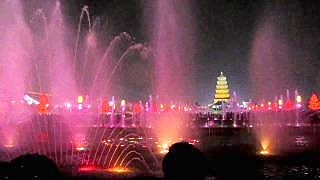
Huge, impressive show, 8pm every day; and free !
|

|
Walk For You takes a ride from ChongQing to ChengDu ...
|

|
Brave voices speak out despite the chilling, silencing fear of firebombs and steel pipes of the foreign-backed subversive destroyers.
Fascist colonialism re-branded as 'freedom and democracy'; in reality, everything but.
The rioters are either imports or dupes. Either way, probably best called terrorists, because terror is their mode of action.
|

|
With Walk East ...
|
|
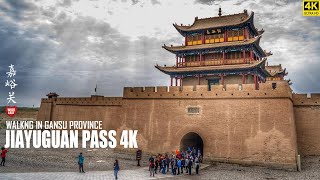
With Walk East - the Great Wall of China.
JiaYu Pass is not only the western starting point of the Ming Great Wall, but also a vital pass on the ancient Silk Road. It's the joining place of the cultures of the Silk Road ...
|

|
Provincial capital of JiLin in north-east China.
Filmed in 2012.
|
|
With China Walking Tour ...
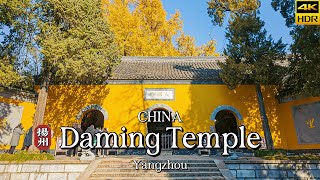
The DaMing Temple (大明寺) in YangZhou, JiangSu province, is a renowned Buddhist temple with a rich history dating back over a thousand years. It is one of the key cultural and historical landmarks in YangZhou and holds significant importance in Chinese Buddhist heritage. Here is more information about the DaMing Temple:
History and Origins:
Establishment: The DaMing Temple was originally built during the Southern Dynasties period in the 5th century AD, making it one of the oldest temples in Jiangsu province.
Significance: It was initially established by the ruler of the Liang Dynasty, Emperor Wu, as a center for Buddhist teachings and practices.
Architectural Features:
Main Hall (Mahavira Hall): The temple's main hall is the Mahavira Hall (大雄宝殿), a grand and majestic structure that enshrines statues of Buddha and other important figures in Buddhism.
Pagoda: The temple complex also includes a historic pagoda, known as the Yunyan Pagoda (云岩塔), which is a designated national treasure and an iconic symbol of Yangzhou.
Cultural Heritage:
Influence: Throughout its history, the DaMing Temple has played a pivotal role in the development of Buddhist culture, attracting scholars, monks, and pilgrims from across China and beyond.
Renowned Monks: The temple has been associated with several influential Buddhist monks and scholars, contributing to the spread of Buddhism and the exchange of knowledge.
Attractions and Highlights:
Yunyan Pagoda: The pagoda within the temple grounds is a must-visit attraction, offering panoramic views of Yangzhou from its upper levels.
Historic Artifacts: The DaMing Temple houses various Buddhist artifacts, scriptures, and relics, providing insights into the region's religious and cultural heritage.
Modern Significance:
Cultural Site: Today, the DaMing Temple remains an active Buddhist temple and a popular destination for tourists, scholars, and pilgrims interested in exploring China's Buddhist traditions.
Tourist Destination: Visitors can immerse themselves in the serene atmosphere of the temple complex, admire its architecture, and learn about its historical significance.
Location:
Address: DaMing Temple, No. 1 Taicheng Road, Hanjiang District, Yangzhou, Jiangsu Province, China.
The DaMing Temple in Yangzhou stands as a testament to China's enduring Buddhist legacy and serves as a living link to the region's ancient past. Its blend of architectural beauty, cultural heritage, and spiritual significance makes it a captivating destination for travelers seeking to explore Jiangsu's historical treasures.
|

|
With Wei's Travel ...
|