 YuanMingYuan 圆明园, BeiJing
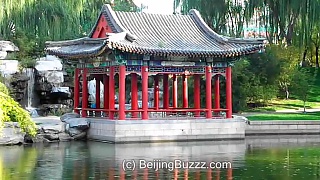
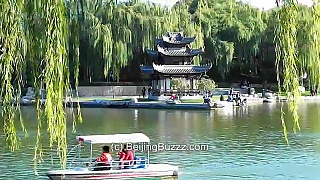
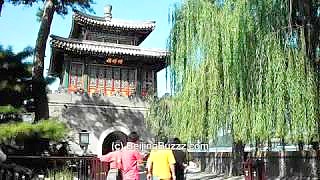
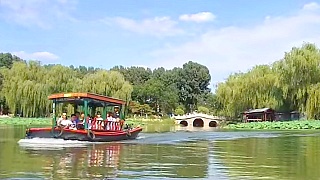
YuanMingYuan, also known as the 'Old Summer Palace', was constructed during the 18th and early 19th century and was a wonderland of lakes and waterways, bridges, hills and pavilions.
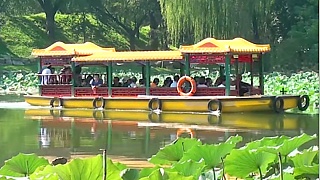
One third of the ground of YuanMingYuan was taken up by over 200 small hills with steep sides, secluded valleys, rock walls and stone caves. Half of the garderns are covered by the waters of lakes, winding streams and ponds.
It was at YuanMingYuan that the emperors of the Qing Dynasty resided and handled government affairs - until it was destroyed; the Forbidden City was mostly used only for formal ceremonies at this time.
The southern part of YuanMingYuan was where emperors handled state affairs, while the other parts were primarily for personal use and comprised of more than 150 scenic spots, involving rare exotic flowers and trees from different parts of the country.
There were originally towers, terraces, pavilions, halls, corridors, pagodas and bridges with a total construction area of 150,000 square meters - corresponding in scale to that of the Imperial Palace. Artisans were recruited from all over China to enact the exquisite settings.
The various styles of architecture, standing encircled by hills and rivulets, presented a most picturesque view. Many were reproductions of scenic mountains, rivers and famous gardens in China (mostly southern China).
During his many tours of the country, emperor QianLong made it a point to have pictures of famous gardens and scenes drawn so that he could have replicas built in Beijing. Most famous of these were the ten scenic spots of the West Lake in HangZhou.
The Old Summer Palace is often associated with the European-style palaces (Xi Yang Lou) that were built of stone. The designers of those structures, the Jesuits Giuseppe Castiglione and Michel Benoist, were employed by emperor QianLong to satisfy his taste for exotic buildings and objects. However, more than 95% of the Imperial Gardens consisted of essentially Chinese-style buildings. There were also a few buildings in Tibetan and Mongolian styles, reflecting the diversity of the Qing empire.
In addition, hundreds of invaluable Chinese art masterpieces and antiquities were stored in the halls, including some unique copies of literary works and collections.
In 1860, during the 'Second Opium War', the British and French expeditionary forces looted the Old Summer Palace. Later, on October 18 1860, a British general - despite protestations from the French (who in fact had began the looting) - gave the order to set fire to the huge complex, which burned to the ground.
In 1900, those buildings that had partly survived or been restored were burnt for good by the Western expeditionary forces sent to quell the 'Boxer Rebellion'. Many priceless artifacts were plundered and made their way to museums and private collections in Europe.
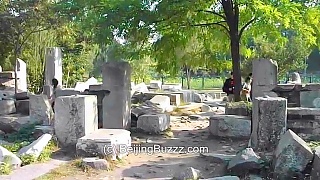
The ruins were further plundered by the warlords of the early republican period and further destruction of the ruins took place during the 'Cutural Revolution'. After all this destruction, what was left was truely just an empty shell.
Empress dowager CiXi later directed the forming of YiHeYuan (Garden of Nurtured Harmony), into a new Summer Palace; this was near to the Old Summer Palace, but on a (somewhat) smaller scale.
Nearest subway station : YuanMingYuan on line 4.
Don't miss :
- Buying a large souvenir 'map' at the entrance showing the original gardens
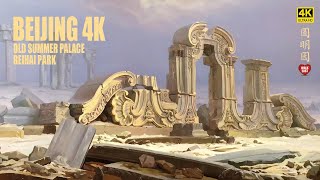
- The ruins of the Western-style palaces
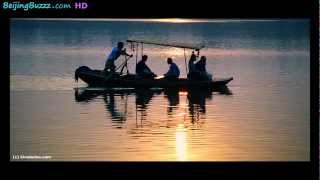
- FuHai Lake near sunset
[640],shadow=true,start=,stop=
Beijing, the capital city of China, is a vibrant metropolis steeped in history, culture, and modernity. Here's a brief overview of what you can expect as a tourist in Beijing:
Historical Landmarks:
The Great Wall of China: One of the most iconic structures in the world, the Great Wall is easily accessible from Beijing. Mutianyu and Badaling sections are popular among tourists.
Forbidden City (Palace Museum): A UNESCO World Heritage Site, this vast imperial palace complex was home to Chinese emperors for over 500 years. It houses numerous halls, courtyards, and historical artifacts.
Temple of Heaven: A masterpiece of Chinese architecture, this ancient temple complex served as a place of worship for emperors to pray for good harvests.
Summer Palace: A stunning ensemble of lakes, gardens, and palaces, the Summer Palace served as a retreat for emperors during the Qing dynasty.
Tiananmen Square: One of the largest city squares in the world, Tiananmen Square is flanked by important landmarks such as the Monument to the People's Heroes, the Great Hall of the People, and the Mausoleum of Mao Zedong.
Cultural Sites:
Beijing Hutongs: Explore the narrow alleyways and traditional courtyard residences of Beijing's historic neighborhoods. You can take a rickshaw tour or simply wander around on foot.
Beijing Opera: Experience traditional Chinese opera performances at venues like the Liyuan Theater or the Chang'an Grand Theatre.
798 Art District: A hub of contemporary art and culture, this former industrial area is now home to numerous galleries, studios, and cafes.
Modern Attractions:
Olympic Park: Visit iconic structures such as the Bird's Nest (National Stadium) and the Water Cube (National Aquatics Center) from the 2008 Beijing Olympics.
CBD (Central Business District): Marvel at the futuristic skyline of Beijing's modern business district, which includes landmarks like the CCTV Headquarters and the China World Trade Center Tower III.
Culinary Delights:
Peking Duck: Indulge in Beijing's most famous dish, crispy roast duck served with pancakes, scallions, and hoisin sauce.
Street Food: Explore the city's vibrant street food scene and sample local delicacies like jianbing (savory crepes), lamb skewers, and dumplings.
Practical Tips:
Transportation: Beijing has an extensive public transportation system, including the subway, buses, and taxis. However, traffic can be heavy, so plan your travels accordingly.
Language: While English is not widely spoken, especially outside tourist areas, many signs and transportation announcements are in English. It's helpful to carry a translation app or a phrasebook.
Weather: Beijing experiences four distinct seasons, with hot summers and cold winters. The best times to visit are spring (April to June) and autumn (September to October) when the weather is mild and comfortable.
Etiquette: Respect local customs and traditions, such as removing your shoes before entering someone's home and using both hands to pass or receive items.
Beijing offers a rich tapestry of experiences for tourists, blending ancient heritage with modern innovations. Whether you're fascinated by history, culture, or culinary delights, there's something for everyone in this dynamic city.