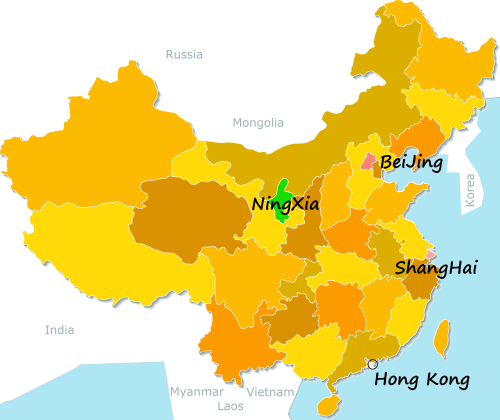
NingXia map
Live more ...
 QingTongXia Yellow River Grand Canyon

|
Welcome to Beijing!
Discover the vibrant capital city of China, where ancient history meets modernity. Beijing, with its rich heritage, iconic landmarks, delicious cuisine, and bustling streets, promises an unforgettable journey.
About Beijing
Beijing, also known as Peking, is the political, cultural, and educational center of China. As one of the world's oldest continuous civilizations, Beijing has been the heart of Chinese history for centuries.
Key features of Beijing include its historic hutongs (narrow alleys), ancient palaces, and temples alongside modern skyscrapers and shopping malls. The city is renowned for its role in Chinese history, serving as the capital of several dynasties.
Top Attractions
Forbidden City (Palace Museum): Explore the largest imperial palace complex in the world, with over 9,000 rooms filled with treasures and historical artifacts.
Great Wall of China: Visit iconic sections like Badaling, Mutianyu, or Jinshanling for stunning views of this UNESCO World Heritage site.
Tiananmen Square: Discover the heart of Beijing and witness the monumental Tiananmen Gate, Chairman Mao's Mausoleum, and the National Museum of China.
Temple of Heaven: Experience the spiritual ambiance of this ancient temple complex where emperors once prayed for good harvests.
Summer Palace: Wander through lush gardens, pavilions, and Kunming Lake at this UNESCO-listed royal retreat.
Hutong Tour: Take a rickshaw ride through traditional hutongs to see local life and visit courtyard homes.
798 Art District: Explore Beijing's contemporary art scene in a former factory complex filled with galleries, studios, and cafes.
Lama Temple (Yonghe Temple): Admire the impressive Tibetan-style architecture and giant Buddha statue at this active Buddhist temple.
National Museum of China: Learn about Chinese history, art, and culture through extensive exhibitions.
Culture and History
Beijing is steeped in cultural heritage, offering a glimpse into China's ancient traditions and customs.
Peking Opera: Attend a live performance of this traditional art form known for its colorful costumes, music, and storytelling.
Chinese Tea Culture: Visit tea houses to sample different teas and participate in tea ceremonies.
Imperial Architecture: Marvel at the architectural marvels of the Forbidden City, Summer Palace, and Temple of Heaven.
Traditional Festivals: Experience festive celebrations during Chinese New Year, Mid-Autumn Festival, and Dragon Boat Festival.
Beijing Cuisine: Indulge in local specialties such as Peking duck, hotpot, dumplings, and street food delicacies.
Dining in Beijing
Beijing offers a diverse culinary landscape, from gourmet dining to street-side snacks.
Peking Duck: Savor the crispy-skinned duck at renowned restaurants like Quanjude or Da Dong.
Street Food: Explore Wangfujing Snack Street for a variety of local snacks, skewers, and sweets.
Hutong Restaurants: Dine in historic courtyard homes serving homestyle Beijing cuisine.
Hotpot: Enjoy interactive dining with a bubbling pot of broth and fresh ingredients.
Dumplings and Noodles: Try handmade jiaozi (dumplings) and la mian (hand-pulled noodles) in bustling noodle shops.
Teahouses: Relax in traditional teahouses and sample regional teas paired with snacks.
Shopping in Beijing
Discover unique souvenirs, antiques, and modern goods in Beijing's vibrant shopping districts.
Silk Market: Bargain for silk products, clothing, and accessories at this bustling market.
Wangfujing Street: Shop for international brands, local goods, and Beijing-style snacks.
Panjiayuan Antique Market: Browse through a vast array of antiques, ceramics, and curios.
Hongqiao Pearl Market: Find pearls, jewelry, and electronics at competitive prices.
Dashilar Street: Explore historic Dashilar alley for traditional handicrafts and nostalgic items.
Practical Tips for Visitors
Best Time to Visit: Spring (April to May) and autumn (September to October) offer mild weather and fewer crowds.
Language: Learn basic Mandarin phrases; use translation apps for communication.
Currency: Use Chinese Yuan (CNY); major credit cards accepted in tourist areas.
Transportation: Navigate the city with the extensive subway system, buses, taxis, and ridesharing apps.
Accommodation: Choose from luxury hotels, boutique guesthouses, or budget-friendly hostels.
Etiquette: Respect local customs, such as using both hands to receive items and addressing people with courtesy.
Safety: Be cautious of pickpockets in crowded areas; keep valuables secure.
Internet Access: Purchase a local SIM card for mobile data; free Wi-Fi available in many public places.
Health and Hygiene: Carry bottled water and practice good hygiene; be aware of air quality during winter.
Enjoy Your Journey in Beijing!
Immerse yourself in the vibrant culture, rich history, and captivating experiences that Beijing has to offer. Whether you're exploring ancient landmarks or indulging in local cuisine, Beijing promises an unforgettable journey that will leave lasting memories.
|
|
With Wei's Travel ...
|
|
To the hùtōng ! With the Fung Bros ...
|
|
Bonus film - CITIC Tower ...
|

|
A look at how the city of ShenZhen is leading the way in robots, electric vehicles and solar powered charging stations, plus an automated parking solution ...
Bonus films - aerial view of ShenZhen by drone ...
plus, driving around ShenZhen ...
|
|
With CHINA 4K HDR ...
|
|
With Walk East ...
|
|
Relive the amazing scenes from August 8th 2008 ...
|
|
A flashback to October 2004 ...
|