Beautiful YangShuo 阳朔, GuangXi province – aerial footage

[640],shadow=true,start=,stop=

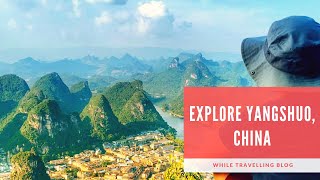
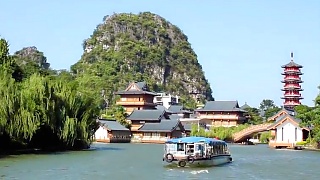
Yangshuo, situated in Guangxi Zhuang Autonomous Region in southern China, is renowned for its breathtaking karst landscapes, serene rivers, and vibrant local culture. Here's a guide for visitors to Yangshuo:

Natural Beauty:
Karst Mountains: Yangshuo is famous for its iconic karst mountains, which rise sharply from the surrounding plains, creating a dramatic and picturesque landscape. Visitors can explore these unique limestone formations by hiking, biking, or taking boat cruises along the Li River.

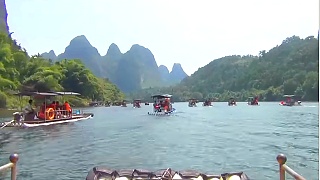
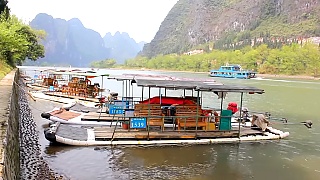
Li River: The Li River, one of China's most scenic waterways, meanders through the karst mountains of Yangshuo, offering stunning vistas at every turn. A leisurely boat cruise along the Li River is a must-do activity for visitors, providing opportunities to admire the breathtaking scenery and capture iconic views of the karst peaks reflected in the water.

Yulong River: The Yulong River, a tributary of the Li River, is another picturesque waterway that flows through Yangshuo's countryside. Visitors can enjoy bamboo rafting or kayaking on the Yulong River, passing through idyllic villages, rice paddies, and bamboo groves along the way.

Outdoor Activities:
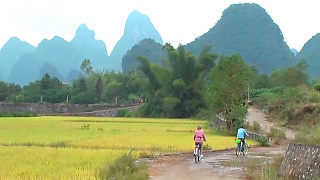
Cycling: Yangshuo is a cyclist's paradise, with scenic countryside roads and trails that wind through rice fields, orchards, and traditional villages. Renting a bicycle and exploring the surrounding countryside at a leisurely pace is a popular activity for visitors.

Rock Climbing: With its towering karst cliffs and limestone peaks, Yangshuo is a premier rock climbing destination in China. Experienced climbers and beginners alike can find suitable routes and climbing spots in the area, with options for guided tours and equipment rental available.

Cultural Experiences:
West Street: West Street (Xi Jie) is the main thoroughfare in Yangshuo's town center and a hub of activity for tourists and locals alike. Lined with shops, restaurants, cafes, and bars, West Street offers a vibrant atmosphere and is a great place to shop for souvenirs, sample local cuisine, and soak in the town's unique charm.

Impression Sanjie Liu: Directed by renowned filmmaker Zhang Yimou, Impression Sanjie Liu is a spectacular outdoor performance staged on the Li River. Featuring a cast of hundreds of performers, including local fishermen and farmers, the show combines music, dance, and light effects to showcase the natural beauty and cultural heritage of the area.

Practical Tips:
Weather: Yangshuo has a subtropical climate with mild winters and hot, humid summers. The best time to visit is during the spring (March to May) and autumn (September to November) when the weather is most pleasant and the landscapes are lush and green.

Accommodation: Yangshuo offers a range of accommodation options, including guesthouses, boutique hotels, and hostels catering to various budgets and preferences. Staying in the town center allows visitors to easily access attractions, restaurants, and transportation options.

Local Cuisine: Don't miss the opportunity to sample Yangshuo's delicious local cuisine, which includes specialties such as beer fish and Guilin rice noodles. Many restaurants in Yangshuo offer outdoor seating with panoramic views of the surrounding karst landscape.

Yangshuo's stunning natural scenery, outdoor activities, and vibrant cultural scene make it a popular destination for travelers seeking to explore the beauty of southern China. Whether cruising along the Li River, cycling through the countryside, or immersing oneself in the town's bustling street life, Yangshuo offers unforgettable experiences for visitors of all ages and interests.
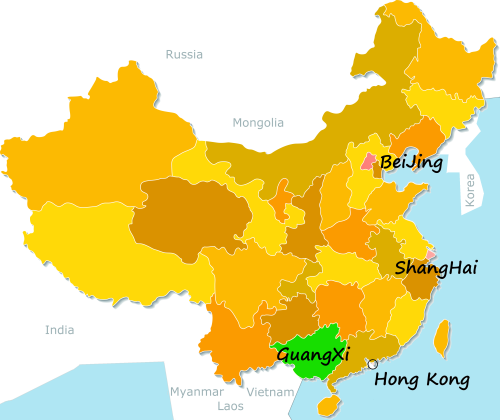
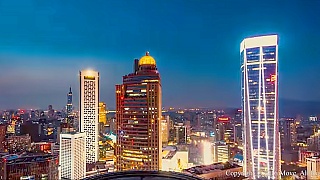
GuangXi map

Related Videos


Featured Videos

China 中国 trip – fun-loving pandas in ChengDu, LeShan Giant Buddha, ChongQing and Mount Emei
Plus the Paradise Island Water Park in ChengDu, the Arkansas Jazz Band in ChengDu, and a lot more ... We end with a clip from 'ChongQing from the Air', starting with the city at night, and followed by the awesome natural scenery in the surrounding area, including the beautiful peaks and valleys of the Three Gorges area ... PLEASE DONATE to this site - we really need your help to keep going; see the donate button on the right. ChengDu Pandas, LeShan Giant Buddha and Mount Emei Paradise Island Water Park, ChengDu Arkansas Jazz Band, ChengDu, plus local dancers Two scenes from ChengDu ChongQing from the air
YuanYang rice terraces, YunNan 雲南元陽梯田 (Scenic China Special, 2018 – 1)
A glimpse of FengHuang 凤凰, HuNan province …
1 minute in Phoenix ancient water town ...
“Seen By My Eyes”, Hong Kong, China 《我所看見的美麗香港》
A beautiful, award-winning time-lapse video film by Francis So that focuses on the natural landscape (only 10% of Hong Kong is developed). With the most exquisite music - Saturn, by Sleeping At Last; turn up your best sound system. How beautiful, this world ! I would love to see it all, Again ... The second wonderful film is by Shanghainese film-maker Smaty Shi - "198 days in Hong Kong". The second and third films include the city. With Francis So ...
Exploring ancient KaiFeng, HeNan province
With China Walking Tour ... 1. Daxiangguo Temple (大相国寺) Daxiangguo Temple is one of the most renowned Buddhist temples in China, located in the heart of Kaifeng. Originally built during the Northern Wei Dynasty (early 6th century), it has a history spanning over 1,400 years. The temple is famous for its grand architectural design and historical significance, as it was once a prominent center for Buddhist learning and cultural exchange. Visitors can admire its ancient wooden structures, exquisite carvings, and beautiful gardens. The temple is also known for housing numerous cultural relics, including ancient Buddhist scriptures and statues. 2. Shan, Shan, and Gan Guild Hall (山陕甘会馆) The Shan, Shan, and Gan Guild Hall, also known as the Shanxi, Shaanxi, and Gansu Guild Hall, is an impressive historical building that once served as a meeting place for merchants from these regions. Located near the Kaifeng Ancient City Wall, the guild hall is a fine example of traditional Chinese architecture, showcasing intricate woodwork, carved beams, and painted ceilings. It reflects the vibrant commercial life of Kaifeng during the Song Dynasty when it was a bustling trade hub. The hall also features a rich collection of artifacts that offer a glimpse into the merchant culture of the time. 3. Longting Park (龙亭公园) Longting Park, or Dragon Pavilion Park, is one of Kaifeng’s most famous scenic spots, known for its serene beauty and historical importance. The park is home to the Longting Pavilion, a magnificent structure originally built during the Song Dynasty as a royal palace. The pavilion has been reconstructed over the years, but it still retains its grandeur and historical charm. Surrounded by tranquil lakes and lush greenery, Longting Park is a perfect place to explore the fusion of nature and ancient Chinese architecture. It also houses several other historical buildings and cultural relics, making it a must-visit for anyone interested in Chinese history. 4. Chinese Han Garden (中国翰园) The Chinese Han Garden, or Zhongguo Han Yuan, is a unique cultural and architectural park dedicated to showcasing the history and achievements of the Han Dynasty. Located in Kaifeng, this garden beautifully blends traditional Chinese landscape design with ancient architectural styles. It features a collection of pavilions, bridges, and pathways that recreate the atmosphere of the Han Dynasty. The park is home to numerous stone tablets inscribed with famous Chinese calligraphy and poetry, providing visitors with an insight into the intellectual and artistic accomplishments of the era. The tranquil surroundings and impressive structures make it a peaceful retreat for history enthusiasts. These landmarks offer a deep dive into the rich history and architectural grandeur of Kaifeng, making them essential stops for any traveler exploring the city’s cultural heritage. Video 2 The Qingming Riverside Landscape Garden (Qingming Shanghe Yuan, 清明上河园) is a large-scale cultural and historical theme park located in Kaifeng, Henan Province, China. It is inspired by the famous ancient Chinese painting "Along the River During the Qingming Festival" (清明上河图) by the Song Dynasty artist Zhang Zeduan. The park recreates the bustling city life and natural scenery depicted in the painting, reflecting the prosperity of the Northern Song Dynasty (960–1127 AD). Historical Reproduction: The park meticulously reconstructs the architecture, streets, waterways, marketplaces, and daily life of Bianjing (modern-day Kaifeng), the capital of the Northern Song Dynasty. This immersive environment gives visitors a glimpse into the ancient city's urban culture and economic vitality. Performances and Activities: Qingming Riverside Landscape Garden offers daily performances showcasing traditional Chinese culture, including folk dances, acrobatics, and reenactments of Song Dynasty customs. Highlights include the Imperial Court Parade, martial arts demonstrations, and shadow puppet shows. Cultural Exhibits: Visitors can explore Song-era crafts, such as pottery, calligraphy, and silk weaving. The park also features exhibits about the technologies and trade practices of the time. Interactive Experiences: Guests can dress in traditional Song Dynasty attire, participate in ancient games, and take boat rides along the carefully designed canals that replicate the waterways in the painting. Festivals and Night Tours: During special occasions like the Qingming Festival and the Mid-Autumn Festival, the park hosts themed events and illuminates its buildings, creating a magical night-time atmosphere. Significance: Qingming Riverside Landscape Garden is not only a popular tourist attraction but also an important educational site, offering visitors insights into the rich history and culture of the Northern Song Dynasty. It serves as a living museum, celebrating the artistic and architectural achievements of ancient China. Whether you're a history enthusiast, a culture lover, or simply looking for a unique travel experience, this park is a must-visit destination in Henan Province.
Now you’re in Beijing 北京 … (Flashback – almost 10 years !)
Original posting - December 2014. Starting with 'Now you're in Beijing (commie jungle mix)', music video. Plus Beijing's popular attractions, a trip to the blue sky city, QianHai Lake (in central Beijing), the BeiJing to ShangHai sleeper train, and The Forbidden City (documentary; in English) bonus films ... 'Now you're in Beijing ...' - think about it - you're in Beijing, China - it might be different but that is here and not there; sure some things could be better - such as rights and protections for migrant workers, but Rome wasn't built in a day, as they say. A few words on the Hu JinTao / Wen JiaBao era - definately one of China's most successful jumps forward; a major rise in prosperity for all, the growth of great infrastructure, such as the high-speed rail system, and much more, the Beijing Olympics, the Shanghai World Expo, space exploration, and the list goes on ... A happy retirement to two leaders who helped guide China back to greatness ! Mao ZeDong unified the country and helped defeat the Japanese invaders, and for that is a national hero. But things didn't go so well subsequently and on his death the 'Gang of Four' were arrested and China took a new path, though slowly at first following the courageous efforts of Deng XiaoPing. But it was not until circa 1990 that China really began to take off. So its rise to greatness, once more, is remarkable for having been achieved, from so little, in just 25 years. Obviously, they have done most things very right.
Five days in and around ShangHai
With Millie Liao ... With Saranghoe ... Bonus films - HangZhou trip : with LiVanSi ... And back to ShangHai - with linyi ... ... and BeiJing ... With JustKenna ...
Park life in BeiJing 北京
Music, dance and exercise ... First film is at TaoRanTing Park; the second at TianTan Park.
The ancient HuaYan, FaHua, HunYuan & ShanHua temples, DaTong, ShanXi province
With Andy see the World ... *** HuaYan Temple, located in DaTong, ShanXi province, is a magnificent example of Buddhist temple architecture and one of the best-preserved temples from the Liao and Jin dynasties. Its name, "Huayan," is derived from the Huayan Sutra, an important scripture in Chinese Buddhism, reflecting the temple's strong connection to the Huayan school of Buddhist thought. Key Features: Divided Structure: The temple is unique as it is divided into two parts: the Upper Temple and the Lower Temple. The Upper Temple, built on a hill, was primarily used for religious ceremonies, while the Lower Temple served as a residential and study area for monks. Grand Hall: The Great Buddha Hall in the Upper Temple is one of the largest remaining halls of its kind from the Liao dynasty. It features massive wooden beams, intricate carvings, and large Buddha statues that exude a sense of serenity. Murals and Sculptures: The temple is renowned for its well-preserved murals and Buddhist sculptures. These artworks depict scenes from Buddhist scriptures and stories, reflecting the artistic style and religious devotion of the era. Library of Sutras: The Lower Temple houses a library of Buddhist sutras, emphasizing the temple’s role as a center for learning and spiritual practice. Architectural Significance: The wooden structures of Huayan Temple showcase the advanced engineering and architectural techniques of ancient China. The use of dougong brackets (interlocking wooden brackets) is particularly impressive. Cultural Heritage: Huayan Temple is a testament to the flourishing of Buddhism in northern China during the Liao and Jin dynasties. It represents a blend of religious, artistic, and architectural achievements. Atmosphere: Visitors often find the temple serene and spiritually uplifting, with its quiet courtyards, ancient trees, and the scent of incense enhancing the experience. It is not just a historical site but also an active place of worship. Huayan Temple remains a significant cultural and spiritual landmark, drawing visitors and scholars from around the world to explore its beauty and historical importance. *** Shanhua Temple, located in Datong, Shanxi Province, is a stunning example of Chinese Buddhist architecture and history. Originally constructed during the Tang Dynasty, the temple has been preserved and renovated over the centuries, with its current structures mainly dating back to the Liao and Jin Dynasties. The temple complex is composed of three main halls arranged along a north-south axis: the Main Gate Hall, the Mahavira Hall, and the Sansheng Hall. These halls are surrounded by peaceful courtyards, ancient trees, and stone pathways, creating a serene environment for visitors. The Mahavira Hall is the centerpiece of the temple, housing large statues of the Buddha and bodhisattvas. The craftsmanship of these statues reflects the artistic style of the Liao Dynasty, with intricate details and vibrant colors. The Sansheng Hall, dedicated to the Three Saints of Hua-yen Buddhism, also contains exquisite statues and murals that are valuable cultural relics. One of the temple's unique features is its collection of wooden structures, which have survived numerous dynasties and demonstrate the sophisticated construction techniques of ancient Chinese architecture. The intricate carvings, painted beams, and symbolic motifs throughout the temple showcase the skill of artisans from different eras. Visitors to Shanhua Temple can also enjoy the surrounding scenery, as the temple is situated near other historical sites in Datong, such as the Nine-Dragon Wall and the Yungang Grottoes. Its peaceful ambiance and historical significance make it a must-visit destination for those exploring China's rich cultural heritage. *** The HunYuan Confucian Temple, located in Hunyuan County near Datong, Shanxi Province, is an important historical and cultural site dedicated to the teachings of Confucius. Known for its elegant architecture and serene atmosphere, the temple reflects the Confucian emphasis on education, morality, and respect for tradition. Originally built during the Yuan Dynasty, the temple has undergone several renovations and expansions over the centuries, with many of its current structures dating back to the Ming and Qing Dynasties. The layout of the temple follows traditional Confucian principles, with symmetrical courtyards and a central axis leading to the main halls. The temple complex includes several key structures, such as the Dacheng Hall, the Gate of Rites, and the Hall of Confucius’ Tablets. The Dacheng Hall, the centerpiece of the temple, houses a statue of Confucius and tablets honoring his disciples and other influential scholars. Its wooden beams and intricate carvings are a testament to the craftsmanship of ancient Chinese builders. The temple grounds are adorned with ancient cypress trees, stone tablets, and inscriptions that highlight the enduring legacy of Confucianism in Chinese culture. These elements create a tranquil environment for visitors, providing a space for reflection and appreciation of traditional values. Hunyuan Confucian Temple is not only a place of historical significance but also a symbol of the enduring influence of Confucian thought in shaping Chinese society. Its proximity to other attractions in the area, such as the Hanging Temple, makes it an excellent addition to any itinerary for visitors exploring the region. *** The Fahua Temple, located in Datong, Shanxi Province, is a historic Buddhist temple with a serene atmosphere and a rich cultural heritage. Known for its traditional Chinese architecture and intricate details, the temple provides a glimpse into the spiritual and artistic traditions of ancient China. Originally built during the Ming Dynasty, Fahua Temple has undergone renovations over the centuries, preserving its historic charm while maintaining its religious significance. The temple is dedicated to Buddhist teachings and serves as a place of worship, meditation, and cultural reflection. The layout of the temple includes several key structures, such as the main hall, bell tower, and various smaller pavilions. The main hall is adorned with statues of the Buddha and Bodhisattvas, as well as colorful murals that depict scenes from Buddhist scriptures. The bell tower houses an ancient bronze bell that is said to bring blessings and peace to those who hear its chime. The temple grounds are quiet and peaceful, with pathways lined by trees and flowers that enhance the meditative experience. Stone carvings and inscriptions throughout the temple complex reflect the devotion and artistic skills of past generations. Visitors often find the setting conducive to quiet reflection and spiritual exploration. Fahua Temple is an important cultural and religious site in Datong, offering visitors a chance to connect with Buddhist traditions and admire the craftsmanship of Chinese temple architecture. Its tranquil environment makes it a worthwhile stop for those seeking a deeper understanding of the region’s history and spiritual legacy.

Tag search ?