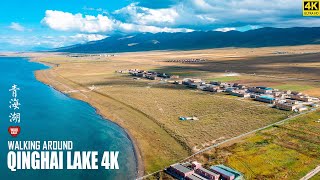
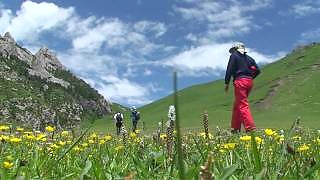
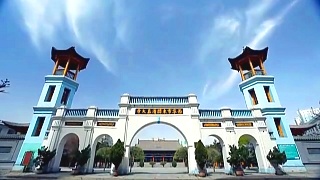
A trip to QingHai 青海 province

Including the capital, XiNing, and QingHai Lake ...

[640],shadow=true,start=,stop=105
[320],shadow=true,start=17,stop=593
[320],shadow=true,start=,stop=
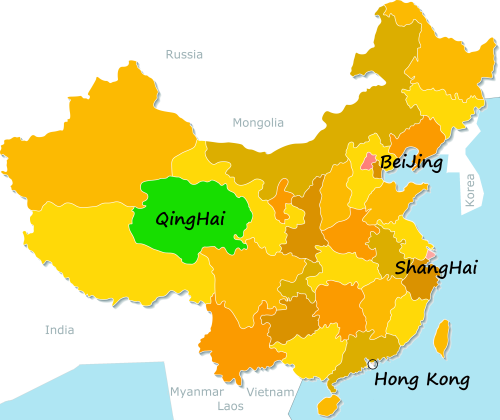
QingHai map

Related Videos


Featured Videos

Typhoon on the way – a rain-swept night walk in ShangHai
With REC Shanghai ... Bonus film - daytime ShangHai walk - with Wei's Travel ...
Family fun in BeiJing
With TimGloAdventures ...
BeiJing’s hutongs
With Aaron and Char ... With Beyond A to B ... With DS Travel ... With Travelogue ...
Chinese Cloisonné 景泰蓝 (JǐngTàiLán)
The art of saying no
How to be free. Warning : lots of f-bombs in the video; but it is full of wisdom.
Skyline ShangHai 上海
The ruins of the Western-style palaces at YuanMingYuan 圆明园, BeiJing
YuanMingYuan, also known as the 'Old Summer Palace', was constructed during the 18th and early 19th century and was a wonderland of lakes and waterways, bridges, hills and pavilions. One third of the ground of YuanMingYuan was taken up by over 200 small hills with steep sides, secluded valleys, rock walls and stone caves. Half of the garderns are covered by the waters of lakes, winding streams and ponds. It was at YuanMingYuan that the emperors of the Qing Dynasty resided and handled government affairs - until it was destroyed; the Forbidden City was mostly used only for formal ceremonies at this time. The southern part of YuanMingYuan was where emperors handled state affairs, while the other parts were primarily for personal use and comprised of more than 150 scenic spots, involving rare exotic flowers and trees from different parts of the country. There were originally towers, terraces, pavilions, halls, corridors, pagodas and bridges with a total construction area of 150,000 square meters - corresponding in scale to that of the Imperial Palace. Artisans were recruited from all over China to enact the exquisite settings. The various styles of architecture, standing encircled by hills and rivulets, presented a most picturesque view. Many were reproductions of scenic mountains, rivers and famous gardens in China (mostly southern China). During his many tours of the country, emperor QianLong made it a point to have pictures of famous gardens and scenes drawn so that he could have replicas built in Beijing. Most famous of these were the ten scenic spots of the West Lake in HangZhou. The Old Summer Palace is often associated with the European-style palaces (Xi Yang Lou) that were built of stone. The designers of those structures, the Jesuits Giuseppe Castiglione and Michel Benoist, were employed by emperor QianLong to satisfy his taste for exotic buildings and objects. However, more than 95% of the Imperial Gardens consisted of essentially Chinese-style buildings. There were also a few buildings in Tibetan and Mongolian styles, reflecting the diversity of the Qing empire. In addition, hundreds of invaluable Chinese art masterpieces and antiquities were stored in the halls, including some unique copies of literary works and collections. In 1860, during the 'Second Opium War', the British and French expeditionary forces looted the Old Summer Palace. Later, on October 18 1860, a British general - despite protestations from the French (who in fact had began the looting) - gave the order to set fire to the huge complex, which burned to the ground. In 1900, those buildings that had partly survived or been restored were burnt for good by the Western expeditionary forces sent to quell the 'Boxer Rebellion'. Many priceless artifacts were plundered and made their way to museums and private collections in Europe. The ruins were further plundered by the warlords of the early republican period and further destruction of the ruins took place during the 'Cutural Revolution'. After all this destruction, what was left was truely just an empty shell. Empress dowager CiXi later directed the forming of YiHeYuan (Garden of Nurtured Harmony), into a new Summer Palace; this was near to the Old Summer Palace, but on a (somewhat) smaller scale. Nearest subway station : YuanMingYuan on line 4.
The beautiful Temple of Heaven, BeiJing
With Beijing Old Liu ... Welcome to the Temple of Heaven Explore the ancient beauty and cultural significance of the Temple of Heaven in Beijing. Introduction The Temple of Heaven is a complex of religious buildings situated in the southeastern part of central Beijing. It is renowned for its architectural beauty and historical significance. Location The Temple of Heaven is located in the Dongcheng District of Beijing, easily accessible from various parts of the city. History The Temple of Heaven was constructed from 1406 to 1420 during the reign of the Yongle Emperor, who also oversaw the construction of the Forbidden City. The temple complex was used by the emperors of the Ming and Qing dynasties for annual ceremonies of prayer to Heaven for a good harvest. The temple complex was expanded and renovated during the reign of the Jiajing Emperor in the 16th century and again during the reign of the Qianlong Emperor in the 18th century. It was designated a UNESCO World Heritage Site in 1998. Attractions Hall of Prayer for Good Harvests: The iconic triple-gabled circular building, used by emperors to pray for good harvests. Imperial Vault of Heaven: A circular building surrounded by a smooth circular wall, famous for its Echo Wall. Circular Mound Altar: An open-air altar platform where the emperor would worship Heaven during the winter solstice. Seven Star Stones: A group of large stones with historical and cultural significance. Ancient Cypress Trees: The garden areas of the complex are home to many ancient cypress trees, some over 600 years old. Activities Historical Tours Cultural Performances Photography Guided Walks Seasonal Festivals and Events Facilities Visitor Center Restrooms Gift Shops Cafes and Restaurants Parking Lots Wheelchair Access Visitor Tips Wear comfortable walking shoes. Bring water and snacks, especially if you plan to stay for several hours. Visit early in the morning or late in the afternoon to avoid crowds. Check the weather forecast and dress appropriately. Respect the cultural significance of the site; behave appropriately and follow all rules and guidelines.
The beautiful Summer Palace 頤和園 in BeiJing
Known as YíHéYuán in Chinese, meaning the Garden of Nurtured Harmony ...

Tag search ?