With Fragrant Mandarin ...
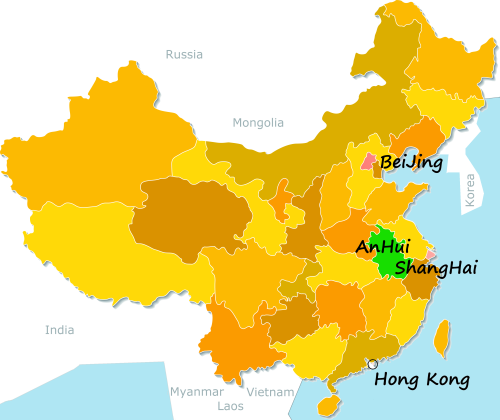
[640],shadow=true,start=,stop=AnHui map
Live more ...
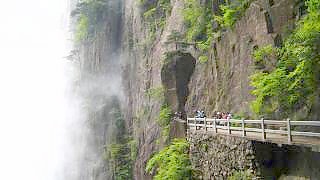
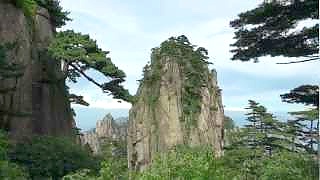
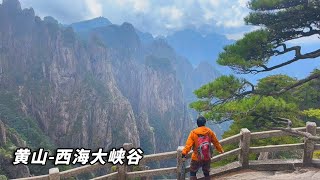
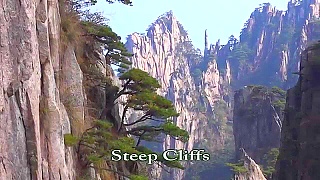
 A three day hike at the awesome HuangShan 黄山 (Yellow Mountain)
With Fragrant Mandarin ...
[640],shadow=true,start=,stop=

|
Bric by Bric - sanctions, and the threat of sanctions, seems to be leading the world away from the US dollar as reserve currency and global trade.
With The Duran ...
With Fernando Munoz Bernal ...
With Two Dollars Investing ...
With Inside China Business ...
With NaRvi Academy ...
|

|
A look at how the city of ShenZhen is leading the way in robots, electric vehicles and solar powered charging stations, plus an automated parking solution ...
Bonus films - aerial view of ShenZhen by drone ...
plus, driving around ShenZhen ...
|
|
JiangSu province ...
|
|
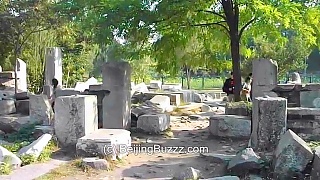
YuanMingYuan, also known as the 'Old Summer Palace', was constructed during the 18th and early 19th century and was a wonderland of lakes and waterways, bridges, hills and pavilions.
One third of the ground of YuanMingYuan was taken up by over 200 small hills with steep sides, secluded valleys, rock walls and stone caves. Half of the garderns are covered by the waters of lakes, winding streams and ponds.
It was at YuanMingYuan that the emperors of the Qing Dynasty resided and handled government affairs - until it was destroyed; the Forbidden City was mostly used only for formal ceremonies at this time.
The southern part of YuanMingYuan was where emperors handled state affairs, while the other parts were primarily for personal use and comprised of more than 150 scenic spots, involving rare exotic flowers and trees from different parts of the country.
There were originally towers, terraces, pavilions, halls, corridors, pagodas and bridges with a total construction area of 150,000 square meters - corresponding in scale to that of the Imperial Palace. Artisans were recruited from all over China to enact the exquisite settings.
The various styles of architecture, standing encircled by hills and rivulets, presented a most picturesque view. Many were reproductions of scenic mountains, rivers and famous gardens in China (mostly southern China).
During his many tours of the country, emperor QianLong made it a point to have pictures of famous gardens and scenes drawn so that he could have replicas built in Beijing. Most famous of these were the ten scenic spots of the West Lake in HangZhou.
The Old Summer Palace is often associated with the European-style palaces (Xi Yang Lou) that were built of stone. The designers of those structures, the Jesuits Giuseppe Castiglione and Michel Benoist, were employed by emperor QianLong to satisfy his taste for exotic buildings and objects. However, more than 95% of the Imperial Gardens consisted of essentially Chinese-style buildings. There were also a few buildings in Tibetan and Mongolian styles, reflecting the diversity of the Qing empire.
In addition, hundreds of invaluable Chinese art masterpieces and antiquities were stored in the halls, including some unique copies of literary works and collections.
In 1860, during the 'Second Opium War', the British and French expeditionary forces looted the Old Summer Palace. Later, on October 18 1860, a British general - despite protestations from the French (who in fact had began the looting) - gave the order to set fire to the huge complex, which burned to the ground.
In 1900, those buildings that had partly survived or been restored were burnt for good by the Western expeditionary forces sent to quell the 'Boxer Rebellion'. Many priceless artifacts were plundered and made their way to museums and private collections in Europe.
The ruins were further plundered by the warlords of the early republican period and further destruction of the ruins took place during the 'Cutural Revolution'. After all this destruction, what was left was truely just an empty shell.
Empress dowager CiXi later directed the forming of YiHeYuan (Garden of Nurtured Harmony), into a new Summer Palace; this was near to the Old Summer Palace, but on a (somewhat) smaller scale.
Nearest subway station : YuanMingYuan on line 4.
|
|
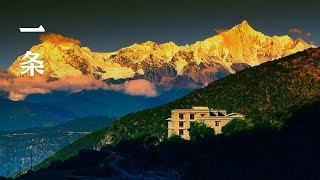
Experience the rich culture and breathtaking scenery ...
|
|
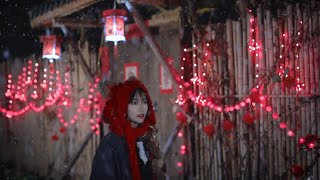
Chinese New Year’s decorations, goods and snacks!
明日除夕,挂灯笼、贴对联、备好年货过大年啦!
A masterclass with LiZiQi (pure genius). Don't miss it ...
|
|
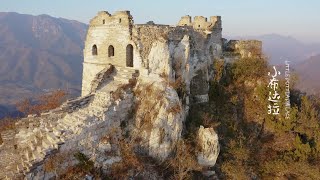
ShanHaiGuan, east of Beijing at the coast, is at the eastern end of the Great Wall.
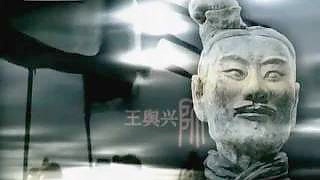
This is located near QinHuangDao and is closely associated with China's first emperor. Qin Dynasty: 221 - 206 BC.
Qin Shi Huang joined together walls at China's northern frontier into the first Great Wall. He also ended feudalism and unified much of China. JaiYuGuan, the western-most gate of the Qin Great Wall, where trade along the old Silk Road also took place, lies thousands of kilometers from here.
|
|
With Brian Berletic and Danny Haiphong ...
* In China, the people are family.
* In the West, the people are livestock.
With Angelo Giuliano - on Myanmar, the Philippines and Taiwan; how the West is trying to burn down south-east Asia to contain China to maintain its hegemony over the world (keep it down and plunder its resources) ...
The US goal of world hegemony dates from at least the 1960s ...
The 'threat' of China is simply that it is a good example; 'no country should be other than our slave'.
With Willene Business & Lifestyle ...
On hegemony / dominance, with Jeffrey Sachs ...
Latest news on China - with Wave Media ...
On the EV car market - with Cyrus Janssen ...
Italy, a basket case with a tendency to fascism, has buckled to US pressure and left the BRI; but three countries line up to replace it - Turkey, Greece and Spain ...
Ciao Italia. Video was deleted by YT.
On the Chinese island of Taiwan ...
On Jimmy Lai, Apple Daily and the attempted HK overthrow ...
Now, some positive videos :
KunMing city, YunNan province ...
ShangHai trip - with Sophie Kim ...
A room with a view - YangShuo, with Darby Alex ...
LiJiang, YunNan province, with Fel Thommy ...
|
|
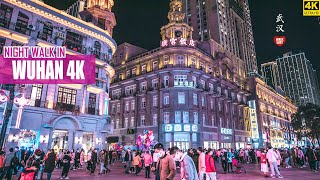
HuBei province.
With Walk East ...
YT comment : "I'm from Australia. Wuhan looks beautiful. Thanks for showing me what Wuhan really looks like. Our media can't afford to show China without a dystopian filter. The more our media and US media keep attacking China, the more convinced I am that China is doing something right for itself and the more compelled I am to visit this beautiful country. Thanks again for your video!"
|