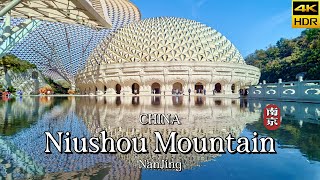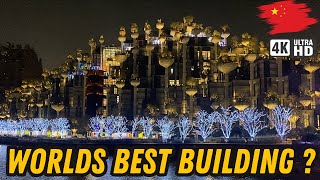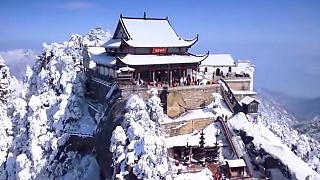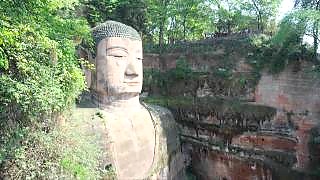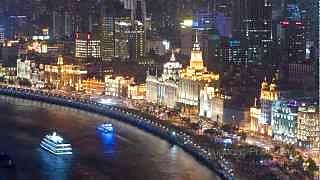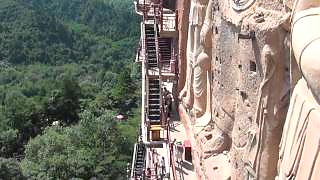
NiuShou Mountain Buddhist temple palace, NanJing

With Middle Kingdom Productions ...

[640],shadow=true,start=,stop=

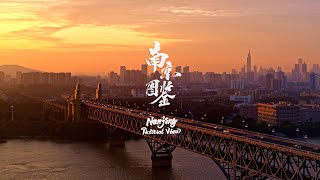
Nanjing, known as the Southern Capital, is one of China's most historically significant cities and a vibrant modern metropolis. Situated in the Jiangsu Province, Nanjing offers visitors a blend of rich history, cultural heritage, scenic landscapes, and modern amenities. Here's a guide to Nanjing for visitors:

Historical and Cultural Attractions:
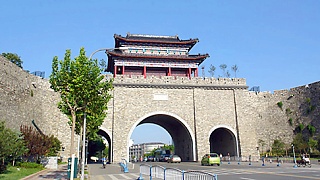
Nanjing City Wall: Explore the remnants of the ancient city wall, one of the most well-preserved in China, offering panoramic views of the city and surrounding areas.

Sun Yat-sen Mausoleum: Pay homage to Dr. Sun Yat-sen, the founding father of modern China, at his grand mausoleum located at the foot of Purple Mountain.

Confucius Temple (Fuzimiao): Immerse yourself in traditional Chinese architecture, visit the Confucius Temple, and stroll along the Qinhuai River, known for its lively atmosphere and historic charm.

Nanjing Massacre Memorial Hall: Commemorates the victims of the Nanjing Massacre. Learn about this tragic chapter in history.

Presidential Palace: Explore the former presidential residence of China's early republican era, showcasing exhibits on Chinese history and culture.

Jiming Temple: Visit one of Nanjing's oldest temples, known for its serene atmosphere, beautiful gardens, and ancient pagodas.

Natural Beauty:
Purple Mountain (Zijin Shan): Escape the urban hustle and bustle with a visit to Purple Mountain, home to scenic hiking trails, tranquil lakes, and historical sites like the Ming Xiaoling Mausoleum.

Xuanwu Lake: Relax by the shores of Xuanwu Lake, a picturesque oasis in the heart of the city, offering boat rides, walking paths, and lush greenery.

Modern Landmarks:
Nanjing Olympic Sports Center: Experience modern Nanjing at the Olympic Sports Center, home to state-of-the-art sports facilities, shopping malls, and entertainment venues.

Nanjing Eye Pedestrian Bridge: Take a leisurely stroll across the Yangtze River on the Nanjing Eye Pedestrian Bridge, offering stunning views of the city skyline.

Culinary Delights:
Nanjing Salted Duck: Sample this local delicacy, known for its savory flavor and tender meat, at traditional restaurants throughout the city.

Nanjing Dumplings (Soup Dumplings): Indulge in Nanjing's famous soup dumplings, filled with flavorful broth and served piping hot.

Practical Information:
Transportation: Getting around Nanjing is easy, with an efficient public transportation system including buses, metro, and taxis.

Accommodation: Nanjing offers a range of accommodation options, from luxury hotels to budget-friendly hostels, catering to different preferences and budgets.

Language: Mandarin Chinese is the official language, but some locals may speak English, especially in tourist areas.

Nanjing's blend of historical significance, natural beauty, cultural richness, and modernity makes it a compelling destination for travelers seeking a diverse and immersive experience in China.
Related Videos


Featured Videos

Reality (philosophy, Alan Watts)
When a mind is like a mirror, it sees everything, and holds onto nothing. Chuang-Tzu : '... mind as a mirror; it grasps nothing; it refuses nothing; it receives, but does not keep.' The wisdom of the eloquent Alan Watts (1915 - 1973) - the insights behind both Taoism and Buddhism ...
US rushes to war with China, with the Chinese island of Taiwan the excuse
The deluded separatists in Taiwan (a breakaway province aided by the US as a missile base) risk destroying their home. With Brian Berletic / The New Atlas, Angelo Giuliano and Carl Zha ... Bonus film - with Jeffrey Sachs ...
QingDao city drive, ShanDong province
With Chinese Street View ...
Universal Studios, BeiJing
Full, day to night tour. With Wei's Travel ... Bonus film - walking the sky gardens at Centennial Park, ShangHai ...
Poetry and architecture
On a trip to Yunhe Terrace in Lishui, Zhejiang in 2016, mother fell in love with the beautiful views and fresh air there. Recalling that mother sold family house in hometown to raise money for his tuition to study abroad 16 years ago, Tian rent a 2-mu land 1030 meters above the sea level and built his mother a new house surrounded by mountains and clouds. The spare rooms are used to run a guesthouse. 2016年,建築師田景海帶著母親去浙江麗水的雲和梯田旅遊,母親愛上了這兒的好山好水好空氣。想起16年前母親為了籌措自己留學的學費,賣掉老家的房子,田景海便在麗水租下2畝地,在海拔1030米的雲海山間,為媽媽造了一個新宅,空餘房間則用來做民宿。 Ye Hui is a poet. He is passionate about the fate of people, and his poems have been selected many times in the "Chinese Annual Poetry". Meanwhile he is an architect, specializing in old building renovation. In 2014, Ye Hui bought a lakeview villa in Nanjing. Living in a house with 400-square-meter indoor area and an 800-square-meter courtyard, he spends most of his time in a 3-square-meter space. 葉輝是詩人,他的詩作飽含情感地關注著人的命運,多次入選《中國年度詩歌》,同時他也是一位建築師,擅長老建築改造。2014年,葉輝買下南京的一套湖景別墅,室內空間400㎡,內院800㎡,不過他最常待的工作空間,只有3㎡。
The M50 Art District, ShangHai
50 Moganshan Road, or simply M50, is a contemporary art district in ShangHai that houses a community of more than a hundred artists whose studios are open to the public. It is similar to BeiJing's 798 Art Zone. With Flow Food Tea Repeat ...
NanChang 南昌 – provincial capital of JiangXi
Rock guitar goddess – YO YO (PinXi Liu) plays Glasgow Kiss …
Don't miss it ! A musician at one with the music. Wei wu wei - no effort (no separation) - literally, action without action. First kiss - the one you'll never forget ... Cover - John Petrucci. Bonus film - Asian shredding - a jam with Li-sa-X from Japan - "Little Wings" ...
Why is Western media so biased against China ?
With Cyrus Janssen ... Comment by Gustavo Andrés ... There is an overwhelming assumption in the West that China’s Achilles heel is the state: that it lacks legitimacy. This is the underlying reason why Westerners believe that China’s transformation is unsustainable: that the political system cannot survive. It would be wrong to suggest that attitudes have not shifted: the endurance of the reform period, now over 35 years old, and the scale of its achievement have bred a growing if still grudging respect, and a less apocalyptic view of Chinese political change. Few now regard it to be imminent and many have extended their time horizons somewhat into the future. Nevertheless, most Westerners still regard China’s present political order as lacking legitimacy and as ultimately unsustainable. In the post 1945 period, Westerners have come to believe that Western-style democracy – essentially universal suffrage and a multi-party system – is more or less the sole source of a government’s legitimacy. This is a superficial and ahistorical position. Western-style democracy does not ensure the legitimacy of a regime in the eyes of its people: Italy is perhaps the classic example, with successive governments over a long historical period experiencing a chronic lack of legitimacy. And what of China? Although it does not have Western-style democracy, there is plenty of evidence – for example the Pew Global Attitude surveys and the work of Tony Saich at the Harvard Kennedy School – that the Chinese government enjoys high levels of support and legitimacy, much higher indeed than those of Western governments. How do we explain this? Clearly the reason is not Western-style democracy because China has not chosen this path. The late Lucian W. Pye, in his book ‘Asian Power and Politics’, argues that Western scholars have, in their understanding of politics, prioritised political systems over political cultures: Pye argues, correctly in my view, that the opposite is the case. His insight is highly relevant to the Chinese case. The relationship between the state and society in China is very different from that which characterises Western societies. There are three key elements. First, China is primarily a civilization-state rather than a nation-state, with the overriding and extremely difficult age-old task of government being to maintain the unity of China and its civilization. This has lent the state an enduring authority, importance and centrality in China that is very different from the Western nation-state tradition. The state is intrinsic to China in a way that this is not true in Western societies: they are, in effect, in large degree synonymous. Furthermore the Chinese regard the state in some degree as an expression and extension of themselves. Second, whereas in Western societies the state is seen in an instrumentalist and utilitarian way – in other words, what will it do for me? – in China, following from the Confucian tradition and the idea that the Emperor should model himself on the father’s role as the head of the family, the state is perceived in a familial way, whence the expression ‘nation-family’, or the idea of China as an extended family. Or, to put it another way, in Western societies the state is viewed as an external and somewhat artificial construct, for the Chinese it is an intimate. Third, a much higher premium is placed on the efficiency and efficacy of the state than in the West, whence the importance of meritocracy in the recruitment of public servants. In the West, discussion about the state largely revolves around the manner by which the government is selected, in China, by way of contrast, the competence of the state assumes priority. Fourthly, following from the previous point, the state is expected and required to deliver in China. Over the last few decades, of course, it has presided over and masterminded a huge transformation, the most remarkable in modern economic history. The contrast between the performance of the Chinese and Western economies is manifest. In summary, the relationship between the state and society in China and the West is profoundly different and the reasons lie in the historical and cultural differences between them. They can and should learn from each other but they will remain distinct. So what of the future? As I mentioned at the outset, it is axiomatic in the West that sooner or later China will face a crisis of governance that will result in profound reform along Western lines. In reality, it seems far more likely that the crisis of governance will occur in the West than China. The United States and Europe are in decline and, as a consequence, their ruling elites and political systems are already suffering from declining legitimacy and authority, a process that is likely to continue. China, in contrast, is a rising power whose ruling elite is likely to enjoy growing status and prestige as a consequence. China, though, faces its own kind of governance challenge. The country is changing at extraordinary speed. If one thinks of how the life of an ordinary person has changed over the course of the last three decades, then this is a measure of how everything else, including political rule, must also change in order to survive. Of course, transparency, representivity and accountability have been transformed since Mao’s death, but this is a dynamic process and arguably the greatest changes still lie in the future. It is not that China needs to or should change its system – it has stood the test of time and managed to stay abreast of and lead the wider transformations – but, this notwithstanding, more profound ways must be found to modernise the political system and its institutions if they are to meet the demands and expectations of a very different society.

Tag search ?